

A retired American boxer returns to the village of his birth in 1920s Ireland, where he falls for a spirited redhead whose brother is contemptuous of their union.A retired American boxer returns to the village of his birth in 1920s Ireland, where he falls for a spirited redhead whose brother is contemptuous of their union.A retired American boxer returns to the village of his birth in 1920s Ireland, where he falls for a spirited redhead whose brother is contemptuous of their union.
- Director
- Writers
- Stars
- Won 2 Oscars
- 15 wins & 10 nominations total





Charles B. Fitzsimons
- Hugh Forbes
- (as CHARLES fitzSIMONS)

James O'Hara
- Father Paul
- (as James Lilburn)

Sean McClory
- Owen Glynn
- (as Sean McGlory)

Jack MacGowran
- Ignatius Feeney
- (as Jack McGowran)
- Director
- Writers
- All cast & crew
- Production, box office & more at IMDbPro
7.745.1K
1
2
3
4
5
6
7
8
9
10
Featured reviews
10huttfam5
A simply wonderful film
What's not to like about this picture? A classic directed by the legendary John Ford. John Wayne and Maureen O'Hara light up the screen. Wayne's performance is brilliant, but what really stands out is that he is playing a regular guy with real feelings and emotions--no army uniforms, no indians to fight, no cavalry coming to the rescue--just a great performance. The supporting cast is unmatched--including great performances by Victor McLaglen, Barry Fitzgerald and Ward Bond. Look closely for Ken Curtis (Festus, from Gunsmoke) in an uncredited role. The scenery is absolutly breathtaking--it makes me want to go home to Ireland--and I'm not even Irish. To top it off The Quiet Man has the greatest fist fight ever captured on film. This is one of my two favorite John Wayne movies. The Duke should have gotten an Oscar for this one. Movie viewers won't be disapointed by this one.
A Stick To Beat the Lovely Lady
The filming of The Quiet Man was the culmination of a dream by John Ford to make an Irish picture in Ireland. He bought the rights to the story over a decade before and peddled it to every studio in Hollywood and was turned down.
He went to Republic Pictures partly because John Wayne was just winding down his contract with them and he wouldn't have to pay him extra, and partly because Herbert J. Yates's small studio was the last stop. Ford got the permission for The Quiet Man on the condition he do a sure fire moneymaking John Wayne cavalry picture first. So Ford, Wayne, and Maureen O'Hara did Rio Grande first before setting out for Ireland.
In her recent memoirs O'Hara said that this was her role of a lifetime, she knew it would be before one frame of film was shot. She'd been playing in a load of ridiculous Hollywood drivel films as a redheaded Bedouin princess and she did them essentially for the money. This one was to be a labor of love.
Love yes, but a labor nonetheless. John Ford was a talented, but strange man to work for. He could be a bully and a tyrant on any set he was on. She was grateful to him for the career making roles she got with him, but recognized his faults. She relates in her memoirs that Ford used his influence to knock her out of an Oscar Nomination for Mary Kate Danaher in 1952 over some trivial offense Ford thought O'Hara committed and took umbrage.
It was a family affair for Wayne of sorts as well. His kids came to Ireland with him and you can see them at the horse racing scene as extras. Young Patrick Wayne spoke his first movie lines. He also had with him his second wife, Esperanza Baur who was not his kid's mom. She was a tempestuous sort and they would soon part in a very ugly divorce.
Sean Thornton who was born in Innisfree, but went to America as a toddler, has come back to his native Ireland after making a name for himself as a prizefighter and killing a man in the ring. He and Maureen O'Hara have an instant attraction for each other. However Wayne does run afoul of her bully of a brother, Squire Will Danaher played by Ford regular Victor McLaglen.
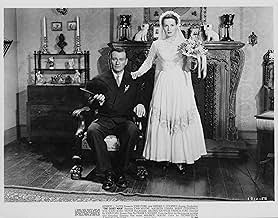
Wayne and O'Hara marry, but McLaglen won't turn over the bride's dowry. And Wayne won't contest him for it.
So with a little help from The Taming of the Shrew and a bit of Falstaff thrown in, things are put right in Innisfree. More I won't say.
As in all of John Ford's films and this is one of the best, he got some grand performances from some of the most minute characters in the film. Some of his regulars like Ward Bond, Mildred Natwick, Ken Curtis, Barry Fitzgerald and Arthur Shields with the rest of the roles played by Dublin's acclaimed Abbey Theatre players. One of my favorites is Jack McGowran who played Feeney, Squire Danaher's little toady factotum.
The music was arranged by Victor Young who did a grand job of using traditional Irish melodies in the score. One song, The Isle of Innisfree was recorded by Bing Crosby for Decca and sold a few platters for him the year The Quiet Man came out.
The Quiet Man is an annual classic for St. Patrick's Day, the same way It's A Wonderful Life is for Christmas. At least in America it is. I've wondered if it is as well received in Ireland as it is here. I think John Ford, the former Sean O'Fearna, was hoping it would turn out that way.
Mr. Ford, you got your wish.
He went to Republic Pictures partly because John Wayne was just winding down his contract with them and he wouldn't have to pay him extra, and partly because Herbert J. Yates's small studio was the last stop. Ford got the permission for The Quiet Man on the condition he do a sure fire moneymaking John Wayne cavalry picture first. So Ford, Wayne, and Maureen O'Hara did Rio Grande first before setting out for Ireland.
In her recent memoirs O'Hara said that this was her role of a lifetime, she knew it would be before one frame of film was shot. She'd been playing in a load of ridiculous Hollywood drivel films as a redheaded Bedouin princess and she did them essentially for the money. This one was to be a labor of love.
Love yes, but a labor nonetheless. John Ford was a talented, but strange man to work for. He could be a bully and a tyrant on any set he was on. She was grateful to him for the career making roles she got with him, but recognized his faults. She relates in her memoirs that Ford used his influence to knock her out of an Oscar Nomination for Mary Kate Danaher in 1952 over some trivial offense Ford thought O'Hara committed and took umbrage.
It was a family affair for Wayne of sorts as well. His kids came to Ireland with him and you can see them at the horse racing scene as extras. Young Patrick Wayne spoke his first movie lines. He also had with him his second wife, Esperanza Baur who was not his kid's mom. She was a tempestuous sort and they would soon part in a very ugly divorce.
Sean Thornton who was born in Innisfree, but went to America as a toddler, has come back to his native Ireland after making a name for himself as a prizefighter and killing a man in the ring. He and Maureen O'Hara have an instant attraction for each other. However Wayne does run afoul of her bully of a brother, Squire Will Danaher played by Ford regular Victor McLaglen.
Wayne and O'Hara marry, but McLaglen won't turn over the bride's dowry. And Wayne won't contest him for it.
So with a little help from The Taming of the Shrew and a bit of Falstaff thrown in, things are put right in Innisfree. More I won't say.
As in all of John Ford's films and this is one of the best, he got some grand performances from some of the most minute characters in the film. Some of his regulars like Ward Bond, Mildred Natwick, Ken Curtis, Barry Fitzgerald and Arthur Shields with the rest of the roles played by Dublin's acclaimed Abbey Theatre players. One of my favorites is Jack McGowran who played Feeney, Squire Danaher's little toady factotum.
The music was arranged by Victor Young who did a grand job of using traditional Irish melodies in the score. One song, The Isle of Innisfree was recorded by Bing Crosby for Decca and sold a few platters for him the year The Quiet Man came out.
The Quiet Man is an annual classic for St. Patrick's Day, the same way It's A Wonderful Life is for Christmas. At least in America it is. I've wondered if it is as well received in Ireland as it is here. I think John Ford, the former Sean O'Fearna, was hoping it would turn out that way.
Mr. Ford, you got your wish.
wonderful and misinterpreted
The Quiet Man is a wonderfully layered and at times hilariously ironic portrayal of Ireland as seen by an American.
For those who doubt the film's sense of irony, just re-watch the scene where Sean (John Wayne) paints the door of his cottage. The Vicar's wife remarks on its beauty and in a deadpan manner suggests "only an American would have thought of Emerald Green". Only an American (or a foreigner), is the implication, would think that the picturebook Ireland they are seeing in this film is a realistic portrayal of a lived experience of the country. An Irish person would have painted the door red, she says. It weathers better that way.
The film takes ideas of Irishness and exaggerates them to brilliant and comic effect. The drinking Mickaleen, the patriarchal rule, the idyllic countryside. But beneath the Oirish exterior is a sharp intelligence and a subversion of what the film at first glance seems to suggest.
Beneath the idyllic countryside are elemental forces that are waiting to be disturbed, as we see in the two scenes where Sean and Mary-kate kiss. Storm clouds fill the sky and the wind whips about them. The countryside which previously seemed so welcoming is now tempestuous and threatening. Theirs are passions which do not fit in the comic book world which we have previously seen. Yet they exist.
The portrayal of women, and particularly Sean's treatment of Mary-Kate when he drags her through the field is not so oppressive as it might seem. Remember that it is her who insists on receiving her dowry, who equates her possessions to her worth. It is she who forces Sean to act the way he does and fight Will Danaher. She indoctrinates him into her society by threatening to leave him. She withholds the marital bed. Sean eventually becomes the man she wants him to be.
In short this is a portrayal of Irish, or more importantly, rural life that is very much from the point of view of the outsider. Of the city folk. Yet it always acknowledges that and has great fun playing with its stereotypes. Its funny, its romantic, it appeals to the part of us that yearns to live a simple life away from the complex world, much as we know that life does not exist. Enjoy it!
For those who doubt the film's sense of irony, just re-watch the scene where Sean (John Wayne) paints the door of his cottage. The Vicar's wife remarks on its beauty and in a deadpan manner suggests "only an American would have thought of Emerald Green". Only an American (or a foreigner), is the implication, would think that the picturebook Ireland they are seeing in this film is a realistic portrayal of a lived experience of the country. An Irish person would have painted the door red, she says. It weathers better that way.
The film takes ideas of Irishness and exaggerates them to brilliant and comic effect. The drinking Mickaleen, the patriarchal rule, the idyllic countryside. But beneath the Oirish exterior is a sharp intelligence and a subversion of what the film at first glance seems to suggest.
Beneath the idyllic countryside are elemental forces that are waiting to be disturbed, as we see in the two scenes where Sean and Mary-kate kiss. Storm clouds fill the sky and the wind whips about them. The countryside which previously seemed so welcoming is now tempestuous and threatening. Theirs are passions which do not fit in the comic book world which we have previously seen. Yet they exist.
The portrayal of women, and particularly Sean's treatment of Mary-Kate when he drags her through the field is not so oppressive as it might seem. Remember that it is her who insists on receiving her dowry, who equates her possessions to her worth. It is she who forces Sean to act the way he does and fight Will Danaher. She indoctrinates him into her society by threatening to leave him. She withholds the marital bed. Sean eventually becomes the man she wants him to be.
In short this is a portrayal of Irish, or more importantly, rural life that is very much from the point of view of the outsider. Of the city folk. Yet it always acknowledges that and has great fun playing with its stereotypes. Its funny, its romantic, it appeals to the part of us that yearns to live a simple life away from the complex world, much as we know that life does not exist. Enjoy it!
A great masterpiece on film.
One of the best directed by John Ford. An emotional, humorous look at an American, played by John Wayne, going back to his native Ireland and trying to fit in with the present culture. Sensational scenery and the grand music by Victor Young support this classic among classics. Breezy and rowdy. Too beautiful to turn your back on. A great illustration of romance. The interaction between Wayne and Maureen O'Hara is magical and hard to beat.
Other classic performances are turned in by Victor McLaglen, Ward Bond and Barry Fitzgerald.
Other classic performances are turned in by Victor McLaglen, Ward Bond and Barry Fitzgerald.
Ah, the dopiness of many a poster
Hard to believe that this harmless and witty little low comedy, John Ford' comic valentine to his birthplace, can engender any negativity amongst IMDB dwellers. But, perhaps I shouldn't be surprised.
Among the negative comments are things like "John Wayne has never been in a movie that wasn't corny and hokey" (ahem -- "The Searchers" or "Stagecoach" to name but two), "the Irish accents were terrible" (with the exception of Wayne, almost all the principals were born in Ireland), "it's only funny if you think brutality to women is funny" (says nothing of the repeated right hooks aimed at Wayne's jaw by Maureen).
This is a funny picture with, as another poster pointed out, a very Ford-esque subtext. Often beautifully photographed, it plays on Irish (and Irish-American) stereotypes knowingly and deliberately to achieve its effect -- which is to make us laugh. So lighten up, people.
Among the negative comments are things like "John Wayne has never been in a movie that wasn't corny and hokey" (ahem -- "The Searchers" or "Stagecoach" to name but two), "the Irish accents were terrible" (with the exception of Wayne, almost all the principals were born in Ireland), "it's only funny if you think brutality to women is funny" (says nothing of the repeated right hooks aimed at Wayne's jaw by Maureen).
This is a funny picture with, as another poster pointed out, a very Ford-esque subtext. Often beautifully photographed, it plays on Irish (and Irish-American) stereotypes knowingly and deliberately to achieve its effect -- which is to make us laugh. So lighten up, people.


Did you know
- TriviaAt the film's conclusion, after the credits, we see Kate and Sean standing in their garden waving good-bye. Maureen O'Hara turns to John Wayne and whispers something in his ear, evoking a priceless reaction from Wayne. What was said was known only to O'Hara, Wayne and director John Ford. In exchange for saying this unscripted bit of text, O'Hara insisted that the exact line never be disclosed by any involved parties. In her memoirs she says that she refused to say the line at first as she "couldn't possibly say that to Duke", but Ford insisted, claiming he needed a genuine shock reaction from Wayne. The line remains a mystery to this day.
- GoofsBefore Sean enters Mary Kate's home to ask her brother's permission to court her, the flowers he's carrying are very sad looking. After he enters the house, they change into a nice, full, colorful bouquet.
- Quotes
Mary Kate Danaher: Could you use a little water in your whiskey?
Michaleen Flynn: When I drink whiskey, I drink whiskey; and when I drink water, I drink water.
- ConnectionsFeatured in Directed by John Ford (1971)
- SoundtracksThe Wild Colonial Boy
(uncredited)
Traditional
Adapted by Sean O'Casey and Dennis O'Casey
Performed by John Wayne, Ken Curtis, and Francis Ford and others in the Pub
Reprised a cappella by Wayne and Victor McLaglen
Details
- Release date
- Countries of origin
- Languages
- Also known as
- El hombre quieto
- Filming locations
- Cong, County Mayo, Ireland(Inisfree)
- Production company
- See more company credits at IMDbPro
Box office
- Budget
- $1,750,000 (estimated)
- Runtime
- 2h 9m(129 min)
- Aspect ratio
- 1.37 : 1
Contribute to this page
Suggest an edit or add missing content