IMDb RATING
8.1/10
8.3K
YOUR RATING


Follows a woman's fight and survival amid the vicissitudes of life and the cruelty of society.Follows a woman's fight and survival amid the vicissitudes of life and the cruelty of society.Follows a woman's fight and survival amid the vicissitudes of life and the cruelty of society.
- Director
- Writers
- Stars
- Awards
- 2 wins & 1 nomination total
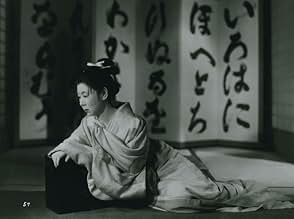
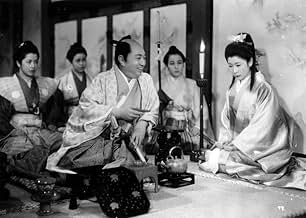
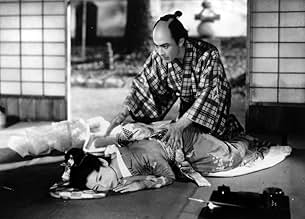


- Director
- Writers
- All cast & crew
- Production, box office & more at IMDbPro
8.18.2K
1
2
3
4
5
6
7
8
9
10
Featured reviews
Gentle consciousness-raiser
Mizoguchi's films are capable, I think, of teaching life lessons without preaching or grandstanding. This film could cause a male chauvinist to join a consciousness-raising make sensitivity group. In a simple,understated way, the film outlines the tyrannies that made happiness almost impossible for women, not only in feudal Japan, but all over the world. It comments on the use of women's bodies as sex objects and baby-making machines, with no regard for women's minds or feelings. Notice, by the way, that Oharu (Kinuyo Tanaka)is supposed to age from 18 to 50-and she really seems to age although makeup in the 1950s was not as advanced an art as it is now. The aging process is achieved through Tanaka's acting. And if she does not seem to us to be quite the ravaged old "witch" that one of her customers claims she is, then so much the better to let us know that she is being judged by an insensitive society.
Bleak yet masterful character study
Although much of Kenji Mizoguchi's early work is now lost, the Japanese director is regarded as one of the country's finest thanks mainly to a handful of films made in the 1950s, many of which are considered masterpieces. The likes of Ugetsu Monogatari, Sansho the Bailiff and Street of Shame will no doubt be known to anyone with a keen interest in cinema, but none have the same lasting impression as The Life of Oharu, Mizoguchi's tale of one woman's plight in 1600's Japan. He was considered one of the first feminist directors, and much of his life was spent writing about their mistreatment at the hands of a matriarchal society rooted in class tradition. He was also known for frequenting brothels, but rather than paying for their services, Mizoguchi would instead listen to their stories. We meet Oharu (Kinuyo Tanaka) as a middle-aged prostitute, spending her nights by the city's gates begging or trying to sell her body to drunken wanderers.
She tells her friends how earlier that night an older man had brought her to a home full of young men, displaying her ageing face to the group as a way to convince them not to pay for prostitutes. They ask Oharu about her past, but she doesn't want to talk about it. Visiting a Buddhist temple, she notices that one of the statutes of Buddha bares a striking resemblance to her one and only love, a lowly retainer named Katsunosuke (Toshiro Mifune). Decades earlier, Oharu was a woman of high station, and shunned the advances of the young page simply because society wouldn't allow it. She could not resist true love however, and the two are eventually caught. While he is sent to the chopping block, Oharu's family are stripped of their status and forced to live out in the country. Her father (Ichiro Sugai) blames Oharu, but his attitude changes when she is chosen to produce the heir of Lord Matsudaira (Toshiaki Konoe). However, she is banished after giving birth to a boy to return to a family who will soon sell her into prostitution.
What transpires is a series of cruel punishments inflicted on our protagonist, and tragedy is born out of the fact that Oharu makes few of her own choices. There seems to be no place for true love in this society, something that still effects many countries today. A system seems to be in place that deflects the blame from the men who usher Oharu into these positions. She eventually serves as a maid, but loses her post when she is recognised from her days as a prostitute, and is even turned away from becoming a nun because of her 'sinful' past. The plot may sound like pure melodrama, but Mizoguchi is careful to avoid using broad strokes or losing focus of the larger picture. The camera is mostly still and precise, and also keeps its distance. Mizoguchi isn't interested in grand emotive close-ups - he wants you to see the whole picture as Oharu is shoved through her life like a puppet of little value. Most of us have gone through our lives making choices based on our core values, having the opportunity to stand up against anything that may threaten our moral code. The Life of Oharu is about a character completely stripped of this freedom, and her strength to bend rather than break. It's incredibly bleak stuff, but a masterpiece of measured character study.
She tells her friends how earlier that night an older man had brought her to a home full of young men, displaying her ageing face to the group as a way to convince them not to pay for prostitutes. They ask Oharu about her past, but she doesn't want to talk about it. Visiting a Buddhist temple, she notices that one of the statutes of Buddha bares a striking resemblance to her one and only love, a lowly retainer named Katsunosuke (Toshiro Mifune). Decades earlier, Oharu was a woman of high station, and shunned the advances of the young page simply because society wouldn't allow it. She could not resist true love however, and the two are eventually caught. While he is sent to the chopping block, Oharu's family are stripped of their status and forced to live out in the country. Her father (Ichiro Sugai) blames Oharu, but his attitude changes when she is chosen to produce the heir of Lord Matsudaira (Toshiaki Konoe). However, she is banished after giving birth to a boy to return to a family who will soon sell her into prostitution.
What transpires is a series of cruel punishments inflicted on our protagonist, and tragedy is born out of the fact that Oharu makes few of her own choices. There seems to be no place for true love in this society, something that still effects many countries today. A system seems to be in place that deflects the blame from the men who usher Oharu into these positions. She eventually serves as a maid, but loses her post when she is recognised from her days as a prostitute, and is even turned away from becoming a nun because of her 'sinful' past. The plot may sound like pure melodrama, but Mizoguchi is careful to avoid using broad strokes or losing focus of the larger picture. The camera is mostly still and precise, and also keeps its distance. Mizoguchi isn't interested in grand emotive close-ups - he wants you to see the whole picture as Oharu is shoved through her life like a puppet of little value. Most of us have gone through our lives making choices based on our core values, having the opportunity to stand up against anything that may threaten our moral code. The Life of Oharu is about a character completely stripped of this freedom, and her strength to bend rather than break. It's incredibly bleak stuff, but a masterpiece of measured character study.
10rbiko-1
a masterpiece
I cannot agree with the reviewer who commented that Mizoguchi does not have the aesthetic sensibility of Kurosawa or Ozu. In fact, he appears to me to be the true master of Japanese cinema. 'Oharu' is a marvellous achievement - a compassionate, beautiful account of a quite astonishing fall from privilege and grace into destitution and despair. It is unremittingly bleak and yet due to Mizoguchi's genius and Kinuyo Tanaka's luminous portrayal of the unlucky Oharu, it is a spiritually compelling work, with sheer artistry and simple human empathy competing for our attention in every take. Breathtaking film-making of the highest quality.
dignity in disgrace
Mizoguchi's empathy for female characters is legendary. The Life of Oharu is one outstanding example. One woman's journey from member of the imperial court to elderly streetwalker is narrated in exquisite, shimmering, painful style. Oharu (Kinuyo Tanaka) is seduced by a man below her station. Her crime is to love the man back unreservedly. That action becomes the catalyst for a series of degradations punctuated by false dawns, as Oharu's life spirals to rock bottom. And as bleak and depressing as that sounds, Mizoguchi's storytelling, combined with Tanaka's dignified portrayal, make this film cathartic, a tragedy with a small, life-affirming message at its heart. It is a cautionary tale to the follies of social mores, and the burden that women through the ages have to endure. More than that, it is a tale of one woman's dignity through the most humiliating of circumstances. Stunning.
magical camera-work and immaculate direction
Deeply tragic and sad tale that is nevertheless presented to us with great dignity and style. A tale of the harshness of feudal Japan and the way the men treat the women is unfortunately not without its echo, even today in that great country. A woman here, originally of noble beginnings, makes bad, then good, then more and more bad and none of it of her making. She is simply the result in men's dealings and hypocrisies. Still beautiful to look at though with the magical camera-work and immaculate direction. Some slight confusions at first until we realise that time jumps at the blink of an eye and before we know it one period has slid effortlessly into another, where inevitably another tragedy awaits our fallen heroine.


Did you know
- TriviaThis film, which was director Kenji Mizoguchi's dream project, was severely under-financed, and the production was forced to use a warehouse instead of a regular sound stage. This warehouse happened to be located near railways, and each time a train passed by, they had to stop shooting, which made the shooting of the film even more difficult with the director's obsessive use of long, continuous, uninterrupted takes. The same warehouse was also used for Josef von Sternberg's film Anatahan (1953).
- Quotes
Katsunosuke: Lady Oharu, a human being - no, a woman - can only be happy if she marries for love. Rank and money don't mean happiness.
- Crazy creditsOpening credits shown over Japanese artwork/water-colors.
- ConnectionsFeatured in See Here My Love (1978)
- How long is The Life of Oharu?Powered by Alexa
Details
Box office
- Gross worldwide
- $6,921
- Runtime
- 2h 13m(133 min)
- Color
- Sound mix
- Aspect ratio
- 1.37 : 1
Contribute to this page
Suggest an edit or add missing content