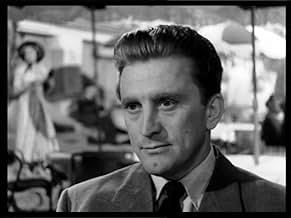
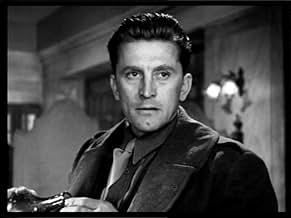
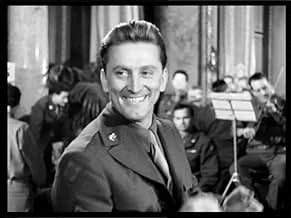
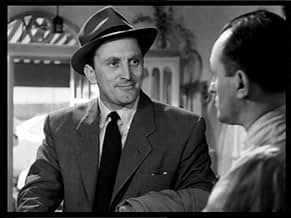
A former soldier on holiday in the French Riviera recalls his time in France during WWII, and his love for a French peasant woman.A former soldier on holiday in the French Riviera recalls his time in France during WWII, and his love for a French peasant woman.A former soldier on holiday in the French Riviera recalls his time in France during WWII, and his love for a French peasant woman.
- Director
- Writers
- Stars
Martine Alexis
- Une prostituée à la Conciergerie
- (uncredited)
- Director
- Writers
- All cast & crew
- Production, box office & more at IMDbPro
6.5613
1
2
3
4
5
6
7
8
9
10
Featured reviews
A Surprise Jewel!
Many things about this movie are charming and have a wistful quality that brings you into its story.
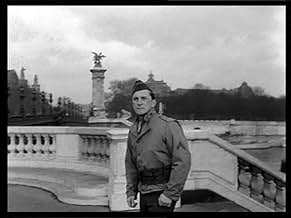
First of all, and I offer my apologies to the absorbing performances, to me the most fascinating aspect of this film is the location; PARIS. But not just any Paris. This is a during and post-WWII Paris. Although released an amazing 8 years after the end of the war, much of the charm of a Paris which lingers in our hearts is still there. This is not travelogue picture with dancing Americans to a Rodgers score. There is a very true-to-life depiction of, what I call, the most elegant city in the world.
This movie tempts us to fall in love again with Paris. All politics aside, please. We see a Paris which many a serviceman or woman probably fell in love with during the war. We see the sights in and around Paris, there are some views of Fontainebleau just outside of the city which make me want to go back and suffer the awful Summer heat inside of it again just to see the gorgeous architecture there.
Second, I liked this story because it ran true. It has few Hollywood formulas -- even to the end it tempts us to see stories like these as they really were. Some happy, some not so. Another reviewer complained about "pidgin French - English" which was heard throughout the movie. I must say that whatever it was, it did not offend my ears and I have friends who live in Paris and have similar accents when they speak English. The accents did bother me -- and neither did the French without subtitles. I do remember a time when Americans knew more about the French language and were proud of it. I still am.
Yet, all through this we have a love story which develops and then unravels due to bureaucratic entanglements.
Finally, if you must see this for one reason, see it for the story and the deft performances. Kirk Douglas, it seems, never made a bad picture - or at least he never gave a bad performance. Every one was absorbing - brought you in, gave you permission to involve yourself with the situations in them. This is not exception. It is a low-key performance, true. But it is no less absorbing than anything he ever did.
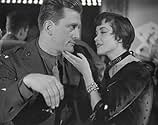
Of course there was gorgeous Dany Robin as Kirk Douglas's love interest. Her portrayal of a shy, innocent French girl was perfect considering she was voted "nastiest French actress" that same year. She had a fabulous French career and worked with many famous directors, including Litvak, who also directed "Sorry, Wrong Number", "The Snake Pit" and "Anastasia".
I recommend this to those viewers who still have a little romance in their hearts - but walk with a dose of reality down every turn of their adventures.
First of all, and I offer my apologies to the absorbing performances, to me the most fascinating aspect of this film is the location; PARIS. But not just any Paris. This is a during and post-WWII Paris. Although released an amazing 8 years after the end of the war, much of the charm of a Paris which lingers in our hearts is still there. This is not travelogue picture with dancing Americans to a Rodgers score. There is a very true-to-life depiction of, what I call, the most elegant city in the world.
This movie tempts us to fall in love again with Paris. All politics aside, please. We see a Paris which many a serviceman or woman probably fell in love with during the war. We see the sights in and around Paris, there are some views of Fontainebleau just outside of the city which make me want to go back and suffer the awful Summer heat inside of it again just to see the gorgeous architecture there.
Second, I liked this story because it ran true. It has few Hollywood formulas -- even to the end it tempts us to see stories like these as they really were. Some happy, some not so. Another reviewer complained about "pidgin French - English" which was heard throughout the movie. I must say that whatever it was, it did not offend my ears and I have friends who live in Paris and have similar accents when they speak English. The accents did bother me -- and neither did the French without subtitles. I do remember a time when Americans knew more about the French language and were proud of it. I still am.
Yet, all through this we have a love story which develops and then unravels due to bureaucratic entanglements.
Finally, if you must see this for one reason, see it for the story and the deft performances. Kirk Douglas, it seems, never made a bad picture - or at least he never gave a bad performance. Every one was absorbing - brought you in, gave you permission to involve yourself with the situations in them. This is not exception. It is a low-key performance, true. But it is no less absorbing than anything he ever did.
Of course there was gorgeous Dany Robin as Kirk Douglas's love interest. Her portrayal of a shy, innocent French girl was perfect considering she was voted "nastiest French actress" that same year. She had a fabulous French career and worked with many famous directors, including Litvak, who also directed "Sorry, Wrong Number", "The Snake Pit" and "Anastasia".
I recommend this to those viewers who still have a little romance in their hearts - but walk with a dose of reality down every turn of their adventures.
7B24
Casting Sentimentality Aside
How truly odd it is that so little attention to this film is evident in these archives. Apart from some quibbles one might have with its casting, the occasionally stilted dialogue, or some melodramatic nonsense here and there, it really is an important addition to the Kirk Douglas oeuvre as well as a story about a character very much like those he played later in "Paths of Glory" and "Lonely Are the Brave."
Douglas must have had more than a passing hand in choosing roles for himself during his career. Unlike many of his contemporaries (Brando comes to mind), he has played characters that require a fine balance between kinetic displays of a true hero and moments of self-effacing and troubled doubt. It is not so much the quality of the writing at work here as it is his own deliberate and skillful willingness to interpret the role honestly, without regard to any supposed preconceptions of what his audience expects of him.
I write this with a degree of reservation, because I never much cared for his voice or his looks. The fact that I admire his acting skill is perhaps all the more enhanced by this admission, however. With a profile a little less vivid and a better vocal range and timbre, he might have played Shakespeare.
His French colleagues in the present effort are more stereotypical than one cares for. They are made to speak a kind of pidgin English that was generally thought acceptable in 1953 for American audiences. Subtitles accompanying actual French would be requisite for any remake.
Moreover, there is that recurrent tinge of sentimentality and bathos. But I still liked it on the whole, giving it a solid 7 out of 10.
Douglas must have had more than a passing hand in choosing roles for himself during his career. Unlike many of his contemporaries (Brando comes to mind), he has played characters that require a fine balance between kinetic displays of a true hero and moments of self-effacing and troubled doubt. It is not so much the quality of the writing at work here as it is his own deliberate and skillful willingness to interpret the role honestly, without regard to any supposed preconceptions of what his audience expects of him.
I write this with a degree of reservation, because I never much cared for his voice or his looks. The fact that I admire his acting skill is perhaps all the more enhanced by this admission, however. With a profile a little less vivid and a better vocal range and timbre, he might have played Shakespeare.
His French colleagues in the present effort are more stereotypical than one cares for. They are made to speak a kind of pidgin English that was generally thought acceptable in 1953 for American audiences. Subtitles accompanying actual French would be requisite for any remake.
Moreover, there is that recurrent tinge of sentimentality and bathos. But I still liked it on the whole, giving it a solid 7 out of 10.
A real find
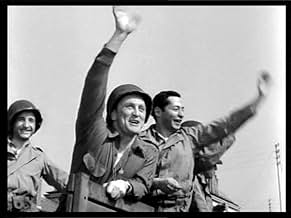
More than any other movie I've seen, this one draws a dark picture of what the statistical enormity and bureaucratic obscenity of WWII did to individuals during (and after) the Second World War. This is a love story set against the new way of dealing with the logistics of millions of people on the move in wartime Europe -- on either side. The big point is that it's difficult to draw a line between the sides in the brutal impersonality of the events that crush people like the characters in this story.
Kirk Douglas is great, of course, and the direction in the film is always intersting. Hard to believe this was made as late as 53.
See this if you can -- I saw it on TCM recently in a Kirk Douglas festival. For that matter, watch all the Kirk Douglas flicks you can -- the guy had either great taste or great luck.
Kirk Douglas is great, of course, and the direction in the film is always intersting. Hard to believe this was made as late as 53.
See this if you can -- I saw it on TCM recently in a Kirk Douglas festival. For that matter, watch all the Kirk Douglas flicks you can -- the guy had either great taste or great luck.
Love in the Ruins
A low-key film with a fine cast. Unfortunately, it's so low-key as to seem nearly aimless for the first half. The pace and interest do pick up, however, toward the end.
As World war II grinds slowly to a halt in Europe, an innocent French girl on the brink of prostitution and a cynical but lonely GI fall in love in the City of Lights - where, due to the war, the lights don't always work, A flaw, at least as the film plays on television, is that the French accents are sometimes hard to understand. And there are plenty of them.
Though ten years too old for the role, not unusual for actors in war movies before the '70s, Douglas turns in a solid performance as Pfc. Teller, the wounded American soldier now stationed at an army headquarters in Paris. But it is the lovely Dany Robin, rarely seen in America, who deserves most of the acting credit for keeping the rather unfocused story interesting. Fernand Ledoux is adequately brooding and resentful. The eighteen-year-old Brigitte Bardot is already beautiful, but look sharp or you may miss her.
The real scene-stealer here, though, is the slinky Barbara Laage, who shows herself to be a fine actress in very nearly her only American film. Too bad she breezes out of the picture a third of the way through.
The on-location shots of Paris are also a plus in a film that sometimes flirts dangerously with soap opera. Not a classic or even a forgotten classic, but worth your time if bittersweet love is your cup of tea.
As World war II grinds slowly to a halt in Europe, an innocent French girl on the brink of prostitution and a cynical but lonely GI fall in love in the City of Lights - where, due to the war, the lights don't always work, A flaw, at least as the film plays on television, is that the French accents are sometimes hard to understand. And there are plenty of them.
Though ten years too old for the role, not unusual for actors in war movies before the '70s, Douglas turns in a solid performance as Pfc. Teller, the wounded American soldier now stationed at an army headquarters in Paris. But it is the lovely Dany Robin, rarely seen in America, who deserves most of the acting credit for keeping the rather unfocused story interesting. Fernand Ledoux is adequately brooding and resentful. The eighteen-year-old Brigitte Bardot is already beautiful, but look sharp or you may miss her.
The real scene-stealer here, though, is the slinky Barbara Laage, who shows herself to be a fine actress in very nearly her only American film. Too bad she breezes out of the picture a third of the way through.
The on-location shots of Paris are also a plus in a film that sometimes flirts dangerously with soap opera. Not a classic or even a forgotten classic, but worth your time if bittersweet love is your cup of tea.
A real find
More than any other movie I've seen, this one draws a dark picture of what the statistical enormity and bureaucratic obscenity of WWII did to individuals during (and after) the Second World War. This is a love story set against the new way of dealing with the logistics of millions of people on the move in wartime Europe -- on either side. The big point is that it's difficult to draw a line between the sides in the brutal impersonality of the events that crush people like the characters in this story.
Kirk Douglas is great, of course, and the direction in the film is always intersting. Hard to believe this was made as late as 53.
See this if you can -- I saw it on TCM recently in a Kirk Douglas festival. For that matter, watch all the Kirk Douglas flicks you can -- the guy had either great taste or great luck.
Kirk Douglas is great, of course, and the direction in the film is always intersting. Hard to believe this was made as late as 53.
See this if you can -- I saw it on TCM recently in a Kirk Douglas festival. For that matter, watch all the Kirk Douglas flicks you can -- the guy had either great taste or great luck.
Did you know
- TriviaKirk Douglas also did the French language version's dialogue.
- Quotes
Robert Teller: The River Seine. All my life I wanted to see it. Finally I saw it, with a gun in my hand. Travel, twentieth-century style.
- ConnectionsFeatured in Veraz (1991)
- How long is Act of Love?Powered by Alexa
Details
- Runtime
- 1h 48m(108 min)
- Color
- Sound mix
- Aspect ratio
- 1.37 : 1
Contribute to this page
Suggest an edit or add missing content