IMDb RATING
6.7/10
3.6K
YOUR RATING


An aspiring young writer insinuates herself into the life of a Broadway producer only to meet an unexpected fate.An aspiring young writer insinuates herself into the life of a Broadway producer only to meet an unexpected fate.An aspiring young writer insinuates herself into the life of a Broadway producer only to meet an unexpected fate.
- Director
- Writers
- Stars



Mabel Albertson
- Sylvia
- (uncredited)
Edward Astran
- Party Guest
- (uncredited)

Bea Benaderet
- Mrs. Franklin Walsh
- (uncredited)

Mary Benoit
- Party Guest
- (uncredited)
Nesdon Booth
- Police A.P.B. Man
- (uncredited)

Paul Bradley
- Party Guest
- (uncredited)

Steve Carruthers
- Party Guest
- (uncredited)
- Director
- Writers
- All cast & crew
- Production, box office & more at IMDbPro
6.73.6K
1
2
3
4
5
6
7
8
9
10
Featured reviews
A Guilty Pleasure With A Strange Cast: Not Very Noir
I greatly enjoyed this Cinemascope, Stereo-Sound romp, but mainly as a Guilty Pleasure, as it's a film very much of it's time, with mismatched acting styles, lush, unbelievable sets, a central premise that doesn't make much sense (lending your expensive apartment to a just-met down-and-out writer while your wife's away),and an early attempt to make visual sense of the then-new wide-screen process.
Why do I like it? Ginger Rogers is way over the top, popping on and off screen with snappy diva one-liners, like Margo Channing on pep pills; Peggy Ann Garner plays a subversive Lolita, crazy-seductive and irresistible, and you can even spot Aaron Spelling towards the end in a bit part as a theatre employee.
The palette is loaded with pastel colors so popular in the 1950's, and the whole thing is sort of a mild domestic whodunit whipped up into an anemic Douglas Sirk confection. Great it ain't, but because of Rogers, Van Heflin, Gene Tierney (who has very little to do but does it beautifully) and Reginald Gardner, I found it greatly entertaining.
Why do I like it? Ginger Rogers is way over the top, popping on and off screen with snappy diva one-liners, like Margo Channing on pep pills; Peggy Ann Garner plays a subversive Lolita, crazy-seductive and irresistible, and you can even spot Aaron Spelling towards the end in a bit part as a theatre employee.
The palette is loaded with pastel colors so popular in the 1950's, and the whole thing is sort of a mild domestic whodunit whipped up into an anemic Douglas Sirk confection. Great it ain't, but because of Rogers, Van Heflin, Gene Tierney (who has very little to do but does it beautifully) and Reginald Gardner, I found it greatly entertaining.
In Colour & Widescreen For No Good Reason.
This is a colourful mystery yarn, nothing to deep or steep, with a limited pallet of suspects. In the right hands this could of been a decent "Film Noir" but the colour all rather lush and plush on top of highly unsuitable widescreen which mostly ruins the framing of the actors while giving this studio shot film an artificial look that undermines the suspense. Nonetheless, this is enjoyable froth nicely dated and a good movie for a wet and lazy afternoon.
Tightly constructed, beautifully filmed, straight up high society suspense
Black Widow (1954)
An early full color Cinemascope drama, loaded with starts, and written by a high powered but somewhat forgotten stage and screen writer of the 40s and 50s, Nunnally Johnson. And this is one of a handful of films he directed, too. It's really quite a fully blossomed drama, and it grows with complexity as it goes. And it's packed with stars. The leading man has always impressed me even though he's not the handsome or powerful sort that usually commands the first credits, Van Heflin. he's really amazing, subtle and perfectly sophisticated and well meaning and (eventually) tortured.
His wife is played with usual cool cheerfulness by Gene Tierney, and their neighbor and friend is a haughty and ridiculous (perfectly so) Ginger Rogers. Rogers takes her role to the hilt, both in arrogance and frivolity and later in emotional breakdown.
What ensues is not just highbrow Broadway theater culture, but eventually a criminal (or psychologically suspenseful) tidal wave sweeps over the relatively lightweight beginnings, and the effect is kind of remarkable in its own way. I mean, it's so completely theatrical and melodramatic, and yet it really works as an interpersonal and heartfelt (and probing) drama, too. The writing is smart, nuanced, and it plays the line of being exactly what it is--meaning that it's about the very world that Johnson lives in.
The cop in this case is George Raft, always a little stiff and stiff again here, but he does his job. The seductress who is the center of all these talents is Peggy Ann Garner. Who is she? Well, after several years of being a successful child actress, and except for a small role in an obscure 1951 Fred Zinnemann film as an adult, Garner was a television actress (including some t.v. movies) bouncing from one series to another. Then, at the end of her career, she had small roles in three more features. And in many ways, she's the weak link here--she's supposed to be sleeping her way to success in the theater world, and yet there's something not quite right about her in this role. I suppose I underestimate middle aged rich men.
The plot this girl weaves for those around her is elaborate and devilish. And when it goes wrong for her, it really goes wrong for our main man Heflin. At the point the film is very much like Hitchcock film, with the apparently innocent man accused of a crime. Unlike Hitchcock, Johnson uses flashbacks at key points near the end., which do their job but also have a way of deflating the suspense.
See for yourself!
An early full color Cinemascope drama, loaded with starts, and written by a high powered but somewhat forgotten stage and screen writer of the 40s and 50s, Nunnally Johnson. And this is one of a handful of films he directed, too. It's really quite a fully blossomed drama, and it grows with complexity as it goes. And it's packed with stars. The leading man has always impressed me even though he's not the handsome or powerful sort that usually commands the first credits, Van Heflin. he's really amazing, subtle and perfectly sophisticated and well meaning and (eventually) tortured.
His wife is played with usual cool cheerfulness by Gene Tierney, and their neighbor and friend is a haughty and ridiculous (perfectly so) Ginger Rogers. Rogers takes her role to the hilt, both in arrogance and frivolity and later in emotional breakdown.
What ensues is not just highbrow Broadway theater culture, but eventually a criminal (or psychologically suspenseful) tidal wave sweeps over the relatively lightweight beginnings, and the effect is kind of remarkable in its own way. I mean, it's so completely theatrical and melodramatic, and yet it really works as an interpersonal and heartfelt (and probing) drama, too. The writing is smart, nuanced, and it plays the line of being exactly what it is--meaning that it's about the very world that Johnson lives in.
The cop in this case is George Raft, always a little stiff and stiff again here, but he does his job. The seductress who is the center of all these talents is Peggy Ann Garner. Who is she? Well, after several years of being a successful child actress, and except for a small role in an obscure 1951 Fred Zinnemann film as an adult, Garner was a television actress (including some t.v. movies) bouncing from one series to another. Then, at the end of her career, she had small roles in three more features. And in many ways, she's the weak link here--she's supposed to be sleeping her way to success in the theater world, and yet there's something not quite right about her in this role. I suppose I underestimate middle aged rich men.
The plot this girl weaves for those around her is elaborate and devilish. And when it goes wrong for her, it really goes wrong for our main man Heflin. At the point the film is very much like Hitchcock film, with the apparently innocent man accused of a crime. Unlike Hitchcock, Johnson uses flashbacks at key points near the end., which do their job but also have a way of deflating the suspense.
See for yourself!
entertaining story, magnificent visual effects
"Black Widow" is a well-written, though old-style, entertaining mystery. The story is taken from a novel by Patrick Quentin, a sound mystery-writer.
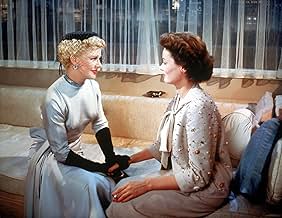
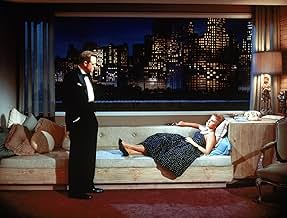
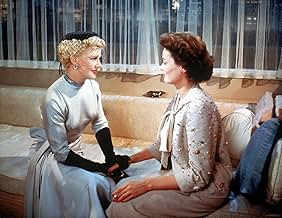
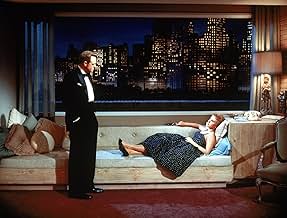
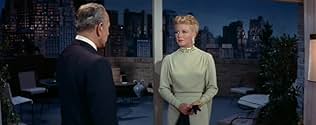
However the essence of the movie lies in the magnificent cinemascope photography, colors and visual effects. Note that most scenes have in the background large windows or terraces wide-open on the spectacular, terrific New York sceneries. Even the furniture of the various apartments is carefully chosen and placed, with beautiful artistic effects. Outstanding is the brief scene inside the dark bar, with the costumers merged into a liquid light: an evident reminiscence of Edward Hopper's paintings.
Alas! All these visual beauties are seriously damaged, if not destroyed, by the TV version, which essentially shows just half of the screen.
The performances by all interpreters are generally good and professional. A major (personal) disappointment is that Gene Tierney does nothing. She's not even in the list of suspects, since she was thousands of miles away from New York during the whole murder affair. She just sits silently on the background, adding her incomparable beauty and natural refinement to the magnificent New York views. It should be added that George Raft seems completely out-of-role... but I'm too fond of this guy to be able to criticize him.
"Black Widow" is a good film; hopefully someone will be able to see it on the wide screen.
However the essence of the movie lies in the magnificent cinemascope photography, colors and visual effects. Note that most scenes have in the background large windows or terraces wide-open on the spectacular, terrific New York sceneries. Even the furniture of the various apartments is carefully chosen and placed, with beautiful artistic effects. Outstanding is the brief scene inside the dark bar, with the costumers merged into a liquid light: an evident reminiscence of Edward Hopper's paintings.
Alas! All these visual beauties are seriously damaged, if not destroyed, by the TV version, which essentially shows just half of the screen.
The performances by all interpreters are generally good and professional. A major (personal) disappointment is that Gene Tierney does nothing. She's not even in the list of suspects, since she was thousands of miles away from New York during the whole murder affair. She just sits silently on the background, adding her incomparable beauty and natural refinement to the magnificent New York views. It should be added that George Raft seems completely out-of-role... but I'm too fond of this guy to be able to criticize him.
"Black Widow" is a good film; hopefully someone will be able to see it on the wide screen.
this sweet young girl is everything you think she isn't
This is a neat little crime movie in a minor key. Nunnally Johnson's script is basically a linear, expository narrative, the plot building and unfolding without the diversion of tacked on flourishes. The production, in fact, would have benefited from the addition of "noir-ish" elements to amp up the tension and suspense level as this is a visually unengaging film. Both the cinematography and lighting are unimaginative and flat. The camera functions as a static eye invariably positioned as if photographing a stage play. This lack of dynamism extends to the lighting, which captures every scene in full-lit monotone, without contributing any nuance of character or mood.
A Ginger Rogers older than we are accustomed to seeing her, looks aged and brittle. She plays Carlotta Marin, an applauded stage diva lording in regal dominance over her domain. Her wan, defeated husband, Brian Mullen, portrayed by Reginald Gardner, endures all, only too well aware that he plays lackey to his domineering wife. He defines himself as a "hitchhiker" along for the ride, an impotent passenger seated in his wealthy wife's glory train.
Van Heflin puts out a good performance as the successful Broadway producer Peter Denver, contending with his volatile, demanding star "Lottie" Marin. Gene Tierney, as Iris, Heflin's wife, is delegated to the background, given little to do in the movie other than serve as the understanding, patient helpmate.
Enter the seemingly naïve waif, Nancy Ordway, played by the former child actress Peggy Ann Garner, who engineers to insert herself into this mix of the Broadway elite. She announces her ambition to be a famous writer but this is far from her real agenda. She's a manipulating, conniving little gold digger and none of these worldly Manhattan sophisticates can even sniff out her game. This is where the logic of the plot unravels. Wouldn't someone with the professional stats and savvy of a Broadway big-shot producer like Peter Denver scope out a conniver like Nancy? The gullibility level of this crowd is to a one an improbability.
George Raft, as the voice of the law, Det. Bruce, is not given much to do but play the authoritative investigator.
All in all, the movie no great event, still provides an hour or so of agreeable entertainment.
A Ginger Rogers older than we are accustomed to seeing her, looks aged and brittle. She plays Carlotta Marin, an applauded stage diva lording in regal dominance over her domain. Her wan, defeated husband, Brian Mullen, portrayed by Reginald Gardner, endures all, only too well aware that he plays lackey to his domineering wife. He defines himself as a "hitchhiker" along for the ride, an impotent passenger seated in his wealthy wife's glory train.
Van Heflin puts out a good performance as the successful Broadway producer Peter Denver, contending with his volatile, demanding star "Lottie" Marin. Gene Tierney, as Iris, Heflin's wife, is delegated to the background, given little to do in the movie other than serve as the understanding, patient helpmate.
Enter the seemingly naïve waif, Nancy Ordway, played by the former child actress Peggy Ann Garner, who engineers to insert herself into this mix of the Broadway elite. She announces her ambition to be a famous writer but this is far from her real agenda. She's a manipulating, conniving little gold digger and none of these worldly Manhattan sophisticates can even sniff out her game. This is where the logic of the plot unravels. Wouldn't someone with the professional stats and savvy of a Broadway big-shot producer like Peter Denver scope out a conniver like Nancy? The gullibility level of this crowd is to a one an improbability.
George Raft, as the voice of the law, Det. Bruce, is not given much to do but play the authoritative investigator.
All in all, the movie no great event, still provides an hour or so of agreeable entertainment.


Did you know
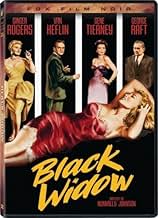
- TriviaThe main poster image (also the Fox Film Noir DVD cover) shows the title character as a blonde with long yellow hair, which is completely misleading, since Peggy Ann Garner has short blond hair.
- GoofsIf one listens carefully for changes in presence, it appears that some of Van Heflin's dialogue was looped in post-production.
- Quotes
[opening narration]
Peter Denver: The Black Widow, deadliest of all spiders, earned its dark title through its deplorable practice of devouring its mate.
- Crazy creditsOpening credits are shown over the background of a spider web made by a black widow.
- ConnectionsFeatured in Ginger Rogers at Twentieth Century Fox (2007)
- SoundtracksTheme from 'Dance of the Seven Veils'
from "Salome"
by Richard Strauss
[Played occasionally throughout the picture]
- How long is Black Widow?Powered by Alexa
Details
- Release date
- Country of origin
- Language
- Also known as
- La viuda negra
- Filming locations
- 1515 Broadway, Manhattan, New York City, New York, USA(Hotel Astor exterior near Times Square)
- Production company
- See more company credits at IMDbPro
Box office
- Budget
- $1,095,000 (estimated)
- Runtime
- 1h 35m(95 min)
- Color
- Aspect ratio
- 2.55 : 1
Contribute to this page
Suggest an edit or add missing content