IMDb RATING
8.0/10
3.2K
YOUR RATING

Schoolteacher Hisako Oishi forms an emotional bond with her pupils and teaches them various virtues, while at the same time worrying about their future.Schoolteacher Hisako Oishi forms an emotional bond with her pupils and teaches them various virtues, while at the same time worrying about their future.Schoolteacher Hisako Oishi forms an emotional bond with her pupils and teaches them various virtues, while at the same time worrying about their future.
- Director
- Writers
- Stars
- Awards
- 10 wins & 1 nomination total




- Director
- Writers
- All cast & crew
- Production, box office & more at IMDbPro
8.03.1K
1
2
3
4
5
6
7
8
9
10
Featured reviews
Movie Made When People Still Had Innocence
24 eyes is based on a novel that was written in 1952 by Sakae Tsuboi. It's a story about the life of a school teacher in three different time period (1928 to 1947) of Japan, namely pre- war period, during war, and post war Japan. Sakae was also born in Shodo-shima island like the main character of this movie Ms. Ooishi (Hideko Takamine). The movie has a strong anti-war theme to it as well as showing how tough life was when Japan was still a third world country.
In 1928 new school teacher named Ooishi (her first name is never mentioned in the movie) comes to the satellite school in Shodo-shima island, where there are 12 children. The place is a real country side and Ms Ooishi has a problem with the local customs, but she try's to be a good teacher. One day the children plays a prank and Ms. Ooishi falls into a hole dug by the students. She severs her Achilles tendon and has to take a long leave of absence. But the children wanting to see her travels a long way to see her, braving hunger and loneliness. Ms. Ooishi recovers, but soon she is assigned to the main school. Due to depression, many of her former students has to quit school and go to work. Ms. Ooishi gets married, but she quits being a teacher saying she hates the brain washing pro military education. War starts and many of her students and even her husband dies in the war. Long war ends and Ms. Ooishi returns to the satellite school. Many of her students are the children of her former students. As she gives roll calls, memory hits her hard, and she starts crying. Children not knowing the reason, call her cry baby teacher. Soon old students suggests a class reunion. Her old students, now grown adult gives Ms. Ooishi a bicycle like the one she used to ride to school. Ms. Ooishi cry's again seeing her old students once again.
The movie won the Golden Globe award's best foreign movie, and also won the first place in Japanese movie magazine, surpassing Kurosawa's The Seven Samurai that came out the same year.
Movie tells the life of children living in the country, but it also shows how war affected their lives. In the 1930s, Japan was trying to become one of the great nations. Their role model were United States, France, England, Dutch, and Germany. They saw that other great nations were using colonization to expand their empire, and decided to create their own empire in the name of Great Asian Co-prosperity Region. Japan won the Russo Japanese war and was big headed about their military might. All this worked for Japan to charge head in into militarism. While the Japanese navy who had their over seas envoy knew the foolishness of fighting the allied force, the army headed by Tojo insisted on taking the country to war which had deadly consequence for Japan and its people. The movie shows how very ordinary people got entangled in the tides of time, and young and impressionable people went willingly to war thinking it was patriotism. Now China who was on the receiving end during this war is only a hair trigger away from making the same mistake.
What is most striking about the movie is the innocence people had at the time. Despite their hard life they weren't crooked, or violent. Each character in this movie had an endearing qualities. Keisuke Kinoshita who was perhaps Japan's first gay director was a master at depicting people in their family settings. Hideko Takamine marries the assistant director of this movie Zenzo Matsuyama a year after this movie was made.
All this makes this one of a kind memorable movie of all time. Once you've seen it, you'll never forget it.
In 1928 new school teacher named Ooishi (her first name is never mentioned in the movie) comes to the satellite school in Shodo-shima island, where there are 12 children. The place is a real country side and Ms Ooishi has a problem with the local customs, but she try's to be a good teacher. One day the children plays a prank and Ms. Ooishi falls into a hole dug by the students. She severs her Achilles tendon and has to take a long leave of absence. But the children wanting to see her travels a long way to see her, braving hunger and loneliness. Ms. Ooishi recovers, but soon she is assigned to the main school. Due to depression, many of her former students has to quit school and go to work. Ms. Ooishi gets married, but she quits being a teacher saying she hates the brain washing pro military education. War starts and many of her students and even her husband dies in the war. Long war ends and Ms. Ooishi returns to the satellite school. Many of her students are the children of her former students. As she gives roll calls, memory hits her hard, and she starts crying. Children not knowing the reason, call her cry baby teacher. Soon old students suggests a class reunion. Her old students, now grown adult gives Ms. Ooishi a bicycle like the one she used to ride to school. Ms. Ooishi cry's again seeing her old students once again.
The movie won the Golden Globe award's best foreign movie, and also won the first place in Japanese movie magazine, surpassing Kurosawa's The Seven Samurai that came out the same year.
Movie tells the life of children living in the country, but it also shows how war affected their lives. In the 1930s, Japan was trying to become one of the great nations. Their role model were United States, France, England, Dutch, and Germany. They saw that other great nations were using colonization to expand their empire, and decided to create their own empire in the name of Great Asian Co-prosperity Region. Japan won the Russo Japanese war and was big headed about their military might. All this worked for Japan to charge head in into militarism. While the Japanese navy who had their over seas envoy knew the foolishness of fighting the allied force, the army headed by Tojo insisted on taking the country to war which had deadly consequence for Japan and its people. The movie shows how very ordinary people got entangled in the tides of time, and young and impressionable people went willingly to war thinking it was patriotism. Now China who was on the receiving end during this war is only a hair trigger away from making the same mistake.
What is most striking about the movie is the innocence people had at the time. Despite their hard life they weren't crooked, or violent. Each character in this movie had an endearing qualities. Keisuke Kinoshita who was perhaps Japan's first gay director was a master at depicting people in their family settings. Hideko Takamine marries the assistant director of this movie Zenzo Matsuyama a year after this movie was made.
All this makes this one of a kind memorable movie of all time. Once you've seen it, you'll never forget it.
An interesting description of Japan rural society
It was a pleasure for me to see this lovely movie, a film I've really wished to see in the last four years but I couldn't do it until today. I heard about this movie when I lived in Japan and visited Shodoshima island, where "Eiga Mura" (Cinema Village), the place this film was made, can still be visited and the atmosphere of the past can be enjoyed. To be honest, I must say that "Nijushi no hitomi" wasn't for me the "exceptional film" I expected to see, but anyway it has been a pleasant experience. The life of the rural teacher, from the start of her career (in the mid 20's) to the time she retakes her teaching position after having become a widow (in the 40's, after the end of WWII), is an interesting guide to discover the traditional life and mentalities in the small islands of Seto (Japan Inland Sea). A good point for this film: it is usually said that this is an "anti-war" film. Well, it is true that the teacher shows a clear position against the wars Japan was involved (the war against China and the later Pacific War against the USA), but this film mustn't be considered as a pacifist pamphlet: the honest position of the teacher against the war is just one more detail in this complete description of how life should be in rural Japan during those difficult prewar, war and postwar years. A film that should be shown in every school around the world.
Absorbing and Affecting
For English speaking people, there are not many movies available on DVD starring Hideko Takamine. This is one, and it is a masterpiece. Ms. Takamine plays a schoolteacher in a small Inland Sea village in Japan. The movie's time line is twenty years, from 1928 to 1948. These turbulent times affect the students she teaches, some of whom went off to war. There are many tears in this film, from the children and Takamine's character. The fact that "Auld Lang Syne" is used at times for background music heightens the feelings of loss & sadness, which does make up some of the story. This is somewhat of an anti-war film, but only as it affects the children and the teacher. Ms. Takamine is luminous in this role, as she is in every movie I've ever seen her in. The fact that the director Kinoshita Keisuke also directed her in "Carmen Comes Home" (the first ever Japanese film in color), a film light years away from this one, shows off their versatility in their craft. The only complaint I have is small, that the subtitles are somewhat annoying, since they are sometimes out of sync. However, a great movie is a great movie. This film won the Golden Globe for Best Foreign Language Film. It is a richly deserved honor.
An incredibly moving film
Mostly unknown and frequently dismissed in the West, this film is often considered by the Japanese to be one of their very best films, if not their best. I concur with the Japanese. I can understand the issues people have with it, namely that it is overly sentimental, but I think it mostly earns the tears that are shed over it. It's a film in the classic teacher genre, like Goodbye Mr. Chips. Hideko Takamine plays Hisako Oishi, a young woman who begins the movie as a first grade teacher on a small island in 1928. Being a small population, she ends up staying with the same students for several years. The film ends in the 1950s, so you kind of know what will probably happen to her male students, and what she and her female students will have to experience. It may be somewhat predictable, but it's incredibly heartbreaking. The film is beautifully made, and filled with Japanese folk songs (strangely, the score of the film is made up of a bunch of Western music, including "Bonnie Annie Laurie" and "There's No Place Like Home"; it's definitely a flaw). Takamine, who starred in several Mikio Naruse films around the same time, is exceptional.
Masterpiece of storytelling...
People who view this film would do well to consider the sentiment of post-war Japan in the mid-50s, when the future was still uncertain and the vast devastation and shame caused by the war were prevalent in the mindset of its citizens.
The timing for this film's release was significant, because perhaps for the first time, it permitted the people of Japan to cry unabashedly for themselves, far removed from any political statement so frequent in Shochiku films such as with many of Kurosawa's classics. Movies at the time tended to have positive, uplifting themes that motivated the populous to help rebuild the country into a modern democratic nation. You can thank Douglas MacArthur for that.
The post-war generation was now almost 10 years old, and in the Japanese psyche was the need for justification for its darkest period in history.
This film served as a reminder of the horrors of war, not from the battlefields, but from the emotional scars left on its children who lived and died during it.
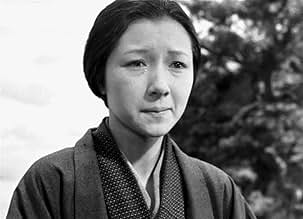
Hideko Takamine brilliantly played the role of a school teacher on a typical remote island community in south Japan during an increasingly militarist government. As was customary at the time, the same teacher saw to their students' education from primary to high school, forming a lifetime bond.
Director Keisuke Kinoshita's camera work is nothing less than genius, beautifully portraying the transitions of seasons from year to year. The water, sand, and dust textures are so distinct that you almost forget that it was filmed in black and white.
The character closeups are never exaggerated and the 12 children actors (hence "24 Eyes") do an outstanding job portraying how they end up sacrificing their childhood dreams due to poverty and for national duty.
Of symbolic note is the appearance of the Island bus, which is seen at first with Japanese kanji characters painted on the side. Later in the film, it's written in English as "Shima Bus", signifying how modernization has reached the island after the war.
From cast, location and cinematography, Nijushi no Hitomi is a masterpiece of emotional storytelling.
The timing for this film's release was significant, because perhaps for the first time, it permitted the people of Japan to cry unabashedly for themselves, far removed from any political statement so frequent in Shochiku films such as with many of Kurosawa's classics. Movies at the time tended to have positive, uplifting themes that motivated the populous to help rebuild the country into a modern democratic nation. You can thank Douglas MacArthur for that.
The post-war generation was now almost 10 years old, and in the Japanese psyche was the need for justification for its darkest period in history.
This film served as a reminder of the horrors of war, not from the battlefields, but from the emotional scars left on its children who lived and died during it.
Hideko Takamine brilliantly played the role of a school teacher on a typical remote island community in south Japan during an increasingly militarist government. As was customary at the time, the same teacher saw to their students' education from primary to high school, forming a lifetime bond.
Director Keisuke Kinoshita's camera work is nothing less than genius, beautifully portraying the transitions of seasons from year to year. The water, sand, and dust textures are so distinct that you almost forget that it was filmed in black and white.
The character closeups are never exaggerated and the 12 children actors (hence "24 Eyes") do an outstanding job portraying how they end up sacrificing their childhood dreams due to poverty and for national duty.
Of symbolic note is the appearance of the Island bus, which is seen at first with Japanese kanji characters painted on the side. Later in the film, it's written in English as "Shima Bus", signifying how modernization has reached the island after the war.
From cast, location and cinematography, Nijushi no Hitomi is a masterpiece of emotional storytelling.


Did you know
- TriviaAccording to Japanese film critic and historian Tadao Satô, in casting this film about a schoolteacher and her relationships with her pupils over many years, director Keisuke Kinoshita very cleverly chose pairs of look-alike siblings to portray the students. So for those scenes set in later years, Kinoshita simply substituted the older siblings for the younger ones, so that the schoolchildren appeared to "grow" before the audience's eyes.
- ConnectionsReferenced in Violence at Noon (1966)
- SoundtracksAnnie Laurie
- How long is Twenty-Four Eyes?Powered by Alexa
Details
- Release date
- Country of origin
- Language
- Also known as
- Vierundzwanzig Augen
- Filming locations
- Production company
- See more company credits at IMDbPro
- Runtime
- 2h 36m(156 min)
- Color
- Sound mix
- Aspect ratio
- 1.37 : 1
Contribute to this page
Suggest an edit or add missing content