IMDb RATING
5.6/10
1.1K
YOUR RATING


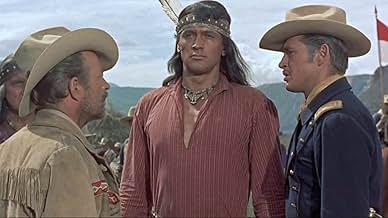
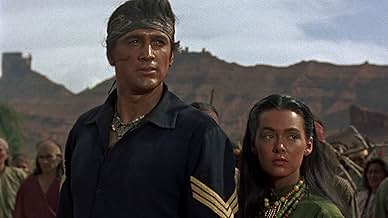
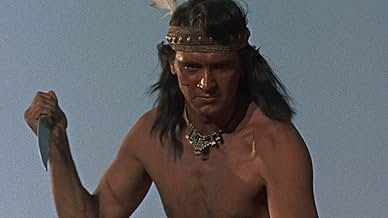
When peacemaking Apache chief Cochise dies, the Chiricahua Apaches are torn between following Cochise's peace loving son Taza and following the warlike renegade Apache warrior Geronimo.When peacemaking Apache chief Cochise dies, the Chiricahua Apaches are torn between following Cochise's peace loving son Taza and following the warlike renegade Apache warrior Geronimo.When peacemaking Apache chief Cochise dies, the Chiricahua Apaches are torn between following Cochise's peace loving son Taza and following the warlike renegade Apache warrior Geronimo.
- Director
- Writers
- Stars





Rex Reason
- Naiche
- (as Bart Roberts)


Eugene Iglesias
- Chato
- (as Gene Iglesias)

Richard H. Cutting
- Cy Hegan
- (as Richard Cutting)


Bradford Jackson
- Lt. Richards
- (as Brad Jackson)


Seth Bigman
- Indian Man
- (uncredited)
- Director
- Writers
- All cast & crew
- Production, box office & more at IMDbPro
5.61.1K
1
2
3
4
5
6
7
8
9
10
Featured reviews
Western fans and Sirk fans can skip this one
One might have expected a lot more from Douglas Sirk in this, his single Western. Beautifully shot by Russell Metty who worked extensively with Sirk, it's a very routine Western of no great interest.
Before Sirk hit his stride with the great melodramas he tried his hand at light romantic comedy and costume drama with pleasing if not spectacular results. He brought little if anything at all to the Western.
Perhaps more than anything it's an important rung in the ladder of elevating Rock Hudson towards stardom which would come with Sirk's next film "Magnificent Obsession".
Hudson is adequate in the role, but that's hardly difficult amongst some truly wooden performances. All in all something of a low point in the amazing 50's career of Douglas Sirk.
Before Sirk hit his stride with the great melodramas he tried his hand at light romantic comedy and costume drama with pleasing if not spectacular results. He brought little if anything at all to the Western.
Perhaps more than anything it's an important rung in the ladder of elevating Rock Hudson towards stardom which would come with Sirk's next film "Magnificent Obsession".
Hudson is adequate in the role, but that's hardly difficult amongst some truly wooden performances. All in all something of a low point in the amazing 50's career of Douglas Sirk.
The reactionary side of Douglas Sirk
Don't get me wrong.I've always been a big fan of Deltlef Sierck (Douglas Sirk in America)and most of his melodramas are among my all time favorites : "A time to live and a time to die ","All that Heaven allows" "Magnificent obsession" " Tarnished angels" "Written on the wind" plus those with Zarah Leander in Germany not to forget his final effort ,the remake of "imitation of life".
THis remake was drastically different from Stahl's version:the black servant Delilah became Annie and the only thing she could expect in life was a beautiful funeral.In Stahl's version (and in Fannie Hurst's novel) she was a businesswoman's associate ,in Sirk's screenplay she stayed the good servant -not very far away from GWTW's Mamma-who knew her place.
Still with me?I do think that,in spite of Sirk's storyteller qualities and good scenes (the discovery of the bruises on Barbara Rush's back),"Taza" is also a reactionary work .Taza (who in real life died of pneumonia two years after his dad)predates Annie in "Imitation" :he is the good Indian,who knows his place ,who (this is amazing) dresses like them ,who rebels against his people's customs and even fights them;on the other hand ,Geronimo (and his allies) plays the role of the villain : "we were hunters, warriors,we won't be breeders ".After all ,the white men are taking their land and sending them to reservations:his rebellion makes sense.
Rock Hudson,who was Sirk's favorite actor (his best parts were certainly "All that Heaven allows" and "Magnificent Obsession" -another remake of a Stahl's work-) ,is not well cast as an Indian.And what about Barbara Rush as a squaw?Debra Paget was acceptable ("Broken Arrow"),she is not.
THis remake was drastically different from Stahl's version:the black servant Delilah became Annie and the only thing she could expect in life was a beautiful funeral.In Stahl's version (and in Fannie Hurst's novel) she was a businesswoman's associate ,in Sirk's screenplay she stayed the good servant -not very far away from GWTW's Mamma-who knew her place.
Still with me?I do think that,in spite of Sirk's storyteller qualities and good scenes (the discovery of the bruises on Barbara Rush's back),"Taza" is also a reactionary work .Taza (who in real life died of pneumonia two years after his dad)predates Annie in "Imitation" :he is the good Indian,who knows his place ,who (this is amazing) dresses like them ,who rebels against his people's customs and even fights them;on the other hand ,Geronimo (and his allies) plays the role of the villain : "we were hunters, warriors,we won't be breeders ".After all ,the white men are taking their land and sending them to reservations:his rebellion makes sense.
Rock Hudson,who was Sirk's favorite actor (his best parts were certainly "All that Heaven allows" and "Magnificent Obsession" -another remake of a Stahl's work-) ,is not well cast as an Indian.And what about Barbara Rush as a squaw?Debra Paget was acceptable ("Broken Arrow"),she is not.
Terrific in 3d
Not all 3d movies are filmed having in mind that 3d technique requires specific camera movements and well adjusted settings to shine. But Douglas Sirk, a consumated director did not make that mistake. Just watch the opening sequence with an indian on a horse standing in front of the deep immensity of the canyon at Arches National Monument Park in 3d and glorious technicolor. Breathtaking.
The story -almost totally fictionized- turns pale before it but still is a nice entertainment. Jeff Chandler, who played Cochise in Broken Arrow and The battle at apache pass reprise the role uncredited at the beginning of the film, passing the leadership to his older son Taza. The story runs along to explain how indians are put aside in a reservation with many discontent trying to sublevate and others -guided by Taza- trying to preserve a peace difficult to mantain due to white man's rigid mentality. Imperative to watch it in 3d to enjoy the visual values of this film.
Ambitious But Flawed
When Cochise (played briefly by an uncredited Jeff Chandler) dies, his son Taza (played by Rock Hudson) takes over as chief of the Chiricahua Apaches and tries to maintain the peace. Followers of Geronimo wish to start fighting again.
It's a thoughtful script, and director Douglas Sirk claimed it was his favorite of his movies; he had always wanted to make a western. There are some issues with the movie, some caused by technical issues, and most by Rock Hudson's rather wooden acting. He's got two settings, thoughtful and angry, and that performance makes him, as the central character, seem rather stupid, especially given the more nuanced performances afforded the men playing cavalrymen.
The technical issues can be understood by knowing this was originally shot for 3-D, but released in a flat version. The compositions meant to showcase the depth of shot stick out like a sore thumb, lending a peculiarly film noir look to them. While Russel Metty's camerawork is exemplary in the big-screen shots of Utah, many of the more intimate scenes show up in a peculiarly dark and grey light.
The script by George Zuckerman keeps things moving along, but the problems of performance and camerawork lay heavily on this movie. Sirk and producer Ross Hunter abandoned the western for a series of glossy soap operas.
It's a thoughtful script, and director Douglas Sirk claimed it was his favorite of his movies; he had always wanted to make a western. There are some issues with the movie, some caused by technical issues, and most by Rock Hudson's rather wooden acting. He's got two settings, thoughtful and angry, and that performance makes him, as the central character, seem rather stupid, especially given the more nuanced performances afforded the men playing cavalrymen.
The technical issues can be understood by knowing this was originally shot for 3-D, but released in a flat version. The compositions meant to showcase the depth of shot stick out like a sore thumb, lending a peculiarly film noir look to them. While Russel Metty's camerawork is exemplary in the big-screen shots of Utah, many of the more intimate scenes show up in a peculiarly dark and grey light.
The script by George Zuckerman keeps things moving along, but the problems of performance and camerawork lay heavily on this movie. Sirk and producer Ross Hunter abandoned the western for a series of glossy soap operas.
Story that is VERY loosely based on Apache Life During Geronimo's time.
This movie is well-famed and Rock Hudson looked great ( as he always did even to non-gay men). The long hair and darkened skin make him an awesome looking Indian. His Features are White but this was more often the case in Hollywood movies about Indians than roles of Indians played by real Indians. It is Ironic that Taza's son became an actor and acted in early westerns.. I learned this fact by IMDb. I shall use it in my future writing.
No-- It took 45 yrs to force Geronimo to Surrender and his legend is founded largely on the fact that he was never caught but due to many of his own warriors becoming scouts, he was forced to surrender. It is sad but in a very harsh way--just punishment that these scouts were stripped of their roles as Scouts and sent to the same prison where Geronimo was. They served much longer sentences than what they were given. This is yet another unfairness done to the APACHE and to Geronimo. Who died in his mid-eighties from alcoholism and from falling from his horse on the way home from a saloon. HE wound up in a irrigation ditch all night and caught pneumonia as a result and died shortly after. Not a fitting end for a man that could raise the back of the hair on many a settler and many a cavalry soldier who had to think about his chances of surviving a battle with him.
He almost beat the US army--but alcoholism is a disease that killed far more Indians than cavalry soldiers ever did. The Native American had NO time in their history to develop a resistance to the effects of alcohol---both the immediate effects and the long-term effects shortened the lives of most Native Americans who drank it.
In the much later movie GERONIMO starring Gene Hackman and Robert Duvall, the camera takes us on the long train ride to Florida in the end of the movie. Some Apaches who did not become traitors to Geronimo were being chastised by loyal warriors and Geronimo reminds them that they are so few that it would be good for them to learn to get a long- -he reminds them that all they have is each other.
Geronimo was a name that leaps off of the pages even now--- but in his lifetime-- anything written about him was read immediately because it was usually news about his ongoing exploits. It is very sad that they allow the mistake of saying that he was captured to be stated as truth among his own people. Because the fact that he was not captured or killed even though the forces used to find and arrest or kill him were massive, is a testimonial to the skill of the Apache and to Geronimo himself. I believe the final number that surrendered was under 100. However, I would not want to be a settler and live anywhere Near where that 100 Apache were running free. They were intelligent, skilled warriors and Geronimo has been called a tactical genius. Since he was NEVER captured-- that must be true.
I must clarify: I do not believe that Geronimo Was EVER actually Captured-- He did surrender twice and after the second surrender, he was sent to prison in Florida. He was treated with respect by white soldiers with high level rank and other Apache though that respect from White Generals did deteriorate, he was NEVER just dismissed by his peers. This movie shows that happening again and again. This is tragic for the Apache was never really conquered and to say that he was, cheats him of the truth. Entire Armies were sent against them but they were NOT actually beaten in the common sense of the word. IF I was an Apache-- I would want that fact to remain clear and would be angered by a sloppy screenplay from Hollywood that disputes the truth of the Apache's wartime accomplishments. They have never been equalled.
Warren E.Justice
No-- It took 45 yrs to force Geronimo to Surrender and his legend is founded largely on the fact that he was never caught but due to many of his own warriors becoming scouts, he was forced to surrender. It is sad but in a very harsh way--just punishment that these scouts were stripped of their roles as Scouts and sent to the same prison where Geronimo was. They served much longer sentences than what they were given. This is yet another unfairness done to the APACHE and to Geronimo. Who died in his mid-eighties from alcoholism and from falling from his horse on the way home from a saloon. HE wound up in a irrigation ditch all night and caught pneumonia as a result and died shortly after. Not a fitting end for a man that could raise the back of the hair on many a settler and many a cavalry soldier who had to think about his chances of surviving a battle with him.
He almost beat the US army--but alcoholism is a disease that killed far more Indians than cavalry soldiers ever did. The Native American had NO time in their history to develop a resistance to the effects of alcohol---both the immediate effects and the long-term effects shortened the lives of most Native Americans who drank it.
In the much later movie GERONIMO starring Gene Hackman and Robert Duvall, the camera takes us on the long train ride to Florida in the end of the movie. Some Apaches who did not become traitors to Geronimo were being chastised by loyal warriors and Geronimo reminds them that they are so few that it would be good for them to learn to get a long- -he reminds them that all they have is each other.
Geronimo was a name that leaps off of the pages even now--- but in his lifetime-- anything written about him was read immediately because it was usually news about his ongoing exploits. It is very sad that they allow the mistake of saying that he was captured to be stated as truth among his own people. Because the fact that he was not captured or killed even though the forces used to find and arrest or kill him were massive, is a testimonial to the skill of the Apache and to Geronimo himself. I believe the final number that surrendered was under 100. However, I would not want to be a settler and live anywhere Near where that 100 Apache were running free. They were intelligent, skilled warriors and Geronimo has been called a tactical genius. Since he was NEVER captured-- that must be true.
I must clarify: I do not believe that Geronimo Was EVER actually Captured-- He did surrender twice and after the second surrender, he was sent to prison in Florida. He was treated with respect by white soldiers with high level rank and other Apache though that respect from White Generals did deteriorate, he was NEVER just dismissed by his peers. This movie shows that happening again and again. This is tragic for the Apache was never really conquered and to say that he was, cheats him of the truth. Entire Armies were sent against them but they were NOT actually beaten in the common sense of the word. IF I was an Apache-- I would want that fact to remain clear and would be angered by a sloppy screenplay from Hollywood that disputes the truth of the Apache's wartime accomplishments. They have never been equalled.
Warren E.Justice


Did you know
- TriviaDouglas Sirk often cited this film as the favorite of his own films since he always wanted to make a Western.
- GoofsThe official U.S. flag of 1872, the year the story takes place, did have 37 stars in five rows, however it consisted of a top and bottom row of eight stars with three rows of seven stars in between (8-7-7-7-8), not alternating rows of seven and eight (7-8-7-8-7) as the one in the film has.
- ConnectionsFeatured in Rock Hudson's Home Movies (1992)
- How long is Taza, Son of Cochise?Powered by Alexa
Details
- Release date
- Country of origin
- Languages
- Also known as
- Son of Cochise
- Filming locations
- Devils Garden, Arches National Park, Utah, USA(cavalry ambush scene)
- Production company
- See more company credits at IMDbPro
- Runtime
- 1h 19m(79 min)
- Color
- Aspect ratio
- 2.00 : 1
Contribute to this page
Suggest an edit or add missing content