IMDb RATING
7.1/10
4.4K
YOUR RATING


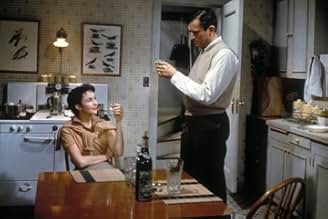
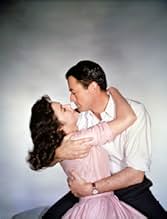
An ex-soldier faces ethical questions as he tries to earn enough to support his wife and children well.An ex-soldier faces ethical questions as he tries to earn enough to support his wife and children well.An ex-soldier faces ethical questions as he tries to earn enough to support his wife and children well.
- Director
- Writers
- Stars
- Awards
- 1 win & 3 nominations total



Tristram Coffin
- Byron Holgate
- (scenes deleted)

William 'Bill' Phillips
- Antonio Bulaga
- (scenes deleted)
- Director
- Writers
- All cast & crew
- Production, box office & more at IMDbPro
7.14.3K
1
2
3
4
5
6
7
8
9
10
Featured reviews
a great movie in need of better editing
I had trouble finding this film in the local video store but finally saw it on television. It's well worth watching. It's a wonderful commentary on the American suburban corporate culture emerging in the years following the second World War. Peck plays the stereotypical businessman living in Connecticut and taking the New Haven Railroad into New York City each day. He is faced with a number of seemingly mundane dilemmas, such as settling a deceased relative's estate, how to deal with a dissatisfied wife more ambitious than he, whether to switch jobs for better pay, and whether he should tell his new boss what he *needs* rather than *wants* to hear. Hanging over him are the ever-present memories of his wartime combat experience, which intrude on him occasionally especially during those otherwise empty hours spent commuting on the train.
I disagree with the reviewer who found the film boring apart from the war scenes. One of the reasons why this film works so well is that it regularly jolts the viewer, nearly lulled into complacency by the apparent ordinariness of suburban life, with those sudden flashbacks of the horrors of war. The juxtaposition of these quite different scenes was quite deliberate and speaks volumes in itself. How is it possible for someone who has spent four years both killing and avoiding death to settle into a normal life of family and work? Obviously it's not easy.
Furthermore, death continues to haunt the family in various, almost light-hearted ways, particularly by way of the children who were born after the carnage had ended and for whom death is no more real than the gunfights in those television westerns to which they are so conspicuously addicted. A scene near the beginning has one of the girls suffering from chicken pox, a fairly minor malady, as everyone knows. But she tells her father she has "small pox" and her sister keeps teasing her with the morbid suggestion that she is going to die. The father tells her to stop, but she keeps it up. He knows what death is all about; his children do not.
The term "workaholic" had not yet been coined in 1956, but the contrast between the man who chooses a fuller, less driven life including time for family and the man married to his career could not have been more starkly portrayed. The viewers find themselves applauding the choice Peck eventually makes and pitying March for not having done so himself.
I am a great fan of the score's composer, Bernard Herrmann, whose music is uniquely capable of evoking a range of strong emotions in the listener. The music here is typically Herrmann, although it is not as central a "character" in this film as are his scores in, say, "Vertigo" and "Psycho." It is impossible to imagine the latter two films without the music, while this film seems less obviously dependent on its score.
Although I quite liked this film, it is overly long and could have been better edited. The several subplots needed to be better integrated into the whole. What, for example, was the purpose of the challenge to Peck's inheritance, other than to show the persistent salvific role Cobb played in his life? This subplot could easily have been cut and the film would have suffered nothing in terms of its overall impact. In fact, it might have been better for being more tightly constructed.
I disagree with the reviewer who found the film boring apart from the war scenes. One of the reasons why this film works so well is that it regularly jolts the viewer, nearly lulled into complacency by the apparent ordinariness of suburban life, with those sudden flashbacks of the horrors of war. The juxtaposition of these quite different scenes was quite deliberate and speaks volumes in itself. How is it possible for someone who has spent four years both killing and avoiding death to settle into a normal life of family and work? Obviously it's not easy.
Furthermore, death continues to haunt the family in various, almost light-hearted ways, particularly by way of the children who were born after the carnage had ended and for whom death is no more real than the gunfights in those television westerns to which they are so conspicuously addicted. A scene near the beginning has one of the girls suffering from chicken pox, a fairly minor malady, as everyone knows. But she tells her father she has "small pox" and her sister keeps teasing her with the morbid suggestion that she is going to die. The father tells her to stop, but she keeps it up. He knows what death is all about; his children do not.
The term "workaholic" had not yet been coined in 1956, but the contrast between the man who chooses a fuller, less driven life including time for family and the man married to his career could not have been more starkly portrayed. The viewers find themselves applauding the choice Peck eventually makes and pitying March for not having done so himself.
I am a great fan of the score's composer, Bernard Herrmann, whose music is uniquely capable of evoking a range of strong emotions in the listener. The music here is typically Herrmann, although it is not as central a "character" in this film as are his scores in, say, "Vertigo" and "Psycho." It is impossible to imagine the latter two films without the music, while this film seems less obviously dependent on its score.
Although I quite liked this film, it is overly long and could have been better edited. The several subplots needed to be better integrated into the whole. What, for example, was the purpose of the challenge to Peck's inheritance, other than to show the persistent salvific role Cobb played in his life? This subplot could easily have been cut and the film would have suffered nothing in terms of its overall impact. In fact, it might have been better for being more tightly constructed.
A Great Movie That Shows How Empty Our Lives Are
It's amazing this film came out of the 50's. It's even more true today, than it was then, now things are so rigidly stratified in our society that people can't even relate to considering being a Workaholic anything other than 'worthwhile' and 'normal'. Rat Race lifestyle, is all America is about now. Misery, stress, alienation, isolation; great material wealth but a dysfunctional society that has made little robots and zombies out of each of us. Remember how vibrant you felt as a child, how full of wonder? Remember being excited about the chance to play with other kids? Now we dread every minute of our lifestyle, yet still smile and say "things are going okay" when asked. What liars we have become. A culture of liars and cruel, vicious people, with plastic smiles frozen on our faces and our deep heartache and longing hidden away. This film shows that America has been on the wrong path for a long time and it's only gotten worse. Great film!! Peck is adequate, but considering the times he lived in, a pretty good performance. It's the writing and the messages of this film that stand out!!
You like Spam?
I was really surprised on this film as it was not at all what I expected. The title suggested to me something about life in corporate America, but that was just a background to what was really going on.
The movie was really about men.
I certainly would not excuse the taking of the opportunity to have an illicit affair during wartime, but I can understand the longing for warmth and affection when you are so far away from home and feel that you life is about to end.
I was really taken with the character's (Gregory Peck) cautious approach to life. I can empathize with him as he puts security and safety for his family about the wife's (Jennifer Jones) wanting someone to make a difference. He was never really comfortable stepping out into a world where he did not know the rules.
I can certainly empathize with him in the decision to be a 9-5 man instead of someone who builds. You don't always know the effect that can have on a family when forced to make that decision.
Peck played an honorable man, who tried to do the right thing for his boss and his family. It was a fascinating movie, and I believe that every man cans see some of himself in Peck's character.
A lot of big stars from the era: Fredric March, Lee J. Cobb, and Keenan Wynn made the movie well worth watching.
The movie was really about men.
I certainly would not excuse the taking of the opportunity to have an illicit affair during wartime, but I can understand the longing for warmth and affection when you are so far away from home and feel that you life is about to end.
I was really taken with the character's (Gregory Peck) cautious approach to life. I can empathize with him as he puts security and safety for his family about the wife's (Jennifer Jones) wanting someone to make a difference. He was never really comfortable stepping out into a world where he did not know the rules.
I can certainly empathize with him in the decision to be a 9-5 man instead of someone who builds. You don't always know the effect that can have on a family when forced to make that decision.
Peck played an honorable man, who tried to do the right thing for his boss and his family. It was a fascinating movie, and I believe that every man cans see some of himself in Peck's character.
A lot of big stars from the era: Fredric March, Lee J. Cobb, and Keenan Wynn made the movie well worth watching.
Workplace values under scrutiny
This movie from the 1950's goes beyond the conflict in balancing home and work commitments because it also deals with the loss of idealism by young people who become caught up with the need to provide and the competition to succeed. Life seems to have gotten worse in the 60 years since this movie was made. In fact, some people, both men and women, have given up on the idea of family life in favour of success in the business world. One can only guess at the level of social dysfunction from our addictive and artificial work environments. In this movie, directed by Nunnally Johnson, a cast of exceptional acting talent provides great entertainment as well as an insight into the shallow lives that many people began to lead in the 1950's. Jennifer Jones signals her dissatisfaction with her husband's work ethic. This at first struck me as a yearning for a lost youth, wanting her husband Gregory Peck to provide for his family while keeping his knight in shining armour image. But Jones is no status seeker; she senses the boring conventional work world that her husband inhabits is not healthy for him or the family. Fredric March, that icon of American integrity, is the company Chairman. On the surface, he pays lip service to family values but struggles with his own estrangement from his wife and a daughter's elopement. Peck learns from March as a mentor but also in his failings as a man. Lee J. Cobb has a supporting role as judge and family friend. Towards the end of the movie, after some setbacks, Peck and Jones take a courageous step together that shows their own integrity and their maturity as a couple. The movie is a another landmark for the World War II generation who came back to civilian life and encountered a new world. It is one worth watching!
a movie for all generations
This film reaches far beyond its time. In every way, shape and form; from the troubles to the triumphs of the protaganist, to the intensity and sincerity of its ethos, this cinematic work is an under exposed classic. It is my hope that this film be rediscovered and in doing so help those lost in a sea of moral relativity to detect delineation. The story cleary exposes the moral and emotional importance of honesty and its consequences. Additionally, the issue of war-time trauma is touched upon and its long-term impact on personal and professional relationships.
The performances by all are outstanding and will resonate with the viewer dramatically. As a gen x'r, I found this film to be a breath of fresh air. I am not alone. I pray that this story will be recirculated - for its impact is profound.
The performances by all are outstanding and will resonate with the viewer dramatically. As a gen x'r, I found this film to be a breath of fresh air. I am not alone. I pray that this story will be recirculated - for its impact is profound.


Did you know
- TriviaOne of Gregory Peck's movie children was played by Portland Mason, who was the daughter of actor James Mason, and an Italian delivery boy was played by Johnny Crawford a few years before he would achieve fame on the popular TV Western, The Rifleman (1958).
- GoofsIt is believed by some that Tom shifting his car into reverse then driving away forward at the end of the film is a goof. However, the car is a manual transmission Ford with a column-shifted 3 speed manual transmission with an unsynchronized first gear. A quirk of that style transmission is that at a standing stop, getting the transmission into 1st gear when the engine is running is easiest if the operator first abruptly lifts the shift lever from neutral to place the transmission into second gear, then back down into first. This prevents clash (grinding) of the unsynchronized first gear. Drivers of the era, including Tom Rath, would have been well familiar with this technique.
- Quotes
Tom Rath: I don't know anything about public relations.
Bill Hawthorne: Who does? You've got a clean shirt and you bathe every day. That's all there is to it.
- Crazy creditsOnce it fades in, the 20th Century Fox logo (set to the film's dramatic opening credits music, rather than the traditional Fox fanfare) appears in a slightly smaller CinemaScope windowbox, slowly panning to normal size (correctly fitting the CinemaScope screen) before fadeout.
- ConnectionsFeatured in The Fifties (1997)
- Soundtracks(I'm a) Ramblin' Wreck from Georgia Tech
(1908) (uncredited)
Lyrics by Billy Walthall
Music by Frank Roman and Mike Greenblatt
based on "Son of a Gambolier"
Music by Charles Ives (1895)
Played on the ukulele by Gregory Peck
- How long is The Man in the Gray Flannel Suit?Powered by Alexa
Details
- Release date
- Country of origin
- Official site
- Languages
- Also known as
- Čovek u sivom odelu
- Filming locations
- Production company
- See more company credits at IMDbPro
Box office
- Budget
- $2,670,000 (estimated)
- Runtime
- 2h 33m(153 min)
- Color
- Aspect ratio
- 2.55 : 1
Contribute to this page
Suggest an edit or add missing content