IMDb RATING
5.8/10
1.5K
YOUR RATING

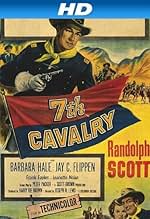
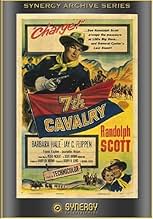
An officer accused of cowardice volunteers to bring back General Custers's body after Little Big Horn.An officer accused of cowardice volunteers to bring back General Custers's body after Little Big Horn.An officer accused of cowardice volunteers to bring back General Custers's body after Little Big Horn.
- Director
- Writers
- Stars


Bill Clark
- Soldier With Kellogg
- (uncredited)

Charles Horvath
- Knife-Wielding Indian
- (uncredited)

William Leslie
- Lt. Murray
- (uncredited)

Harold Miller
- Officer at Inquiry
- (uncredited)
- Director
- Writers
- All cast & crew
- Production, box office & more at IMDbPro
5.81.5K
1
2
3
4
5
6
7
8
9
10
Featured reviews
It plays a bit fast and loose with history, but it is entertaining.
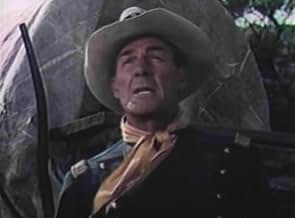
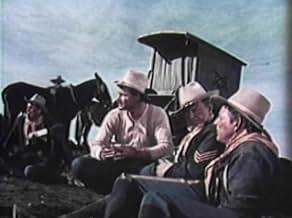
"7th Cavalry" picks up just after General Custer and his command is wiped out at the Battle of Little Big Horn. Captain Benson (Randolph Scott) was away on personal leave, so he somehow missed out on the massacre. However, folks are looking for a scapegoat and folks second-guess Benson and brand him a coward. Not wanting to live with disgrace, he volunteers to do an insanely difficult duty--to go into Indian territory and bury the Cavalry's dead. Oddly, instead of taking competent soldiers, he takes the scum of the regiment--guys who DID survive due to their own cowardice. Can these guys somehow redeem themselves?
The film is not based 100% on real history--which is VERY typical of most westerns. Benson and his mission is entirely fictional. However, one thing that isn't is that some officers, rightfully, questioned the competence of General Custer. He was, according to most historians, an incompetent who made many serious blunders due to his own hubris. So, when the soldiers openly question his decisions that led to the battle, that is pretty much fact--despite Benson defending his commander's decisions.
So is it any good? Well, I gave the film an 8. This is mostly because they acting is very nice and compared to other films of the genre from this age, it stands well above most due to very nice acting and an interesting what if scenario.
The film is not based 100% on real history--which is VERY typical of most westerns. Benson and his mission is entirely fictional. However, one thing that isn't is that some officers, rightfully, questioned the competence of General Custer. He was, according to most historians, an incompetent who made many serious blunders due to his own hubris. So, when the soldiers openly question his decisions that led to the battle, that is pretty much fact--despite Benson defending his commander's decisions.
So is it any good? Well, I gave the film an 8. This is mostly because they acting is very nice and compared to other films of the genre from this age, it stands well above most due to very nice acting and an interesting what if scenario.
Yellow Hair and the real meaning of Horsepower.
Set after the Battle Of Little Big Horn, 7th Cavalry sees Randolph Scott playing Captain Benson, who returns with his future bride to his post commanded by Indian fighter, Colonel Custer. Custer however was gone, he had taken the famous 7th Cavalry to war with the Sioux at Big Horn and lost badly. Guilt ridden and tarnished by whispers of cowardice, Benson volunteers to lead a dangerous mission back to Big Horn to reclaim the bodies of the fallen soldiers.
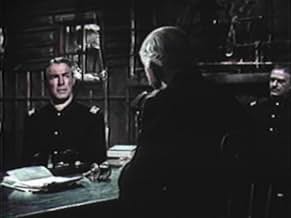
There doesn't appear to be much much love for this 1956 Columbia Pictures Oater. Seems it's either damned for being too talky, or on the flip side, it's too hokey within its plotting to actually merit worth. Well that's a shame for this has something of a vintage feel to it, the themes of guilt and redemption are Western standards, whilst the story also takes in interesting arcs such as religious beliefs and spiritual meanings. Yes this is definitely a "talky" picture - aside from some mano mano action and single horse pursuits that is - but it's a well thought out screenplay by Peter Packer (adapting from Glendon Swarthout's story). Instances such as a military enquiry and an exchange between Benson and a young Indian warrior are intelligent passages in the story (with Scott doing fine work in the process). What it lacks in gusto action it more than makes up for with the characterisations.
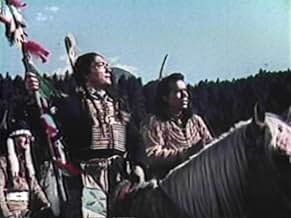
Other plus points are that it's also nicely shot in Mexico, the Technicolor doing justice to the splendid costumes on show. Backing Scott up in support are admirable performers such as Jay C. Flippen, Frank Faylen, Leo Gordon, Michael Pate and Harry Carey Junior. Although the ladies (Jeanette Nolan & Barbara Hale) aren't given too much to do and the score conducted by Mischa Bakaleinikoff is at odds with the tempo of the film, 7th Cavalry still deserves a better reputation than it currently has. If you prepare for a work of fiction that is most assuredly dialogue driven, then hopefully your expectations will at the least be met. 7/10
There doesn't appear to be much much love for this 1956 Columbia Pictures Oater. Seems it's either damned for being too talky, or on the flip side, it's too hokey within its plotting to actually merit worth. Well that's a shame for this has something of a vintage feel to it, the themes of guilt and redemption are Western standards, whilst the story also takes in interesting arcs such as religious beliefs and spiritual meanings. Yes this is definitely a "talky" picture - aside from some mano mano action and single horse pursuits that is - but it's a well thought out screenplay by Peter Packer (adapting from Glendon Swarthout's story). Instances such as a military enquiry and an exchange between Benson and a young Indian warrior are intelligent passages in the story (with Scott doing fine work in the process). What it lacks in gusto action it more than makes up for with the characterisations.
Other plus points are that it's also nicely shot in Mexico, the Technicolor doing justice to the splendid costumes on show. Backing Scott up in support are admirable performers such as Jay C. Flippen, Frank Faylen, Leo Gordon, Michael Pate and Harry Carey Junior. Although the ladies (Jeanette Nolan & Barbara Hale) aren't given too much to do and the score conducted by Mischa Bakaleinikoff is at odds with the tempo of the film, 7th Cavalry still deserves a better reputation than it currently has. If you prepare for a work of fiction that is most assuredly dialogue driven, then hopefully your expectations will at the least be met. 7/10
" Words, Words, Words! "
Captain Thomas Benson returns to Fort Lincoln, the Seventh Cavalry's outpost in the Dakota wilderness, with Martha Kellogg, his bride-to-be. As the couple approach the fort, it is apparent that something is wrong. Benson enters to find the Seventh Cavalry's base strangely silent and motionless. Unknown to Benson, while he has been away General Custer has led the regiment to disaster at the Little Big Horn ...
The stillness and emptiness of the fort could serve as a metaphor for the film's lack of pace and content. The first half consists of endless breast-beating over the recent disaster, and the cavalrymen's torpid dialogue is unrelieved by motion or variety of any kind. It is fully 45 minutes before anything remotely resembling an action sequence occurs.
Benson is regarded with contempt by the remnants of the Seventh, both because he was Custer's favourite and because he managed to avoid the Little Big Horn. Matters are complicated by his choice of fiancee. Martha (Barbara Hale) is the daughter of Colonel Kellogg, the new commander of the regiment, and the man charged with investigating the recent military debacle.
A mundane and leaden horse opera, "Seventh Cavalry" lacks either a coherent structure, interesting action or even a convincing raison d'etre. Benson decides to rehabilitate himself by leading a burial detail out into the battlefield to recover the regiment's dead. He deliberately chooses the drunks and the shirkers, but it is never explained why these men, reluctant soldiers at the best of times, agree to be 'volunteered' for this dangerous work. Once in open terrain, Benson deserts his command to go chasing after a lone indian scout, in flagrant dereliction of his duty. During the pursuit, the two men ride past the same tree stump twice! They fight hand-to-hand, and Benson uses a stick to trap the indian's knife-wielding right hand. Why doesn't the indian simply transfer the knife to his free left hand?
The widow Mrs. Reynolds wails like a soothsayer in the deserted barracks, but neither her text nor her acting carry any conviction. The returning survivors of the Little Big Horn ride into Fort Lincoln, hamming up the weariness and weakness for all they are worth - but where did they acquire the neat, clean bandages? When Benson fights with the loud-mouth Vogel, the scrap is all too obviously conducted by stunt doubles. Even an indian who has been brought up by white folk is unlikely to come out with preposterous lines such as "You are defiling sacred ground". The film's ending is a cheap and hurried reconciliation between the Kelloggs and Benson, shot in an interior to save time and effort.
Randolph Scott was Associate Producer of this piece of nonsense, as well as starring as Benson (despite being patently too old for the part). If one scrabbles around for aspects of the film which deserve praise, one could commend Donald Curtis for his believable Lieutenant Fitch, and the fort set, which is huge and impressive. But that's it.
Verdict - too much talking, not enough motion.
The stillness and emptiness of the fort could serve as a metaphor for the film's lack of pace and content. The first half consists of endless breast-beating over the recent disaster, and the cavalrymen's torpid dialogue is unrelieved by motion or variety of any kind. It is fully 45 minutes before anything remotely resembling an action sequence occurs.
Benson is regarded with contempt by the remnants of the Seventh, both because he was Custer's favourite and because he managed to avoid the Little Big Horn. Matters are complicated by his choice of fiancee. Martha (Barbara Hale) is the daughter of Colonel Kellogg, the new commander of the regiment, and the man charged with investigating the recent military debacle.
A mundane and leaden horse opera, "Seventh Cavalry" lacks either a coherent structure, interesting action or even a convincing raison d'etre. Benson decides to rehabilitate himself by leading a burial detail out into the battlefield to recover the regiment's dead. He deliberately chooses the drunks and the shirkers, but it is never explained why these men, reluctant soldiers at the best of times, agree to be 'volunteered' for this dangerous work. Once in open terrain, Benson deserts his command to go chasing after a lone indian scout, in flagrant dereliction of his duty. During the pursuit, the two men ride past the same tree stump twice! They fight hand-to-hand, and Benson uses a stick to trap the indian's knife-wielding right hand. Why doesn't the indian simply transfer the knife to his free left hand?
The widow Mrs. Reynolds wails like a soothsayer in the deserted barracks, but neither her text nor her acting carry any conviction. The returning survivors of the Little Big Horn ride into Fort Lincoln, hamming up the weariness and weakness for all they are worth - but where did they acquire the neat, clean bandages? When Benson fights with the loud-mouth Vogel, the scrap is all too obviously conducted by stunt doubles. Even an indian who has been brought up by white folk is unlikely to come out with preposterous lines such as "You are defiling sacred ground". The film's ending is a cheap and hurried reconciliation between the Kelloggs and Benson, shot in an interior to save time and effort.
Randolph Scott was Associate Producer of this piece of nonsense, as well as starring as Benson (despite being patently too old for the part). If one scrabbles around for aspects of the film which deserve praise, one could commend Donald Curtis for his believable Lieutenant Fitch, and the fort set, which is huge and impressive. But that's it.
Verdict - too much talking, not enough motion.
One Good Point About The History Amongst All The Bad
This story revolves around an officer who is accused of cowardice after the battle of Little Big Horn but it's not really a case of an erstwhile hero trying to regain his honour in a dramatic and touching way as seen in a movie like SHANE and we don't get to see large scale battle scenes like in CUSTER OF THE WEST or THEY DIED WITH THEIR BOOTS ON . As it appears from reading through the comments on this page it seems the reviewers were expecting so much more from 7TH CALVARY as western fans . I guess not being a western fan I wasn't all that disappointed
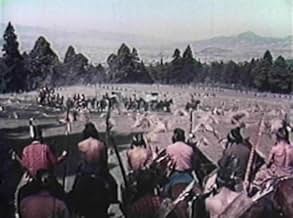
There is a stand out moment which someone has picked up upon which is in relation to the battle itself and that is that the Americans were armed with single shot rifles while the Indian war party was armed with the Winchester repeating rifle . This is something that is often over looked by historians and film makers at the battle of Little Big Horn - The Indians were better armed since the American military thought a rifle that had a massive fire rate would use up far too much precious ammunition hence the blue coats didn't use the Winchester very often , contrary to what you see in paintings and films commemorating the battle
There is a stand out moment which someone has picked up upon which is in relation to the battle itself and that is that the Americans were armed with single shot rifles while the Indian war party was armed with the Winchester repeating rifle . This is something that is often over looked by historians and film makers at the battle of Little Big Horn - The Indians were better armed since the American military thought a rifle that had a massive fire rate would use up far too much precious ammunition hence the blue coats didn't use the Winchester very often , contrary to what you see in paintings and films commemorating the battle
The man from Little Big Horn
This scheme is for Randolph Scott what THE MAN FROM ALAMO was for Glenn Ford. Remember this Universal Studios western where Glenn Ford was accused of being a coward and escaped from Alamo slaughter? So replace Alamo by Little Big Horn, two battles that Americans lost, and you have an idea of what you deal with here. This is not my favorite from director Joseph Lewis, it could have been from André De Toth, but not from Budd Boetticher though. Because Boetticher and Lewis had their own trademark. Here, the plot, directing, camera work, are rather common, nothing to remember of. Nothing in particular, I mean. Good western not more.


Did you know
- TriviaThe surname 'Kellogg' is used for two characters in the film - the colonel and his daughter Martha. It is also the surname of Mark Kellogg, a newspaper reporter who rode with Custer's troops. He was killed at the Battle of the Little Big Horn.
- GoofsAs Corporal Morrison (Harry Carey Jr.) saddles "Dandy", Lt. Col. Custer's second mount, he puts on an English saddle. US Calvary adopted McClellan saddles which remained in service through World War II. This was the wrong saddle for the movie.
- Quotes
[first lines]
Capt. Tom Benson: We'll be able to see the fort from the top of the next rise.
[Tom and Martha ride a little farther]
Capt. Tom Benson: There she is - Fort Lincoln, the base of the finest cavalry regiment in the country - and our home.
- Crazy creditsOpening credits: Capt. Benson was returning with his future bride, to his post commanded by the gallant Indian fighter Colonel Custer, who had prepared the famous 7th for all out war with the Sioux.
- How long is 7th Cavalry?Powered by Alexa
Details
- Runtime
- 1h 15m(75 min)
- Aspect ratio
- 1.85 : 1
Contribute to this page
Suggest an edit or add missing content