IMDb RATING
7.2/10
2.1K
YOUR RATING
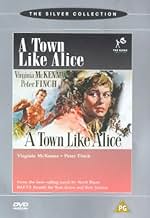
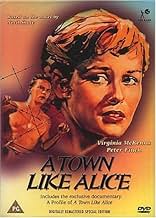
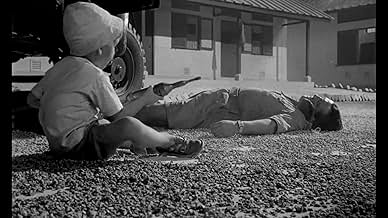
A newly wealthy English woman returns to Malaya to build a well for the villagers who helped her during war. Thinking back, she recalls the Australian man who made a great sacrifice to aid h... Read allA newly wealthy English woman returns to Malaya to build a well for the villagers who helped her during war. Thinking back, she recalls the Australian man who made a great sacrifice to aid her and her fellow prisoners of war.A newly wealthy English woman returns to Malaya to build a well for the villagers who helped her during war. Thinking back, she recalls the Australian man who made a great sacrifice to aid her and her fellow prisoners of war.
- Director
- Writers
- Stars
- Won 2 BAFTA Awards
- 2 wins & 5 nominations total
Kenji Takaki
- Japanese Sergeant
- (as Takagi)
Munesato Yamada
- Captain Takata
- (as Yamada)
Otokichi Ikeda
- Kempetei Sergeant
- (as Ikeda)
- Director
- Writers
- All cast & crew
- Production, box office & more at IMDbPro
7.22.1K
1
2
3
4
5
6
7
8
9
10
Featured reviews
An often overlooked subject in WWII films
I have just posted a comment on "Merry Christmas Mr Lawrence" directed by Nagisa Oshima in the early 1980s. The main originality of MCML does not lie in its subject, as other films have dealt with Prisoner-of-War camps under the Japanese rule, the most famous of them remaining "The Bridge on the River Kwai" by David Lean (1957). As MCML is a much more recent film, it might be considered as a more realistic approach to the daily life in a camp under such circumstances; yet realistic films on this subject appeared as early as in the 1950s with works like "A Town like Alice" directed by Jack Lee, which was rejected in its time by the Cannes Film Festival for its shocking content and violence a sharp contrast with often romanticized productions where war has a glamorous aspect. "A Town like Alice" is also original for it tells war from the point of view of women, and women in conflicts are often ignored by war movies.
It has been years now since I watched "A Town like Alice". I remember it as a good and honest film about the conflict with the Japanese in the Far East. Virginia McKenna as a British nurse and Peter Finch were both convincing. It may be not the best film on WWII, yet it has an authenticity and favors a psychological and realistic approach to the characters than can attract many viewers, not just war movies freaks.
By the way, the title is a reference to the town of Alice Springs, where the story ends.
It has been years now since I watched "A Town like Alice". I remember it as a good and honest film about the conflict with the Japanese in the Far East. Virginia McKenna as a British nurse and Peter Finch were both convincing. It may be not the best film on WWII, yet it has an authenticity and favors a psychological and realistic approach to the characters than can attract many viewers, not just war movies freaks.
By the way, the title is a reference to the town of Alice Springs, where the story ends.
Real Life!
This film is in the same league as the series Tenko for it's realism. I have also watched the mini series which could have it's moments too but the film wins because of the fact that it was made around a decade after it had happened, when things must have been quite fresh in everyones minds. These women were taken captive as the men were but they were not wanted by anyone. These women were far away from home with no clothes apart from what they stood up in, no money and they didn't speak the language. Given those fact the thoughts are so scary!
Excellent Movie
I suppose that it should be confessed at the outset that I had the hots for Ms McEnna in her youth. Nevertheless, I still think that this is an excellent movie of the 1950's war genre.
Ginny and Peter Finch provide typically understated performances that are reminiscent of 'Ice Cold In Alex' and 'The Cruel Sea'. Solid, sterling, stiff-upper-lip-stuff that has no place in the spineless, simpering, metro-sexual third millennium.
I have never read Shute's novel, so I cannot comment on what liberties have been taken, but viewed without prejudice as a movie outlining Japanese brutality and human endurance it is still a well-realised piece of work. Everyone gives a thoroughly believable turn, both Caucasian and Oriental alike, as Ms McEnna's character concludes 'you can't really hate anyone' in the end. Though the Japanese - like their Nazi counterparts - did their very best to merit it.
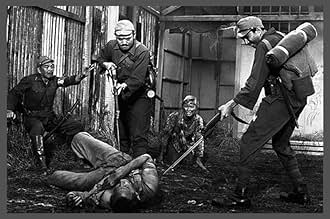
Ms McKenna leads a group of unwanted western women and children, for whom no Japanese officer wants responsibility. So; they get shunted from one place to another, on foot, inadequately fed, and without medical assistance. Inevitably; they begin dying. Finch plays a captured Aussie running trucks for the Japanese. Filmed in black-&-white, in Britain and on location, it offers a very believable turn upon the miasmic swamps, crippling heat, humidity and deluging rain.
Of course, it's a love story too. And here again Ginny and Peter play their parts to perfection. I defy any true romantic not to be rendered lachrymose by her realisation of his survival and their final meeting at the end. Her hasty, last-minute application of cosmetics is particularly touching and well-observed. As if he'd care a hoot one way or the other.
It's a great old feel-good movie for the austerity generation. I give it nine stars and good luck to 'em all I say.
Ginny and Peter Finch provide typically understated performances that are reminiscent of 'Ice Cold In Alex' and 'The Cruel Sea'. Solid, sterling, stiff-upper-lip-stuff that has no place in the spineless, simpering, metro-sexual third millennium.
I have never read Shute's novel, so I cannot comment on what liberties have been taken, but viewed without prejudice as a movie outlining Japanese brutality and human endurance it is still a well-realised piece of work. Everyone gives a thoroughly believable turn, both Caucasian and Oriental alike, as Ms McEnna's character concludes 'you can't really hate anyone' in the end. Though the Japanese - like their Nazi counterparts - did their very best to merit it.
Ms McKenna leads a group of unwanted western women and children, for whom no Japanese officer wants responsibility. So; they get shunted from one place to another, on foot, inadequately fed, and without medical assistance. Inevitably; they begin dying. Finch plays a captured Aussie running trucks for the Japanese. Filmed in black-&-white, in Britain and on location, it offers a very believable turn upon the miasmic swamps, crippling heat, humidity and deluging rain.
Of course, it's a love story too. And here again Ginny and Peter play their parts to perfection. I defy any true romantic not to be rendered lachrymose by her realisation of his survival and their final meeting at the end. Her hasty, last-minute application of cosmetics is particularly touching and well-observed. As if he'd care a hoot one way or the other.
It's a great old feel-good movie for the austerity generation. I give it nine stars and good luck to 'em all I say.
The long road to walk
I remember my mother and my aunt watching this film when I was a little boy late once night when it came on television.
They seemed to have cried most of the way through the film. This is an image that sticks in my mind whenever this film is mentioned.
Years later my mother told me how she lost some relatives in the second world war as they tried to escape from the Japanese in Burma by trying to walk it to India. They apparently died of exhaustion
A Town Like Alice adapted from the novel by Nevile Shute looks at a group of women as they shuffle from one Japanese camp to another during occupied Malaysia but no one would take them in. Slowly one by one they perish because of malnutrition, sickness, disease or exhaustion.
During their journey they are accompanied by an old guard who slowly comes to respect them.
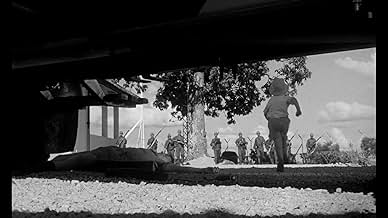
During the journey Virginia McKenna meets Australian soldier Peter Finch also a prisoner of war but he does his best to help them out here and there and both fall for each other. However he faces severe punishment when he is found out for stealing some chickens.
The film is told in flashback as McKenna goes back to Malaysia after the war and discovers what happened to Finch.
This is a gritty and unromanticised view of life in occupied Far East, many years before films like Empire of the Sun. Also it is unusual for not being set in a prisoner of war camp, these people want to get there and stay there.
It was filmed in Malaysia and Australia for added authenticity.
Look out for Jean Anderson, many years later she appeared in the BBC television series Tenko which was also women held in a prisoner of war camp in Malaysia.
They seemed to have cried most of the way through the film. This is an image that sticks in my mind whenever this film is mentioned.
Years later my mother told me how she lost some relatives in the second world war as they tried to escape from the Japanese in Burma by trying to walk it to India. They apparently died of exhaustion
A Town Like Alice adapted from the novel by Nevile Shute looks at a group of women as they shuffle from one Japanese camp to another during occupied Malaysia but no one would take them in. Slowly one by one they perish because of malnutrition, sickness, disease or exhaustion.
During their journey they are accompanied by an old guard who slowly comes to respect them.
During the journey Virginia McKenna meets Australian soldier Peter Finch also a prisoner of war but he does his best to help them out here and there and both fall for each other. However he faces severe punishment when he is found out for stealing some chickens.
The film is told in flashback as McKenna goes back to Malaysia after the war and discovers what happened to Finch.
This is a gritty and unromanticised view of life in occupied Far East, many years before films like Empire of the Sun. Also it is unusual for not being set in a prisoner of war camp, these people want to get there and stay there.
It was filmed in Malaysia and Australia for added authenticity.
Look out for Jean Anderson, many years later she appeared in the BBC television series Tenko which was also women held in a prisoner of war camp in Malaysia.
A great movie
I have the video of this movie which I got a few years back. I wish they would bring this movie out on DVD. Its wonderfully acted. Hard to believe this was based on a true story. I can't believe these women marched hundreds of miles, having nothing to eat much of the time and some of their companions dying along the way. They must have been a hardy bunch. Its too bad more people couldn't see this movie. Virginia McKenna and Peter Finch were excellent as the main characters and the rest of the supporting cast were very good too. I'm glad to have the video, but would very much like to see a DVD come out on it. The movie is in black and white but this in no way detracts from the story or the acting.
Did you know
- TriviaAccording to the book 'The Golden Gong---Fifty years of the Rank Organisation, its films and its stars' by Quentin Falk, "While at premiere of a Disney film, 'Robin Hood' [See: The Story of Robin Hood and His Merrie Men (1952)], he [Earl St. John] was particularly impressed by the young man who played the Sheriff of Nottingham. The name on the programme was that of Peter Finch. St. John bumped into Finch on the stairs of the theatre and invited him to come and talk business at Pinewood. Next day he gave Finch what would be a pivotal role in his burgeoning career: the Australian soldier, Joe, in A Town Like Alice (1956).
- GoofsHarry Corbett bought his Sooty puppet from a regular store---he didn't design or create it as such. It's possible therefore that Freddie might have had the same puppet before Harry Corbett gave it national fame.
- Quotes
[repeated line]
Japanese Sergeant: Japanese women walk!
- Crazy creditsOPENING CREDITS PROLOGUE: "The characters in this story are fictitious. The story itself however is based upon true fact."
- ConnectionsFeatured in A Profile of 'A Town Like Alice' (2001)
- How long is A Town Like Alice?Powered by Alexa
Details
- Release date
- Country of origin
- Languages
- Also known as
- The Rape of Malaya
- Filming locations
- Kuala Lumpur, Malaysia(establishing shot of British Government Offices - now the Sultan Abdul Samad Building)
- Production companies
- See more company credits at IMDbPro
- Runtime
- 1h 57m(117 min)
- Color
- Aspect ratio
- 1.66 : 1
Contribute to this page
Suggest an edit or add missing content