IMDb RATING
7.9/10
31K
YOUR RATING
A self-assured businessman murders his employer, the husband of his mistress, which unintentionally provokes an ill-fated chain of events.A self-assured businessman murders his employer, the husband of his mistress, which unintentionally provokes an ill-fated chain of events.A self-assured businessman murders his employer, the husband of his mistress, which unintentionally provokes an ill-fated chain of events.
- Director
- Writers
- Stars
- Awards
- 1 win total
- Director
- Writers
- All cast & crew
- Production, box office & more at IMDbPro
7.931K
1
2
3
4
5
6
7
8
9
10
Featured reviews
The black cat has it...
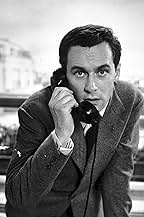
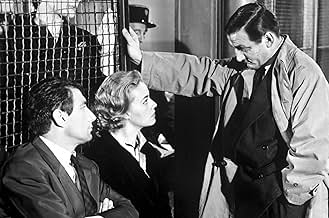
Ascenseur pour l'échafaud (AKA: Elevator to the Gallows/Lift to the Scaffold) is directed by Louis Malle and co-written by Malle, Roger Nimier and Noël Calef (novel). It stars Jeanne Moreau, Maurice Ronet, Georges Poujouly, Yori Bertin and Jean Wall. Music is by Miles Davis and cinematography by Henri Decaë.
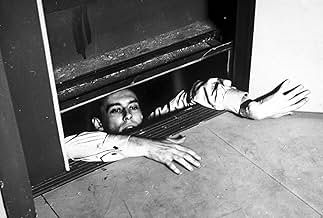
A little ole devil this one, a sly slow pacer that itches away at your skin. Rightly seen as a bridging movie between the classic film noir cycle and the nouvelle vague, Malle's movie is in truth straightforward on narrative terms. Julien Tavernier (Ronet) is going to kill husband of his lover, Florence Carala (Moreau), who also happens to be his boss, but upon executing the perfect murder, he, through his own absent mindedness, winds up stuck in a lift close to the crime scene. Outside Florence is frantically awaiting his arrival so as to begin their life together in earnest, but when a couple of young lovers steal Julien's car, Florence gets the wrong end of the stick and a sequence of events lead to Julien and Florence hitching that ride to the gallows.
Simplicity of narrative be damned, Malle's movie is a classic case of that mattering not one jot. There is style to burn here, with bleak atmospherics dripping from every frame, and Miles Davis' sultry jazz music hovers over proceedings like a sleazy grim reaper. The ironic twists in the writing come straight off the bus to noirville, putting stings in the tale, the smart reverse of the norm finding Moreau (sensual) wandering the streets looking for her male lover, while elsewhere he's in isolation and a doppleganger murder scenario is cunningly being played out. Decaë's photography has a moody desperation about it that so fits the story, the use of natural light making fellow French film makers sit up and take notice. While the dialogue, and the caustic aside to arms dealings, ensures we know that Malle can be a sly old fox. He really should have done more noir like pictures.
A film that convinces us that Julien and Florence are deeply in love and passionate about each other, and yet they never are once together in the whole movie! It's just one of the many wonderful things about Louis Malle's excellent picture.
Remember folks, the camera never lies... 9/10
A little ole devil this one, a sly slow pacer that itches away at your skin. Rightly seen as a bridging movie between the classic film noir cycle and the nouvelle vague, Malle's movie is in truth straightforward on narrative terms. Julien Tavernier (Ronet) is going to kill husband of his lover, Florence Carala (Moreau), who also happens to be his boss, but upon executing the perfect murder, he, through his own absent mindedness, winds up stuck in a lift close to the crime scene. Outside Florence is frantically awaiting his arrival so as to begin their life together in earnest, but when a couple of young lovers steal Julien's car, Florence gets the wrong end of the stick and a sequence of events lead to Julien and Florence hitching that ride to the gallows.
Simplicity of narrative be damned, Malle's movie is a classic case of that mattering not one jot. There is style to burn here, with bleak atmospherics dripping from every frame, and Miles Davis' sultry jazz music hovers over proceedings like a sleazy grim reaper. The ironic twists in the writing come straight off the bus to noirville, putting stings in the tale, the smart reverse of the norm finding Moreau (sensual) wandering the streets looking for her male lover, while elsewhere he's in isolation and a doppleganger murder scenario is cunningly being played out. Decaë's photography has a moody desperation about it that so fits the story, the use of natural light making fellow French film makers sit up and take notice. While the dialogue, and the caustic aside to arms dealings, ensures we know that Malle can be a sly old fox. He really should have done more noir like pictures.
A film that convinces us that Julien and Florence are deeply in love and passionate about each other, and yet they never are once together in the whole movie! It's just one of the many wonderful things about Louis Malle's excellent picture.
Remember folks, the camera never lies... 9/10
A Strong Debut From Malle
A self-assured business man murders his employer, the husband of his mistress, which unintentionally provokes an ill-fated chain of events.
Journalist Barry Farrell wrote, "Moreau had 20 forgettable films behind her... Malle put Moreau under an honest light and wisely let his camera linger. The film was nothing special, but it did accomplish one thing: it proposed a new ideal of cinematic realism, a new way to look at a woman. All the drama in the story was in Moreau's face – the face that had been hidden behind cosmetics and flattering lights in all her earlier films." Farrell is certainly right about the portrayal of Moreau. How can you make a leading lady anything but glamorous? Malle found a way that was quite successful.
As for the film being "nothing special", I think Farrell is wrong. A 1950s French film noir that is well executed? This is something we need more of. Starting with a murder and then spreading out from there, this is a good story of suspense, intrigue and all that. The whole concept of being caught in an elevator is incredible, and probably unprecedented.
Journalist Barry Farrell wrote, "Moreau had 20 forgettable films behind her... Malle put Moreau under an honest light and wisely let his camera linger. The film was nothing special, but it did accomplish one thing: it proposed a new ideal of cinematic realism, a new way to look at a woman. All the drama in the story was in Moreau's face – the face that had been hidden behind cosmetics and flattering lights in all her earlier films." Farrell is certainly right about the portrayal of Moreau. How can you make a leading lady anything but glamorous? Malle found a way that was quite successful.
As for the film being "nothing special", I think Farrell is wrong. A 1950s French film noir that is well executed? This is something we need more of. Starting with a murder and then spreading out from there, this is a good story of suspense, intrigue and all that. The whole concept of being caught in an elevator is incredible, and probably unprecedented.
Amazingly Good
Elevator to the Gallows is a great film and even better, has a short running time! The acting is great in every instance, the plot is original, and the direction is probably among the best I've ever seen. I loved how the plot had a lot of twists but there weren't so many that you were confused as to what was going on. Although I won't reveal the ending, I thought it was great and made me smile. However, you have to like this type of movie to see it, as it is kind of complicated and there isn't a ton of action. This film shows how the perfect murder can be only planned so well; you can never plan what could happen. If you don't get bored too easily, stick with this gem and I'm sure you'll love it.
The Camera has more than one picture
Greetings again from the darkness. The phrase Film Noir conjures up a certain feel and look and "Gallows" certainly captures what we have come to expect from the genre. However, the great director Louis Malle goes even further with his minimalistic approach to sound, lighting and dialog. Where 1944's "Double Indemnity" wreaks explosive on screen passion, Malle offers up a quiet simmering that draws the viewer into the lives of the main characters.
Jeanne Moreau is the perfect pouty French femme fatale. Her scenes of walking (wandering) the dark, rainy streets of Paris are chilling to watch for film lovers. The weak lighting and lack of make-up allow Moreau's true emotions to guide us. Malle also is tremendous in his filming of the elevator scenes with Maurice Ronet.
The secondary characters of the young lovers played by Yori Bertin (Veronique) and George Poujouly (Louis) are unmistakable in their likeness to Natalie Wood and James Dean. Watching two young kids carelessly destroy their own lives, as well as that of others, is quite the contrast to the well-conceived scheme of Moreau and Ronet.
I have not been able to come up with an apt description of the powerfully improvised jazz score from the legendary Miles Davis. The approach has been mimicked over the years, but never duplicated. It is startling in its ability to slap the viewer in the face! Moreau is of course a screen legend and went on to star in "Jules and Jim", Truffaut's "The Four Hundred Blows" and my personal favorite, "The Bride Wore Black". As great as she was in all of these, I am not sure her essence was ever better captured than her wandering through the Paris streets in "Elevator to the Gallows".
Jeanne Moreau is the perfect pouty French femme fatale. Her scenes of walking (wandering) the dark, rainy streets of Paris are chilling to watch for film lovers. The weak lighting and lack of make-up allow Moreau's true emotions to guide us. Malle also is tremendous in his filming of the elevator scenes with Maurice Ronet.
The secondary characters of the young lovers played by Yori Bertin (Veronique) and George Poujouly (Louis) are unmistakable in their likeness to Natalie Wood and James Dean. Watching two young kids carelessly destroy their own lives, as well as that of others, is quite the contrast to the well-conceived scheme of Moreau and Ronet.
I have not been able to come up with an apt description of the powerfully improvised jazz score from the legendary Miles Davis. The approach has been mimicked over the years, but never duplicated. It is startling in its ability to slap the viewer in the face! Moreau is of course a screen legend and went on to star in "Jules and Jim", Truffaut's "The Four Hundred Blows" and my personal favorite, "The Bride Wore Black". As great as she was in all of these, I am not sure her essence was ever better captured than her wandering through the Paris streets in "Elevator to the Gallows".
Implausible Perfection...
The best laid plans seldom consider the unexpected, with the most subtle of causes, the opportunities taken, resulting in profoundly unfortunate effects. An elegantly structured piece of story telling with sound, pictures and performances raised to the rafters, this is a piece of cinema you will struggle to shear away from and, with luck, it wont leave you hanging.
Did you know
- TriviaMiles Davis recorded the music in a single recording session while he watched a screening. He composed it while watching a rough cut and then invited a quartet of French and US musicians in a for few hours (from 11pm to 5am one night), improvising each number and allegedly sipping champagne with Jeanne Moreau and Louis Malle.
- GoofsWhen Florence arrives at the motel, the photos are just being developed - with the lights on! Exposing the prints to light before fixation would make them turn black. By the way, it's not recommended to put your hands into developer.
- Quotes
Commissaire de police: Anything's good for an alibi. Wives, girlfriends, bartenders, childhood friends, deceived husbands - but not an elevator. That's ridiculous. It's totally harebrained.
- SoundtracksAscenseur Pour L'Échafaud (Générique)
Composed by Miles Davis
Performed by Miles Davis (Trumpet), Barney Wilen (Tenor Saxophone), Emilhenco (as René Urtreger) (Piano), Pierre Michelot (Bass) and Kenny Clarke (Drums)
- How long is Elevator to the Gallows?Powered by Alexa
Details
- Release date
- Country of origin
- Official sites
- Languages
- Also known as
- Frantic
- Filming locations
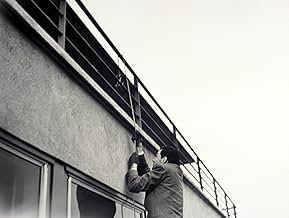
- 26 Rue de Courcelles, Paris 8, Paris, France(Tavernier climbing on the upper terrace)
- Production company
- See more company credits at IMDbPro
Box office
- Gross US & Canada
- $374,671
- Opening weekend US & Canada
- $7,354
- Jun 26, 2005
- Gross worldwide
- $431,784
- Runtime
- 1h 31m(91 min)
- Color
- Aspect ratio
- 1.66 : 1
Contribute to this page
Suggest an edit or add missing content