IMDb RATING
7.8/10
4.1K
YOUR RATING


A kabuki theatre-inflected story about a poor village whose people have to be carried to a nearby mountain to die once they get old.A kabuki theatre-inflected story about a poor village whose people have to be carried to a nearby mountain to die once they get old.A kabuki theatre-inflected story about a poor village whose people have to be carried to a nearby mountain to die once they get old.
- Director
- Writers
- Stars
- Awards
- 6 wins & 1 nomination total



- Director
- Writers
- All cast & crew
- Production, box office & more at IMDbPro
7.84K
1
2
3
4
5
6
7
8
9
10
Featured reviews
Very Powerful
The Ballad of Narayama (1958)
Rating: (4/5)
Review: "The Ballad of Narayama" masterfully blends Kabuki theater with the golden age of Japanese cinema, delivering a powerful and moving experience. The film's fantastic sets and heartrending climax make it truly memorable.
At the heart of the story is Orin, an elderly woman who faces the traditional practice of being carried to Mount Narayama to die once she reaches the age of 70. Her character is portrayed with deep emotional resonance, capturing the strength and dignity with which she accepts her fate. Orin's son plays a crucial role in the narrative, as he struggles with the impending loss of his mother and the cultural expectations placed upon him. Their relationship adds a poignant layer to the film, highlighting themes of familial duty and love.
The performances are deeply emotional, and the direction is impeccable, capturing the cultural and historical essence of the story. This film is a testament to the enduring power of traditional Japanese storytelling.
At the heart of the story is Orin, an elderly woman who faces the traditional practice of being carried to Mount Narayama to die once she reaches the age of 70. Her character is portrayed with deep emotional resonance, capturing the strength and dignity with which she accepts her fate. Orin's son plays a crucial role in the narrative, as he struggles with the impending loss of his mother and the cultural expectations placed upon him. Their relationship adds a poignant layer to the film, highlighting themes of familial duty and love.
The performances are deeply emotional, and the direction is impeccable, capturing the cultural and historical essence of the story. This film is a testament to the enduring power of traditional Japanese storytelling.
Deliciously Stunning Exploration of the Possibilities of Colour
Made available on Blu-ray by the Criterion Collection, Kinoshita's highly stylized exploration of the Narayama story is a deliciously stunning exploration of the possibilities of colour, and has some of the most inventive use of transition in film.
You might be familiar with the far more explicit and naturalistic film version of the same story from 1983, made by Shôhei Imamura, and knowledge of that film greatly enhanced my viewing of this. These two films are worlds apart, in fact so much that it feels that Imamura's film openly converses with this, since its theatricality seems to almost provoke the kind of hyper-naturalism inherent in the Imamura. Another film that enriches this is Kinugasa's "Jigokumon" ("Gates of Hell", 1953), available on Region B Blu-ray courtesy of the Masters of Cinema, and soon to be released by Criterion, as well.
I didn't know much of Kinoshita before this, only the biographical information concerning his relationship with Masaki Kobayashi, who served as his apprentice and whose film "Harakiri" (1962) Kinoshita openly disliked (he reversed his opinion later). I think it's somewhat ironic since Kobayashi's use of lighting certainly finds a compeer here, and I think this definitely encouraged "Kwaidan" (1964) to go to the lengths it did.
You might be familiar with the far more explicit and naturalistic film version of the same story from 1983, made by Shôhei Imamura, and knowledge of that film greatly enhanced my viewing of this. These two films are worlds apart, in fact so much that it feels that Imamura's film openly converses with this, since its theatricality seems to almost provoke the kind of hyper-naturalism inherent in the Imamura. Another film that enriches this is Kinugasa's "Jigokumon" ("Gates of Hell", 1953), available on Region B Blu-ray courtesy of the Masters of Cinema, and soon to be released by Criterion, as well.
I didn't know much of Kinoshita before this, only the biographical information concerning his relationship with Masaki Kobayashi, who served as his apprentice and whose film "Harakiri" (1962) Kinoshita openly disliked (he reversed his opinion later). I think it's somewhat ironic since Kobayashi's use of lighting certainly finds a compeer here, and I think this definitely encouraged "Kwaidan" (1964) to go to the lengths it did.
One of the most under seen films of all-time
Classic Japanese cinema is something that isn't very popular here in the west. However several classic Japanese films still have large followings, the films of people like Akira Kurosawa, and Masaki Kobayashi have found relatively large audiences. Nevertheless there are still countless hidden gems that remain nearly completely unknown, even among the fans of Kurosawa and Kobayashi. These hidden gems rank among some of the most underrated films of all time. These films can come from the silent era, to postwar Americanized Japan. One such film that comes from the latter is Ballad of Narayama.
Ballad of Narayama is a film that is designed to protest euthanasia, through the film's central topic of Ubasute, Ubastute is the feudal Japanese practice, where the elderly and crippled are carried up mountains and left to die of exposure. The film is about a small isolated Japanese town in the mountains during feudal times. In this small town their is an old women by the name of Orin, (played by Kinuyo Tanaka, who starred in several of Kenji Mizoguchi's films.) who is approaching her 71st birthday. This may not seem like a big deal to us, but in the small-town this is shameful. In their eyes she should have been taken to Narayama, which is the mountain that villagers use to dispose of their elderly, years ago. The villagers see her as selfish for sticking around for so long, and to make things worse she still has a full set of teeth! (Again that doesn't seem important to us, but it is to them.) The film tells the story of how Orin's son Tatushei (played by Teiji Takahashi, who collaborated with Yasujiro Ozu several times.) must face the fact that he will eventually have to take Orin up to the top of the mountain.
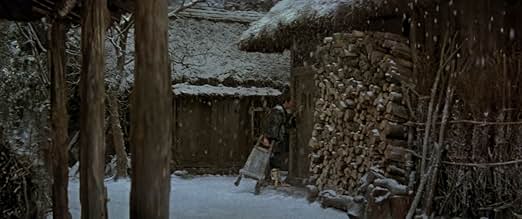
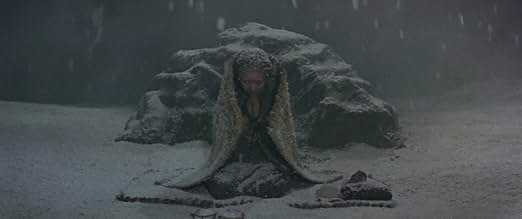
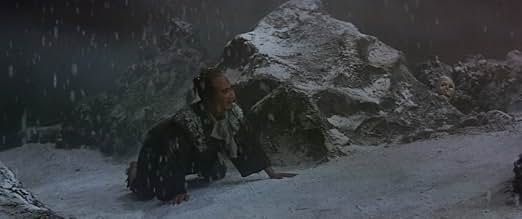
Ballad of Narayama was directed by Keisuke Kinoshita, who while extremely skilled, is almost completely unknown. And he does wonders in Ballad of Narayama. Ballad of Narayama is one of the most unconventional films I have ever scene. Whether it's the singing narration, or the strangest transitions ever. Ballad of Narayama is always doing something to keep you invested and interested. I've gone over two paragraphs without mentioning Ballad of Narayama's (arguably) strongest aspect, it's lighting, set design, and cinematography. All of these combine to make Ballad of Narayama one of they most beautiful films ever made. The beauty really is impossible to describe, but Ballad of Narayama is one of a few films were just the visuals are able to evoke an emotional response. Another thing you'll notice about the film's visuals is that the film resembles a play. The film opens with a strange man standing in front of a curtain and he introduces the film to us and then the opening credits happen, and then the curtain opens and the film begins. The sets also seem very stage-like, and I mean that in the best way possible. There's something about the sets and lighting that just makes the films so alive and vivid. Every shot in the film pays such close attention to detail, it just feels like you're watching a feudal Japanese village.
Ballad of Narayama comments on much more than euthanasia, though that is the central focus. Like most postwar Japanese films Ballad of Narayama criticizes the traditional Japanese view of marriage. The idea that you always have to be married to be happy, and there is no such thing as a single life. The film also discusses the concept of justice and punishment, in one scene a character is caught stealing from one of the villagers, and all the villagers, then round up all of the thief's family and all of there possessions, and distribute it amongst themselves. Orin tries to protest this, saying it isn't right for the villagers to punish the thief's family for what he did. But even with all of its other social commentary, it's undeniable central focus is euthanasia. Rarely do films comment on topics that are this serious or controversial. It's not like Orin doesn't want to die, but she needs her son to carry her up to the top of Narayama, and her son doesn't want to be the one who kills her. Which makes it much more complex and controversial. I don't think I've ever even seen another film that dared touch on this topic. Ballad of Narayama takes its subject matter very seriously, yes their are happy and slightly comic moments in the film, the same way you would find them in a Kurosawa film. But when it needs to, Ballad of Narayama can bring its audience to tears.
Ballad of Narayama was remade by famed Japanese new wave director Shohei Imamura in 1983, Imamura's version won the Palme d'Or that year. And that is probably the most recognition the original 1958 film has received since its release. Well that or when in 2013 it became the last film to be added to Roger Ebert's great movies list before he died, but unfortunately even with the acclaim its received, Ballad of Narayama still remains one of the most criminally unknown films of all time.
9.4
Ballad of Narayama is a film that is designed to protest euthanasia, through the film's central topic of Ubasute, Ubastute is the feudal Japanese practice, where the elderly and crippled are carried up mountains and left to die of exposure. The film is about a small isolated Japanese town in the mountains during feudal times. In this small town their is an old women by the name of Orin, (played by Kinuyo Tanaka, who starred in several of Kenji Mizoguchi's films.) who is approaching her 71st birthday. This may not seem like a big deal to us, but in the small-town this is shameful. In their eyes she should have been taken to Narayama, which is the mountain that villagers use to dispose of their elderly, years ago. The villagers see her as selfish for sticking around for so long, and to make things worse she still has a full set of teeth! (Again that doesn't seem important to us, but it is to them.) The film tells the story of how Orin's son Tatushei (played by Teiji Takahashi, who collaborated with Yasujiro Ozu several times.) must face the fact that he will eventually have to take Orin up to the top of the mountain.
Ballad of Narayama was directed by Keisuke Kinoshita, who while extremely skilled, is almost completely unknown. And he does wonders in Ballad of Narayama. Ballad of Narayama is one of the most unconventional films I have ever scene. Whether it's the singing narration, or the strangest transitions ever. Ballad of Narayama is always doing something to keep you invested and interested. I've gone over two paragraphs without mentioning Ballad of Narayama's (arguably) strongest aspect, it's lighting, set design, and cinematography. All of these combine to make Ballad of Narayama one of they most beautiful films ever made. The beauty really is impossible to describe, but Ballad of Narayama is one of a few films were just the visuals are able to evoke an emotional response. Another thing you'll notice about the film's visuals is that the film resembles a play. The film opens with a strange man standing in front of a curtain and he introduces the film to us and then the opening credits happen, and then the curtain opens and the film begins. The sets also seem very stage-like, and I mean that in the best way possible. There's something about the sets and lighting that just makes the films so alive and vivid. Every shot in the film pays such close attention to detail, it just feels like you're watching a feudal Japanese village.
Ballad of Narayama comments on much more than euthanasia, though that is the central focus. Like most postwar Japanese films Ballad of Narayama criticizes the traditional Japanese view of marriage. The idea that you always have to be married to be happy, and there is no such thing as a single life. The film also discusses the concept of justice and punishment, in one scene a character is caught stealing from one of the villagers, and all the villagers, then round up all of the thief's family and all of there possessions, and distribute it amongst themselves. Orin tries to protest this, saying it isn't right for the villagers to punish the thief's family for what he did. But even with all of its other social commentary, it's undeniable central focus is euthanasia. Rarely do films comment on topics that are this serious or controversial. It's not like Orin doesn't want to die, but she needs her son to carry her up to the top of Narayama, and her son doesn't want to be the one who kills her. Which makes it much more complex and controversial. I don't think I've ever even seen another film that dared touch on this topic. Ballad of Narayama takes its subject matter very seriously, yes their are happy and slightly comic moments in the film, the same way you would find them in a Kurosawa film. But when it needs to, Ballad of Narayama can bring its audience to tears.
Ballad of Narayama was remade by famed Japanese new wave director Shohei Imamura in 1983, Imamura's version won the Palme d'Or that year. And that is probably the most recognition the original 1958 film has received since its release. Well that or when in 2013 it became the last film to be added to Roger Ebert's great movies list before he died, but unfortunately even with the acclaim its received, Ballad of Narayama still remains one of the most criminally unknown films of all time.
9.4
Dumping Grannies
Kinoshita is a director who seems to have two distinct reputations - his Japanese reputation as a beloved and critically acclaimed filmmaker of long standing - and his western reputation as a technically adept but conservative and overly sentimental director, not someone in the same class as Kurosawa, Ozu, etc. This movie seems to sum up why this could be.
Its based on a classic old story, about a son who's duty is to bring his elderly mother to a mountain to die, in line with local tradition. This tradition is a rational response to extreme poverty, where infanticide is the normal form of birth control and the old are seen as too much of a burden for poor families. The mother is determined to go with dignity, to meet the gods on Mount Narayama - the loving widowed son is desperate to dissuade her. His older son and daughter in law are hateful, immature and greedy, more than willing to see the grandmother go if it means more food for them.
The story is told in a highly theatrical, staged style, and narrated and acted as if it were a kabuki play. It even starts with a curtain parting. This would have been familiar to early Japanese film goers as the roots of Japanese cinema was in filmed theater, rather than in representational forms (i.e. 'moving pictures') as in most other countries. So, while this seems a somewhat contrived and arty approach to a modern western viewer, to the contemporary Japanese audience it would have been familiar and natural.
The staging is beautiful and it is a very moving story, with some gorgeous sets and lighting. Kinuyo Tanaka is particularly moving as the old lady (she was also a director in her own right). One source book (by David Thompson) claims she actually had her teeth removed to make the movie, although I'd be a bit skeptical about that (this sounds to me like the sort of thing a publicist would invent). Like similar movies such as the Kon Ichikawas superior 'An Actors Revenge', this movie is a very accessible introduction to viewers to traditional Japanese forms.
A solemn and formal film like this could be boring, but its a tribute to Kinoshita and the actors that it is always gripping and powerful. However, it also exposes his weaknesses as a director, as the story is used purely for aesthetic purposes, and with the sorrow of the son being used to grab our sympathies, but there is no element whatever of a condemnation of a society that allowed this to happen, or for that matter an exploration of the psychological implications of this on the individuals in a society. I would have expected any of the more astute and radical directors of the time (such as Masumura or Ichikawa) to have used this basic story as a way of critiquing Japanese society or exploring what this sort of situation tells us about ourselves. In this way, the movie is essentially quite shallow and conservative.
Its based on a classic old story, about a son who's duty is to bring his elderly mother to a mountain to die, in line with local tradition. This tradition is a rational response to extreme poverty, where infanticide is the normal form of birth control and the old are seen as too much of a burden for poor families. The mother is determined to go with dignity, to meet the gods on Mount Narayama - the loving widowed son is desperate to dissuade her. His older son and daughter in law are hateful, immature and greedy, more than willing to see the grandmother go if it means more food for them.
The story is told in a highly theatrical, staged style, and narrated and acted as if it were a kabuki play. It even starts with a curtain parting. This would have been familiar to early Japanese film goers as the roots of Japanese cinema was in filmed theater, rather than in representational forms (i.e. 'moving pictures') as in most other countries. So, while this seems a somewhat contrived and arty approach to a modern western viewer, to the contemporary Japanese audience it would have been familiar and natural.
The staging is beautiful and it is a very moving story, with some gorgeous sets and lighting. Kinuyo Tanaka is particularly moving as the old lady (she was also a director in her own right). One source book (by David Thompson) claims she actually had her teeth removed to make the movie, although I'd be a bit skeptical about that (this sounds to me like the sort of thing a publicist would invent). Like similar movies such as the Kon Ichikawas superior 'An Actors Revenge', this movie is a very accessible introduction to viewers to traditional Japanese forms.
A solemn and formal film like this could be boring, but its a tribute to Kinoshita and the actors that it is always gripping and powerful. However, it also exposes his weaknesses as a director, as the story is used purely for aesthetic purposes, and with the sorrow of the son being used to grab our sympathies, but there is no element whatever of a condemnation of a society that allowed this to happen, or for that matter an exploration of the psychological implications of this on the individuals in a society. I would have expected any of the more astute and radical directors of the time (such as Masumura or Ichikawa) to have used this basic story as a way of critiquing Japanese society or exploring what this sort of situation tells us about ourselves. In this way, the movie is essentially quite shallow and conservative.
Excellent Presentation
In Kabuki style, the film tells the story of a remote mountain village where the scarcity of food leads to a voluntary but socially-enforced policy in which relatives carry 70-year-old family members up Narayama mountain to die.
Roger Ebert of the Chicago Sun-Times rated the film a maximum 4 stars, and added it to his Great Movies list in 2013, making it the final film he added to the list before his death. In a June 1961 review in The New York Times, A.H. Weiler called the film "an odd and colorful evocation of Japan's past that is only occasionally striking"; "It is stylized and occasionally graphic fare in the manner of the Kabuki Theatre, which is realistically staged, but decidedly strange to Western tastes." I have to respectfully disagree with Weiler. Perhaps at the time the film was strange to Western taste. I couldn't speak to that. But I find it quite refreshing, and really enjoy how they made it obvious that the story was told on a stage. Rather than hide the stag as American films do, this one embraces it, so you know you are really watching a story and it need not be any more than that. And yet, it is not just theater but a bigger experience.
Roger Ebert of the Chicago Sun-Times rated the film a maximum 4 stars, and added it to his Great Movies list in 2013, making it the final film he added to the list before his death. In a June 1961 review in The New York Times, A.H. Weiler called the film "an odd and colorful evocation of Japan's past that is only occasionally striking"; "It is stylized and occasionally graphic fare in the manner of the Kabuki Theatre, which is realistically staged, but decidedly strange to Western tastes." I have to respectfully disagree with Weiler. Perhaps at the time the film was strange to Western taste. I couldn't speak to that. But I find it quite refreshing, and really enjoy how they made it obvious that the story was told on a stage. Rather than hide the stag as American films do, this one embraces it, so you know you are really watching a story and it need not be any more than that. And yet, it is not just theater but a bigger experience.


Did you know
- TriviaThis was the final film to be added to Roger Ebert's list of "Great Movies" before his death on April 4, 2013 at the age of 70.
- ConnectionsFeatured in Tvennesnack: Varför kan vi inte komma ihåg den här jävla filmen? (2022)
- How long is The Ballad of Narayama?Powered by Alexa
Details
- Release date
- Country of origin
- Language
- Also known as
- Ballad of Narayama
- Filming locations
- Production company
- See more company credits at IMDbPro
Contribute to this page
Suggest an edit or add missing content