

An upstate Michigan lawyer defends a soldier who claims he killed an innkeeper due to temporary insanity after the victim raped his wife. What is the truth and will he win his case?An upstate Michigan lawyer defends a soldier who claims he killed an innkeeper due to temporary insanity after the victim raped his wife. What is the truth and will he win his case?An upstate Michigan lawyer defends a soldier who claims he killed an innkeeper due to temporary insanity after the victim raped his wife. What is the truth and will he win his case?
- Nominated for 7 Oscars
- 10 wins & 18 nominations total




- Director
- Writers
- All cast & crew
- Production, box office & more at IMDbPro
8.076.7K
1
2
3
4
5
6
7
8
9
10
Featured reviews
The title is ironic...
... since part of the allure is the mystery as to whether or not a true murder has been committed in the first place. There is a killing - but is it murder? That is what this courtroom drama is trying to determine.
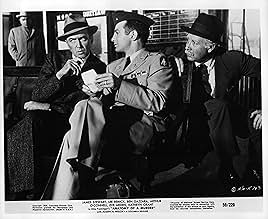
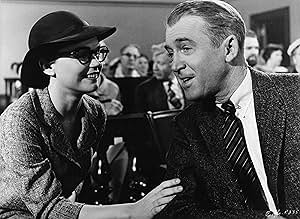
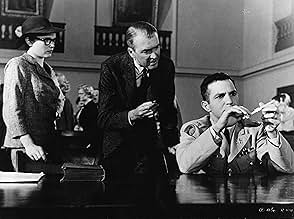
Paul Biegler (James Stewart) is a country lawyer in Michigan who was once the local DA but must have lost reelection at some point. He seems to consider himself pseudo-retired, as he stays in just enough contract work to finance his true love - fishing. But then a lieutenant in the army (Ben Gazzara as Fred Manion) kills the man who raped his wife (Lee Remick as Laura Manion), is charged with murder, and Biegler has a big case on his hands.
Manion is a bit shifty - At first claiming he has the "unwritten law" on his side. But then when Biegler tells him there really is no such thing, Manion adjusts his story such that temporary insanity could be a plausible defense.
The truth is, it never is clear which was true - Did Manion truly temporarily lose it when he saw his wife brutalized by a rapist, or did Laura Manion get cold busted by her husband stepping out with another man with the result being that Lt. Manion lost his temper and killed the other man? Gazzara plays his part as arrogant and Remick plays her part as flirty, each shooting the other looks at various points that indicate they are keeping at least part of the truth to themselves. What keeps it interesting are the characters, the emphasis on the legal process, and the question I just posed that hangs over the entire proceedings. Although everyone is good, the judge is an absolute understated scream. You can tell he doesn't like having this high profile case in his courtroom, that like Biegler he'd rather be fishing, but he has a job to do and he'll do it fairly. Joseph Welch played the part of the judge, and the fact that he was actually an attorney gives the performance the needed authenticity.
James Stewart was supposed to star in "North By Northwest" in 1959, but Hitchcock was angry at him because Vertigo had been a commercial failure, calling Stewart too old. He then dumped Stewart for Cary Grant so that Stewart was available to do this film. In the end, everything worked out. All three films are now recognized classics, and I can't see anybody but Stewart with his folksy charm playing the lead in this film.
Paul Biegler (James Stewart) is a country lawyer in Michigan who was once the local DA but must have lost reelection at some point. He seems to consider himself pseudo-retired, as he stays in just enough contract work to finance his true love - fishing. But then a lieutenant in the army (Ben Gazzara as Fred Manion) kills the man who raped his wife (Lee Remick as Laura Manion), is charged with murder, and Biegler has a big case on his hands.
Manion is a bit shifty - At first claiming he has the "unwritten law" on his side. But then when Biegler tells him there really is no such thing, Manion adjusts his story such that temporary insanity could be a plausible defense.
The truth is, it never is clear which was true - Did Manion truly temporarily lose it when he saw his wife brutalized by a rapist, or did Laura Manion get cold busted by her husband stepping out with another man with the result being that Lt. Manion lost his temper and killed the other man? Gazzara plays his part as arrogant and Remick plays her part as flirty, each shooting the other looks at various points that indicate they are keeping at least part of the truth to themselves. What keeps it interesting are the characters, the emphasis on the legal process, and the question I just posed that hangs over the entire proceedings. Although everyone is good, the judge is an absolute understated scream. You can tell he doesn't like having this high profile case in his courtroom, that like Biegler he'd rather be fishing, but he has a job to do and he'll do it fairly. Joseph Welch played the part of the judge, and the fact that he was actually an attorney gives the performance the needed authenticity.
James Stewart was supposed to star in "North By Northwest" in 1959, but Hitchcock was angry at him because Vertigo had been a commercial failure, calling Stewart too old. He then dumped Stewart for Cary Grant so that Stewart was available to do this film. In the end, everything worked out. All three films are now recognized classics, and I can't see anybody but Stewart with his folksy charm playing the lead in this film.
I am a trial attorney
I have tried more cases than I can remember - hundreds. This movie, more than any other, comes closet to real life.
In criminal cases., the first and most important thing is - the phone call. That's right, getting the case.
Next comes the 'talk.' An attorney has to inform the client of the possible outcomes given the facts. In Anatomy of a Murder, the main facts are 'undisputed', that is, there is no doubt that the defendant killed the victim.
Given that fact, there are only so many possible defenses - and so Jimmy Stewart, in one of the best performances of his career, relates those defenses to Ben Gazzara, in one of his best performances.
Along the way, we are treated to George C. Scott's premiere performance on screen - and it is is magnificent.
Did I mention how incredible and sexy and vulnerable Lee Remick is?
And the rest of the cast is also as good as it gets.
And then there's the Duke Ellington score (he won a Grammy) and the Wendell Mayes screenplay and the B/W cinematography by Sam Leavitt (The Defiant Ones (Oscar-winner), A Star is Born (1954)).
Watch this movie to see how to make a crime drama. There is nothing as good as it is - nothing.
One of my favorites
If you haven't yet seen Anatomy of a Murder, you've got to buy a copy and host a movie night as soon as you can. You're going to want to own your own copy, since this exciting courtroom drama can be enjoyed over and over again. I've lost track of how many times I've seen it, and it never gets old. I'm a huge fan of the boundary-pushing director Otto Preminger, and he once again pushed the envelope of the censors in 1959. In this movie, the words "rape" and "panties" are spoken several times - shocking at that time!
James Stewart, in his silver-haired charm, stars as a defense attorney with passions outside the courtroom. He loves fishing, he loves jazz music, and he loves the sight of a good-looking woman. When the latter appears in his office, in the form of Lee Remick, asking for his help in her husband's upcoming trial, he agrees to take the case. Lee is beautiful and sexy, and she brings out such a flirtatious spark in Jimmy. Her husband, Ben Gazarra, will be on trial for murdering the man who raped and beat her up. It seems like an easy case, right? Not exactly.
There's much more to the situation than meets the eye. As Jimmy explains to Ben on their first, memorable meeting: "There are four ways I can defend murder. . ." I love that scene. It's clever and concise without seeming glib or artificial. The chemistry between every member of the cast is so electric, you can feel the words bouncing off the actors. Jimmy and Ben spar with their eyes, George C. Scott and Jimmy love to hate each other, and George practically undresses Lee with his words. Who knew a murder trial could have so much sex appeal?
The script is intelligent, the performances are energetic, and the subject matter is modern for its time. There are so many reasons to watch it, and so many things to appreciate when you do watch it, that you'll keep coming back to it over the years as I have.
James Stewart, in his silver-haired charm, stars as a defense attorney with passions outside the courtroom. He loves fishing, he loves jazz music, and he loves the sight of a good-looking woman. When the latter appears in his office, in the form of Lee Remick, asking for his help in her husband's upcoming trial, he agrees to take the case. Lee is beautiful and sexy, and she brings out such a flirtatious spark in Jimmy. Her husband, Ben Gazarra, will be on trial for murdering the man who raped and beat her up. It seems like an easy case, right? Not exactly.
There's much more to the situation than meets the eye. As Jimmy explains to Ben on their first, memorable meeting: "There are four ways I can defend murder. . ." I love that scene. It's clever and concise without seeming glib or artificial. The chemistry between every member of the cast is so electric, you can feel the words bouncing off the actors. Jimmy and Ben spar with their eyes, George C. Scott and Jimmy love to hate each other, and George practically undresses Lee with his words. Who knew a murder trial could have so much sex appeal?
The script is intelligent, the performances are energetic, and the subject matter is modern for its time. There are so many reasons to watch it, and so many things to appreciate when you do watch it, that you'll keep coming back to it over the years as I have.
An overlooked classic
The legendary James Stewart has worked for several of Hollywood's most legendary directors including Frank Capra and Alfred Hitchcock but his films for them can not reach the level of this 1959 Columbia Pictures release that he did for Otto Preminger. Stewart gives his all time greatest performance in a gem of a courtroom drama that is often overlooked. Released on the heels of several other courtroom drama classics such as "Twelve Angry Men" and "Witness For The Prosecution", "Anatomy Of A Murder" tells the story of a small town Michigan lawyer (Stewart) who takes on the case of an army officer who is standing trial for murdering a man who he believes had raped his wife. A little risque and controversial for its time but still a classic and time has served it well. A triumph for all of the talent involved.
Classy courtroom drama that trades on it's cynical edge
Lawyer Paul Biegler takes the case of Lt. Manion who killed a man after he discovered he had raped his wife, Laura. Biegler realises that the cards are not all in his favour and begins to ensure that the facts are spun in his favour as much as possible during the trial.
This film caused a stir back when it was released supposedly over the dialogue that contained words not used before in a motion picture. However it was more likely that the furore was over the cynical view of the legal profession that the film has. The story is good, but if you're looking for a John Grisham type film with shouting and ridiculous twists in the final reel then you're in the wrong place. What we have here is a clever, interesting story that moves slowly focusing on Biegler rather than twists and turns in the actual plot.
Biegler is sort of clean cut, but he seems like a real lawyer he twists facts and prompts lies in order to improve his case. The various tricks and theatrical shenanigans during the trail are also well observed. The characters are all interesting with only the judge seeming like a dull stereotype.
James Stewart is excellent and helps make the shifty lawyer more likeable and relatable. Remick is excellent as the flirtatious Laura while Gazzara is cool as the accused. George C Scott doesn't have much to do, but does well anyway.
Overall a very enjoyable courtroom thriller it lacks the fireworks of modern legal dramas but has a nice cynical edge to it that shows it isn't as in awe of the law as Grisham is.
This film caused a stir back when it was released supposedly over the dialogue that contained words not used before in a motion picture. However it was more likely that the furore was over the cynical view of the legal profession that the film has. The story is good, but if you're looking for a John Grisham type film with shouting and ridiculous twists in the final reel then you're in the wrong place. What we have here is a clever, interesting story that moves slowly focusing on Biegler rather than twists and turns in the actual plot.
Biegler is sort of clean cut, but he seems like a real lawyer he twists facts and prompts lies in order to improve his case. The various tricks and theatrical shenanigans during the trail are also well observed. The characters are all interesting with only the judge seeming like a dull stereotype.
James Stewart is excellent and helps make the shifty lawyer more likeable and relatable. Remick is excellent as the flirtatious Laura while Gazzara is cool as the accused. George C Scott doesn't have much to do, but does well anyway.
Overall a very enjoyable courtroom thriller it lacks the fireworks of modern legal dramas but has a nice cynical edge to it that shows it isn't as in awe of the law as Grisham is.


Did you know
- TriviaPart of the controversy surrounding this movie was because it included use of the words "bitch", "contraceptive", "panties", "penetration", "rape", "slut", and "sperm".
- GoofsPaul Biegler goes to negotiate with the DA at the courthouse. The sign over the DA's door is misspelled "Proseguting attorney".
Actually this is not true. It's possible to compare the c with the g at the end of the word, and you can see the g has a descending stroke. It's just a foible of the font.
- Quotes
Paul Biegler: As a lawyer, I've had to learn that people aren't just good or just bad. People are many things.
- Alternate versionsAfter initially being banned by the Irish censor in October 1959, the Appeal Board upheld the ban in December. Columbia resubmitted it in February 1960, when it passed for "General" viewing in a heavily censored version, after 53 separate cuts totaling around 15 minutes. These removed all references to rape in the central trial scene. In 2001, it received an uncut 12 certificate for Columbia TriStar's DVD release.
- ConnectionsFeatured in Portrait of an Actor (1971)
Details
- Release date
- Country of origin
- Language
- Also known as
- Anatomía de un asesinato
- Filming locations
- Tripoli Bar, Ishpeming, Michigan, USA(interiors: Thunder Bay Inn)
- Production company
- See more company credits at IMDbPro
Box office
- Gross worldwide
- $194
- Runtime
- 2h 41m(161 min)
- Color
- Sound mix
- Aspect ratio
- 1.85 : 1
Contribute to this page
Suggest an edit or add missing content