IMDb RATING
7.9/10
5.7K
YOUR RATING

In the closing days of WWII, remnants of the Japanese army in Leyte are abandoned by their command and face certain death by starvation.In the closing days of WWII, remnants of the Japanese army in Leyte are abandoned by their command and face certain death by starvation.In the closing days of WWII, remnants of the Japanese army in Leyte are abandoned by their command and face certain death by starvation.
- Awards
- 6 wins total




- Director
- Writers
- All cast & crew
- Production, box office & more at IMDbPro
7.95.7K
1
2
3
4
5
6
7
8
9
10
Featured reviews
A good description of a good movie
This is probably one of the best examples of that film genre known as the anti-war movie. It is a story about a group a Japanese soldiers in the last days of the second world war,weakened,demoralized,and starving. The situation deteriorates even further when one of them resorts to cannibalism in an attempt to ward off hunger. As they shuffle their way through the jungle one notices their shabby appearance with their feet sticking out of their boots and a sense of resignation or futility about them. It has even an element of the absurd about it in one of the scenes when one of the soldiers pleads to a comrade to eat him. This portrayal of them appeals to one's sense of pity or sympathy regardless of what cause or nation they're fighting for. For their situation could be anyone's unfortunate fate if circumstances were unfavorable. If there is one thing this film can show or get across is that our sense of humanity or what makes us feel civilized, is but a thin veneer or facade that in the right or wrong situation can vanish. The stark truth as depicted in this movie is that we are only always a few steps away from returning to the jungle if given the chance. This reminds me of another movie"Lord Of The Flies" which was about a group of English schoolboys stranded on an island after a plane crash. After awhile they descend or regress into a bunch of jungle savages or barbarians losing whatever decorum or civilization they possessed.
Gritty, unglamourous WW2 drama
1945. The US recapture of the Philippines is nearing its conclusion, resulting in a Japanese unit being cut off and lacking supplies. In order to reduce the supply problem Private Tamura is ordered to check into the hospital and, if unsuccessful, kill himself. His trip to the hospital ends up being a harrowing journey.
A Japanese war drama that shows the horrors of war in brutal, unvarnished fashion. As much a survival drama as a war drama - we hardly see the enemy at all during the film - Tamura's experiences are harrowing and realistic.
Not perfect though. The film is quite linear and plodding, which is to be expected for the nature of the plot, but it is too slow at times, feeling laboured. While meant to show the inanity and insanity of war, some aspects of the plot aren't entirely watertight.
Still, a great exposition on the wastefulness and depravity of war.
A Japanese war drama that shows the horrors of war in brutal, unvarnished fashion. As much a survival drama as a war drama - we hardly see the enemy at all during the film - Tamura's experiences are harrowing and realistic.
Not perfect though. The film is quite linear and plodding, which is to be expected for the nature of the plot, but it is too slow at times, feeling laboured. While meant to show the inanity and insanity of war, some aspects of the plot aren't entirely watertight.
Still, a great exposition on the wastefulness and depravity of war.
A harrowing masterpiece on the sheer madness and despair of war
A harrowing masterpiece on the sheer madness and despair of war, Fires on the Plain (Nobi) is not going to be to everybody's taste: this is a war movie in the truest possible sense of the term, one that resorts neither to flag-waving patriotism nor saccharine sentimentality. Nobi cuts deep, it's ugly, tenebrous and bleak as few things ever committed on celluloid will ever be. This is war behind the cannons, with no triumphs or heroes, no moral victories or defeats to be had, just a handful of gaunt and terrible-looking men strewn across a land ravaged by war like penitents fleeing a great disaster. The characters defy moral judgment because they are creatures beset by a great woe, a woe that does not permit questions of a moral nature. War and survival. Pitting one's will against the other's in a battlefield arena. The loser is simply removed from existence.
Tamura, soldier in the Japanese Imperial army, is discharged from his platoon and ordered to report in a nearby hospital on account of him coughing blood and being disliked by the rest of the platoon. He's told to never come back and instead commit suicide by hand grenade in case the hospital rejects him. Which it does. The hospital is nothing but a shack made of wooden planks and the hospital surgeon simply tells him that if he's capable of walking he's just fine. It is in that shabby excuse of a hospital that one of the most harrowing scenes of the film takes place. As the area is carpet bombed by American planes the doctors and those who can walk and sustain themselves flee from the hospital and into the woods. Moments before the hospital is blown to pieces, the gaunt and crippled figures of the sick and injured crawl out of it in every manner of posture, dressed in their sickly white robes, as if the building is some kind of beast spewing viscera and filth out upon the earth.
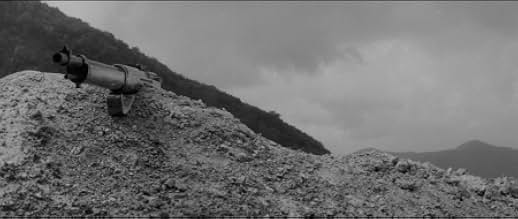
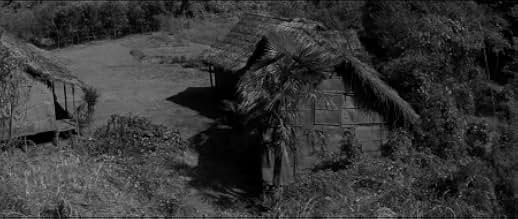
That is Nobi's greatest success; the stark and brooding depiction of the suffering of war in simple but evocative images, without melodrama or pseudo-heroism. Soldiers cross a marsh, wading knee-deep in mud, move across the opposite bank and into a field only to discover enemy tanks hiding in the woods, their lights shining like malignant eyes as they scan the dark. A procession of injured soldiers, dirty and half-mad, crossing a road, dropping to the ground on the sound of enemy planes. Buzzards feasting on a pile of dead bodies. An abandoned village. A mad soldier that believes himself to be Buddha sitting under a tree, covered with flies and his own excrement, offering his arm to be eaten by Tamura when he's dead. These are the images Kon Ichikawa conjures for our eyes, merciless and unflinching in their poignancy but honest and raw.
Nobi doesn't rush to get somewhere. It is content to follow Tamura's travels through the war-torn land as he tries to reach the regrouping center of Palompa, and observe the madness and obscenities of war. The movie wades through the sludge of the horror of war, slow and brooding, just like the characters it follows. The final thirty minutes with Tamura taking refuge with two deserters who feed on 'monkey meat' are the closest Nobi comes to adhering to conventional narratives and they're no less powerful for that matter. Strikingly photographed in black and white, with great performances from the cast, and Ichikawa's assured direction, Nobi is not only among the best war movies to be made but also among the finest of Japanese cinema.
Tamura, soldier in the Japanese Imperial army, is discharged from his platoon and ordered to report in a nearby hospital on account of him coughing blood and being disliked by the rest of the platoon. He's told to never come back and instead commit suicide by hand grenade in case the hospital rejects him. Which it does. The hospital is nothing but a shack made of wooden planks and the hospital surgeon simply tells him that if he's capable of walking he's just fine. It is in that shabby excuse of a hospital that one of the most harrowing scenes of the film takes place. As the area is carpet bombed by American planes the doctors and those who can walk and sustain themselves flee from the hospital and into the woods. Moments before the hospital is blown to pieces, the gaunt and crippled figures of the sick and injured crawl out of it in every manner of posture, dressed in their sickly white robes, as if the building is some kind of beast spewing viscera and filth out upon the earth.
That is Nobi's greatest success; the stark and brooding depiction of the suffering of war in simple but evocative images, without melodrama or pseudo-heroism. Soldiers cross a marsh, wading knee-deep in mud, move across the opposite bank and into a field only to discover enemy tanks hiding in the woods, their lights shining like malignant eyes as they scan the dark. A procession of injured soldiers, dirty and half-mad, crossing a road, dropping to the ground on the sound of enemy planes. Buzzards feasting on a pile of dead bodies. An abandoned village. A mad soldier that believes himself to be Buddha sitting under a tree, covered with flies and his own excrement, offering his arm to be eaten by Tamura when he's dead. These are the images Kon Ichikawa conjures for our eyes, merciless and unflinching in their poignancy but honest and raw.
Nobi doesn't rush to get somewhere. It is content to follow Tamura's travels through the war-torn land as he tries to reach the regrouping center of Palompa, and observe the madness and obscenities of war. The movie wades through the sludge of the horror of war, slow and brooding, just like the characters it follows. The final thirty minutes with Tamura taking refuge with two deserters who feed on 'monkey meat' are the closest Nobi comes to adhering to conventional narratives and they're no less powerful for that matter. Strikingly photographed in black and white, with great performances from the cast, and Ichikawa's assured direction, Nobi is not only among the best war movies to be made but also among the finest of Japanese cinema.
One of the most harrowing and powerful films I've ever seen.
Despite its flaws, Fires On The Plain is one of the most harrowing and powerful films I've ever seen. With its incredible stark black and white photography, we're taken on an emotionally exhausting journey through how far a man will go to survive. It takes it to the bleak extremes and pushes the limits. It's incredible and fascinating to watch the "everyman" main character on his episodic adventure and has great points about the devastating effects of war on the human condition. This could've easily been a favourite if not for some points that hold it back. Although the journey later blossoms, the music is definitely far too overdramatic and it opens with far too on-the-nose exposition that could've easily been summed up in a few more simple visuals. Unfortunately for the excellent cinematography, the editing isn't as good and perhaps its suffers due to the amateur performances who struggle to keep up continuity in different angles. However, these flaws don't distract from its power, as depressing as it is.
8/10
8/10
A bleak outlook
I recently saw "Nobi" ("Fires On the Plain"), for the second time. Of all Ichikawa's films, and most of his films - (the ones I've seen), even "Tokyo Olympiad", has a strong thread of despair running through them. This is one of the few films (especially as its from the Japanese perspective), that deals, uncompromisingly, with how ordinary soldiers deal with, and are prepared to go, to survive a war where no prisoners were taken. It's a depressing film, but it should be seen by all the people, especially the Generals and Politicians, who think war is an heroic endeavour.


Did you know
- TriviaIn order to achieve maximum authenticity, actors were fed very little, and were not permitted to tend to matters of simple hygiene such as brushing their teeth and cutting their nails. As a precaution against serious deterioration of the actors' health, a number of nurses were always on call on the set. Eiji Funakoshi was never specifically told not to eat. He willingly abstained from eating to help get himself into character. The rest of the cast and crew were unaware of this until he eventually collapsed on the set. Production was shut down for two weeks.
- ConnectionsFeatured in L'Oeil du cyclone: Cannibalisme, réalité ou fantasme (1995)
- How long is Fires on the Plain?Powered by Alexa
Details
- Runtime
- 1h 48m(108 min)
- Color
- Aspect ratio
- 2.35 : 1
Contribute to this page
Suggest an edit or add missing content