
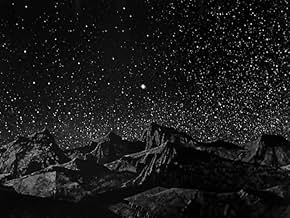
A journey through the universe as it would appear to a space traveler beginning at the David Dunlap Observatory on Earth.A journey through the universe as it would appear to a space traveler beginning at the David Dunlap Observatory on Earth.A journey through the universe as it would appear to a space traveler beginning at the David Dunlap Observatory on Earth.
- Directors
- Writers
- Stars
- Nominated for 1 Oscar
- 2 wins & 1 nomination total

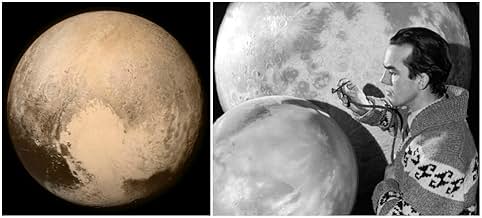


Douglas Rain
- Self - Narrator
- (voice)
- (uncredited)
- Directors
- Writers
- All cast & crew
- Production, box office & more at IMDbPro
7.6414
1
2
3
4
5
6
7
8
9
10
Featured reviews
Major Influence
This film was one of a series of films made by the CNFB. However, there is no doubt that it had a huge impact when it allowed Stanley Kubrick to imagine making 2001 A Space Odyssey. Largely uncredited are the special effects of Wally Gentleman who went to England to work with Kubrick on 2001. Also the other reviewers complaints about the narration are somewhat amusing since the voice is Douglas Rains, the same Canadian actor who was the voice of HAL 9000 and perhaps one of the most famous movie voices in history! Worth seeing and if you want to hear more of Rains check out the CNFB films on major religions of the world. Hear HAL 9000 talk about Buddhism!
10Paul-412
The Canadian film that spawned all modern science fiction.
Universe, a short film made by the infamous B-unit of the Canadian National Film Board in 1960, is one of the best films ever made and one of my favourites. This (under 30 minute) film inspired Kubrick's "2001: A Space Oddyssey", which itself inspired Lucas' "Star Wars", which itself inspired all other science fiction. My earlier reference to the filmmakers (infamous B-unit) is in regards to a group of filmmakers who made a series of instructional documentaries for the Canadian film board. Upon deeper analysis of these films, and particularily Universe, one finds a hidden philosophy which can allude to the meaningless of life and a kind of anti-americanism which is at the core of all the B-unit films.
Universe itself is a breathtaking film with visuals as yet unmatched by today's expensive special effects. The effects in Universe make one feel small and insignificant as if our existence is arbitrary, unimportant, and even vulnerable. We're shown the Universe as a cold void which is indifferent to our cries of "What does it all mean?" However, for those not willing to give this film the analysis which it deserves, Universe can be enjoyed just on the visuals alone which can watched again and again. I've stopped short from giving a detailed description of the plot so that anyone reading this before seeing the film can simply sit down and let the film wash over you. Enjoy!
Universe itself is a breathtaking film with visuals as yet unmatched by today's expensive special effects. The effects in Universe make one feel small and insignificant as if our existence is arbitrary, unimportant, and even vulnerable. We're shown the Universe as a cold void which is indifferent to our cries of "What does it all mean?" However, for those not willing to give this film the analysis which it deserves, Universe can be enjoyed just on the visuals alone which can watched again and again. I've stopped short from giving a detailed description of the plot so that anyone reading this before seeing the film can simply sit down and let the film wash over you. Enjoy!
Holds up well despite the passage of time
This short, done under the auspices of the National Film Board of Canada, holds up quite well in an area that can date in an instant. The animation effects are exceptional and my only real problem was with the narrator who came perilously close to becoming a cure for insomnia. Very well done, it was nominated for an Oscar for Documentary Short. Recommended, with the caveat that later information renders some of this less useful on technical points.
Universe
It never ceases to amaze me what men in the obligatory white coats can deduce from a still, monochrome, photograph taken of an object at least 200 million miles away!. Their spectrographic analysis can tell us the make up of everything from the rings of Saturn to the million miles long tail of a racing comet. The scientists in question are based at the David Dunlap Observatory in Ontario and for half an hour they regale us with images both real and speculative of our solar system, of the wider universe, stars, nova, super nova - you name it. The visual effects could easily be the inspiration for the titles on the original "Star trek" series as we are given a sensation of moving through space encountering a myriad of objects en route. Knowing now what we didn't then does enable us to poke some fun at the concept of Martian broccoli or the twelve moons of Jupiter (is has dozens and dozens) but that would not be fair on people who made some surprisingly intelligent guesses and drew some spectacularly accurate conclusions from within the limitations of their contemporary technology. The narration is a little pedestrian, but by the end I thought it would be fascinating to see how the skills of these astronomers could capitalise on today's technology. They didn't do so badly fifty-odd years ago and this is an interesting documentary to watch.
10Inigo-3
Wonderful special effects, dated information
When this black-and-white astronomy documentary came out in 1960, it was a startling venture into groundbreaking special effects--a grand tour of the universe from our own planet to the far-flung galactic clusters at the limits of mid-century astronomical observation. Although much of the information is now dated (particularly that on Mars and Venus), the film deserves video release if only for its consummate artistry in combining visuals, music, and narration. When he was assembling a crew for "2001--A Space Odyssey," Stanley Kubrick was so impressed with the film that he tried to hire the team that created it; unfortunately they were unavailable.


Did you know
- Trivia'Stanley Kubrick' viewed this film and was used as a template for the special effect shots used in his 2001: A Space Odyssey (1968). He used the same panning camera effect for creating his planets. He even hired narrator Douglas Rain to voice the computer HAL.
- ConnectionsEdited into 50 for 50: Volume 1, Tape 3: Animation: Reflections (1989)
Details
- Release date
- Country of origin
- Language
- Also known as
- Der Himmel über uns
- Filming locations
- Production companies
- See more company credits at IMDbPro
- Runtime
- 29m
- Color
- Sound mix
- Aspect ratio
- 1.37 : 1
- 1.66 : 1
Contribute to this page
Suggest an edit or add missing content