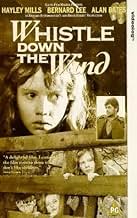
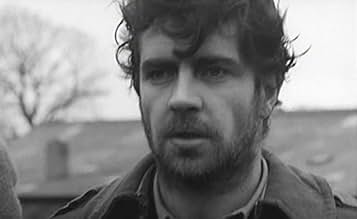
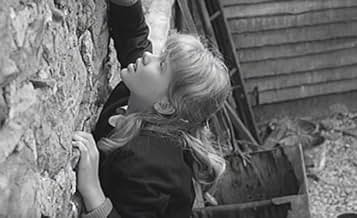
When an injured wife murderer takes refuge on a remote Lancashire farm, the owner's three children mistakenly believe him to be the Second Coming of Christ.When an injured wife murderer takes refuge on a remote Lancashire farm, the owner's three children mistakenly believe him to be the Second Coming of Christ.When an injured wife murderer takes refuge on a remote Lancashire farm, the owner's three children mistakenly believe him to be the Second Coming of Christ.
- Director
- Writers
- Stars
- Nominated for 4 BAFTA Awards
- 1 win & 5 nominations total
- Director
- Writers
- All cast & crew
- Production, box office & more at IMDbPro
7.64K
1
2
3
4
5
6
7
8
9
10
Featured reviews
superb, superior children's film
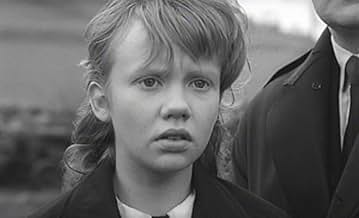
The original story, before Andrew Lloyd-Webber americanised it (and ruined it, IMO), was written by Hayley Mills' mother, Mary Hayley Bell, and starred Hayley as a Northern girl who thinks she finds Jesus Christ returned to Earth and living in her father's barn. In fact the man is a convict on the run (beautifully played by Alan Bates, one of his best early roles).
The girl and her sister and little brother (Alan Barnes, a superb performance) cosset the man and plot to keep him secret from the adults, because of what happened to him 'last time'. The man in turn is bewildered by the increasing adultation and attention of the neighbouring kids.
One of the strongest points of the story, aside from the contention that religion really couldn't cope with the return of Christ, is the developing attraction between the pre-teen Mills and Bates. This is understated but unmistakable, and owes a lot to Hayley's talent when she was a child actress. The music by Matthew Arnold is superb and Bryan Forbes' direction is sympathetic and cleverly done.
Perhaps the final symbolism is overdone but 'Whistle' is an excellent film that lingers long in the memory.
The girl and her sister and little brother (Alan Barnes, a superb performance) cosset the man and plot to keep him secret from the adults, because of what happened to him 'last time'. The man in turn is bewildered by the increasing adultation and attention of the neighbouring kids.
One of the strongest points of the story, aside from the contention that religion really couldn't cope with the return of Christ, is the developing attraction between the pre-teen Mills and Bates. This is understated but unmistakable, and owes a lot to Hayley's talent when she was a child actress. The music by Matthew Arnold is superb and Bryan Forbes' direction is sympathetic and cleverly done.
Perhaps the final symbolism is overdone but 'Whistle' is an excellent film that lingers long in the memory.
Under-rated classic British movie of the sixties
Hayley Mills excels in this understated, underrated movie juxtaposing the sordid criminal world (Alan Bates as a murderer on the run) with the innocence of children. Cleverly designed, perfectly acted (by all the children as well as the adults), pithily appropriate screenplay, believable accents (the setting is the Yorkshire moors in England), and a well-balanced, carefully planned production all combine to produce a mesmerising gem of a film. Already a star, Hayley Mills proved she was not just a pretty face and built on her impressive performance in Tiger Bay to create a moving character of budding adolescence, still trapped in childhood innocence and belief. The period of the early sixties is neatly conveyed, and Hayley Mills as Cathy creates a metaphor for the deeper layer of the film's message of the increasing social awareness and diminishing religious belief (despite the traditional Sunday School attitudes and practices) which was gradually bringing about the social change of Britain in the sixties. The story is well told, the drama is dynamic, the actors do a marvellous job and the film certainly deserves to be better known, if not least because it's an early example of Richard Attenborough's production skills.
Beautiful, nostalgic film
Whistle Down the Wind has remained one of my favourite films ever since I saw it as a young child many years ago when my parents took me to see it when it was originally released. The performances by all the children in the film are charming and Alan Bates excels as the criminal who is mistaken for Jesus. For me, the special aspects of the film are its genuine innocence and the capturing of a much simpler time in England that will never return. I myself was born and grew up in the north in an area similar to the one shown in the film and today, now aged 48, watch the film with great nostalgia and a warm feeling about my carefree life as a child. I also feel sadness that many children in our country today cannot enjoy the freedom to roam and play far and wide as I (and the children in the film) could do at that time. I have never met anyone who didn't enjoy this underrated classic and defy anyone not to be moved by the naturalness of the performances. A marvelous addition to anyone's DVD collection and one that I treasure.
I'll call my kitten Spider. And when he grows up I'll teach him to hate yours!
Once in a while you come across a film that is perfect - and this film is one of them. It has everything - humour, pathos, skilled acting, beautiful cinematography and it deals with the deepest questions of human existence. I found myself alternating between laughter and tears. It seems to touch on deep themes which films rarely dare to nowadays - themes of belief, faith, and the meaning of love.
The photography of the bleak Lancashire countryside is superbly crisp, the facial expressions of the actors (especially Mr Bates) let us know exactly what is going on in their minds but subtly, in a way that is never seen nowadays in films where everything must be made explicit.The children interact entirely naturally and they are not merely credulous, but curious and questioning ('he's not Jesus, he's just some fella'). Some scenes are deeply moving, in particular when the children dance under a tree to the music of 'We Three Kings' in joy and praise at seeing what they believe to be their Saviour - seeming to sum up the deep, almost pagan connection between religion and the English countryside.
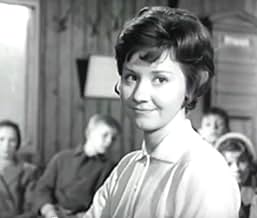
The film deftly deals with the changing England of the time. By the early sixties, mainstream Christianity had begun to lose its hold on the English people (this was the time of Bishop Robinson and the 'Honest to God' debate); the decaying, plundered church is representative of the decline in organised religion, juxtaposed with the 'true' faith of the children. The religious figures, however, are not pilloried as would be the case in most modern films - they are treated sympathetically. I particularly liked the look of awkwardness on the Sunday school teacher's face when she is asked a question about Jesus which she knows she cannot answer with any honesty, and which she clumsily sidesteps.
In many ways the film is an elegy for a lost England - an England where children roam the countryside freely, where the nearest telephone is half a mile away, and where children live in relative material poverty but with strong familial love, where the simple pleasures of life are enjoyed - playing in the open air, having a birthday party at home, or reading late into the night. The film could not realistically have been made even just ten years later.
The photography of the bleak Lancashire countryside is superbly crisp, the facial expressions of the actors (especially Mr Bates) let us know exactly what is going on in their minds but subtly, in a way that is never seen nowadays in films where everything must be made explicit.The children interact entirely naturally and they are not merely credulous, but curious and questioning ('he's not Jesus, he's just some fella'). Some scenes are deeply moving, in particular when the children dance under a tree to the music of 'We Three Kings' in joy and praise at seeing what they believe to be their Saviour - seeming to sum up the deep, almost pagan connection between religion and the English countryside.
The film deftly deals with the changing England of the time. By the early sixties, mainstream Christianity had begun to lose its hold on the English people (this was the time of Bishop Robinson and the 'Honest to God' debate); the decaying, plundered church is representative of the decline in organised religion, juxtaposed with the 'true' faith of the children. The religious figures, however, are not pilloried as would be the case in most modern films - they are treated sympathetically. I particularly liked the look of awkwardness on the Sunday school teacher's face when she is asked a question about Jesus which she knows she cannot answer with any honesty, and which she clumsily sidesteps.
In many ways the film is an elegy for a lost England - an England where children roam the countryside freely, where the nearest telephone is half a mile away, and where children live in relative material poverty but with strong familial love, where the simple pleasures of life are enjoyed - playing in the open air, having a birthday party at home, or reading late into the night. The film could not realistically have been made even just ten years later.
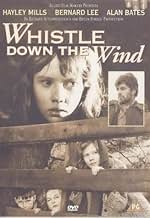
What a discovery! Little Miss Mills
Beautifully photographed in black and white this film should be considered a MASTERPIECE! Haley Millsgives the performance of her career (maybe next to"Tiger Bay) as Cathy. Alan Bates is also excellent! It is real shame that these classic films do not get airplay on cable.
Did you know
- TriviaThe title "Whistle Down the Wind" originally comes from falconry and means "to let a falcon fly away free."
- GoofsIn several scenes, but especially when the children are in the barn discussing a name for the cats, the youngest boy can be seen mouthing the other characters lines before he says his own.
- Quotes
Charlie Bostock: It isn't Jesus. It's just a fella.
- Crazy creditsThe character played by Alan Bates is named Arthur Alan Blakey in the movie, but in the credits he is listed as "The Man."
- ConnectionsFeatured in Blue Peter: Episode #4.32 (1961)
- SoundtracksWe Three Kings
(uncredited)
Words and Music by John H. Hopkins (as Reverend John Henry Hopkins,, Jr.)
Incorporated into incidental music
- How long is Whistle Down the Wind?Powered by Alexa
Details
Box office
- Budget
- £148,000 (estimated)
- Runtime
- 1h 39m(99 min)
- Color
- Aspect ratio
- 1.66 : 1
Contribute to this page
Suggest an edit or add missing content