

A surly convicted murderer held in permanent isolation redeems himself when he becomes a renowned bird expert.A surly convicted murderer held in permanent isolation redeems himself when he becomes a renowned bird expert.A surly convicted murderer held in permanent isolation redeems himself when he becomes a renowned bird expert.
- Director
- Writers
- Stars
- Nominated for 4 Oscars
- 4 wins & 12 nominations total
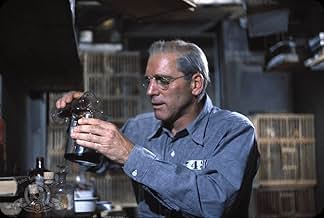
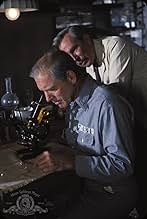
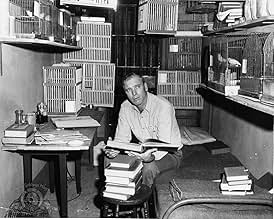
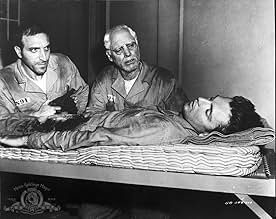


Robert Bailey
- Reporter on Dock
- (uncredited)

Nicky Blair
- Inmate
- (uncredited)
John Burnside
- Captain of Marines
- (uncredited)

Robert Burton
- Sen. Ham Lewis
- (uncredited)

Mushy Callahan
- Inmate
- (uncredited)
Jimmy Casino
- Inmate
- (uncredited)
James Cavanaugh
- Guard
- (uncredited)
- Director
- Writers
- All cast & crew
- Production, box office & more at IMDbPro
7.820.9K
1
2
3
4
5
6
7
8
9
10
Featured reviews
Story of one man who has many others like him.
John Frankenheimers 1962 film about a convicted double murderer who turns his half-life into something meaningful by becoming an expert on the diseases of birds. Although this is not a completely accurate tale of Robert Stroud who became known as The Birdman of Alcatraz the performance of Burt Lancaster makes it a classic film of the human-interest story genre. Genuine WWII hero turned actor Neville Brand likewise turns in a strong performance as a stern yet sympathetic guard at the Leavenworth Penitentiary. Karl Malden is cast as the by the book bureaucratic prison official who's life continues to cross paths with the incarcerated Stroud. Veteran character actress Thelma Ritter is Strouds over protective mother who will do anything for her loving son realizing that where he is is probably the best place for him.
The film strangely shows the mental capabilities of a person and how much someone can achieve when one wishes to. The Stroud character has only an elementary school education at the films beginning yet applies himself to obtain knowledge equal to that of a college educated individual.
Although the story takes place in a prison this is not just a prison picture but more of a story of one man conquering his own ignorance by reaching into himself and casting out the demons that put him in the situation that he must live with. There are perhaps many such people in this countries prisons who have done similar as the main character in this movie.
The film strangely shows the mental capabilities of a person and how much someone can achieve when one wishes to. The Stroud character has only an elementary school education at the films beginning yet applies himself to obtain knowledge equal to that of a college educated individual.
Although the story takes place in a prison this is not just a prison picture but more of a story of one man conquering his own ignorance by reaching into himself and casting out the demons that put him in the situation that he must live with. There are perhaps many such people in this countries prisons who have done similar as the main character in this movie.
Excellent Example of a Sadly Lost Film-making Style
"Birdman of Alcatraz" depicts a fictionalized version of the life of Robert Stroud, a real prisoner who served a life sentence in various American prisons, including Alcatraz.
As other viewers have commented, the film fictionalizes the life of the real Robert Stroud, who was a murderer and who has been accused of being a pedophile, as well.
This fictionalization should not interfere with an intelligent viewer's enjoyment of a fine film.
Too, this fictionalization doesn't change the key features of Stroud's case -- a bad man, a man who is shown on screen to be a real murderer, was condemned to death by the state. That much is true from Stroud's real life story, and that much is shown in the film.
Stroud was a difficult person who did not treat other people decently. That much was true of the real Stroud and that is shown in the film.
Stroud's mother pled for his life and President Woodrow Wilson commuted his sentence to life. A warden, aware of how difficult Stroud was to control, declared that Stroud be kept in segregation. That much is true in Stroud's real life story, and that is depicted in the film.
Finally, Stroud became noteworthy for his research and writing on canaries, after he found an injured bird in the recreation yard. That much was true in Stroud's life, and that is shown in the film.
Those who argue that the film is not as accurate as it could be have a point, but the film does follow the facts outlined above.
The film is quiet, and black and white, and yet riveting.
It is an example of a kind of film-making that is sadly lost today. The film attempts a serious discussion of serious issues: the value of a man, the death penalty, the role of prisons, their wardens and guards, the possibility of human connection, even under conditions of relative isolation. Stroud makes some human contact with his guard, and with a fellow inmate he communicates with via tapping.
The film is riveting because its entire cast has a kind of star power that is hard to find today. Even given his quiet, surly performance in this black and white film, you can't take your eyes off of Burt Lancaster. The supporting cast is equally excellent.
This film is a must for anyone interested in cinematic treatments of prisons, of the death penalty, of questions of human worth, even the worth of persons who display their lack of worth in, almost, their every act, and, the kind of films of the late fifties and early sixties that provided intelligent discussions of social issues.
It's also a great movie if you just want to be entertained.
As other viewers have commented, the film fictionalizes the life of the real Robert Stroud, who was a murderer and who has been accused of being a pedophile, as well.
This fictionalization should not interfere with an intelligent viewer's enjoyment of a fine film.
Too, this fictionalization doesn't change the key features of Stroud's case -- a bad man, a man who is shown on screen to be a real murderer, was condemned to death by the state. That much is true from Stroud's real life story, and that much is shown in the film.
Stroud was a difficult person who did not treat other people decently. That much was true of the real Stroud and that is shown in the film.
Stroud's mother pled for his life and President Woodrow Wilson commuted his sentence to life. A warden, aware of how difficult Stroud was to control, declared that Stroud be kept in segregation. That much is true in Stroud's real life story, and that is depicted in the film.
Finally, Stroud became noteworthy for his research and writing on canaries, after he found an injured bird in the recreation yard. That much was true in Stroud's life, and that is shown in the film.
Those who argue that the film is not as accurate as it could be have a point, but the film does follow the facts outlined above.
The film is quiet, and black and white, and yet riveting.
It is an example of a kind of film-making that is sadly lost today. The film attempts a serious discussion of serious issues: the value of a man, the death penalty, the role of prisons, their wardens and guards, the possibility of human connection, even under conditions of relative isolation. Stroud makes some human contact with his guard, and with a fellow inmate he communicates with via tapping.
The film is riveting because its entire cast has a kind of star power that is hard to find today. Even given his quiet, surly performance in this black and white film, you can't take your eyes off of Burt Lancaster. The supporting cast is equally excellent.
This film is a must for anyone interested in cinematic treatments of prisons, of the death penalty, of questions of human worth, even the worth of persons who display their lack of worth in, almost, their every act, and, the kind of films of the late fifties and early sixties that provided intelligent discussions of social issues.
It's also a great movie if you just want to be entertained.
One of Lancaster's finest parts
I've just seen this film on TV, it being several years since I saw it last. What a fine job Burt Lancaster makes of portraying Robert Stroud, a two-times murderer who finds inner peace when he nurses a young sparrow back to health in his prison cell. More birds follow, and in time he becomes an authority on bird pathology and develops several cures for diseases which were thought untreatable.
The quiet dignity that Lancaster gives to the part may or may not have been a genuine part of the real Robert Stroud but it is deeply moving, and the Director's careful treatment of the relationship he has with his long-term warder who grows old alongside him is one part of the film which can bring a lump to the throat.
Of course the film carries the message that not all prisoners should be treated with brutal disdain and could be seen as just another left-wing handwringer from a period when this kind of thing was popular among movie-makers, but it is certainly a top-notch example.
The quiet dignity that Lancaster gives to the part may or may not have been a genuine part of the real Robert Stroud but it is deeply moving, and the Director's careful treatment of the relationship he has with his long-term warder who grows old alongside him is one part of the film which can bring a lump to the throat.
Of course the film carries the message that not all prisoners should be treated with brutal disdain and could be seen as just another left-wing handwringer from a period when this kind of thing was popular among movie-makers, but it is certainly a top-notch example.
A fine film from a true star.
There are many combinations in Hollywood that produce fine work; and, then, there are those that produce tremendous work. Directors and actors can often be at odds, but when they are in sync, something wonderful can come of it. Hitchcock made classics with Jimmy Stewart and Cary Grant; Scorcese and Deniro transcend their contemporaries; and Burt Lancaster and John Frankenheimer made great movies together.
I've always liked Burt Lancaster. At first, I had only seen his swashbucklers and his westerns. But, as I discovered his dramas, my respect grew. Lancaster was the perfect leading man. He was tall, good looking, charming, and loaded with charisma. What's more, he had talent. He could turn out a pirate yarn or play a con artist who finds love; a marshall in the most famous gunfight, or a general who abandons his oath; a ghost of a doctor who gets that one at-bat, or a prisoner who becomes an expert on birds. Lancaster is brilliant in this film.
Lancaster was more than a movie star; he was an actor. He never sought the easy route, his life had never been easy. Maybe that's why his movies stand out. Nothing good ever comes easy.
Lancaster presents a brilliant portrayal of Robert Stroud. Whether it is historically accurate or not is beside the point. Lancaster represents the indomitable human spirit; no matter what challenge life throws at him, he rises above. Lancaster is understated in this role, but so powerful. He doesn't need method or make up or any tricks; just his humanity.
So many movies shine due to the presence of Lancaster; but his collaborations with Frankenheimer shine brightest. Frankenheimer is highly underrated, due to his later work; but, there was a period when he was one of the best. The Manchurian Candidate, Seven Days in May, The Train, and Birdman of Alcatraz are clear examples of his talent. Do yourself a favor, when you see a movie in the video store, or on tv, look for the names Frankenheimer and Lancaster. If you find them, watch the movie. You'll be glad you did.
I've always liked Burt Lancaster. At first, I had only seen his swashbucklers and his westerns. But, as I discovered his dramas, my respect grew. Lancaster was the perfect leading man. He was tall, good looking, charming, and loaded with charisma. What's more, he had talent. He could turn out a pirate yarn or play a con artist who finds love; a marshall in the most famous gunfight, or a general who abandons his oath; a ghost of a doctor who gets that one at-bat, or a prisoner who becomes an expert on birds. Lancaster is brilliant in this film.
Lancaster was more than a movie star; he was an actor. He never sought the easy route, his life had never been easy. Maybe that's why his movies stand out. Nothing good ever comes easy.
Lancaster presents a brilliant portrayal of Robert Stroud. Whether it is historically accurate or not is beside the point. Lancaster represents the indomitable human spirit; no matter what challenge life throws at him, he rises above. Lancaster is understated in this role, but so powerful. He doesn't need method or make up or any tricks; just his humanity.
So many movies shine due to the presence of Lancaster; but his collaborations with Frankenheimer shine brightest. Frankenheimer is highly underrated, due to his later work; but, there was a period when he was one of the best. The Manchurian Candidate, Seven Days in May, The Train, and Birdman of Alcatraz are clear examples of his talent. Do yourself a favor, when you see a movie in the video store, or on tv, look for the names Frankenheimer and Lancaster. If you find them, watch the movie. You'll be glad you did.
Who cares about truth! Birdman Of Alcatraz 1962 is fabulous.
This is a loose telling story of Robert Franklin Stroud (Burt Lancaster) who became known as The Birdman Of Alcatraz.
Have to say I have avoided this film for years purely because of its leading man, but before you Burt Lancaster fans jump on me let me say here and now that I'm now very much a convert these days. A dear on line friend of mine convinced me to check out some of his work last year after they found out I wasn't all that impressed with him, so after watching Atlantic City and his supreme film noirs, I was quickly back in line. This one landed from the rental folk strangely after me enjoying Lancaster in The Unforgiven only last week.
A strange thing with prison films is that few of them actually capture the oppressive feel of incarceration, so when I see one that does, then I'm very over the moon. Director John Frankenheimer manages to put the viewer in with Stroud because the pace is perfect, it's meant to be slow, prison time is slow time, the film is always close and intimate to give you the feel of being there. This film, much like two other greats from the genre in Papillon & Escape From Alcatraz, needs its lead actor to be restrained yet brood with menace, and Lancaster delivers from the top draw here. How unfortunate for him that he should turn in a fantastic turn in the same year that Atticus & Lawrence were dazzling cinema goers. The film never veers into over sentimental slumber because there is much more going on with Stroud, be it his Mother, business acumen, or the political fall out of this murderous man's time in prison.
Watching such macho men like Lancaster & Savalas grow fond of our feathered friends is priceless and brings about scenes that are both touching and poignant at the same time. Whatever the distortion of the facts as regards Robert Stroud's penal life, one thing we do know is that he made an official impact and it makes for one hell of a story. Added bonus here is that you've got Frankenheimer directing deftly in his black & white style, aided considerably by the smart cinematography from Burnett Guffey. And of course from a memorable performance from Big Bad Burt.
I was so impressed I ordered it for my own collection. 9/10
Have to say I have avoided this film for years purely because of its leading man, but before you Burt Lancaster fans jump on me let me say here and now that I'm now very much a convert these days. A dear on line friend of mine convinced me to check out some of his work last year after they found out I wasn't all that impressed with him, so after watching Atlantic City and his supreme film noirs, I was quickly back in line. This one landed from the rental folk strangely after me enjoying Lancaster in The Unforgiven only last week.
A strange thing with prison films is that few of them actually capture the oppressive feel of incarceration, so when I see one that does, then I'm very over the moon. Director John Frankenheimer manages to put the viewer in with Stroud because the pace is perfect, it's meant to be slow, prison time is slow time, the film is always close and intimate to give you the feel of being there. This film, much like two other greats from the genre in Papillon & Escape From Alcatraz, needs its lead actor to be restrained yet brood with menace, and Lancaster delivers from the top draw here. How unfortunate for him that he should turn in a fantastic turn in the same year that Atticus & Lawrence were dazzling cinema goers. The film never veers into over sentimental slumber because there is much more going on with Stroud, be it his Mother, business acumen, or the political fall out of this murderous man's time in prison.
Watching such macho men like Lancaster & Savalas grow fond of our feathered friends is priceless and brings about scenes that are both touching and poignant at the same time. Whatever the distortion of the facts as regards Robert Stroud's penal life, one thing we do know is that he made an official impact and it makes for one hell of a story. Added bonus here is that you've got Frankenheimer directing deftly in his black & white style, aided considerably by the smart cinematography from Burnett Guffey. And of course from a memorable performance from Big Bad Burt.
I was so impressed I ordered it for my own collection. 9/10


Did you know
- TriviaBurt Lancaster was so immersed in his role that he wept on some occasions, but he asked director John Frankenheimer not to show him cry to the audience.
- GoofsWhile Stroud is at Alcatraz, his cell is depicted with a window. All the cells at Alcatraz were located on inside walls with no openings to the outside.
- Quotes
[last lines]
Robert Stroud: Tom? You know what they used to call Alcatraz in the old days?
Tom Gaddis: What?
Robert Stroud: Bird Island.
Tom Gaddis: [narrating] Robert Stroud's petition for parole has been denied annually for 24 years. Age 72, he is now in his 53rd year of imprisonment.
- Alternate versionsEuropean release is five minutes longer than original US theatrical version.
- ConnectionsFeatured in Film Review: Burt Lancaster (1968)
- How long is Birdman of Alcatraz?Powered by Alexa
Details
- Release date
- Country of origin
- Language
- Also known as
- La celda olvidada
- Filming locations
- Alcatraz Island, San Francisco Bay, California, USA(exteriors: long shots)
- Production company
- See more company credits at IMDbPro
Box office
- Budget
- $2,650,000 (estimated)
- Runtime
- 2h 27m(147 min)
- Color
- Aspect ratio
- 1.85 : 1
Contribute to this page
Suggest an edit or add missing content