IMDb RATING
7.2/10
4.7K
YOUR RATING

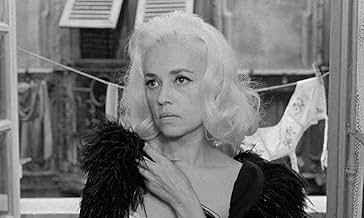
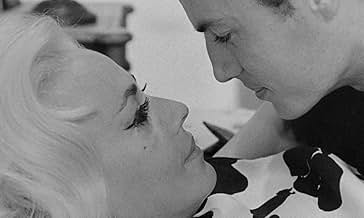
Jean is a clerk in a bank. His colleague Caron is a gambler and gives him the virus. In the casinos, Jean meets Jackie. Their love affair will follow their luck at the roulette.Jean is a clerk in a bank. His colleague Caron is a gambler and gives him the virus. In the casinos, Jean meets Jackie. Their love affair will follow their luck at the roulette.Jean is a clerk in a bank. His colleague Caron is a gambler and gives him the virus. In the casinos, Jean meets Jackie. Their love affair will follow their luck at the roulette.
- Awards
- 1 win total



- Director
- Writer
- All cast & crew
- Production, box office & more at IMDbPro
7.24.6K
1
2
3
4
5
6
7
8
9
10
Featured reviews
'Je croyais que cette vie n'existait plus'
This is a kind of interesting film. It has been overshadowed by later, greater works by Jacques Demy, such as Les Parapluies de Cherbourg, but at its heart it has pretty much the same themes - the difficulties of translating American modernity into French provincial life. Moreau has an unusual turn as an Americanised film star, complete with bleached blonde hair -do a la Marilyn Monroe, playing Jackie, a gambler on the Cote d'Azur. Jean, on holiday from his strict father, falls in love with her. This slight plot (that really is it!)is the background for meditations on chance, love, luck, and life. There are some virtuoso cinematic moments, such as Jackie running toward Jean being glimpsed in mirrors at the end of the film. The overpowering score is slightly grating, but all in all it's a charming period piece.
Well crafted, slow character study, microscopic quality.
This film enters with a spectacular high speed tracking shot matched by the hyper circular theme song by Michelle Legrand that sounds both like spinning and falling, and which does indeed represent both the spinning of the roulette wheel and falling in love.
Here we have the side of Jeanne Moreau I don't care for, posey, game playing and artificial... the kind of woman men like and women hate... and that made her perfect in this role. (And her performance her is Infinitely BETTER than in EVA, same type role.) What I like a lot about her casting here is that she looks quite a bit like Marilyn Monroe, but is as different internally as anyone can possibly be - which a lot of the world was doing at this time, being bad Marilyn Monroe wannabees. I love that the platinum hair makes her look much more harsh, older, and very false, and that is, of course, the essence of the character. And this film is mainly a character study, with little story and little explanation.
Our leading man is the young naive everyman sucked into her world in all respects. We feel for his every bad decision, and this is a true and real representation of both the allure and the tawdriness of the gambling world.
Without giving anything away, the ending feels contrived, but in this time period, films wanted "endings"... today a truer ending would just go on spinning like the roulette wheel. Michel Legrand's score is great. Like many of Demy's films, this is a dark story of the current day told with musicality and attention to the games we play with ourselves.
Here we have the side of Jeanne Moreau I don't care for, posey, game playing and artificial... the kind of woman men like and women hate... and that made her perfect in this role. (And her performance her is Infinitely BETTER than in EVA, same type role.) What I like a lot about her casting here is that she looks quite a bit like Marilyn Monroe, but is as different internally as anyone can possibly be - which a lot of the world was doing at this time, being bad Marilyn Monroe wannabees. I love that the platinum hair makes her look much more harsh, older, and very false, and that is, of course, the essence of the character. And this film is mainly a character study, with little story and little explanation.
Our leading man is the young naive everyman sucked into her world in all respects. We feel for his every bad decision, and this is a true and real representation of both the allure and the tawdriness of the gambling world.
Without giving anything away, the ending feels contrived, but in this time period, films wanted "endings"... today a truer ending would just go on spinning like the roulette wheel. Michel Legrand's score is great. Like many of Demy's films, this is a dark story of the current day told with musicality and attention to the games we play with ourselves.
Greatest sin of them all - not on video!
I was chilled to the bone, and mesmerized, by the dark crime of M (1931). Then, in the double-feature session, the 15-y-o boy trespassing as a 17-y-o, quickly changed his temperature when the 'great sinner' Jeanne Moreau appeared on La Baie des Anges (1963). «Actress Moreau forcefully demonstrates the verve, style and flamboyant femaless that make her the envy of European sex symbols much greener in years and cooler in blood. Her wicked, winning presence has saved a bad movie from utter oblivion, and at 36 she knows how to turn Bay of the Angels into a one woman show.» So wrote a reviewer (Time, November 27, 1964), and I couldn't put it better; I'm now copying this from my typewritten notes - no photocopier at home, then. That young boy would never enter a casino in his life due to this film, and he tried to see all the films starring Jeanne Moreau. I'm a winner on two counts, by money not given away to casino owners, and by a plethora of good films that were saved from oblivion by this great woman, and actress.
Luck be a lady..........
Although it may not go down too well with Jacques Demy devotees who enjoy seeing his characters burst into song, I consider this to be his most accomplished work. Not only is it close to perfection and technically flawless, no other film has managed to capture so well the agony and ecstasy of gambling.
Jean is introduced by a friend to the roulette tables in Nice and gets the bug. Initially he exercises great self-contol and quits when he's ahead but all that changes when he meets an addictive gambler named Jacqueline. They become lovers and the high and lows they experience in the casino are reflected in their relationship. Here Jeanne Moreau, one of the greatest of French actresses, complete with dyed blonde hair, cigarette holder and outfits from Pierre Cardin, is utterly riveting as Jacqueline and is perfectly complemented by Claude Mann whose first film this is. Excellent script by Demy although by all accounts he had little experience of gambling. Camerawork, editing and production design are exemplary. Unsurprisingly the score is by Michel Legrand whose partnership with Demy is one of cinema's most rewarding.
The gambler's life with its cycles of euphoria and despair and its dramatic fluctuations of luck, is very often frowned upon. Demy does not stoop to moralising but simply presents gambling as a metaphor for living. What this tender, bittersweet and entertaining piece does is to remind us that in the world of the gambler one law reigns supreme:THE HOUSE ALWAYS WINS.
Jean is introduced by a friend to the roulette tables in Nice and gets the bug. Initially he exercises great self-contol and quits when he's ahead but all that changes when he meets an addictive gambler named Jacqueline. They become lovers and the high and lows they experience in the casino are reflected in their relationship. Here Jeanne Moreau, one of the greatest of French actresses, complete with dyed blonde hair, cigarette holder and outfits from Pierre Cardin, is utterly riveting as Jacqueline and is perfectly complemented by Claude Mann whose first film this is. Excellent script by Demy although by all accounts he had little experience of gambling. Camerawork, editing and production design are exemplary. Unsurprisingly the score is by Michel Legrand whose partnership with Demy is one of cinema's most rewarding.
The gambler's life with its cycles of euphoria and despair and its dramatic fluctuations of luck, is very often frowned upon. Demy does not stoop to moralising but simply presents gambling as a metaphor for living. What this tender, bittersweet and entertaining piece does is to remind us that in the world of the gambler one law reigns supreme:THE HOUSE ALWAYS WINS.
Relatable and absorbing
Jacques Demy's "Bay Of Angels" may be the best movie ever made about compulsive gambling, along with the appropriately titled "The Gambler" (1974). It's not "realistic" in its technicalities (winning three consecutive times by betting on a single roulette number happens ONLY in the movies), but I don't think it wants to be; what it's trying to get at is the psychology of gambling, and at that it succeeds (in fact, it shows two different "types" of players: the wetting-his-feet and the full addict). This movie, which offers a rare view of the high and low life in and around the Nice and Monte Carlo casinos circa 1963, has the immediacy and spontaneity that the French New Wave often strived for, minus any of the pretentiousness (just compare it with Godard's not dissimilar "Pierrot Le Fou"). Jeanne Moreau sports an iconic look and plays a daringly flawed female character; the much lesser-known internationally Claude Mann is also very good. It's a minor classic. ***1/2 out of 4.


Did you know
- TriviaAccording to Agnès Varda, Jacques Demy had little to no experience gambling prior to making this film. Although another source states Demy decided to make the movie after winning a large bet placed on the number 17. Jackie's lucky number is also 17.
- Quotes
[English subtitled version]
Jean Fournier: I've been the studious, mild-mannered boy up until now. That's over now. I need something else.
- ConnectionsFeatured in Jacquot of Nantes (1991)
- How long is Bay of Angels?Powered by Alexa
Details
- Release date
- Countries of origin
- Official site
- Language
- Also known as
- Bay of the Angels
- Filming locations
- Production company
- See more company credits at IMDbPro
Box office
- Gross US & Canada
- $85,840
- Gross worldwide
- $85,840
- Runtime
- 1h 30m(90 min)
- Color
- Sound mix
Contribute to this page
Suggest an edit or add missing content