
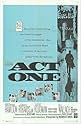
Story of the life of writer/playwright Moss Hart.Story of the life of writer/playwright Moss Hart.Story of the life of writer/playwright Moss Hart.
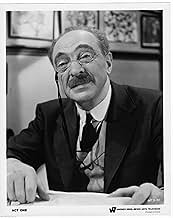
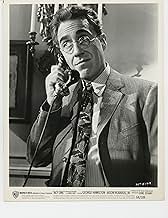
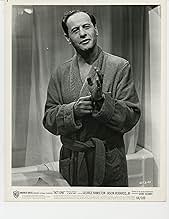
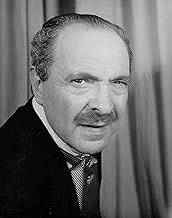
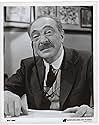


Jonathan Goldsmith
- Teddy Manson
- (as Jonathan Lippe)

- Director
- Writers
- All cast & crew
- Production, box office & more at IMDbPro
6.0317
1
2
3
4
5
6
7
8
9
10
Featured reviews
One of the worst movies I have ever seen
I am an actress and the book "Act One" is one of my favorites and a must-read for every actor, director, producer, etc. I know. The kind of book I re-read every 5 years or so. This movie was a disgrace. Although it had some good actors in it: Jason Robards, Jack Klugman, George Segal. Just awful and a slap in the face to the great Moss Hart. Bert Convy as "Archie Leach", a.k.a. Cary Grant and no English accent? What was that? Also, Moss Hart's family lived in grinding poverty and that was not shown accurately. The apartment they lived in looked much too nice. One of the many horrible things about it was the score! Intrusive, inappropriate, childish. Shame on you, Skitch Henderson!
interesting story not very well done
Moss Hart wrote one of the great books on theater, Act One, and here it's turned into a film starring George Hamilton as Hart.
The film also features Jason Robards as George S. Kaufman, Eli Wallach as a producer, George Segal as Hart's friend Lester, Sam Groom as a student, Ruth Ford as Mrs. Kaufman, Jack Klugman as a good friend to Moss, and Bert Convy as "Archie Leach," another friend, whom film fans know became Cary Grant.
The story goes from Hart's days as a young, serious playwright to the Broadway opening of Hart's first play, "Once in a Lifetime," co-written with George S. Kaufman. They became one of the finest Broadway writing teamsin theater history.
George Hamilton is a handsome man who has become a wonderful parody of himself and his tan in later years. He was never really much of an actor though he does an okay job here.
Someone certainly thought a lot of his looks here - he is photographed in closeup with a special light in his eyes, the kind designed for Dirk Bogarde in the '50s.
I don't know if Dore Schary, the director, had a limited budget or what, but casting Bert Convy as Cary Grant was such an insult to probably the biggest male film star of all time. Convy was nice looking, but he made no attempt at an accent. The problem is, it was too small a part to cast someone like John Gavin.
The rest of the performances were fine, but Jason Robards as Kaufman was a true standout. Wallach didn't have much to do.
The film has been criticized for being too sentimental. I didn't find it sentimental, I found it unexciting, when there's probably nothing more exciting than preparing a show for Broadway.
It's possible that the book wasn't really adaptable as a movie. It's hard to make writing exciting on screen. Hart was a huge talent who wrote some fabulous plays. I just don't think that somehow, his story made for an impressive film.
The film also features Jason Robards as George S. Kaufman, Eli Wallach as a producer, George Segal as Hart's friend Lester, Sam Groom as a student, Ruth Ford as Mrs. Kaufman, Jack Klugman as a good friend to Moss, and Bert Convy as "Archie Leach," another friend, whom film fans know became Cary Grant.
The story goes from Hart's days as a young, serious playwright to the Broadway opening of Hart's first play, "Once in a Lifetime," co-written with George S. Kaufman. They became one of the finest Broadway writing teamsin theater history.
George Hamilton is a handsome man who has become a wonderful parody of himself and his tan in later years. He was never really much of an actor though he does an okay job here.
Someone certainly thought a lot of his looks here - he is photographed in closeup with a special light in his eyes, the kind designed for Dirk Bogarde in the '50s.
I don't know if Dore Schary, the director, had a limited budget or what, but casting Bert Convy as Cary Grant was such an insult to probably the biggest male film star of all time. Convy was nice looking, but he made no attempt at an accent. The problem is, it was too small a part to cast someone like John Gavin.
The rest of the performances were fine, but Jason Robards as Kaufman was a true standout. Wallach didn't have much to do.
The film has been criticized for being too sentimental. I didn't find it sentimental, I found it unexciting, when there's probably nothing more exciting than preparing a show for Broadway.
It's possible that the book wasn't really adaptable as a movie. It's hard to make writing exciting on screen. Hart was a huge talent who wrote some fabulous plays. I just don't think that somehow, his story made for an impressive film.
The Creative Process
Four years before his death in 1961 Moss Hart wrote his incredibly successful autobiography Act One where he detailed the story of his life as the son of a cigar maker until the opening night of his first Broadway success, Once In A Lifetime. The film skips all of his childhood and early adulthood and concentrates on the creation of that first success and the process that went into it.
With Dore Schary producing and directing the film for Warner Brothers it certainly could be said that this was someone who knew the creative process and could empathize with Moss struggling to write that first success, accepting the help of George S. Kaufman who had already achieved success on Broadway as a collaborator with such folks as Morrie Ryskind and Edna Ferber and Marc Connelly. Two heads are often better than one when it's right two heads.
As this was written way before Stonewall, the gay side of Moss Hart was certainly not explored. Moss Hart married Kitty Carlisle and they did have two children, but Moss was forever a man on the prowl as any number of Broadway folks could have attested to back in the day. Young George Hamilton may not have looked Jewish, but he certainly gave off some attractive vibes.
With his hair styled as a straight up flat top and a pair of glasses, Jason Robards, Jr. was the spitting image of George S. Kaufman who probably put more wit into the mouths of actors than anyone else in the last century, not to mention some of the offhanded cracks he was credited with. Ruth Ford played a sympathetic first wife who was soon to be an injured innocent party when Kaufman got dragged into Mary Astor's divorce case via her diary. According to her Kaufman had more than wit available in his arsenal.
Eli Wallach puts in an appearance as a producer who was supposed to be based on Jed Harris who was one of the most disliked men on Broadway, the spiritual father of David Merrick later on. He doesn't get much to work with so it's not one of his better portrayals.
You also had to love that delicatessen round-table that included such folks as Jack Klugman, George Segal, and Bert Convy playing a young actor named Archie Leach. As Cary Grant said in His Girl Friday, no one ever heard from him again. Sort of a warm up for Hart of the famous Algonquin round-table where he and Kaufman were charter members.
Moss Hart probably came along at one of the peak times for creativity in the American theater and he became a very big part of it. He also got over his distaste for musicals being associated with quite a few good ones in his time, the last being Camelot. Maybe had he lived we might have seen an Act Two. But his whole life was one big creative process.
With Dore Schary producing and directing the film for Warner Brothers it certainly could be said that this was someone who knew the creative process and could empathize with Moss struggling to write that first success, accepting the help of George S. Kaufman who had already achieved success on Broadway as a collaborator with such folks as Morrie Ryskind and Edna Ferber and Marc Connelly. Two heads are often better than one when it's right two heads.
As this was written way before Stonewall, the gay side of Moss Hart was certainly not explored. Moss Hart married Kitty Carlisle and they did have two children, but Moss was forever a man on the prowl as any number of Broadway folks could have attested to back in the day. Young George Hamilton may not have looked Jewish, but he certainly gave off some attractive vibes.
With his hair styled as a straight up flat top and a pair of glasses, Jason Robards, Jr. was the spitting image of George S. Kaufman who probably put more wit into the mouths of actors than anyone else in the last century, not to mention some of the offhanded cracks he was credited with. Ruth Ford played a sympathetic first wife who was soon to be an injured innocent party when Kaufman got dragged into Mary Astor's divorce case via her diary. According to her Kaufman had more than wit available in his arsenal.
Eli Wallach puts in an appearance as a producer who was supposed to be based on Jed Harris who was one of the most disliked men on Broadway, the spiritual father of David Merrick later on. He doesn't get much to work with so it's not one of his better portrayals.
You also had to love that delicatessen round-table that included such folks as Jack Klugman, George Segal, and Bert Convy playing a young actor named Archie Leach. As Cary Grant said in His Girl Friday, no one ever heard from him again. Sort of a warm up for Hart of the famous Algonquin round-table where he and Kaufman were charter members.
Moss Hart probably came along at one of the peak times for creativity in the American theater and he became a very big part of it. He also got over his distaste for musicals being associated with quite a few good ones in his time, the last being Camelot. Maybe had he lived we might have seen an Act Two. But his whole life was one big creative process.
A Showbiz Yarn
The movie, unlike the weighty memoir upon which it was based, is a typical showbiz-in-the-1920s yarn about a young man making it big on Broadway in spite of his own insecurity and the many setbacks in the production of his first play. It is satisfying as such, with memorable performances by Jason Robards as the grumpy genius George S. Kaufman, Bert Convy as the struggling Archie Leach, and Eli Wallach as a Jed Harris-like obnoxious producer, and many other cameos of well known actors playing legendary New Yorkers of the day.
George Hamilton was too suave, too dapper, and just too damn pretty to be all that convincing as Moss Hart, but he was at his peak here, and he does a pretty good acting turn.
The story is predictable, but the movie still works, depicting a legend in an industry that loves legends about itself. There is a show playing in New York now based on the same material, and it is a huge hit. Maybe it portrays more of the poverty and the agony from which the real Moss Hart sprang, I don't know; but this movie hardly attempts to do that. Instead it gives us another fantasy of a time and place we love to think about and a life we would love to live. If you're not interested in that, this movie is not for you.
George Hamilton was too suave, too dapper, and just too damn pretty to be all that convincing as Moss Hart, but he was at his peak here, and he does a pretty good acting turn.
The story is predictable, but the movie still works, depicting a legend in an industry that loves legends about itself. There is a show playing in New York now based on the same material, and it is a huge hit. Maybe it portrays more of the poverty and the agony from which the real Moss Hart sprang, I don't know; but this movie hardly attempts to do that. Instead it gives us another fantasy of a time and place we love to think about and a life we would love to live. If you're not interested in that, this movie is not for you.
Maybe I liked this better than most...
... because I've actually seen "Once In a Lifetime" filmed by Universal in 1932 and thought it hilarious. Plus I just have an affinity for the early talkies. Since this film focuses on playwright Moss Hart's efforts to birth his first hit, the play by the same name about the birth of the talkies, I was quite interested in it.
I've also read the book "Act One", and it is going to be impossible to incorporate all of Hart's comic and insightful remarks about the creative process into one less than 120 minute film, so I managed my expectations.
George Hamilton works as the fresh faced Hart, still living in his cramped apartment with his impoverished family at age 25, with high expectations of writing a drama who has to pivot to comedy, thus "Once in a Lifetime". And watching somebody have to sit for days in an office to see an important producer when they actually have an appointment, only to have that meeting finally take place in the producer's bathroom was quite funny.
The second half is focused on his partnership with George S. Kaufmann, with a great performance by Jason Robards in that role. He got that less was more in this part. It really is a strange marriage, but the film avoids sentimentality by not trying to say that the two ever really bond in any kind of way. Instead, Kaufmann slowly grows to accept and respect Hart, even introducing him to his Algonquin roundtable friends.
Hart has his own kind of Algonquin roundtable, always meeting in restaurants. The most recognizable name will probably be Archie Leach, played by Bert Convy. You might also recognize Mr. Leach under his stage name - Cary Grant.
The struggling artist as a young man trope is well-trod ground, but some low-key performances make this a jovial enough time, so I'd recommend it.
I've also read the book "Act One", and it is going to be impossible to incorporate all of Hart's comic and insightful remarks about the creative process into one less than 120 minute film, so I managed my expectations.
George Hamilton works as the fresh faced Hart, still living in his cramped apartment with his impoverished family at age 25, with high expectations of writing a drama who has to pivot to comedy, thus "Once in a Lifetime". And watching somebody have to sit for days in an office to see an important producer when they actually have an appointment, only to have that meeting finally take place in the producer's bathroom was quite funny.
The second half is focused on his partnership with George S. Kaufmann, with a great performance by Jason Robards in that role. He got that less was more in this part. It really is a strange marriage, but the film avoids sentimentality by not trying to say that the two ever really bond in any kind of way. Instead, Kaufmann slowly grows to accept and respect Hart, even introducing him to his Algonquin roundtable friends.
Hart has his own kind of Algonquin roundtable, always meeting in restaurants. The most recognizable name will probably be Archie Leach, played by Bert Convy. You might also recognize Mr. Leach under his stage name - Cary Grant.
The struggling artist as a young man trope is well-trod ground, but some low-key performances make this a jovial enough time, so I'd recommend it.


Did you know
- TriviaFirst film role of Jonathan Goldsmith (as Jonathan Lippe), who portrayed Teddy Manson, and who is now much better known as "The Most Interesting Man in the World" from Dos Equis beer TV commercials.
- GoofsIn the opening scene, set in September 1929, Moss Hart turns on his radio to listen to a news report by Jimmy Wallington. One of the stories features an error as Wallington reports "Colonel Theodore Roosevelt returned to New York yesterday from a 10-month expedition in China...the former President was in excellent spirits..." This would have been impossible as President Theodore Roosevelt died 10 years earlier. However, his sons Theodore Roosevelt Jr. (a brigadier general in the Army) and Kermit Roosevelt did, in fact, make a 10-month expedition to China between 1928 and 1929.
The radio also reports that the New York Yankees defeated the Detroit Tigers 9-3 the previous day, but the game occurred two days earlier and the previous day's game had been postponed because of rain. The news report is read nearly verbatim from the New York Times' account of the game.
- Crazy credits"Curtain" (instead of "The End")
- ConnectionsReferenced in I've Got a Secret: George Hamilton (1963)
Details
- Runtime
- 1h 50m(110 min)
- Color
- Aspect ratio
- 1.66 : 1
Contribute to this page
Suggest an edit or add missing content