IMDb RATING
6.0/10
2.2K
YOUR RATING


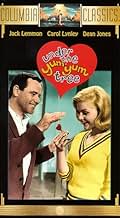
A horny, love-struck landlord tries to convince a pretty young tenant to dump her fiancé and give him a chance.A horny, love-struck landlord tries to convince a pretty young tenant to dump her fiancé and give him a chance.A horny, love-struck landlord tries to convince a pretty young tenant to dump her fiancé and give him a chance.
- Awards
- 2 nominations total


Jerry Antes
- Adam
- (uncredited)
Tom Anthony
- Barber
- (uncredited)

Army Archerd
- Writer
- (uncredited)

Phil Arnold
- Delivery Man
- (uncredited)
Roger Bacon
- Writer
- (uncredited)

Bill Bixby
- Track Team Coach
- (uncredited)

Paul Bradley
- Barbershop Customer
- (uncredited)

Françoise Bush
- College Girl
- (uncredited)

Gloria Calomee
- Sandy
- (uncredited)

Cliff Carnell
- Athletic Instructor
- (uncredited)
- Director
- Writers
- All cast & crew
- Production, box office & more at IMDbPro
6.02.2K
1
2
3
4
5
6
7
8
9
10
Featured reviews
a little bit of fun
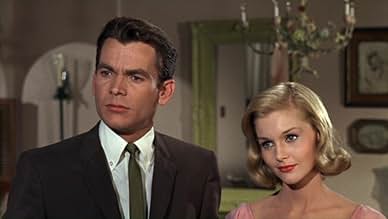
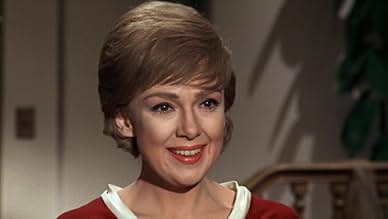
Robin Austin (Carol Lynley) is concerned about her compatibility with boyfriend Dave Manning (Dean Jones). She convinces him to live together first. Her divorced aunt Dr. Irene Wilson (Edie Adams) is moving out of her apartment to move in with her boyfriend Dr. Charles Howard. Hogan (Jack Lemmon) is the womanizing neighbor landlord and he's more than eager to rent the place to Robin.
It's a little bit of fun especially with Lemmon. It could be funnier. It should be funnier. Lemmon and Jones could be a fun rivalry but her choice is never in doubt. Lynley is plenty pretty enough and she is fine. There is some attempt at 60's sex comedy humor but the bite isn't sharp enough and it doesn't bite deep enough. This may be edgy for a 50's sex comedy but feels safe for the 60's. For Lemmon fans, this is interesting to complete their list.
It's a little bit of fun especially with Lemmon. It could be funnier. It should be funnier. Lemmon and Jones could be a fun rivalry but her choice is never in doubt. Lynley is plenty pretty enough and she is fine. There is some attempt at 60's sex comedy humor but the bite isn't sharp enough and it doesn't bite deep enough. This may be edgy for a 50's sex comedy but feels safe for the 60's. For Lemmon fans, this is interesting to complete their list.
The message is actually good
There are so many competent recaps, I will spare readers of my own. However, suffice it to say that this is a pretty simple movie.
The poor reviews were really fascinating to see before I watched the movie, so naturally, I felt even more intrigued. I will admit that this is not Oscar-worthy material in any way. It's a fluffy movie that had earnest attempts at humor and levity. It isn't going to make anyone see life differently, *unless*: you are able to open your mind a little.
The underlying message of the movie is initially "it's wrong to live together romantically unless you're married" (typical mid-century mindset). The secondary theme is "misunderstanding". The love interest is misled both intentionally and unintentionally, which results in the eventual winning of her heart.
But, the final message that I took from this movie is the one that was eloquently stated by Aunt Irene, who states that "love is created", and doesn't fall off a tree. Even when it seems that way, your relationship is not going to be butterflies and flowers forever, no matter how in-love you begin. It's about truly caring for the other, and trying to offer them grace and understanding.
This was at the very end of the movie, and it inspired me to actually like the movie enough to save it on my DVR!
The biggest downfalls of this movie, aside from the many you've read already, are the fact that it's boring when there is a lack of dialogue and only Jack Lemmon making goofy faces; the portions with the meddling groundskeeper and his wife were also like watching a sitcom, nothing special or unique. The most interesting non-plot feature to me was the incredible set, full of both real and fake objects. It was just so colorful, starting with the opening theme song.
The most impressive moment of all: when the celebrity kitty (Orangey) was holding himself up with front paws on a brick wall, while drinking a saucer of milk. Incredibly adorable and worth seeing!
The poor reviews were really fascinating to see before I watched the movie, so naturally, I felt even more intrigued. I will admit that this is not Oscar-worthy material in any way. It's a fluffy movie that had earnest attempts at humor and levity. It isn't going to make anyone see life differently, *unless*: you are able to open your mind a little.
The underlying message of the movie is initially "it's wrong to live together romantically unless you're married" (typical mid-century mindset). The secondary theme is "misunderstanding". The love interest is misled both intentionally and unintentionally, which results in the eventual winning of her heart.
But, the final message that I took from this movie is the one that was eloquently stated by Aunt Irene, who states that "love is created", and doesn't fall off a tree. Even when it seems that way, your relationship is not going to be butterflies and flowers forever, no matter how in-love you begin. It's about truly caring for the other, and trying to offer them grace and understanding.
This was at the very end of the movie, and it inspired me to actually like the movie enough to save it on my DVR!
The biggest downfalls of this movie, aside from the many you've read already, are the fact that it's boring when there is a lack of dialogue and only Jack Lemmon making goofy faces; the portions with the meddling groundskeeper and his wife were also like watching a sitcom, nothing special or unique. The most interesting non-plot feature to me was the incredible set, full of both real and fake objects. It was just so colorful, starting with the opening theme song.
The most impressive moment of all: when the celebrity kitty (Orangey) was holding himself up with front paws on a brick wall, while drinking a saucer of milk. Incredibly adorable and worth seeing!
One big long smirk
Ben Mankiewicz noted on TCM that Jack Lemmon was not happy being assigned this film version of a semi-hit Broadway sex comedy from 1960, and you can see why. As the libidinous landlord of a California complex who rents out only to nubile young things, he's playing an absolutely awful man, and for all his comic finesse, he's charmless and irritating. In Lawrence Roman's oversexed plot (he adapted his play with director David Swift), Lemmon's Hogan mistakenly rents a beautiful one bedroom (for $75 a month; oh, to be in 1963) to undergrad Carol Lynley, who plans to share it platonically with her fiancé, Dean Jones, who had played this part on Broadway. And from there it's one long smirk, with Lynley wiggling her fanny in short-short outfits, Jones bemoaning how difficult a no-sex policy is, and Lemmon mugging and being thoroughly unpleasant. Edie Adams, as Lemmon's ex and Lynley's aunt, is a pro, and Paul Lynde, as a horny-for-young-girls (ha) gardener, and Imogene Coca, as his disapproving wife, wring what laughs they can out of repellent material. If you want to know what '60s sex comedies were like, with endless jokes on will-she-won't- she-lose-her-virginity, this is a good example, typically over lit and supplemented with a cutesy Frank DeVol score. And Lynley and Jones are charming. But given the change in morality in intervening years, it looks it was made on another planet.
Failed to Measure Up to Its True Potential
Having concluded that marriage shouldn't be rushed into because of sexual chemistry, a young college student named "Robin Austin" (Carol Lynley) convinces her boyfriend, "Dave Manning" (Dean Jones), to move in with her as soon as she finds an apartment, on the condition that they do not become physically intimate. Needless to say, Dave thinks this is a terrible idea, but to keep their relationship going, he reluctantly agrees. At the same time, Robin's aunt and college professor, "Dr. Irene Wilson" (Edie Adams), decides to move out of her apartment mainly because she no longer wants to pursue a romantic relationship with her landlord, "Mr. Hogan" (Jack Lemmon). When she tells Robin she's moving out, Robin eagerly jumps at the chance to fill the vacancy. What she doesn't realize is that Hogan is a notorious womanizer who, upon learning about the non-intimacy agreement between Robin and Dave, is more than happy to keep them apart so he can have Robin for himself. To avoid revealing too much, I'll just say this started with an interesting premise and had the right cast for what could have been an outstanding comedy. However, the problem is that Jack Lemmon's character wasn't very likable, and as a result, much of his performance lacked humor. Similarly, the director (David Swift) focused too much on Jack Lemmon's role while limiting the comedic potential of Paul Lynde (as the handyman named "Murphy"). At least, that's how it seemed to me. Nevertheless, although I wouldn't call this a bad movie, I don't think it was as good as it could have been, and I have rated it accordingly.
Funny, Entertaining but it goes on for a bit too long:
I've been catching up on a few of these early sixties semi-sex comedies, while in Covid essential isolation. I'm starting to fall in love with Carol Lynley though sadly, she died about a year ago. Jack Lemmon is always funny and interesting, Edie Adams is forever appealing and Paul Lynde, as the frustrated repressed wannabe letch is amusing to watch.
Yes, I was entertained throughout, yes it was relatively original and yes, I recommend it. However, it does go on for a bit too long without veering direction and there's never a moment when you don't know where it's going to end up. It was, after all, 1963, when the Hays code was starting to be lifted but wasn't quite there yet. Young people in the country were preparing for the sexual revolution but they weren't quite there yet, either. By 1967, the year of Bonnie and Clyde, The Graduate and the year after Who's Afraid of Virginia Woolf, the dynamic between this couple would have been entirely different. And by 1974, the film could have gone in a wide assortment of directions. In 1963, again at the time of the almost sex comedy, there was really only one way this film could go. Watching it get there was entertaining but again, it needed a few more turns and twists to justify the length.
Norman Fell's landlord character from The Graduate ended up as the landlord on Three's Company. It might have been interesting to see this landlord replace him.
Yes, I was entertained throughout, yes it was relatively original and yes, I recommend it. However, it does go on for a bit too long without veering direction and there's never a moment when you don't know where it's going to end up. It was, after all, 1963, when the Hays code was starting to be lifted but wasn't quite there yet. Young people in the country were preparing for the sexual revolution but they weren't quite there yet, either. By 1967, the year of Bonnie and Clyde, The Graduate and the year after Who's Afraid of Virginia Woolf, the dynamic between this couple would have been entirely different. And by 1974, the film could have gone in a wide assortment of directions. In 1963, again at the time of the almost sex comedy, there was really only one way this film could go. Watching it get there was entertaining but again, it needed a few more turns and twists to justify the length.
Norman Fell's landlord character from The Graduate ended up as the landlord on Three's Company. It might have been interesting to see this landlord replace him.


Did you know
- TriviaTo help out his friend Edie Adams financially after her husband Ernie Kovacs's sudden death left her debt-ridden, star/co-producer Jack Lemmon not only insisted upon hiring her for this film, but further insisted that her part be expanded considerably from the original stage play to give her more work.
- GoofsRobin comes up to the door of her apartment with a bag of groceries, which includes two upside-down bunches of celery (root end up), and a square-shaped box of eggs. Then as the camera angle switches to show her coming through the door, the two bunches of celery have suddenly switched to right side up (leafy end up), and the square box of eggs has magically turned into a rectangular shaped box.
- ConnectionsFeatured in Hollywood and the Stars: The Funny Men: Part 2 (1963)
Details
- Release date
- Country of origin
- Languages
- Also known as
- El pícaro seductor
- Filming locations
- 1355 N. Laurel Ave., West Hollywood, California, USA(Centaur Apartments)
- Production company
- See more company credits at IMDbPro
- Runtime
- 1h 50m(110 min)
- Aspect ratio
- 1.85 : 1
Contribute to this page
Suggest an edit or add missing content