Release calendarTop 250 moviesMost popular moviesBrowse movies by genreTop box officeShowtimes & ticketsMovie newsIndia movie spotlight
    What's on TV & streamingTop 250 TV showsMost popular TV showsBrowse TV shows by genreTV news
    What to watchLatest trailersIMDb OriginalsIMDb PicksIMDb SpotlightFamily entertainment guideIMDb Podcasts
    OscarsBest Of 2025Holiday Watch GuideGotham AwardsCelebrity PhotosSTARmeter AwardsAwards CentralFestival CentralAll events
    Born todayMost popular celebsCelebrity news
    Help centerContributor zonePolls
For industry professionals
  • Language
  • Fully supported
  • English (United States)
    Partially supported
  • Français (Canada)
  • Français (France)
  • Deutsch (Deutschland)
  • हिंदी (भारत)
  • Italiano (Italia)
  • Português (Brasil)
  • Español (España)
  • Español (México)
Watchlist
Sign in
  • Fully supported
  • English (United States)
    Partially supported
  • Français (Canada)
  • Français (France)
  • Deutsch (Deutschland)
  • हिंदी (भारत)
  • Italiano (Italia)
  • Português (Brasil)
  • Español (España)
  • Español (México)
Use app
  • Cast & crew
  • User reviews
  • Trivia
  • FAQ
IMDbPro

An Actor's Revenge

Original title: Yukinojô henge
  • 1963
  • Not Rated
  • 1h 55m
IMDb RATING
7.3/10
3.1K
YOUR RATING
An Actor's Revenge (1963)
JapanesePeriod DramaActionComedyDrama

Yukinojo, a Kabuki actor, seeks revenge by destroying the three men who caused the deaths of his parents. Also involved are the daughter of one of Yukinojo's targets, two master thieves, and... Read allYukinojo, a Kabuki actor, seeks revenge by destroying the three men who caused the deaths of his parents. Also involved are the daughter of one of Yukinojo's targets, two master thieves, and a swordsman who himself is out to kill Yukinojo.Yukinojo, a Kabuki actor, seeks revenge by destroying the three men who caused the deaths of his parents. Also involved are the daughter of one of Yukinojo's targets, two master thieves, and a swordsman who himself is out to kill Yukinojo.

  • Director
    • Kon Ichikawa
  • Writers
    • Otokichi Mikami
    • Daisuke Itô
    • Teinosuke Kinugasa
  • Stars
    • Kazuo Hasegawa
    • Fujiko Yamamoto
    • Ayako Wakao
  • See production info at IMDbPro
  • IMDb RATING
    7.3/10
    3.1K
    YOUR RATING
    • Director
      • Kon Ichikawa
    • Writers
      • Otokichi Mikami
      • Daisuke Itô
      • Teinosuke Kinugasa
    • Stars
      • Kazuo Hasegawa
      • Fujiko Yamamoto
      • Ayako Wakao
    • 25User reviews
    • 41Critic reviews
  • See production info at IMDbPro
  • See production info at IMDbPro
    • Awards
      • 1 win total

    Photos30

    View Poster
    View Poster
    View Poster
    View Poster
    View Poster
    + 25
    View Poster

    Top Cast31

    Edit
    Kazuo Hasegawa
    Kazuo Hasegawa
    • Yukinojo Nakamura…
    Fujiko Yamamoto
    Fujiko Yamamoto
    • Ohatsu
    Ayako Wakao
    Ayako Wakao
    • Namiji
    Eiji Funakoshi
    Eiji Funakoshi
    • Heima Kadokura
    Narutoshi Hayashi
    • Mukuzu
    Eijirô Yanagi
    Eijirô Yanagi
    • Hiromi-ya
    Chûsha Ichikawa
    • Kikunojo Nakamura
    Ganjirô Nakamura
    Ganjirô Nakamura
    • Sansai Dobe
    Yutaka Nakayama
    Yutaka Nakayama
    • Townsman
    Chitose Maki
    • Townswoman
    Toshio Chiba
    • Ronin
    Kôichi Mizuhara
    Kôichi Mizuhara
    • Dobe's Man
    Saburô Date
    Saburô Date
    • Kawaguchi-ya
    Shirô Ôtsuji
    • Civil Guardsman
    Jun Hamamura
    Jun Hamamura
    • Isshosai
    Kikue Môri
    Kikue Môri
    • Cruel Old Woman
    Yoshi Katô
    Yoshi Katô
    • Shogun's Retainer
    Eigorô Onoe
    • Shogun
    • Director
      • Kon Ichikawa
    • Writers
      • Otokichi Mikami
      • Daisuke Itô
      • Teinosuke Kinugasa
    • All cast & crew
    • Production, box office & more at IMDbPro

    User reviews25

    7.33.1K
    1
    2
    3
    4
    5
    6
    7
    8
    9
    10

    Featured reviews

    8planktonrules

    Even for a samurai or revenge film, this one is unusual.

    I have seen several hundred Japanese films but am far from an expert on these movies. After all, I am not Japanese and don't always understand some of the subtleties in the pictures. For example, in "An Actor's Revenge", the main character (Yukinojo) is a man who performs as a woman on stage--that I knew and understood. However, he maintained this persona off-stage as well and I wondered just how unusual this was--did other male Kabuki actors also maintain this persona when they weren't acting? If you can answer this question, I would love to hear from you.

    The film begins at a Kabuki performance. Yukinojo has recently come to Edo (Tokyo) and has been planning revenge on three scoundrels for many years. It seemed these wicked men were responsible for destroying his family and he sees himself as the instrument of revenge--much like the character in another famous Japanese film, "Lady Snowblood". However, he doesn't want to just stab them--he wants to have them linger and give him a chance to revel in their destruction. Part of it, however, depends on using the daughter of one of these wicked men--and the lady is innocent of causing any harm to anyone. What's Yukinojo to do? And, what is he to do when several ancillary characters blunder or wander into his plans?

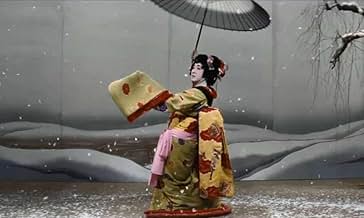
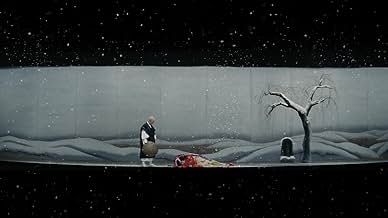
    There were several things I liked about the film. First, the various thieves who were no necessary to the film helped to give the film greater depth and, in an odd way, fun. Second, the film was made in many ways like the entire production was ALL part of a play. Often, using interesting lighting and sets, it looked as if the line between the off-stage and on-stage was often blurred. It made the film truly memorable. Overall, well worth seeing and gloriously artistic.
    chaos-rampant

    A vibrant, theatrical film with a forgettable story but impressive style

    This is an Ichikawa film so expect anything short of sheer visual awesomeness and yer a fool. Impeccably staged, superbly lighted and shot with remarkable flair for atmosphere, this one deserves a watch on its technical cinematic merits alone. The plot relates the adventures of a Kabuki stage actor plotting revenge against those who disgraced and drove his parents to madness and suicide, apparently a readaptation of a 30's movie. Everything is very campy though and the protagonist, a feminine man with a pathetic croaky voice dressed in woman's clothes, is bound to induce a fair amount of groans. Obviously related to the material at hand, Ichikawa stages and shoots the movie in a stylized theatrical manner. The intentional artificiality of sets and lighting perfectly mirrors that. Perhaps the best thing about it is the use of colour, with bright reds, yellows and whites offering a vibrant counterbalance to the almost complete darkness of other set-pieces. All in all, I didn't find the dramaturgy of the film very involving and I suspect Ichikawa didn't care for it either. From a technical standpoint however it is certainly commendable.
    8roedyg

    now for something completely different

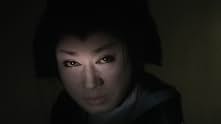
    This movie is quite unlike any other I have ever seen. Oddly, one of the strangest things about it is the lighting. Much of the action occurs in the dark with just spotlights on the actors. This gives it a very stagy surreal feel. It takes place in historic Japan where people demonstrate their wealth not by cramming rooms with furniture, but by having gigantic carpeted empty rooms, with nothing in them but perhaps a stool. I found these starkly elegant and immensely pleasing. The exotic are things that come from Holland. It is fun looking through the Japanese side of the lens of history.

    Characters often pose perfectly still for minutes an a time while some other character does something or narrates.

    Yuki is a male who plays female roles in traditional Kabuki theatre. He always appears in elaborate female clothes. He is has a double chin. He is quite homely, both as male and female, but for reasons never satisfactorily explained seems irresistible to both males and females even though there are many other characters of either sex much better looking. He is also skilled at sword fighting. He is preposterously polite, effusive and self-effacing. The basic plot is seeking revenge for horrible things three men did to his parents. He subtly manipulates his enemies to do each other in.

    A kabuki actor who wanders around is drag offstage does not seem to raise any eyebrows, except for people who don't realise he as an actor. Nobody seems to be the tiniest bit embarrassed by their attraction to him, perhaps annoyed or frustrated, but not ashamed.

    The plot is operatic, very high emotions and drastic crazy behaviour. Kabuki theatre is definitely an acquired taste, but this movie is quite accessible and anything but boring.

    There is one actor who plays two major roles. They give you a hint who it is near the end of the movie. See if you can pick it out earlier.
    8GyatsoLa

    Kabuki in a kabuki

    This movie is that rare species - a film that doesn't take itself seriously for a moment, and yet is stunningly well made and original.

    According to Donald Richies '100 Years of Japanese Cinema' the director was forced to make this movie (the remake of a popular but very hammy 1930's original) as a punishment for his self indulgence in earlier movies. He responded by turning up the campiness to '11' in Spinal Tap terms.

    Kon Ichikawa manages to take the story of a famous Kabuki female impersonator who wrecks revenge on three powerful men who killed his parents both beautiful (the scenery and photography is stunning) and queasy - everyone seems to fall in love with the rather ugly and very feminine leading 'man'. The story is irrelevant (presumably deliberately so), its all an exercise in style. You can see where Suzuki and many other later directors got a lot of their ideas. Kon is a very talented and skillful film maker so despite the fact that the cast are clearly playing it up for laughs, it is extremely well made, with wonderful sets and tight editing. Despite its origins, it is genuinely entertaining and required viewing for anyone with an interest in Kabuki or Japanese design.
    7christopher-underwood

    There are some truly beautiful scenes here

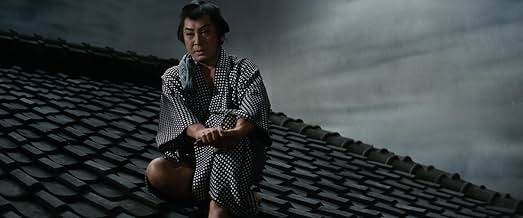
    There are some truly beautiful scenes here, particularly the marvellous use of widescreen in the colourful kabuki sequences and Kazuoha Segawa is faultless in the duel central role. He plays dressed as a woman on the stage but seems also to live out his life this way and he also plays his thieving side-kick. Apparently played for laughs throughout it is difficult for a non Japanese to fully appreciate much of the subtlety and Shakespearean style play on words. Indeed, for me, the whole is rather too mannered and stagey. There is much blurring between stage and 'real life' which some find charming but I tend to find rather confusing and lifeless.

    More like this

    The Burmese Harp
    8.0
    The Burmese Harp
    Fires on the Plain
    7.9
    Fires on the Plain
    Tokyo Olympiad
    7.8
    Tokyo Olympiad
    Conflagration
    7.1
    Conflagration
    The Makioka Sisters
    7.2
    The Makioka Sisters
    A Wife Confesses
    7.4
    A Wife Confesses
    Brother
    6.9
    Brother
    Seisaku's Wife
    7.7
    Seisaku's Wife
    A Story from Chikamatsu
    8.0
    A Story from Chikamatsu
    Gate of Hell
    7.1
    Gate of Hell
    Floating Clouds
    7.6
    Floating Clouds
    Double Suicide
    7.6
    Double Suicide

    Related interests

    Hidetoshi Nishijima and Tôko Miura in Drive My Car (2021)
    Japanese
    Emma Watson, Saoirse Ronan, Florence Pugh, and Eliza Scanlen in Little Women (2019)
    Period Drama
    Bruce Willis and Taniel in Die Hard (1988)
    Action
    Will Ferrell in Anchorman: The Legend of Ron Burgundy (2004)
    Comedy
    Naomie Harris, Mahershala Ali, Janelle Monáe, André Holland, Herman Caheej McGloun, Edson Jean, Alex R. Hibbert, and Tanisha Cidel in Moonlight (2016)
    Drama

    Storyline

    Edit

    Did you know

    Edit
    • Trivia
      Originally designed as a tribute to actor Kazuo Hasegawa, whose 300th film this was. The film was based Teinosuke Kinugasa's Yukinojô henge: Daiippen (1935) which also starred Hasegawa in the same dual role.
    • Connections
      Version of Yukinojô henge: Daiippen (1935)

    Top picks

    Sign in to rate and Watchlist for personalized recommendations
    Sign in

    FAQ14

    • How long is An Actor's Revenge?Powered by Alexa

    Details

    Edit
    • Release date
      • June 16, 1971 (United States)
    • Country of origin
      • Japan
    • Language
      • Japanese
    • Also known as
      • Snow of Strange Change
    • Production company
      • Daiei Studios
    • See more company credits at IMDbPro

    Tech specs

    Edit
    • Runtime
      • 1h 55m(115 min)
    • Sound mix
      • Mono
    • Aspect ratio
      • 2.35 : 1

    Contribute to this page

    Suggest an edit or add missing content
    • Learn more about contributing
    Edit page

    More to explore

    Recently viewed

    Please enable browser cookies to use this feature. Learn more.
    Get the IMDb App
    Sign in for more accessSign in for more access
    Follow IMDb on social
    Get the IMDb App
    For Android and iOS
    Get the IMDb App
    • Help
    • Site Index
    • IMDbPro
    • Box Office Mojo
    • License IMDb Data
    • Press Room
    • Advertising
    • Jobs
    • Conditions of Use
    • Privacy Policy
    • Your Ads Privacy Choices
    IMDb, an Amazon company

    © 1990-2025 by IMDb.com, Inc.