IMDb RATING
6.7/10
6.9K
YOUR RATING


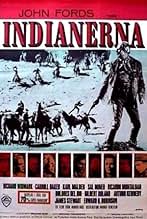
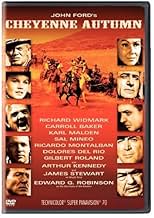
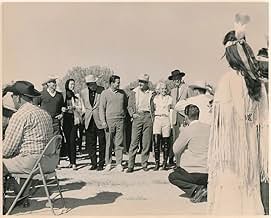
The Cheyenne, tired of broken U.S. government promises, head for their ancestral lands but a sympathetic cavalry officer is tasked to bring them back to their reservation.The Cheyenne, tired of broken U.S. government promises, head for their ancestral lands but a sympathetic cavalry officer is tasked to bring them back to their reservation.The Cheyenne, tired of broken U.S. government promises, head for their ancestral lands but a sympathetic cavalry officer is tasked to bring them back to their reservation.
- Director
- Writers
- Stars
- Nominated for 1 Oscar
- 1 win & 3 nominations total




Dolores Del Río
- Spanish Woman
- (as Dolores Del Rio)


Elizabeth Allen
- Guinevere Plantagenet
- (as Betty Ellen)


- Director
- Writers
- All cast & crew
- Production, box office & more at IMDbPro
6.76.9K
1
2
3
4
5
6
7
8
9
10
Featured reviews
The greatest John Ford Western?
I rediscovered "Cheyenne Autumn" recently and must confess to finding the temptation to hail it as almost the greatest of the John Ford Westerns irresistable. I say "almost" as I realise that the claim needs a certain amount of caution. When set beside the formal perfection of "The Searchers", "My Darling Clementine" and even "She Wore a Yellow Ribbon", "Cheyenne Autumn" has a few weak moments and certainly some longeurs. And yet it has a monumental sweep that somehow outstrips them all. Ford's final Western is an apologia for the white Americans' treatment of the American Indian and his own depiction of them as the bad guys in so much of his previous work. Here the Cheyenne are the victims of White oppression, forced to live far to the south of their natural homeland and desperate to return. Depleted in number mainly through illness and starvation they set out on the long trek north, beset on all sides by alien landscape conditions and the American cavalry in pursuit. These pathetic remnants of a once noble tribe now consist of little more than a group of women and children - very few of the male warriors are left - accompanied by a white Quaker woman who has befriended them. One American cavalry officer (Richard Widmark in one of his best performances) recognises their dilemma and does all he can to summon official awareness of their plight. In a sense this is one of the finest of all road movies, the protagonists forced to face the long journey home across a seemingly endless wilderness. Only through an inner determination are the remnants of the tribe able to make it. It is also one of cinema's most powerful documentations of man's inhumanity to man, not light years away from "Come and See" and Ford's own "The Prisoner of Shark Island". The film is badly flawed by the intrusion of a semi-comic interlude depicting Wyatt Earp and Doc Holliday more intent on card play in Dodge City than in what is happening around them. This only serves to slow the pace of a film that is often prone to encompass peripheral detail to the detriment of moving purposefully forward. But who can quibble when the end result encompasses one magnificent image after another in William Clothier's splendid 'scope photography and the only music score - by Alex North - that ever did real justice to a Ford picture. For once we actually get away from those endless medleys of sentimental hymn and folk melodies with an astringency of style that matches the serious content of the film.
Starts as compelling drama but turns into bad farce and never recovers
The Cheyenne nation has been gathered on their desert reservation waiting for supplies. The people are starving. Captain Thomas Archer (Richard Widmark) is sympathetic but powerless in the face of government indifference. Deborah Wright (Carroll Baker) is a Quaker trying to help the Cheyenne. Chiefs Little Wolf (Ricardo Montalban) and Dull Knife (Gilbert Roland) lead over 300 Cheyenne from their reservation in the Oklahoma territory to their traditional home in Wyoming. Archer is forced to stop them. The media exaggerate army casualties. Secretary of the Interior Carl Schurz (Edward G. Robinson) resists political pressure to increase the conflict.
This starts off well with the vast landscape and compelling story of the Cheyenne mistreatment. Director John Ford is able to give dignity to the movie. Even with the mostly Latinos portraying Cheyennes, it isn't that badly done. There is some good action. It's set up for a serious compelling western. It is a somewhat long march. It's meandering and struggles to keep up the pace. Then it takes a bad comedy detour in Dodge City. Other than having James Stewart play Wyatt Earp, there is nothing worthwhile in that section. The tone is all wrong and breaks down the realism of the movie once and for all.
This starts off well with the vast landscape and compelling story of the Cheyenne mistreatment. Director John Ford is able to give dignity to the movie. Even with the mostly Latinos portraying Cheyennes, it isn't that badly done. There is some good action. It's set up for a serious compelling western. It is a somewhat long march. It's meandering and struggles to keep up the pace. Then it takes a bad comedy detour in Dodge City. Other than having James Stewart play Wyatt Earp, there is nothing worthwhile in that section. The tone is all wrong and breaks down the realism of the movie once and for all.
Conveniently adapted story of Northern Cheyenne
This film shows just a bit of the tragedy of Northern Cheyenne. The film or John Ford did not show that they initially fought together with Sioux led by Sitting Bull war in 1876 and were partially massacred by Custer. Later they fought once again and were defeated at McKenzie compelling them to surrender. Two years later, the prisoners Dull Knife, Wild Hog, and Little Wolf were brought down as prisoners to Fort Reno, from where they escaped and were later killed without mercy. Part of the survivors were killed later when they tried to escape from Fort Robinson, Nebraska, and the others finally confined to a reservation in Montana. Probably Ford wanted to show this story softly giving some feeling of justice to Captain Archer (Richard Widmark), but at the end the film became an approximate story of the reality. Cheyenne, either northern or southern were expelled out from their natural areas, they missed bull hunting and their ancestral traditions. Beside this historical considerations, one must admit that Ford had a very good cast for the film with Widmark, Carroll Baker, always efficient Edward G. Robinson, Karl Malden and others. The only thing difficult to understand was the scene with James Stewart (as Wyatt Earp) together with the veterans Arthur Kennedy and John Carradine, which in my opinion was out of the context.
Some people believe that Westerns are not more of use in Hollywood. I believe that some westerns giving real stories of what happened with the Indians are very much necessary to understand the history of the real American people. Geronimo, Sitting Bull, Dull Knife and others were not criminals, they were only defending the land where they were born and raised. So their lives should be brought fairly to the screen in the coming future.
Some people believe that Westerns are not more of use in Hollywood. I believe that some westerns giving real stories of what happened with the Indians are very much necessary to understand the history of the real American people. Geronimo, Sitting Bull, Dull Knife and others were not criminals, they were only defending the land where they were born and raised. So their lives should be brought fairly to the screen in the coming future.
Underrated John Ford Western
This was John Ford's last Western and it is generally viewed as a weak film. It has been described as his "apology" to Indians for his allegedly negative portrayal of them in his earlier films. If you read the statement he made to Peter Bogdonavich, he doesn't actually use the word "apology". He says he just wanted to a make movie told more from the Indian point of view.
This makes more sense, because most Ford Westerns, with perhaps the exception of "Stagecoach" and "Rio Grande" dealt relatively fairly with Indian characters. I don't think he had much to apologize for.
This movie is underrated by critics. I'm not sure why. I thought it compared favorably with his better work.
Here are the positives about the movie:
Now here are some things that kept the movie from being better:
On the one hand, it seems very odd to introduce a German officer who's oppressing the Cheyenne because "he's only following orders." Do we have to implicate the Germans in our genocide? Don't they have enough problems of their own on this issue?
On the other hand, I guess the point was to draw a comparison between the Holocaust and the destruction of the American Indian population. This was probably a very aggressive and controversial idea in 1964, for Americans anyway. The Germans I've known over the years never had a problem mentioning it to me. In fact, often they would talk of little else.
This makes more sense, because most Ford Westerns, with perhaps the exception of "Stagecoach" and "Rio Grande" dealt relatively fairly with Indian characters. I don't think he had much to apologize for.
This movie is underrated by critics. I'm not sure why. I thought it compared favorably with his better work.
Here are the positives about the movie:
- It may be Ford's most beautiful film. He lingers in Monument Valley far longer than the logic of the script would dictate. He knew this would be that last time he would shoot there. The results are spectacular.
- The film has a stately, almost regal pace with an excellent accompanying soundtrack. This matches the pace of the central plot element – a six month journey by foot.
- It manages to never be dull. This is quite an accomplishment since there is no real hero, no real heavy and very little violent conflict. It's an example of very fine low key storytelling.
- Although this is a strong Indian point of view movie, it never becomes condescending or maudlin. Both sides are presented with respect and complexity.
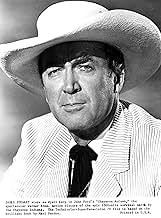
- I've read much criticism of the Dodge City comic relief interlude. I thought this was fantastic segment. What a pleasure to see old pros like John Carradine, James Stewart and Arthur Kennedy do cameos in Ford's last Western. Ford understood the importance of inserting comic relief into Westerns, which are normally tense dramas in need of counterpoint. This is even more effective in the fundamentally somber "Cheyenne Autumn".
- Almost all strong Indian point of view movies are relentless downers that include no comic relief. For example, "Devil's Doorway", "Broken Arrow", "Dances With Wolves". Ford doesn't compromise on his traditional heavy use of humor in this movie and he also includes a somewhat optimistic ending. The ending may seem unrealistically positive, but it is actually at least partly rooted in historical accuracy, from what I've read. Of course, in the big historical picture there was no happy ending for the Indians. The question is: who wants to watch a movie that is that depressing? Ford strikes a good compromise here.
- Carol Baker is an underrated actress. She has a great screen presence and is very good in this film. Her character was very credible, if maybe a little too good looking. If she's a typical 1880's Quaker chick, I would have had to rethink my religious affiliation.
Now here are some things that kept the movie from being better:
- Widmark looks great, but I wish his character had been a more active player in plot developments. It's not best for the male lead to be too much of an observer. Also, he is way too old to be Carol Baker's romantic interest.
- The Indians are poorly cast with the use of mediocre Hispanic actors. I can't believe those weird bangs are authentic hairdos either. If they are, I would have invoked artistic license to change them.
- The subplot with the split between the Cheyenne leaders and the final confrontation at the end was poorly drawn, poorly acted and pointless.
- There are a few plot holes. The only one that really bothered me was the Cheyenne somehow managing to smuggle 20 rifles into their holding facility in the fort in Nebraska.
- Finally, this isn't really a fault, but I wanted to mention that I'm torn about Karl Malden's character.
On the one hand, it seems very odd to introduce a German officer who's oppressing the Cheyenne because "he's only following orders." Do we have to implicate the Germans in our genocide? Don't they have enough problems of their own on this issue?
On the other hand, I guess the point was to draw a comparison between the Holocaust and the destruction of the American Indian population. This was probably a very aggressive and controversial idea in 1964, for Americans anyway. The Germans I've known over the years never had a problem mentioning it to me. In fact, often they would talk of little else.
Ideas in search of story
This honestly needed a page one rewrite. Apparently born of some college research Richard Widmark did and offered up to John Ford years before, the story of the Cheyenne trek from the Southwest back to the Dakotas is a movie without a center. The actual story belongs to the Cheyenne making the trek, but I would assume that studio executives balked at the idea of funding a Western epic with only Cheyenne characters as the main characters, or maybe Ford felt like he couldn't tell the story of the Cheyenne himself. He needed a crutch in the form of a cavalry officer through which to see the story. Whatever the reason, though, the central point gets muddled to no end, eventually introducing some thematic ideas about duty to orders made from ignorance that would have also been a nice central idea. Instead, it's a split film, never able to fully dedicate itself to a single concept, but at least Ford still knew how to make a movie.
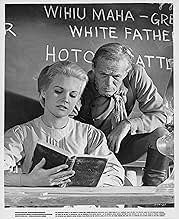
In Oklahoma Territory, the remnants of the Cheyenne nation await a delegation from Washington DC to negotiate the terms of the treaty that was broken and left the Indians fifteen hundred miles from their home. When the DC delegation doesn't even bother to show up, their chief, Tall Tree (Victor Jory), makes the decision to simply take his people back. Ordered to bring them back is Captain Thomas Archer (Widmark), an officer who feels sympathy for the Cheyenne and their plight. There's also a Quaker woman, Deborah (Carroll Baker), who has been teaching the Cheyenne orphans to read and speak English who decides to go with the Cheyenne when they sneak out in the night.
Once the Cheyenne cross the river that marks the northern boundary of the reservation, Archer, encouraged by his commanding officer, Major Braden (George O'Brien), must attack the Cheyenne position. However, when Braden is killed in the fight, Archer takes command and loses the ensuing battle when his lieutenant Scott (Patrick Wayne) launches an unauthorized and ill-advised attack on the left flank that the Cheyenne easily fight off. This gives the Cheyenne the time to get away, starting a hundreds mile chase through the wilderness of the West up through Nebraska.
One of the interesting ideas that simply doesn't get enough screentime (indicative to me of a story trying its best to include as much of the history as possible whether it fits the story dramatically or not) is that the newspapers of the day operated on rumor, conjecture, and outright lies to help either incite or encourage sympathy for people. We get little vignettes further back east with newspaper men angrily shouting that they're changing their coverage simply to be different from everyone else to help sell more newspapers.
And then there's what could simply be described as an extended comedic sketch set in Dodge City, Kansas where Wyatt Earp (Jimmy Stewart) plays cards with Doc Holliday (Arthur Kennedy) and Jeff Blair (John Carradine), talks with people about the news of the Cheyenne, tries to remember if he had actually ever met the pretty Ms. Plantagenet (Elizabeth Allen), and then organizes a loosely knit band of militia when news reaches them that the Cheyenne were heading towards Dodge City with every intention of raping and pillaging. Earp takes them in the exact opposite direction to comedic effect. This was apparently designed by Ford as a sort of Intermission since the film was already kind of long (though without it, the movie would probably only be about 140 minutes which isn't that long).
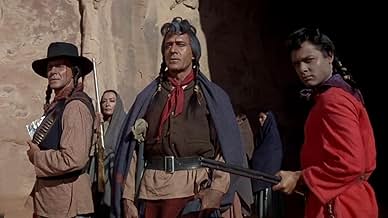
Then the film gets serious again as the Cheyenne must get through an army blockade around a railroad, and the nation splits in two in the snow as the two heirs to Tall Tree, after his death, decide on different paths. Little Wolf (Ricardo Montalban) wants to keep going to the Dakotas and their ancestral home while Dull Knife (Gilbert Roland) wants to give up at the nearest army fort to find food and shelter from the wilderness. This conflict of visions would have been a great thing to build this whole movie on, you know?
We end up following Dull Knife to Fort Robinson, commanded by Captain Wessels (Karl Malden, complete with odd accent that seems to be Russian). Archer shows up immediately afterwards, and then we get another idea that would have been great to build the film on: the question of following orders from those with no real knowledge of the facts on the ground. Wessels has orders to put the Cheyenne under restraint, so he locks them all up in a warehouse. Archer sees this as inhumane, especially when combined with the idea that Wessels will follow his orders strictly and send them right back south in the middle of winter, all but guaranteeing their deaths. Archer takes two weeks leave to go to Washington where he meets the Secretary of the Interior, Carl Schurz (Edward G. Robinson), to let him know of the situation.
The finale of the film is the set up to a battle between the Cheyenne who have escaped and met up with their other half further north and the army, stopped by the sudden arrival of Archer and Schurz. They negotiate a peace that allows the Cheyenne to stay. Oh, and then we have a finale where Little Wolf kills Dull Knife's son because he had stolen one of Little Wolf's wives, and then Archer and Deborah probably get married because, why not?
Really, this did need a page one rewrite. Focus on either the Cheyenne or Archer, or extend this at least another half hour (sans Wyatt Earp comedic interlude), and give it the full epic treatment while finding a way to contrast the duty of Little Wolf to his people and deceased leader with the duty of Archer to his government.
Also, recast Archer. I really dislike Richard Widmark as a leading man. He's a charisma vacuum with a single scowl that represents the outer edges of his acting range. He has no affable charm like John Wayne. He's just grating. The rest of the cast is largely quite good, though. Malden, for all his silly accent, really just needs more time with his character, going somewhat mad with his orders bumping up against his conscience. Baker is soulful and concerned as the good Quaker woman dedicated to the most vulnerable of a vulnerable population. Montalban plays Little Wolf with an inner strength appropriate to a character who refuses to break. It's also nice to see some of the reliable acting troupe of Ford's popping up like Harry Carey Jr. And Ben Johnson as a pair of troopers. Edward G. Robinson brings gravitas to his role as the Secretary, even if his health forced the final negotiation to look fake because he couldn't go on location.
The end result, the movie I actually have instead of the one I imagine in my head, is a mixed bag of half-formed and abandoned ideas with beautiful cinematography, largely solid acting, and a couple of exciting action sequences. Also, for how starkly the Wyatt Earp sequence clashes with the more serious film around it, it is pretty amusing.
In Oklahoma Territory, the remnants of the Cheyenne nation await a delegation from Washington DC to negotiate the terms of the treaty that was broken and left the Indians fifteen hundred miles from their home. When the DC delegation doesn't even bother to show up, their chief, Tall Tree (Victor Jory), makes the decision to simply take his people back. Ordered to bring them back is Captain Thomas Archer (Widmark), an officer who feels sympathy for the Cheyenne and their plight. There's also a Quaker woman, Deborah (Carroll Baker), who has been teaching the Cheyenne orphans to read and speak English who decides to go with the Cheyenne when they sneak out in the night.
Once the Cheyenne cross the river that marks the northern boundary of the reservation, Archer, encouraged by his commanding officer, Major Braden (George O'Brien), must attack the Cheyenne position. However, when Braden is killed in the fight, Archer takes command and loses the ensuing battle when his lieutenant Scott (Patrick Wayne) launches an unauthorized and ill-advised attack on the left flank that the Cheyenne easily fight off. This gives the Cheyenne the time to get away, starting a hundreds mile chase through the wilderness of the West up through Nebraska.
One of the interesting ideas that simply doesn't get enough screentime (indicative to me of a story trying its best to include as much of the history as possible whether it fits the story dramatically or not) is that the newspapers of the day operated on rumor, conjecture, and outright lies to help either incite or encourage sympathy for people. We get little vignettes further back east with newspaper men angrily shouting that they're changing their coverage simply to be different from everyone else to help sell more newspapers.
And then there's what could simply be described as an extended comedic sketch set in Dodge City, Kansas where Wyatt Earp (Jimmy Stewart) plays cards with Doc Holliday (Arthur Kennedy) and Jeff Blair (John Carradine), talks with people about the news of the Cheyenne, tries to remember if he had actually ever met the pretty Ms. Plantagenet (Elizabeth Allen), and then organizes a loosely knit band of militia when news reaches them that the Cheyenne were heading towards Dodge City with every intention of raping and pillaging. Earp takes them in the exact opposite direction to comedic effect. This was apparently designed by Ford as a sort of Intermission since the film was already kind of long (though without it, the movie would probably only be about 140 minutes which isn't that long).
Then the film gets serious again as the Cheyenne must get through an army blockade around a railroad, and the nation splits in two in the snow as the two heirs to Tall Tree, after his death, decide on different paths. Little Wolf (Ricardo Montalban) wants to keep going to the Dakotas and their ancestral home while Dull Knife (Gilbert Roland) wants to give up at the nearest army fort to find food and shelter from the wilderness. This conflict of visions would have been a great thing to build this whole movie on, you know?
We end up following Dull Knife to Fort Robinson, commanded by Captain Wessels (Karl Malden, complete with odd accent that seems to be Russian). Archer shows up immediately afterwards, and then we get another idea that would have been great to build the film on: the question of following orders from those with no real knowledge of the facts on the ground. Wessels has orders to put the Cheyenne under restraint, so he locks them all up in a warehouse. Archer sees this as inhumane, especially when combined with the idea that Wessels will follow his orders strictly and send them right back south in the middle of winter, all but guaranteeing their deaths. Archer takes two weeks leave to go to Washington where he meets the Secretary of the Interior, Carl Schurz (Edward G. Robinson), to let him know of the situation.
The finale of the film is the set up to a battle between the Cheyenne who have escaped and met up with their other half further north and the army, stopped by the sudden arrival of Archer and Schurz. They negotiate a peace that allows the Cheyenne to stay. Oh, and then we have a finale where Little Wolf kills Dull Knife's son because he had stolen one of Little Wolf's wives, and then Archer and Deborah probably get married because, why not?
Really, this did need a page one rewrite. Focus on either the Cheyenne or Archer, or extend this at least another half hour (sans Wyatt Earp comedic interlude), and give it the full epic treatment while finding a way to contrast the duty of Little Wolf to his people and deceased leader with the duty of Archer to his government.
Also, recast Archer. I really dislike Richard Widmark as a leading man. He's a charisma vacuum with a single scowl that represents the outer edges of his acting range. He has no affable charm like John Wayne. He's just grating. The rest of the cast is largely quite good, though. Malden, for all his silly accent, really just needs more time with his character, going somewhat mad with his orders bumping up against his conscience. Baker is soulful and concerned as the good Quaker woman dedicated to the most vulnerable of a vulnerable population. Montalban plays Little Wolf with an inner strength appropriate to a character who refuses to break. It's also nice to see some of the reliable acting troupe of Ford's popping up like Harry Carey Jr. And Ben Johnson as a pair of troopers. Edward G. Robinson brings gravitas to his role as the Secretary, even if his health forced the final negotiation to look fake because he couldn't go on location.
The end result, the movie I actually have instead of the one I imagine in my head, is a mixed bag of half-formed and abandoned ideas with beautiful cinematography, largely solid acting, and a couple of exciting action sequences. Also, for how starkly the Wyatt Earp sequence clashes with the more serious film around it, it is pretty amusing.


Did you know
- TriviaYears earlier Richard Widmark had the historical subject matter researched at Yale. He brought the material to John Ford, who didn't want to make it. Years later Ford, who had kept the research, changed his mind and asked Widmark to star.
- GoofsThe Navajos travel 1500 miles but never seem to leave Monument Valley, except for some snow scenes.
- Quotes
Secretary of the Interior: Oh, Henry... you and I fought together at Gettysburg. You had never seen a Negro slave. All you ever knew was that they were human beings with the rights of human beings - and it was worth an arm to you.
- Alternate versionsMany television prints run 145 minutes, and omit the scene with James Stewart as Wyatt Earp. The video release is the full 154-minute version.
- ConnectionsEdited into Film socialisme (2010)
Greatest Character Actors of All Time
Greatest Character Actors of All Time
The talented actors totally transform for their roles. How many do you recognize?

- How long is Cheyenne Autumn?Powered by Alexa
Details
- Release date
- Country of origin
- Language
- Also known as
- El ocaso de los cheyenes
- Filming locations
- Production company
- See more company credits at IMDbPro
Box office
- Budget
- $4,200,000 (estimated)
- Gross worldwide
- $10,980
- Runtime
- 2h 34m(154 min)
- Aspect ratio
- 2.20 : 1
Contribute to this page
Suggest an edit or add missing content