IMDb RATING
5.4/10
2.8K
YOUR RATING
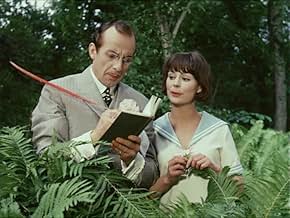
A critic blackmails a famous musician with his biography filled with the revelations of many of his women.A critic blackmails a famous musician with his biography filled with the revelations of many of his women.A critic blackmails a famous musician with his biography filled with the revelations of many of his women.
- Director
- Writers
- Stars
- Awards
- 1 nomination total
Jan Blomberg
- English Radio Reporter
- (uncredited)
Lars-Owe Carlberg
- Driver
- (uncredited)
Axel Düberg
- Man in Black
- (uncredited)
Doris Funcke
- Waitress
- (uncredited)
Göran Graffman
- French Radio Reporter
- (uncredited)
Yvonne Igell
- Waitress
- (uncredited)
Ulf Johansson
- Man in Black
- (uncredited)
- Director
- Writers
- All cast & crew
- Production, box office & more at IMDbPro
5.42.7K
1
2
3
4
5
6
7
8
9
10
Featured reviews
Not the Same & Quite Different...
Felix is a very happy fellow, none more so when he's fiddling with his cello, of which he has a few, perpetually in a queue, makes Cornelius a little green, although he's yellow.
It's a bit of fun, but not funny and there's little pun, plus it hasn't aged well so move on, do not dwell.
Plenty of Bergman stalwarts, including the gorgeous Bibi Andersson, the engaging Harriet Andersson and the delightful Eva Dahlbeck however, even they can't save this, as the story's as daft as a brush and it soon becomes a bit of a chore, as the end seems to extend to a point where you stop caring, and start looking for the door.
It's a bit of fun, but not funny and there's little pun, plus it hasn't aged well so move on, do not dwell.
Plenty of Bergman stalwarts, including the gorgeous Bibi Andersson, the engaging Harriet Andersson and the delightful Eva Dahlbeck however, even they can't save this, as the story's as daft as a brush and it soon becomes a bit of a chore, as the end seems to extend to a point where you stop caring, and start looking for the door.
A Lemon
It's taken a few goes, but I have finally discovered that I can dislike a Bergman film. Perhaps Swedish humour shares some characteristics with Danish humour which tends to leave me cold and perplexed.
Several years on, I still cannot get the cheesy, syncopated version of "Yes, We Have No Bananas" out of my head.
The cast try their best but the material is beyond redemption. in fact, this cast does not include the best Bergman people anyhow.
This film simply is not at all funny nor is it interesting once you get 10 minutes in.
It is merely irritating.
This film is a lemon.
Several years on, I still cannot get the cheesy, syncopated version of "Yes, We Have No Bananas" out of my head.
The cast try their best but the material is beyond redemption. in fact, this cast does not include the best Bergman people anyhow.
This film simply is not at all funny nor is it interesting once you get 10 minutes in.
It is merely irritating.
This film is a lemon.
A Comedy
You can tell this is a comedy. It's not simply the jazzy version of "Yes, We Have No Bananas" they play at scene changes. It begins with a funeral, and that's a rule: comedies start with funerals, tragedies start with peasants dancing around singing "Oh, We are happy peasants!" -- preferably in Italian. It also looks like Ingmar Bergman was tired of being called a grim symbolic genius, so he included titles noting that various things are not symbolic.
My personal interpretation is that he had one movie left on his contract and was angry with the front office for some reason, so he decided to make a Jerry Lewis movie and in color to boot, because he was tired of dealing with the critics.
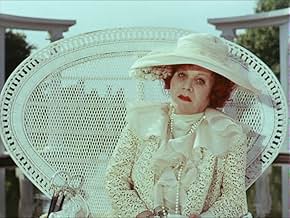
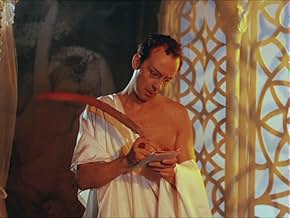
Anyway, after the half dozen or so Bergman leading ladies come up and say the same thing over the unseen corpse -- translated as "So like him and so unlike him" -- we drop back five days to witness Carl Bilquist show up as the home of the great cellist to write his stuffy biography and deal with his mistresses -- the Great Man never appears. I think Bergman was fooling everyone and wanted to get back to the theater for a while.
My personal interpretation is that he had one movie left on his contract and was angry with the front office for some reason, so he decided to make a Jerry Lewis movie and in color to boot, because he was tired of dealing with the critics.
Anyway, after the half dozen or so Bergman leading ladies come up and say the same thing over the unseen corpse -- translated as "So like him and so unlike him" -- we drop back five days to witness Carl Bilquist show up as the home of the great cellist to write his stuffy biography and deal with his mistresses -- the Great Man never appears. I think Bergman was fooling everyone and wanted to get back to the theater for a while.
Not as bad as I'd heard
This comedy, most notable for being Bergman's first film in color, is often considered one of his worst. I went into it with very low expectations, glad that it was just 80 minutes long. Thankfully, it's not nearly as bad as its reputation. It's minor Bergman, for sure. It's main crime is that it thinks it's much funnier than it ever is. That can be annoying, but, really, the film isn't exactly unfunny. Personally, I think Bergman only did comedy right once, with Smiles of a Summer Night, and even that one I don't think is amongst his best work. Simply put, Bergman excels at tragedy, and his comedy can feel forced. This film revolves around an art critic (Jarl Kulle, Bergman's most mugging actor) who comes to write a biography of a famous cellist at his palatial estate. The cellist (whose face never appears on screen) is a philanderer, surrounding himself with women of various ages (including Bibi Andersson, Harriet Andersson and Eva Dahlbeck). Kulle starts a fling with Bibi Andersson, and soon discovers that one of the wives or mistresses is attempting to murder the cellist. The Bergman film this reminds me most of is The Devil's Eye, which also stars Kulle (if I recall correctly, that one is slightly less comic). The color cinematography is actually quite excellent. Bergman didn't film again in color until Cries and Whispers. This is available on Hulu Plus.
A bit of a goof intended to be unpopular
I agree that "All These Women" is misunderstood, especially if you look at it in the context of Bergman's filmography. He had just completed the "Silence of God" trilogy, one of the deepest, most serious works in the history of cinema. So, cut the man some slack and allow him his lark, his goof, his chance to riff on fans and critics and the illusion of the exalted artist (himself), before returning to his true work with his next film, the universally praised "Persona."
I also think he was a little influenced by "8 1/2" which had come out the year before, appreciating Fellini's playfulness as well as his insight into the creative process and, of course, "all these women." Bergman will always be thought of as a somewhat austere and oft despairing artist, but thankfully we have several films that belie that, like "Smiles of a Summer Night," "The Magician," and this little oddball gem.
Did you know
- TriviaThis is Ingmar Bergman's first color film.
- Crazy creditsThe disclaimer at the beginning states that: "Every similarity between this film and the so-called reality has to be a misunderstanding".
- SoundtracksOrchestral Suite No. 3 D-dur (BWV 1068)
Composed by Johann Sebastian Bach
- How long is All These Women?Powered by Alexa
Details
- Runtime
- 1h 20m(80 min)
- Sound mix
- Aspect ratio
- 1.37 : 1
Contribute to this page
Suggest an edit or add missing content