IMDb RATING
7.4/10
10K
YOUR RATING

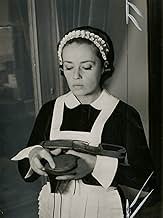
A sophisticated and self-assured woman from Paris joins a middle-class rural estate as a maid and causes quite a stir among the variously uptight, perverse and violent inhabitants.A sophisticated and self-assured woman from Paris joins a middle-class rural estate as a maid and causes quite a stir among the variously uptight, perverse and violent inhabitants.A sophisticated and self-assured woman from Paris joins a middle-class rural estate as a maid and causes quite a stir among the variously uptight, perverse and violent inhabitants.
- Director
- Writers
- Stars
- Awards
- 1 win & 2 nominations total


- Director
- Writers
- All cast & crew
- Production, box office & more at IMDbPro
7.410.2K
1
2
3
4
5
6
7
8
9
10
Featured reviews
A brilliant performance from Jean Moreau is just one of many highlights in what could be Bunuel's most underrated movie.
Bunuel's 'Diary Of A Chambermaid' was released in between two of his surreal masterpieces 'The Exterminating Angel' and 'Simon Of The Desert'. It is, on the surface at least, a lot more conventional as either of those, maybe that's why it doesn't get as much attention as it deserves. I don't know why it is rarely mentioned when people discuss the very best of Bunuel, but for me it's almost as great as 'Viridiana' and 'Belle De Jour'. The story was previously filmed by Renoir in the 1940s, but I haven't seen that version, so I can't say how different Bunuel's approach to the material is. As Bunuel claimed not to have seen it either I don't feel so bad. Jean Moreau, the beautiful star of Truffaut's 'Jules And Jim' and countless other Euro art film favourites, gives a brilliant performance as the enigmatic Celestine, maid to The Monteils, a very odd family living in pre-War France. Bunuel includes some of his usual comments about sexual deviance, and France's future under the Nazi occupation haunts the whole film, but what is most interesting to me about the picture is its subtlety and ambiguity. Like 'Belle De Jour' I think each repeated viewing will reveal more, and opinions on its meaning will depend on the individual viewer. Personally I'm still exploring Bunuel's extraordinary body of work. It is exciting doing so. I've probably only seen a third of his output so far, but I've yet to see a movie made by him that is less than fascinating. 'Diary Of A Chambermaid' just might be his most underrated film. I highly recommend it.
Classic social satire about a young woman taking a servant's job in a provincial French family by the Spanish master of Surrealism Luis Buñuel
Vintage Buñuelian ironical film dealing with Celestine the chambermaid, so she has new job on the country. There she works for are a group of strange people, the family is from the bourgeois class, The Monteils. The ambitious, beautiful Celestine (Jeanne Moreau gives one of her best film performances) makes it from Downstairs to Upstairs by manipulating right-wing lord (Michel Piccoli), wife (Francois Lugagne), his fascist gamekeeper Joseph (Georges Géret), his leftist neighbour (Ivernel) and causes quite a stir among the variously uptight, perverse and violent inhabitants.
This is a free adaptation of the notorious novel by Octave Mirabeau, being Luis Buñue's first foray into French cinema and easing into an atmosphere of sexual hypocrisy and decadence. The story is that of vixenish Celestine, a Parisian waitress who arrives at a country house to serve the Monteil family, her presence will cause a series of embarrassing and disconcerting situations. Octatave Mirabeau's muckracking, famous 1900 novel has abiding insight into the deep structures of French political instability. Buñuel shifts the tale from 1900s to the rise of fascism in the 30s, being very stylized in direction and set design. Buñuel digs right down to that spiritual gunge which links social, political and sexual positions and impositions as equal perversions of human desires in turn perversions of animal desires. Stars Jeanne Moreau who gives a nice acting as a sophisticated and self-assured woman from Paris joins a middle-class rural estate as a maid. Like most Buñuel heroines Celestine is intuitively a feminist, but before her time, and blows it by her ambivalence and egoism before male ruthlessness. This ¨Le journal d'une femme de chambre¨(1964) is a remake of ¨Diary of a Chambermaid¨ (1946) an unsettling rendition by Jean Renoir produced during Renoir's years in Hollywood, being played by Paulette Goddard, Burgues Meredith, Hurt Hatfield and there're other adaptations made by Jess Frank or Jesús Franco.
This wry and engaging motion picture was compellingly directed by Luis Buñuel who was voted the 14th Greatest Director of all time. Luis Buñuel was given a strict Jesuit education which sowed the seeds of his obsession with both subversive behavior and religion , issues well shown in a lot of films and that would preoccupy Buñuel for the rest of his career. This Buñuel's strange film belongs to his French second period ; in fact, it's plenty of known French actors. As Buñuel ived in various countries: Spain, France, Mexico where stayed many years and subsequently emigrated from Mexico to France and in the latter filmed other excellent movies. After moving to Paris, at the beginning , a young Buñuel did a variety of film-related odd jobs, including working as an assistant to director Jean Epstein. With financial help from his mother and creative assistance from Dalí, he made his first film , this 17-minute "Un Chien Andalou" (1929), and immediately catapulted himself into film history thanks to its disturbing images and surrealist plot. The following year, sponsored by wealthy art patrons, he made his second picture, the scabrous witty and violent "Age of Gold" (1930), which mercilessly attacked the church and the middle classes, themes that would preoccupy Buñuel for the rest of his career. That career, though, seemed almost over by the mid-1930s, as he found work increasingly hard to come by and after the Spanish Civil War, where he made ¨Las Hurdes¨, as Luis emigrated to the US where he worked for the Museum of Modern Art and as a film dubber for Warner Bros. Luís subsequently went on his Mexican period, so he teamed up with producer Óscar Dancigers and after a couple of unmemorable efforts shot back to international attention with the lacerating study of Mexican street urchins in ¨Los Olvidados¨ (1950), winning him the Best Director award at the Cannes Film Festival. But despite this new-found acclaim, Buñuel spent much of the next decade working on a variety of ultra-low-budget films, few of which made much impact outside Spanish-speaking countries, though many of them are well worth seeking out. As he went on filming "The Great Madcap" , ¨The brute¨, "Wuthering Heights", ¨El¨ , "The Criminal Life of Archibaldo De la Cruz", ¨Robinson Crusoe¨, ¨Death in the garden¨ and many others . And finally his French-Spanish period in collaboration with producer Serge Silberman and writer Jean-Claude Carrière with notorious as well as polemic films such as: ¨Viridiana¨ , Tristana¨ , ¨The Discreet Charm of the Bourgeoisie", ¨Belle De Jou¨ and his last picture , "That Obscure Object of Desire". Rating: 7/10. Well worth watching for Luis Buñuel followers.
This is a free adaptation of the notorious novel by Octave Mirabeau, being Luis Buñue's first foray into French cinema and easing into an atmosphere of sexual hypocrisy and decadence. The story is that of vixenish Celestine, a Parisian waitress who arrives at a country house to serve the Monteil family, her presence will cause a series of embarrassing and disconcerting situations. Octatave Mirabeau's muckracking, famous 1900 novel has abiding insight into the deep structures of French political instability. Buñuel shifts the tale from 1900s to the rise of fascism in the 30s, being very stylized in direction and set design. Buñuel digs right down to that spiritual gunge which links social, political and sexual positions and impositions as equal perversions of human desires in turn perversions of animal desires. Stars Jeanne Moreau who gives a nice acting as a sophisticated and self-assured woman from Paris joins a middle-class rural estate as a maid. Like most Buñuel heroines Celestine is intuitively a feminist, but before her time, and blows it by her ambivalence and egoism before male ruthlessness. This ¨Le journal d'une femme de chambre¨(1964) is a remake of ¨Diary of a Chambermaid¨ (1946) an unsettling rendition by Jean Renoir produced during Renoir's years in Hollywood, being played by Paulette Goddard, Burgues Meredith, Hurt Hatfield and there're other adaptations made by Jess Frank or Jesús Franco.
This wry and engaging motion picture was compellingly directed by Luis Buñuel who was voted the 14th Greatest Director of all time. Luis Buñuel was given a strict Jesuit education which sowed the seeds of his obsession with both subversive behavior and religion , issues well shown in a lot of films and that would preoccupy Buñuel for the rest of his career. This Buñuel's strange film belongs to his French second period ; in fact, it's plenty of known French actors. As Buñuel ived in various countries: Spain, France, Mexico where stayed many years and subsequently emigrated from Mexico to France and in the latter filmed other excellent movies. After moving to Paris, at the beginning , a young Buñuel did a variety of film-related odd jobs, including working as an assistant to director Jean Epstein. With financial help from his mother and creative assistance from Dalí, he made his first film , this 17-minute "Un Chien Andalou" (1929), and immediately catapulted himself into film history thanks to its disturbing images and surrealist plot. The following year, sponsored by wealthy art patrons, he made his second picture, the scabrous witty and violent "Age of Gold" (1930), which mercilessly attacked the church and the middle classes, themes that would preoccupy Buñuel for the rest of his career. That career, though, seemed almost over by the mid-1930s, as he found work increasingly hard to come by and after the Spanish Civil War, where he made ¨Las Hurdes¨, as Luis emigrated to the US where he worked for the Museum of Modern Art and as a film dubber for Warner Bros. Luís subsequently went on his Mexican period, so he teamed up with producer Óscar Dancigers and after a couple of unmemorable efforts shot back to international attention with the lacerating study of Mexican street urchins in ¨Los Olvidados¨ (1950), winning him the Best Director award at the Cannes Film Festival. But despite this new-found acclaim, Buñuel spent much of the next decade working on a variety of ultra-low-budget films, few of which made much impact outside Spanish-speaking countries, though many of them are well worth seeking out. As he went on filming "The Great Madcap" , ¨The brute¨, "Wuthering Heights", ¨El¨ , "The Criminal Life of Archibaldo De la Cruz", ¨Robinson Crusoe¨, ¨Death in the garden¨ and many others . And finally his French-Spanish period in collaboration with producer Serge Silberman and writer Jean-Claude Carrière with notorious as well as polemic films such as: ¨Viridiana¨ , Tristana¨ , ¨The Discreet Charm of the Bourgeoisie", ¨Belle De Jou¨ and his last picture , "That Obscure Object of Desire". Rating: 7/10. Well worth watching for Luis Buñuel followers.
no concessions
The best thing about Bunuel is his ruthless lucidity, and it's thoroughly on display here. All his films start from the conviction that no one is to be pitied - or even if they are, Bunuel, like life, will not oblige, and neither the audience nor the person concerned should expect it of them. Which is not to say that all abuses are right - the film postulates that between fascist and violent criminal there is little difference, and then, true to lucid form, makes it clear at the end that evil does *not* automatically bring about its own destruction; a fact not to be lamented but fought over. Bunuel said he thought it was his most erotic film. It's not an unreasonable claim. There's not a single sex scene. Go figure.
Fight of Classes, Hypocrisy, Fascism, Clerical and Murder
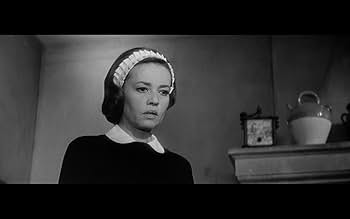
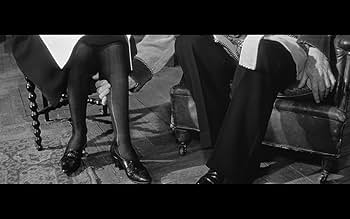
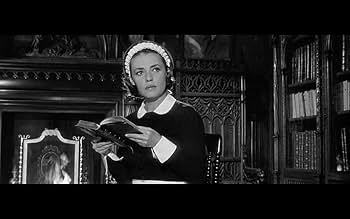
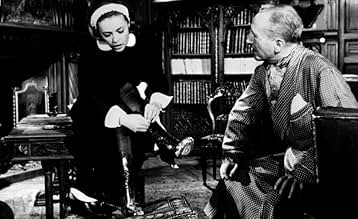
In the 30's, the witty, literate and quite sophisticated chambermaid Céléstine (Jeanne Moreau) comes from Paris to work for the dysfunctional Monteil family in the country, more specifically for the fetishist on shoes and maniac for cleaning Monsieur Rabour (Jean Ozenne). His daughter and mistress of the house Madame Monteil (Françoise Lugagne) is a frigid and arrogant woman, and her husband, Monsieur Monteil (Michel Piccoli), is a hunter and also a wolf with their maids. Their fascist and rude worker Joseph (Georges Géret) feels a sexual attraction for Céléstine, but she repels him. Their neighbor, Captain Mauger (Daniel Ivernel), has a problem with the Monteils and dumps his garbage in their yard, but Céléstine talks to him and is motive of gossips. When Monsieur Rabour unexpectedly dies, Céléstine quits her job but while in the train station, she finds that the girl Claire was found raped and murdered by the police. Céléstine returns to her job convinced that Joseph killed the little girl and trying to find evidences against him.
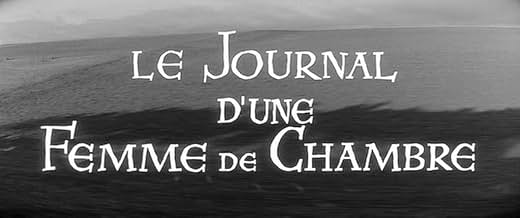
"Le Journal d'une Femme de Chambre" is a delightful movie of undefined genre drama, black comedy, adventure? where Luis Buñuel again exposes fight of classes, hypocrisy of both the bourgeois and the working class, a historical moment in France with the fascism growing, the ridiculous role of the clerical and an unsolved murder case. The story is centered in Céléstine, but the motives why a woman with her profile accepts a job in a rural area is never clear. The identity of the rapist and killer of Claire is also not disclosed, there is only a strong insinuation that Joseph killed the girl. The story is very ironic, like for example when Monsieur Monteil is informed that Céléstine and Joseph will marry and requires the sexual favors from Marianne; or the weird fetishism of Monsieur Rabour; or the priest asking for a new roof for the church to Madame Monteil; or the conclusion with Captain Mauger changing his will and serving the mistress and smart Céléstine on their bed. My vote is seven.
Title (Brazil): "O Diário de uma Camareira" ("The Diary of a Chambermaid")
"Le Journal d'une Femme de Chambre" is a delightful movie of undefined genre drama, black comedy, adventure? where Luis Buñuel again exposes fight of classes, hypocrisy of both the bourgeois and the working class, a historical moment in France with the fascism growing, the ridiculous role of the clerical and an unsolved murder case. The story is centered in Céléstine, but the motives why a woman with her profile accepts a job in a rural area is never clear. The identity of the rapist and killer of Claire is also not disclosed, there is only a strong insinuation that Joseph killed the girl. The story is very ironic, like for example when Monsieur Monteil is informed that Céléstine and Joseph will marry and requires the sexual favors from Marianne; or the weird fetishism of Monsieur Rabour; or the priest asking for a new roof for the church to Madame Monteil; or the conclusion with Captain Mauger changing his will and serving the mistress and smart Céléstine on their bed. My vote is seven.
Title (Brazil): "O Diário de uma Camareira" ("The Diary of a Chambermaid")
A dark comedy of brilliance
This is my favorite Buñel film. The story is stunningly presented, an absolute work of art, unbelievably subtle but always concrete. It is like a great symphony: every note is perfect.
Surprisingly (considering the title) Le journal d'une femme de chambre is not about sex, nor is it a journal for that matter. It is about politics, sexual politics of course, but also domestic politics, manor politics, and nation-state politics. The time is the thirties as fascism moves toward its mesmerizing stranglehold on a decadent Europe. The place is France (Normandy, I imagine) where the republicans hold power. In the streets are those who would be brown suits and among them is Joseph (Georges Geret), groundskeeper for a petite bourgeois family of degenerate eccentrics. He is an incipient Nazi, a xenophobic anti-Semitic man who worships brute force, an ignorant man that every French movie-goer knows will be a Nazi-collaborator once France is under the occupation.
The story is seen from the point of view of Celestine, a chambermaid of some sophistication (and an abiding, but understandable duplicity), a Parisian who has come to work for the family in the country. She is played by the incomparable Jeanne Moreau of the plastic face, a woman of many guises, many moods and an ability to depict with a glance any emotion. She is a great star of the French stage and screen who plays the part effortlessly, with finesse and a fine subtlety. The screenplay by Buñel and the brilliant Jean-Claude Carriere (who penned so many outstanding films, Bell de Jour (1967), The Discreet Charm of the Bourgeoisie (1972), Valmont (1989), The Ogre (1996), etc.) is an adaptation of the novel by Octave Mirbeau. There is a Hollywood film of the same name starring Paulette Goddard, Burgess Meredith and Judith Anderson, directed by Jean Renoir that I haven't seen, released in 1946. I understand the treatment was more comedic and conventional.
Surrealist Luis Buñel's film is perhaps best described as a comédie noire, a genre antecedent to the familiar (and somewhat similar) film noir. In the latter the comedy is usually incidental and there is no attempt at any great philosophic or symbolic significance. Here Buñel not only makes a statement about the nature of the relationship between bourgeois Europe in the thirties and fascism, but even delves into the primeval nature of women and gives us a sharp look at a woman's place in bourgeois society. Celestine is duplicitous because she has to be to survive. She uses men the way the society uses her.
Be sure and pay close attention to the final scene inside and outside the café and consider the implications of what is being shown. What is being suggested? Will Joseph finally get the punishment he so richly deserves? Or did Celestine make the choice she made out of fear? Is the union between Joseph and Celestine symbolic of that between the fascists and Europe?
For those interested in this last theme I highly recommend Vittoria De Sica's brilliant The Garden of the Finzi-Continis (1971).
(Note: Over 500 of my movie reviews are now available in my book "Cut to the Chaise Lounge or I Can't Believe I Swallowed the Remote!" Get it at Amazon!)
Surprisingly (considering the title) Le journal d'une femme de chambre is not about sex, nor is it a journal for that matter. It is about politics, sexual politics of course, but also domestic politics, manor politics, and nation-state politics. The time is the thirties as fascism moves toward its mesmerizing stranglehold on a decadent Europe. The place is France (Normandy, I imagine) where the republicans hold power. In the streets are those who would be brown suits and among them is Joseph (Georges Geret), groundskeeper for a petite bourgeois family of degenerate eccentrics. He is an incipient Nazi, a xenophobic anti-Semitic man who worships brute force, an ignorant man that every French movie-goer knows will be a Nazi-collaborator once France is under the occupation.
The story is seen from the point of view of Celestine, a chambermaid of some sophistication (and an abiding, but understandable duplicity), a Parisian who has come to work for the family in the country. She is played by the incomparable Jeanne Moreau of the plastic face, a woman of many guises, many moods and an ability to depict with a glance any emotion. She is a great star of the French stage and screen who plays the part effortlessly, with finesse and a fine subtlety. The screenplay by Buñel and the brilliant Jean-Claude Carriere (who penned so many outstanding films, Bell de Jour (1967), The Discreet Charm of the Bourgeoisie (1972), Valmont (1989), The Ogre (1996), etc.) is an adaptation of the novel by Octave Mirbeau. There is a Hollywood film of the same name starring Paulette Goddard, Burgess Meredith and Judith Anderson, directed by Jean Renoir that I haven't seen, released in 1946. I understand the treatment was more comedic and conventional.
Surrealist Luis Buñel's film is perhaps best described as a comédie noire, a genre antecedent to the familiar (and somewhat similar) film noir. In the latter the comedy is usually incidental and there is no attempt at any great philosophic or symbolic significance. Here Buñel not only makes a statement about the nature of the relationship between bourgeois Europe in the thirties and fascism, but even delves into the primeval nature of women and gives us a sharp look at a woman's place in bourgeois society. Celestine is duplicitous because she has to be to survive. She uses men the way the society uses her.
Be sure and pay close attention to the final scene inside and outside the café and consider the implications of what is being shown. What is being suggested? Will Joseph finally get the punishment he so richly deserves? Or did Celestine make the choice she made out of fear? Is the union between Joseph and Celestine symbolic of that between the fascists and Europe?
For those interested in this last theme I highly recommend Vittoria De Sica's brilliant The Garden of the Finzi-Continis (1971).
(Note: Over 500 of my movie reviews are now available in my book "Cut to the Chaise Lounge or I Can't Believe I Swallowed the Remote!" Get it at Amazon!)


Did you know
- TriviaThis is Luis Buñuel's only film in the anamorphic widescreen format.
- GoofsAt the train station, Célestine is supposed to be returning to Paris but she's waiting on the wrong side of the tracks: In one shot, one can clearly read "Direction Paris" on the other side.
- ConnectionsFeatured in Regarding Buñuel (2000)
- How long is Diary of a Chambermaid?Powered by Alexa
Details
- Release date
- Countries of origin
- Language
- Also known as
- Dnevnik jedne sobarice
- Filming locations
- Production companies
- See more company credits at IMDbPro
Box office
- Gross worldwide
- $17
- Runtime
- 1h 37m(97 min)
- Color
- Sound mix
- Aspect ratio
- 2.35 : 1
Contribute to this page
Suggest an edit or add missing content