

Surprised that their contract victim didn't try to run away from them, two professional hit men try to find out who hired them and why.Surprised that their contract victim didn't try to run away from them, two professional hit men try to find out who hired them and why.Surprised that their contract victim didn't try to run away from them, two professional hit men try to find out who hired them and why.
- Won 1 BAFTA Award
- 1 win & 1 nomination total
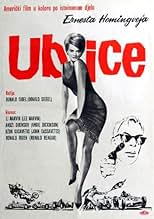
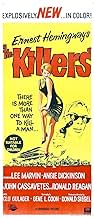
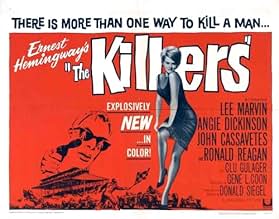
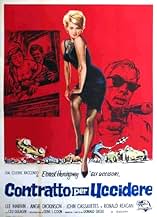
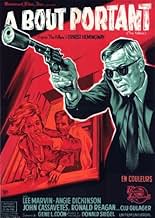
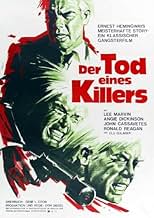
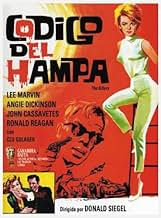
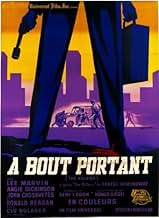


Irvin Mosley Jr.
- Mail Truck Guard
- (as Irvin Mosley)


- Director
- Writers
- All cast & crew
- Production, box office & more at IMDbPro
7.010.2K
1
2
3
4
5
6
7
8
9
10
Featured reviews
Siegel takes Siodmak into fast, brutal post-Camelot era
Under the title Ernest Hemingway's The Killers, Don Siegel's 1964 movie shows no more fidelity to the short story from which it takes its name and a fraction of its plot than Robert Siodmak's 1946 masterpiece, The Killers. And though it borrowed from the earlier movie its flashback structure (substantially simplified) and much of the backstory written for it, it's not quite a remake, either: the changes strike too deep.
A pair of contract hit-men track down a victim who seems ready, almost eager, to die. The killers this time around are Lee Marvin and Clu Gallagher, whose cozy arrangements suggest something of Fante and Mingo in The Big Combo. The first big shift from its 1946 predecessor is that Marvin's curiosity, not an insurance investigator's, sets the plot in motion, by his delving into the target's past and the whereabouts of a million dollars from a heist years before (in fact, he becomes the principal character). The second is a racheted-up level of violence: The movie opens with the pair tracking down their prey in a school for the blind, whose residents they ruthlessly terrorize during their hunt. And the level stays high.
John Cassavettes plays the victim, a former race-car driver fallen on hard times since a bad smash-up. Through the reminiscences of old buddy Claude Akins and past associate Norman Fell, we relive his racing career to an extent that stretches of the movie look like outtakes from Grand Prix. In those glory days he crossed tracks with the femme fatale of the piece, Angie Dickinson (in her rat-pack, late-Camelot salad days herself). After his car crash and their break-up, she lures him off the primrose path to serve as driver during a mail-truck robbery.
But Dickinson's heart belongs to daddy daddy in this instance being Ronald Reagan as a heavy. This marks his last film role. For a while it was chic to dismiss Reagan as a lousy actor, but he was always compentent enough. The puzzle is that the undeniable charisma that helped garner him the governorship of California and the presidency of the United States never came through on the screen; he couldn't carry a picture. He has a nasty moment slapping Dickinson silly when her attention strays to Cassavettes, but Marvin redeems his top billing by stealing the movie.
Ernest Hemingway's The Killers remains a good example of how the complexities and suggestiveness of the noir cycle were to metamorphose into a faster, flatter, more literal and brutal style of moviemaking starting in the late 1950s. Don Siegel was in the forefront of this change, starting in period noirs (The Verdict) but reaching his apogee, so to speak, in Dirty Harry. He delivers the goods, pronto, in a plain brown wrapper.
A pair of contract hit-men track down a victim who seems ready, almost eager, to die. The killers this time around are Lee Marvin and Clu Gallagher, whose cozy arrangements suggest something of Fante and Mingo in The Big Combo. The first big shift from its 1946 predecessor is that Marvin's curiosity, not an insurance investigator's, sets the plot in motion, by his delving into the target's past and the whereabouts of a million dollars from a heist years before (in fact, he becomes the principal character). The second is a racheted-up level of violence: The movie opens with the pair tracking down their prey in a school for the blind, whose residents they ruthlessly terrorize during their hunt. And the level stays high.
John Cassavettes plays the victim, a former race-car driver fallen on hard times since a bad smash-up. Through the reminiscences of old buddy Claude Akins and past associate Norman Fell, we relive his racing career to an extent that stretches of the movie look like outtakes from Grand Prix. In those glory days he crossed tracks with the femme fatale of the piece, Angie Dickinson (in her rat-pack, late-Camelot salad days herself). After his car crash and their break-up, she lures him off the primrose path to serve as driver during a mail-truck robbery.
But Dickinson's heart belongs to daddy daddy in this instance being Ronald Reagan as a heavy. This marks his last film role. For a while it was chic to dismiss Reagan as a lousy actor, but he was always compentent enough. The puzzle is that the undeniable charisma that helped garner him the governorship of California and the presidency of the United States never came through on the screen; he couldn't carry a picture. He has a nasty moment slapping Dickinson silly when her attention strays to Cassavettes, but Marvin redeems his top billing by stealing the movie.
Ernest Hemingway's The Killers remains a good example of how the complexities and suggestiveness of the noir cycle were to metamorphose into a faster, flatter, more literal and brutal style of moviemaking starting in the late 1950s. Don Siegel was in the forefront of this change, starting in period noirs (The Verdict) but reaching his apogee, so to speak, in Dirty Harry. He delivers the goods, pronto, in a plain brown wrapper.
Violent 60's film with standout cast
Director Don Siegel's "The Killers" is very loosely based on the Hemingway short story with few similarities. Two killers (Lee Marvin and Clu Gulager)complete an easy hit-for-hire but wonder why their victim, although warned in advance, didn't run away from them. After piecing together some information, they realize that the $25,000 they got for the hit is a drop in the bucket compared to a missing million dollar stash of stolen loot. After questioning a few "witnesses" they discover that the man they killed had been double-crossed and had lost his will to live. Throw in Angie Dickinson as a two-timing temptress and Ronald Reagan (of all people) as a nasty double-dealing henchman and you've got one violent movie without any good guys in sight. Marvin and Gulager are excellent as the hit men and John Cassavettes is also great as their hapless and resigned victim. Reagan, who supposedly regretted his turn here as a villian, is surprising effective. It was the only time in his career he played a "bad guy". Angie Dickinson, of course, is no mere window-dressing. She gives everyone a run for their money as the best-looking devious dame on the planet. "The Killers", which was originally made for TV, but released in theatres instead due to its violent subject matter, is a one-of-a-kind early 60's film noir. It may have little to do with Hemingway's story, but I'm sure "Papa" would have enjoyed it anyway.
My favourite cult B-movie...
Lee Marvin and Clu Gulager, two contract killers, walk into a Midwest school for the blind and cold-bloodedly murder John Cassavettes. "We walk in, we put him down, we walk out," muses Marvin distractedly on the train back to Chicago. Cassavettes had the chance to run but didn't, and Marvin wants to know why.
Initially, Don Siegel's colour remake of the Ernest Hemingway story was intended as the first made-for-TV movie. Vetoed by the network for its amoral viewpoint and violence, it was released in cinemas and quickly became a cult 1960s B-movie.
Anonymous and menacing in executive suits, sunglasses and briefcase, Marvin and scene-stealing Gulager memorably personify organised crime under Siegel's expert direction. They're pure all-American evil.
True, the main plot - pieced together in flashback as the two hitmen track down the mail robbery gang led by Ronald Reagan (his last film) - is pretty routine stuff. But even that serves to heighten the threat represented by Marvin and Gulager, as they unravel the real reason for Cassavettes' deathwish.
"No one ever knows what we're talking about," mocks Gulager when femme fatale Angie Dickinson tries to act dumb. The scene in the hotelroom where the killers force her to tell is handled with a ferocious cool that is Siegel's trademark.
The Killers was still in production when Kennedy was assassinated - perhaps one reason, given its theme, why TV network ABC pulled it from their 1964 schedule. The scene where Gulager is shot down on a sunlit sidewalk even echoed the killing of Kennedy assassin Lee Harvey Oswald (Gulager's character is called Lee).
OK, it's not a masterpiece. Even the great Don Siegel can't quite disguise a B-movie budget, a repetitious screenplay, brightly artificial colour, and exteriors that are only too obviously the Universal backlot. But it is tense and exciting, thanks to Siegel's authoritative grasp of the genre.
"I shot it in the style which I think is my style at its best," Siegel concluded later. "Very taut and lean with great economy. If I had to do it over again, I don't think I would change much."
Initially, Don Siegel's colour remake of the Ernest Hemingway story was intended as the first made-for-TV movie. Vetoed by the network for its amoral viewpoint and violence, it was released in cinemas and quickly became a cult 1960s B-movie.
Anonymous and menacing in executive suits, sunglasses and briefcase, Marvin and scene-stealing Gulager memorably personify organised crime under Siegel's expert direction. They're pure all-American evil.
True, the main plot - pieced together in flashback as the two hitmen track down the mail robbery gang led by Ronald Reagan (his last film) - is pretty routine stuff. But even that serves to heighten the threat represented by Marvin and Gulager, as they unravel the real reason for Cassavettes' deathwish.
"No one ever knows what we're talking about," mocks Gulager when femme fatale Angie Dickinson tries to act dumb. The scene in the hotelroom where the killers force her to tell is handled with a ferocious cool that is Siegel's trademark.
The Killers was still in production when Kennedy was assassinated - perhaps one reason, given its theme, why TV network ABC pulled it from their 1964 schedule. The scene where Gulager is shot down on a sunlit sidewalk even echoed the killing of Kennedy assassin Lee Harvey Oswald (Gulager's character is called Lee).
OK, it's not a masterpiece. Even the great Don Siegel can't quite disguise a B-movie budget, a repetitious screenplay, brightly artificial colour, and exteriors that are only too obviously the Universal backlot. But it is tense and exciting, thanks to Siegel's authoritative grasp of the genre.
"I shot it in the style which I think is my style at its best," Siegel concluded later. "Very taut and lean with great economy. If I had to do it over again, I don't think I would change much."
Very cool thriller
I haven't seen Robert Siodmark's 1946 original, but since it's generally accepted to be better than this version; I sure want to see it! Second best, this may be, but that's certainly not to say that this isn't an excellent flick. Lee Marvin steps into the role of a hit-man brilliantly, and his no-nonsense performance really makes the film. He is joined by Clu Gulager as his fellow hit-man and partner into an investigation that comes about through Marvin as he wonders why he was paid so much to kill a former race car driver, who also didn't run away when he had the chance. What follows is a tour de force of gangster pulp fiction as the two hit men pay little visits to the various players in the plot behind the assassination they were contracted to commit. The style of the movie is delicious, and watching these two men stroll around coolly in their expensive suits while interrogating their various victims is a treat indeed. Several modern films, Pulp Fiction most obviously, have taken a lot of influence from this flick and it's always good to know where that influence came from.
The central pairing of Lee Marvin and Clu Gulager is what made the film for me. The way that they populate their scenes is excellent, with one of them doing the talking and the other fiddling around in the background. The way that this is orchestrated gives away a very understated coolness, which the film is always keen to capitalise on. The pair's chemistry is more to do with the style and how they look together than how they interact with each other; and that is right on cue. The Killers also benefits from an excellent support cast, which includes the likes of Ronald Reagan, Angie Dickinson and John Cassavetes. This film can't be considered noir because it's in colour, but this is about as close as you can get to the style without actually being a part of it. The film that it was based on was film noir, and this remake has managed to retain the foundations, even if it has lost the dark picture. On the whole, The Killers is an excellent picture and while what some people say about it being second to the original may be withstanding; I say this is an excellent flick in it's own right.
The central pairing of Lee Marvin and Clu Gulager is what made the film for me. The way that they populate their scenes is excellent, with one of them doing the talking and the other fiddling around in the background. The way that this is orchestrated gives away a very understated coolness, which the film is always keen to capitalise on. The pair's chemistry is more to do with the style and how they look together than how they interact with each other; and that is right on cue. The Killers also benefits from an excellent support cast, which includes the likes of Ronald Reagan, Angie Dickinson and John Cassavetes. This film can't be considered noir because it's in colour, but this is about as close as you can get to the style without actually being a part of it. The film that it was based on was film noir, and this remake has managed to retain the foundations, even if it has lost the dark picture. On the whole, The Killers is an excellent picture and while what some people say about it being second to the original may be withstanding; I say this is an excellent flick in it's own right.
Gripping noir film with a host of well-known actors who contribute to the movie's success
This remake of the classic film with the same name (1946) by Robert Siodmak deals with two hired killers (Lee Marvin , Clu Gulager in similar role to William Conrad and Charles McGraw) who murder a man (John Cassavetes replacing Burt Lancaster) at a blind school . The cold-bloody assassins look into his past and by means flashbacks , attempting to solve leads as to why their victim calmly waits for his death and find tracks to a 100.000 dollars robbery . The gunmen discovering his involvement with crime boss (Ronald Reagan , alike role Alfred Dekkker ) and the gangster's moll (Angie Dickinson in the character of Ava Gardner).
This noir film packs action , thrills, suspense, tension , thundering drama and a mighty punch in some exciting scenes . It's loosely based very vaguely on a short story by Ernest Hemingway and originally pretended for television but exhibited to the cinemas due a its lots of violence . This thrilling story with intricate argument plenty of turns and twists , revolves around two assassins revealing surprise after surprise . Noteworthy portrayals come from menacing Ronald Reagan as a racketeer in his last movie, and of course Lee Marvin and Clu Gulager give towering performances as the gunfighters . There's also a magnificent action from John Cassavetes in the pivotal role and Angie Dickinson as gorgeous Femme Fatale and shooting to stardom in one of his first films . Atmospheric musical score by John Williams , subsequently famous as composer of Steven Spielberg films . Rating : Better than average . It's a good film that ensures the nervous intrigue never lets up from the first moment and realized in efficient style by Donald Siegel , then at the peak of his Hollywood career and future author of Charly Varrick, Coogan's bluff and Dirty Harry and sequels. Well worth watching .
This noir film packs action , thrills, suspense, tension , thundering drama and a mighty punch in some exciting scenes . It's loosely based very vaguely on a short story by Ernest Hemingway and originally pretended for television but exhibited to the cinemas due a its lots of violence . This thrilling story with intricate argument plenty of turns and twists , revolves around two assassins revealing surprise after surprise . Noteworthy portrayals come from menacing Ronald Reagan as a racketeer in his last movie, and of course Lee Marvin and Clu Gulager give towering performances as the gunfighters . There's also a magnificent action from John Cassavetes in the pivotal role and Angie Dickinson as gorgeous Femme Fatale and shooting to stardom in one of his first films . Atmospheric musical score by John Williams , subsequently famous as composer of Steven Spielberg films . Rating : Better than average . It's a good film that ensures the nervous intrigue never lets up from the first moment and realized in efficient style by Donald Siegel , then at the peak of his Hollywood career and future author of Charly Varrick, Coogan's bluff and Dirty Harry and sequels. Well worth watching .


Did you know
- TriviaAccording to Don Siegel, it was the policy at Universal at the time to shoot the last scene of the film first. On that first day of filming, according to Siegel and Clu Gulager, Lee Marvin arrived late and had been drinking, but because he had no dialogue, the scenes were used as shot.
- GoofsAt the start of the race, Johnny presses the accelerator to the floorboard with his right foot. However, his left foot is nowhere near the clutch. In a manual transmission, the clutch would need to be released while simultaneously accelerating.
- Quotes
Charlie Strom: Lady, I don't have the time.
- Crazy creditsThe style of the film's credits reflects its original made-for-TV origins: in 1960s TV movies, Stars, Co-stars, and Featured Players were listed only in the opening credits, while supporting players were listed only in the closing credits.
- ConnectionsFeatured in Biography: Angie Dickinson: Tinseltown's Classiest Broad (1999)
- SoundtracksToo Little Time
Music by Henry Mancini
Lyrics by Don Raye
Sung by Nancy Wilson
[Johnny and Sheila dance to the song performed at the nightclub]
Details
Box office
- Budget
- $750,000 (estimated)
- Gross worldwide
- $9,261
- Runtime
- 1h 33m(93 min)
- Color
- Aspect ratio
- 1.85 : 1
Contribute to this page
Suggest an edit or add missing content