

A collection of four Japanese folk tales with supernatural themes.A collection of four Japanese folk tales with supernatural themes.A collection of four Japanese folk tales with supernatural themes.
- Director
- Writers
- Stars
- Nominated for 1 Oscar
- 5 wins & 3 nominations total


Rentarô Mikuni
- Husband
- (segment "Kurokami")

Michiyo Aratama
- First wife
- (segment "Kurokami")

Misako Watanabe
- Second Wife
- (segment "Kurokami")

Kenjirô Ishiyama
- Father
- (segment "Kurokami")
Ranko Akagi
- Mother
- (segment "Kurokami")


Tatsuya Nakadai
- Mi nokichi
- (segment "Yuki-Onna")

Keiko Kishi
- Yuki the Snow Maiden
- (segment "Yuki-Onna")

Yûko Mochizuki
- Minokichi's mother
- (segment "Yuki-Onna")

Kin Sugai
- Village woman
- (segment "Yuki-Onna")

Noriko Sengoku
- Village woman
- (segment "Yuki-Onna")
- Director
- Writers
- All cast & crew
- Production, box office & more at IMDbPro
7.922.3K
1
2
3
4
5
6
7
8
9
10
Featured reviews
A high-class horror anthology laced with unforgettable imagery..
The words "beautiful", "lyrical" and "evocative" aren't ones that you would normally attribute to a horror movie, but they are precisely the ones that best describe Kwaidan, a quintet of Samurai Gothics based (interestingly enough) on the writings of an American author by the name of Lafcadio Hearn. Shot in gorgeous, sumptuous color way back in 1964 by director Masaki Kobayashi, Kwaidan is an unusual, unique and quite extraordinary entry in the old horror anthology genre best represented by 1945's Dead of Night and Milton Subotsky's Amicus anthology series (i.e. Dr. Terror's House of Horrors, Tales From the Crypt & Asylum).
Kwaidan differentiates itself from the pack in a number of significant ways. To begin with, all of the episodes eschew the usual O. Henry "twist" endings and deliberately telegraph their punches, case in point being "Hoichi the Earless", which gives away its climax with its very title! This film is also missing the compulsory "wrap-around" story normally employed by anthology films to tie all the stories together, and the horror elements are far more low-key than most horror aficianados are used to. Kwaidan is far less concerned with springing shocks and fraying nerves than it is in exploring the whirlwind of conflicting emotions that swirl in the dark night of the human soul.
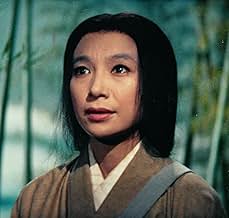
"The Black Hair" is the tale of an impoverished samurai who abandons his loyal and loving wife to marry the daughter of a wealthy lord in another province, only to discover many years later that he is still in love with his first spouse. He returns to their decaying old house to find her exactly as he left her, affectionate and forgiving as could be. You know something in this household just ain't right. "The Woman in the Snow" concerns an apprentice woodcutter who encounters an eerily beautiful female ice-vampire - called a "Yuki-Onna - who spares his life on the condition that he never tell a soul about their encounter. (If you saw the last episode of the flaccid Tales From the Darkside movie, on which this was based, you have an idea of how this one ends).
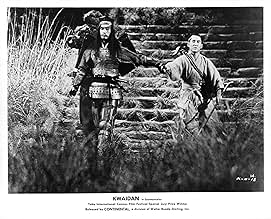
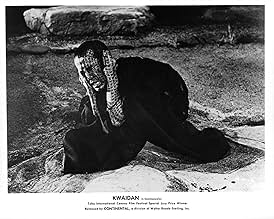
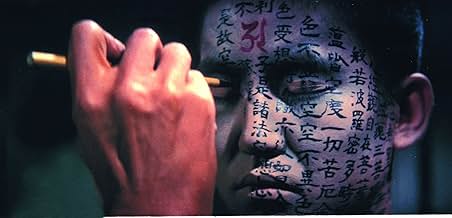
"Hoichi the Earless", easily the most powerful of the bunch, regards a blind biwa (a stringed instrument resembling a guitar) player renowned for his moving rendition of the tragic tale of the battle between the Genji and Heiki clans. Each night he is summoned to the nearby graveyard to chant the epic tale for the ghosts of the warriors who fell in that battle, duped by the spirits into believing that he's performing in the home of a wealthy lord. When Hoichi disocvers that he has been decieved by the dead and refuses to perform for them again, the ghosts exact a terrible revenge.
A note of warning to those deterred by long foreign films: this shimmering jewel in Japanese cinema's crown clocks in at nearly three hours of length and is, of course, fully subtitled. Visually bold, rich and color and texture, and atmospherically photographed with a spine-tingling elegance, I can't guarantee that you'll like Kwaidan, but I think that I can safely assure you'll never forget it. Highly recommended, especially for Japanophiles and those with a taste for high class horror.
Kwaidan differentiates itself from the pack in a number of significant ways. To begin with, all of the episodes eschew the usual O. Henry "twist" endings and deliberately telegraph their punches, case in point being "Hoichi the Earless", which gives away its climax with its very title! This film is also missing the compulsory "wrap-around" story normally employed by anthology films to tie all the stories together, and the horror elements are far more low-key than most horror aficianados are used to. Kwaidan is far less concerned with springing shocks and fraying nerves than it is in exploring the whirlwind of conflicting emotions that swirl in the dark night of the human soul.
"The Black Hair" is the tale of an impoverished samurai who abandons his loyal and loving wife to marry the daughter of a wealthy lord in another province, only to discover many years later that he is still in love with his first spouse. He returns to their decaying old house to find her exactly as he left her, affectionate and forgiving as could be. You know something in this household just ain't right. "The Woman in the Snow" concerns an apprentice woodcutter who encounters an eerily beautiful female ice-vampire - called a "Yuki-Onna - who spares his life on the condition that he never tell a soul about their encounter. (If you saw the last episode of the flaccid Tales From the Darkside movie, on which this was based, you have an idea of how this one ends).
"Hoichi the Earless", easily the most powerful of the bunch, regards a blind biwa (a stringed instrument resembling a guitar) player renowned for his moving rendition of the tragic tale of the battle between the Genji and Heiki clans. Each night he is summoned to the nearby graveyard to chant the epic tale for the ghosts of the warriors who fell in that battle, duped by the spirits into believing that he's performing in the home of a wealthy lord. When Hoichi disocvers that he has been decieved by the dead and refuses to perform for them again, the ghosts exact a terrible revenge.
A note of warning to those deterred by long foreign films: this shimmering jewel in Japanese cinema's crown clocks in at nearly three hours of length and is, of course, fully subtitled. Visually bold, rich and color and texture, and atmospherically photographed with a spine-tingling elegance, I can't guarantee that you'll like Kwaidan, but I think that I can safely assure you'll never forget it. Highly recommended, especially for Japanophiles and those with a taste for high class horror.
10OttoVonB
Japanese Poems
A man returns to his abandoned wife seeking forgiveness and pays for his cruelty. A snow demon and a young man make a pact. A blind priest is summoned by the ghosts of dead warriors to recite the heroic battle that cost them their lives. A samurai is taunted by ghosts in his cup of tea...
Kobayashi's output has been small compared to his contemporaries' (Kurosawa, Ozu...) yet each of his films is an assault on the senses and a visual gem. After unleashing some of Japan's cinematic legends in two of the greatest samurai films ever made (Samurai Rebellion with Toshiro Mifune and the sublime Harakiri with Tatsuya Nakadai), the master moved on to the supernatural with this collection of ghost stories. Filming for the first time in color, Kobayashi wields it like few others before or since, blending spellbinding compositions together and giving us a film of a visual beauty that rivals the best of Kurosawa, Kubrick or Tarkovsky. The eerie feeling of dread is matched only by the film's sheer beauty and power, like watching a moving painting or experiencing a trance.
Kwaidan is not entertaining: it is captivating, bewitching, unique even by it's author's standards. For movie-goers, this is a unique experience. For amateurs of art, it is a feast.
Unmissable!
Kobayashi's output has been small compared to his contemporaries' (Kurosawa, Ozu...) yet each of his films is an assault on the senses and a visual gem. After unleashing some of Japan's cinematic legends in two of the greatest samurai films ever made (Samurai Rebellion with Toshiro Mifune and the sublime Harakiri with Tatsuya Nakadai), the master moved on to the supernatural with this collection of ghost stories. Filming for the first time in color, Kobayashi wields it like few others before or since, blending spellbinding compositions together and giving us a film of a visual beauty that rivals the best of Kurosawa, Kubrick or Tarkovsky. The eerie feeling of dread is matched only by the film's sheer beauty and power, like watching a moving painting or experiencing a trance.
Kwaidan is not entertaining: it is captivating, bewitching, unique even by it's author's standards. For movie-goers, this is a unique experience. For amateurs of art, it is a feast.
Unmissable!
Underappreciated, creepy little film
Kwaidan is one of the great underappreciated films: no one's heard of it, but you'll never, ever forget it once you've seen it. Parts of it may seem slow to some viewers, and most of the stories are extremely predictable, but I have to say this is one of the most beautiful, haunting movies I've ever seen.
Of all the stories I prefer "Black Hair," the first one. Though a rather pointless horseback archery scene just slows it down, it's by far the scariest and most nightmare-worthy of the stories, using sound to incredibly chilling effect. There's more terror in the last minute of this segment than in all three Scream movies put together. Trust me, if you consider yourself a serious fan of horror cinema, you have to see this.
The second story, "The Woman of the Snow," is good, though I wish it ended more like "Black Hair" (you'll see what I mean). "Hoichi the Earless," with its jaw-dropping sea battle sequence, is by far the biggest and most popular of the stories. It's also the most influential, with its main premise prominently re-used in Conan the Barbarian. The film ends with "In a Cup of Tea." This is the only story that doesn't completely telegraph its ending, and coming after three utterly predictable stories, its complexity is a bit unexpected and disorienting. Certainly it's as creepy and beautiful as the rest of the film, but I have to admit I don't really understand it.
Being a tremendous fan of elegant, understated horror movies, as well as a student of Japanese culture, I consider this film one of my all-time favorites. Granted, some viewers may be turned off by the leisurely pace and the theatrical, intentionally unrealistic sets. But this is undeniably a beautiful and chilling film, absolutely perfect to watch late at night, alone, in the dark.
Of all the stories I prefer "Black Hair," the first one. Though a rather pointless horseback archery scene just slows it down, it's by far the scariest and most nightmare-worthy of the stories, using sound to incredibly chilling effect. There's more terror in the last minute of this segment than in all three Scream movies put together. Trust me, if you consider yourself a serious fan of horror cinema, you have to see this.
The second story, "The Woman of the Snow," is good, though I wish it ended more like "Black Hair" (you'll see what I mean). "Hoichi the Earless," with its jaw-dropping sea battle sequence, is by far the biggest and most popular of the stories. It's also the most influential, with its main premise prominently re-used in Conan the Barbarian. The film ends with "In a Cup of Tea." This is the only story that doesn't completely telegraph its ending, and coming after three utterly predictable stories, its complexity is a bit unexpected and disorienting. Certainly it's as creepy and beautiful as the rest of the film, but I have to admit I don't really understand it.
Being a tremendous fan of elegant, understated horror movies, as well as a student of Japanese culture, I consider this film one of my all-time favorites. Granted, some viewers may be turned off by the leisurely pace and the theatrical, intentionally unrealistic sets. But this is undeniably a beautiful and chilling film, absolutely perfect to watch late at night, alone, in the dark.
marvellous fairy-tales: directorial and cinematographic fabulous
Cinematographer Yoshio Miyajima did a marvellous job, although most of the visuals in this masterpiece are obviously invented by Kobayashi. It is clearly studio-work, but Kobayashi turns that to his advance by making the most marvellous background paintings I've ever seen in a movie and his virtuosity comes to full exposure in the light effects that are fabulous for such an old film. That together with the beautiful colors creates a mesmerizing and sometimes terrifying experience. 'Marco the magnificent' (Patelliere&Howard, 1964) reminded me of the visuals in Kwaidan, because of the beautiful environmental shots and because of the (supposed) history of mixture of eastern and western stories. Forget that movie instantly plz. Another film that has nothing to do with this one, but is brilliant and comparable only because of the episode structure, the fairy-tale nature and great cinematography is Kaos (Taviani, 1984).
Kwaidan has such a haunting effect because of the scary music and the sound effects are unnerving(-ly edited). Some call it horror. I thought the pace was rather slow for horror, but it is a film that does not let go easily. The actors (one of which is Takeshi Shimura) convince enthusiastically and they too make it an entertaining film. According to the user-rating this is Kobayashi's least interesting work of these three: Joi-uchi, Seppuku, and Kwaidan. I can't wait to see the other two, although I don't think they can surpass this masterpiece.
10 points out of 10 :-)
Kwaidan has such a haunting effect because of the scary music and the sound effects are unnerving(-ly edited). Some call it horror. I thought the pace was rather slow for horror, but it is a film that does not let go easily. The actors (one of which is Takeshi Shimura) convince enthusiastically and they too make it an entertaining film. According to the user-rating this is Kobayashi's least interesting work of these three: Joi-uchi, Seppuku, and Kwaidan. I can't wait to see the other two, although I don't think they can surpass this masterpiece.
10 points out of 10 :-)
Classical Japanese tragedy, Expressionist visual style
There's a good bit of discussion of this film as "horror"; may I suggest that it's horrific in the sense of the ancient Greek tragedies. There's no attempt to coerce your Hollywood-abused adrenals into delivering just one more squirt by means of some in-your-face special effect. In fact, for each of these slowly developed stories, once you've understood the premise, the story will unfold pretty much as you've guessed it must, inexorably, relentlessly. The ghosts aren't there to "spook" us, they're to show us our common human spiritual and emotional failings. The horror of a ghost wife, for instance, isn't that her chains drag noisily across the the hardwood parquet floor, but that we've created her by our insensitivity, our misplaced values, or our betrayals.
The visual style is stupendous! The action takes place in a disappeared, iconic world of classical medieval Japan, perfect, and admitting no trace of the reality of modern times. Overlaid is a European Expressionist color sensibility, with emotionally charged color displacements of sky and skin, as if Hokusai and Ernst Ludwig Kirchner had been working cooperatively on the sets and lighting.
This is a wonderful movie. Please ignore attempts to fit it into some box, some genre. Rather look at it as a mature work of art, which happens to choose old Japanese ghost stories as its starting point.
The visual style is stupendous! The action takes place in a disappeared, iconic world of classical medieval Japan, perfect, and admitting no trace of the reality of modern times. Overlaid is a European Expressionist color sensibility, with emotionally charged color displacements of sky and skin, as if Hokusai and Ernst Ludwig Kirchner had been working cooperatively on the sets and lighting.
This is a wonderful movie. Please ignore attempts to fit it into some box, some genre. Rather look at it as a mature work of art, which happens to choose old Japanese ghost stories as its starting point.


Did you know
- TriviaThe four vignettes were chosen to represent the four seasons of the year.
- Goofs(at around 2h 25 mins) In the segment "Miminashi Hôichi no hanashi", Donkai says he covered all of Hôichi's body with the sacred writing, but when Hôichi is writhing on the floor after the ghost's attack, his thighs (which in the shots were supposed to be covered by his robe) are visible for a couple of seconds and are clearly unmarked.
- Quotes
Hoichi (segment "Miminashi Hôichi no hanashi"): As long as I live, I'll continue to play the biwa. I'll play with all my soul to mourn those thousands of spirits who burn with bitter hatred.
- Alternate versionsOriginally a four-episode anthology released in Japan at 183 minutes. The USA version removes the second episode, starring Keiko Kishi and Tatsuya Nakadai, in order to shorten the running time to 125 minutes.
- ConnectionsEdited into Catalogue of Ships (2008)
- How long is Kwaidan?Powered by Alexa
Details
Box office
- Budget
- ¥350,000,000 (estimated)
- Runtime
- 3h 3m(183 min)
- Aspect ratio
- 2.35 : 1
Contribute to this page
Suggest an edit or add missing content