

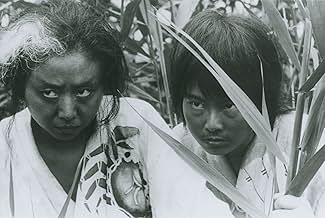
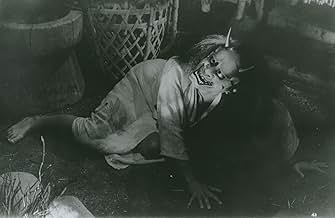
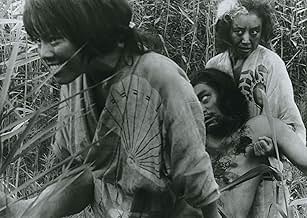
Two women kill samurai and sell their belongings for a living. While one of them is having an affair with their neighbor, the other woman meets a mysterious samurai wearing a bizarre mask.Two women kill samurai and sell their belongings for a living. While one of them is having an affair with their neighbor, the other woman meets a mysterious samurai wearing a bizarre mask.Two women kill samurai and sell their belongings for a living. While one of them is having an affair with their neighbor, the other woman meets a mysterious samurai wearing a bizarre mask.
- Awards
- 2 wins total


- Director
- Writer
- All cast & crew
- Production, box office & more at IMDbPro
7.825K
1
2
3
4
5
6
7
8
9
10
Featured reviews
Investigation Into Jealousy
Onibaba is a very well done film, purposefully using black and white cinema to its' advantage in this stunning portrayal of murder, jealousy, and uncontrollable human instinct in a dark period of Japan's history.
A film that aims at portraying the baser side of human nature and investigating human psychology, it is chalk-full of symbolic scenes and sequences. From start to finish it draws you in with the odd imagery and scenery of Japan's rural areas, and even though in this film though there are very few characters and elements that are to it, both visually and literally, through its' minimalism it effectively tells its' story.
This film is both very artistic & symbolic as well as literal and upfront, juxtaposing very graphic, real images of the face of humanity that demand the viewer to infer much throughout the whole of the film. When going into this film, I would say that it is very important for the viewer to think of the film as being very symbolic for the instincts and base nature of mankind, and perhaps even a 'state of nature' portrayal of humanity. If you watch this film with that in mind, it will help with the inferences that one must make to get the most out of this film.
As it stands by itself, aside from the deeper meaning, it is an intriguing story that is a veritable 'slice of life' film in the darker sense, viewing the way that people had to live during a period of war and hard times in feudal Japan. It deals with the hardships that these people face, and their method of survival, in addition to a very human story of jealousy and portrayal with a very interesting culminating point that I did not expect at all. The climax of the film is very much worth the build-up, though at times it seemed to be rather slow.
Overall, a very important piece of film when it comes to the symbolism and techniques employed. Through its' minimalism and black-and-white cinematography we are really treated to a great film that is, of its' own right, an influential and great movie. The cinematography is exceptionally good, especially the use of the reeds and the light at night.
I would recommend this film to anybody with a serious interest in film, as well as anybody who likes a good film that investigates the darker side of human nature.
A film that aims at portraying the baser side of human nature and investigating human psychology, it is chalk-full of symbolic scenes and sequences. From start to finish it draws you in with the odd imagery and scenery of Japan's rural areas, and even though in this film though there are very few characters and elements that are to it, both visually and literally, through its' minimalism it effectively tells its' story.
This film is both very artistic & symbolic as well as literal and upfront, juxtaposing very graphic, real images of the face of humanity that demand the viewer to infer much throughout the whole of the film. When going into this film, I would say that it is very important for the viewer to think of the film as being very symbolic for the instincts and base nature of mankind, and perhaps even a 'state of nature' portrayal of humanity. If you watch this film with that in mind, it will help with the inferences that one must make to get the most out of this film.
As it stands by itself, aside from the deeper meaning, it is an intriguing story that is a veritable 'slice of life' film in the darker sense, viewing the way that people had to live during a period of war and hard times in feudal Japan. It deals with the hardships that these people face, and their method of survival, in addition to a very human story of jealousy and portrayal with a very interesting culminating point that I did not expect at all. The climax of the film is very much worth the build-up, though at times it seemed to be rather slow.
Overall, a very important piece of film when it comes to the symbolism and techniques employed. Through its' minimalism and black-and-white cinematography we are really treated to a great film that is, of its' own right, an influential and great movie. The cinematography is exceptionally good, especially the use of the reeds and the light at night.
I would recommend this film to anybody with a serious interest in film, as well as anybody who likes a good film that investigates the darker side of human nature.
Down in a hole.
"Battle not with monsters, lest ye become a monster, and if you gaze into the abyss, the abyss gazes also into you."
The characters in Onibaba dwell in the bottom rung of Maslow's Pyramid.
Food, sex, shelter, survival - though not necessarily in that order.
Sexuality permeates every frame of this film. It is ever-present along with the oppressive heat and the marshland weeds.
The stark black and white cinematography perfectly captures the desolate mood.
The score – atonal free jazz backed by tribal rhythms - though completely anachronistic works surprisingly well.
One of the most fiercely primal depictions of the human condition on celluloid, Onibaba is a hauntingly erotic masterpiece.
- Nietzsche
The characters in Onibaba dwell in the bottom rung of Maslow's Pyramid.
Food, sex, shelter, survival - though not necessarily in that order.
Sexuality permeates every frame of this film. It is ever-present along with the oppressive heat and the marshland weeds.
The stark black and white cinematography perfectly captures the desolate mood.
The score – atonal free jazz backed by tribal rhythms - though completely anachronistic works surprisingly well.
One of the most fiercely primal depictions of the human condition on celluloid, Onibaba is a hauntingly erotic masterpiece.
great and intriguing.
Wow,I saw this movie on Cable recently.Both of the women in this story are just trying their best to get by and survive in a bad situation.I could tell it was on a limited budget but very well written.It was erotic with frontal nudity and even filmed in the 60's.It had me on the edge of my seat the whole time.I was trying to figure out where they were going with the whole thing.I kept trying to decide if I sympathized with the old woman more than the young one.Then at the end I felt sorry for both of them.What a great story.This one needs to be on Cable more often.This one is a must see even for people who only like contemporary films.I would recommend it to anyone.
solid rural horror fantasy
Director Kaneto Shindo's ONIBABA is a fantastic, rich, atmospheric horror film set in an amazing rural location. Its influence on decades of rural-set genre pics is undeniable.
In a medieval, warring Japan, a wild, young woman and her mother-in-law rob and kill lost samurai in order to survive. Problems begin when the younger woman becomes involved with an intended victim.
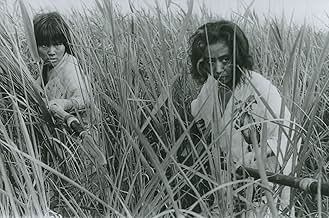
Staged in a rural world of tall, swaying grass and swollen rivers, the film contains little dialogue and little exposition. It relies heavily on the non-verbal performances of the female leads and the superbly conveyed location.
It is erotic, creepy, sensual, savage and beautiful.
Cinematic poetry.
In a medieval, warring Japan, a wild, young woman and her mother-in-law rob and kill lost samurai in order to survive. Problems begin when the younger woman becomes involved with an intended victim.
Staged in a rural world of tall, swaying grass and swollen rivers, the film contains little dialogue and little exposition. It relies heavily on the non-verbal performances of the female leads and the superbly conveyed location.
It is erotic, creepy, sensual, savage and beautiful.
Cinematic poetry.
An absolutely amazing piece of poetry
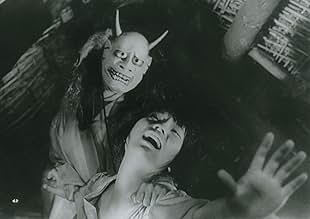
To describe this film in one word, that word would have to 'wow', or something to that effect. In short, Onibaba is an absolutely spectacular cinematic spectacle, and one that has few equals in it's field. In fact, it's the perfect fusion between art-house cinema and atmospheric horror! Loosely based on a Buddhist fable, Onibaba tells a story of lust, envy, wrath and betrayal which is wrapped up by way of a hideous demon mask. Onibaba is a human drama before it's a horror movie - all the character actions are driven by their various needs and wants, and the all the comeuppance emancipates from there. The characters and their actions are constantly fascinating, and it's that which predominantly keeps the film alive. We follow a mother and her daughter-in-law; a couple that are forced to eke out an existence in war torn Japan by killing passing samurai's and selling their belongings for food. Their existence is upset one day, however, when the son's friend, Hachi, returns from the war to the place where the two women live.
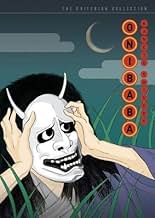
The title of the film roughly translates into English as 'demon woman', and that is an apt title for this story. Although the film doesn't contain any actual demons or other mythical creatures, the real horror comes from the character actions and the film succeeds as a horror film in that way. The atmospheric location, which consists of a huge area covered in reeds, adds weight to film's claim to the horror genre also and the location provides a truly stunning set for this story to take place. The film also features a dark pit, which the women use to dump the bodies of the Samurai they kill, which adds to the fantasy and inventive element of the story. The film is cinematic poetry on many levels, from the bleak yet beautiful cinematography, to the elements of the location mentioned - all the way down to it's central piece of imagery - the mask itself. The mask is the film's centrepiece, and the part's where it features are the most memorable of the movie.
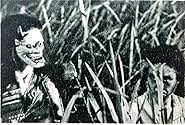
Prolific Japanese director Kaneto Shindô takes us on a tour-de-force of atmospheric direction. He spends a fair amount of time focusing on the reeds blowing in the wind and many of his angles focus on the sky, which will no doubt irritate the less adept viewers amongst us - but the rest of us know that this is a way for Shindô to aptly portray his setting, and every instance when he did that was a delight for yours truly. There are many great shots in this movie, and if you're a fan of technical prowess, Onibaba is your film; and even if you're not, this film is a must see.
The title of the film roughly translates into English as 'demon woman', and that is an apt title for this story. Although the film doesn't contain any actual demons or other mythical creatures, the real horror comes from the character actions and the film succeeds as a horror film in that way. The atmospheric location, which consists of a huge area covered in reeds, adds weight to film's claim to the horror genre also and the location provides a truly stunning set for this story to take place. The film also features a dark pit, which the women use to dump the bodies of the Samurai they kill, which adds to the fantasy and inventive element of the story. The film is cinematic poetry on many levels, from the bleak yet beautiful cinematography, to the elements of the location mentioned - all the way down to it's central piece of imagery - the mask itself. The mask is the film's centrepiece, and the part's where it features are the most memorable of the movie.
Prolific Japanese director Kaneto Shindô takes us on a tour-de-force of atmospheric direction. He spends a fair amount of time focusing on the reeds blowing in the wind and many of his angles focus on the sky, which will no doubt irritate the less adept viewers amongst us - but the rest of us know that this is a way for Shindô to aptly portray his setting, and every instance when he did that was a delight for yours truly. There are many great shots in this movie, and if you're a fan of technical prowess, Onibaba is your film; and even if you're not, this film is a must see.


Did you know
- TriviaOne of Willem Dafoe's favorite films. He briefly owned the rights to the film and was planning on making a remake but eventually abandoned the idea. It was too difficult to rework the story into a new setting for a contemporary audience while remaining respectful to the source material.
- Goofs(at around 55 mins) After Kichi's Mother catches Kichi's Wife trying to sneak out of the hut to go to Hachi, they both go outside. Kichi's Wife says, "No breeze at all.", yet, the miscanthus blades can be seen waving substantially.
- Alternate versionsOriginally cut in England when released in 1968, though the video releases are uncut.
- How long is Onibaba?Powered by Alexa
Details
Box office
- Gross worldwide
- $689
- Runtime
- 1h 43m(103 min)
- Color
- Sound mix
- Aspect ratio
- 2.35 : 1
Contribute to this page
Suggest an edit or add missing content