

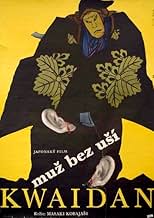
A collection of four Japanese folk tales with supernatural themes.A collection of four Japanese folk tales with supernatural themes.A collection of four Japanese folk tales with supernatural themes.
- Director
- Writers
- Stars
- Nominated for 1 Oscar
- 5 wins & 3 nominations total


Rentarô Mikuni
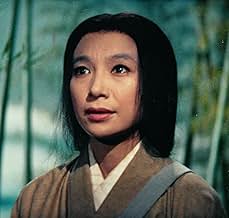
- Husband
- (segment "Kurokami")

Michiyo Aratama
- First wife
- (segment "Kurokami")

Misako Watanabe
- Second Wife
- (segment "Kurokami")

Kenjirô Ishiyama
- Father
- (segment "Kurokami")
Ranko Akagi
- Mother
- (segment "Kurokami")


Tatsuya Nakadai
- Mi nokichi
- (segment "Yuki-Onna")

Keiko Kishi
- Yuki the Snow Maiden
- (segment "Yuki-Onna")

Yûko Mochizuki
- Minokichi's mother
- (segment "Yuki-Onna")

Kin Sugai
- Village woman
- (segment "Yuki-Onna")

Noriko Sengoku
- Village woman
- (segment "Yuki-Onna")
- Director
- Writers
- All cast & crew
- Production, box office & more at IMDbPro
Featured reviews
Cinematographer Yoshio Miyajima did a marvellous job, although most of the visuals in this masterpiece are obviously invented by Kobayashi. It is clearly studio-work, but Kobayashi turns that to his advance by making the most marvellous background paintings I've ever seen in a movie and his virtuosity comes to full exposure in the light effects that are fabulous for such an old film. That together with the beautiful colors creates a mesmerizing and sometimes terrifying experience. 'Marco the magnificent' (Patelliere&Howard, 1964) reminded me of the visuals in Kwaidan, because of the beautiful environmental shots and because of the (supposed) history of mixture of eastern and western stories. Forget that movie instantly plz. Another film that has nothing to do with this one, but is brilliant and comparable only because of the episode structure, the fairy-tale nature and great cinematography is Kaos (Taviani, 1984).
Kwaidan has such a haunting effect because of the scary music and the sound effects are unnerving(-ly edited). Some call it horror. I thought the pace was rather slow for horror, but it is a film that does not let go easily. The actors (one of which is Takeshi Shimura) convince enthusiastically and they too make it an entertaining film. According to the user-rating this is Kobayashi's least interesting work of these three: Joi-uchi, Seppuku, and Kwaidan. I can't wait to see the other two, although I don't think they can surpass this masterpiece.
10 points out of 10 :-)
Kwaidan has such a haunting effect because of the scary music and the sound effects are unnerving(-ly edited). Some call it horror. I thought the pace was rather slow for horror, but it is a film that does not let go easily. The actors (one of which is Takeshi Shimura) convince enthusiastically and they too make it an entertaining film. According to the user-rating this is Kobayashi's least interesting work of these three: Joi-uchi, Seppuku, and Kwaidan. I can't wait to see the other two, although I don't think they can surpass this masterpiece.
10 points out of 10 :-)
'Kwaidan' is an astonishing film, once seen never forgotten. It's labeled horror, but while the four stories within deal with ghosts and the supernatural, I doubt that anyone would be actually frightened watching it. Haunted, yes, scared, no. It's a beautiful movie, very stylized with a very imaginative use of colour. I can't think of anything else I've seen that comes close. Mario Bava, maybe. The movie consists of four stories. I think it's best watched as a whole to let each story blend in to the other, but if forced to choose I would say my favourite segment is the second one ('The Woman In The Snow') which I believe was left out of the version of the movie originally shown outside Japan. 'Kwaidan' is one of those rare movies that leaves you stunned the first time you see it. For me it's equal to 'Rashomon', 'Woman In The Dunes' and 'Branded To Kill' as the most amazing Japanese movies I've ever seen. Each one of these movies blew my mind. It's difficult not to gush about all four. They come with my highest recommendation. I sincerely believe that anybody who watches them will be incredibly impressed. They are all masterpieces.
10OttoVonB
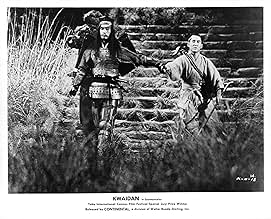
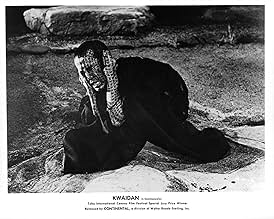
A man returns to his abandoned wife seeking forgiveness and pays for his cruelty. A snow demon and a young man make a pact. A blind priest is summoned by the ghosts of dead warriors to recite the heroic battle that cost them their lives. A samurai is taunted by ghosts in his cup of tea...
Kobayashi's output has been small compared to his contemporaries' (Kurosawa, Ozu...) yet each of his films is an assault on the senses and a visual gem. After unleashing some of Japan's cinematic legends in two of the greatest samurai films ever made (Samurai Rebellion with Toshiro Mifune and the sublime Harakiri with Tatsuya Nakadai), the master moved on to the supernatural with this collection of ghost stories. Filming for the first time in color, Kobayashi wields it like few others before or since, blending spellbinding compositions together and giving us a film of a visual beauty that rivals the best of Kurosawa, Kubrick or Tarkovsky. The eerie feeling of dread is matched only by the film's sheer beauty and power, like watching a moving painting or experiencing a trance.
Kwaidan is not entertaining: it is captivating, bewitching, unique even by it's author's standards. For movie-goers, this is a unique experience. For amateurs of art, it is a feast.
Unmissable!
Kobayashi's output has been small compared to his contemporaries' (Kurosawa, Ozu...) yet each of his films is an assault on the senses and a visual gem. After unleashing some of Japan's cinematic legends in two of the greatest samurai films ever made (Samurai Rebellion with Toshiro Mifune and the sublime Harakiri with Tatsuya Nakadai), the master moved on to the supernatural with this collection of ghost stories. Filming for the first time in color, Kobayashi wields it like few others before or since, blending spellbinding compositions together and giving us a film of a visual beauty that rivals the best of Kurosawa, Kubrick or Tarkovsky. The eerie feeling of dread is matched only by the film's sheer beauty and power, like watching a moving painting or experiencing a trance.
Kwaidan is not entertaining: it is captivating, bewitching, unique even by it's author's standards. For movie-goers, this is a unique experience. For amateurs of art, it is a feast.
Unmissable!
10FieCrier
This is one of my favorite horror films, and I daresay one of my favorite films in general as well. Anyone who doubts that a horror film can be great art as well ought to give this one a try.
I will have to revisit this comment after viewing the film again, as it has been a while, but there were a few comments I thought people might find useful regarding the stories the film adapted.
Two of the stories can be found in Lafcadio Hearn's book Kwaidan: Stories and Studies of Strange Things. These are "Hoichi the Earless" ("The Story of Mimi-nashi-Hôïchi") and "The Woman in the Snow" ("Yuki-Onna"). The other two can be found in other books of Hearn's; I'm grateful to Kenji Inadomi for pointing out that "Black Hair" can be found as "The Reconciliation" in Shadowings, and "In a Cup of Tea" is to be found in Kotto: Being Japanese Curios, with Sundry Cobwebs.
Many of Hearn's stories can be found online, including all of the above except "In a Cup of Tea." Attractive early hardcovers of Hearn's books are pretty plentiful, though, and not terribly expensive either.
As some others have noticed, there's an uncredited adaptation of "The Woman in the Snow" as the "Lover's Vow" segment of Tales from the Darkside: The Movie (1990). It's not bad, but Kaidan (1964) is the one that got it right.
I will have to revisit this comment after viewing the film again, as it has been a while, but there were a few comments I thought people might find useful regarding the stories the film adapted.
Two of the stories can be found in Lafcadio Hearn's book Kwaidan: Stories and Studies of Strange Things. These are "Hoichi the Earless" ("The Story of Mimi-nashi-Hôïchi") and "The Woman in the Snow" ("Yuki-Onna"). The other two can be found in other books of Hearn's; I'm grateful to Kenji Inadomi for pointing out that "Black Hair" can be found as "The Reconciliation" in Shadowings, and "In a Cup of Tea" is to be found in Kotto: Being Japanese Curios, with Sundry Cobwebs.
Many of Hearn's stories can be found online, including all of the above except "In a Cup of Tea." Attractive early hardcovers of Hearn's books are pretty plentiful, though, and not terribly expensive either.
As some others have noticed, there's an uncredited adaptation of "The Woman in the Snow" as the "Lover's Vow" segment of Tales from the Darkside: The Movie (1990). It's not bad, but Kaidan (1964) is the one that got it right.
Over a time span of some 35 years, I saw Kwaidan twice on the large screen. I liked it the very first time, and it got better when I saw it the second time.
From the very opening when credits were introduced, color ink drops penetrating clear water generated an extremely soothing visual effect. The execution was low-tech, but it goes to show the power of human creativity before the age of fast computer chips. This opening also sets the tone of what you are about to get into - a film of great visual beauty, a film that requires a relaxed and unrushed mental frame of mind to appreciate.
It consists of four stories, all about ghosts, spirits and a blood-sucking woman in white. Some stories are better than the others, and my favourite is 'Hoichi the Earless', which also has the longest running time. It is about escapism, tales of morals, and cinema at its best.
From the very opening when credits were introduced, color ink drops penetrating clear water generated an extremely soothing visual effect. The execution was low-tech, but it goes to show the power of human creativity before the age of fast computer chips. This opening also sets the tone of what you are about to get into - a film of great visual beauty, a film that requires a relaxed and unrushed mental frame of mind to appreciate.
It consists of four stories, all about ghosts, spirits and a blood-sucking woman in white. Some stories are better than the others, and my favourite is 'Hoichi the Earless', which also has the longest running time. It is about escapism, tales of morals, and cinema at its best.


Did you know
- TriviaThe four vignettes were chosen to represent the four seasons of the year.
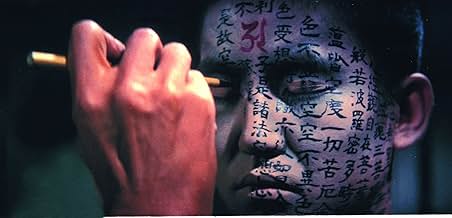
- Goofs(at around 2h 25 mins) In the segment "Miminashi Hôichi no hanashi", Donkai says he covered all of Hôichi's body with the sacred writing, but when Hôichi is writhing on the floor after the ghost's attack, his thighs (which in the shots were supposed to be covered by his robe) are visible for a couple of seconds and are clearly unmarked.
- Quotes
Hoichi (segment "Miminashi Hôichi no hanashi"): As long as I live, I'll continue to play the biwa. I'll play with all my soul to mourn those thousands of spirits who burn with bitter hatred.
- Alternate versionsOriginally a four-episode anthology released in Japan at 183 minutes. The USA version removes the second episode, starring Keiko Kishi and Tatsuya Nakadai, in order to shorten the running time to 125 minutes.
- ConnectionsEdited into Catalogue of Ships (2008)
- How long is Kwaidan?Powered by Alexa
Details
Box office
- Budget
- ¥350,000,000 (estimated)
- Runtime
- 3h 3m(183 min)
- Aspect ratio
- 2.35 : 1
Contribute to this page
Suggest an edit or add missing content