

An American missionary and his wife travel to the exotic island kingdom of Hawaii, intent on converting the natives. But the clash between the two cultures is too great and instead of unders... Read allAn American missionary and his wife travel to the exotic island kingdom of Hawaii, intent on converting the natives. But the clash between the two cultures is too great and instead of understanding there comes tragedy.An American missionary and his wife travel to the exotic island kingdom of Hawaii, intent on converting the natives. But the clash between the two cultures is too great and instead of understanding there comes tragedy.
- Directors
- Writers
- Stars
- Nominated for 7 Oscars
- 2 wins & 10 nominations total


- Charity Bromley
- (as Diane Sherry)
- Directors
- Writers
- All cast & crew
- Production, box office & more at IMDbPro
Featured reviews
"A ministry in which love has no place"
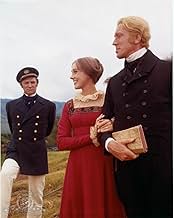
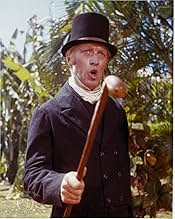
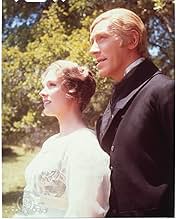
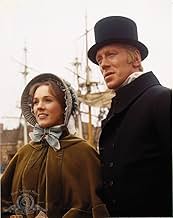
But Hawaii is not some flagrant and roughshod denunciation of church and faith. The picture was adapted (quite liberally) from its source by acclaimed screenwriters Daniel Taradash and Dalton Trumbo, and it has in particular Trumbo's tendency to treat all his characters with respectful and human portrayals, in spite of what antagonisms they may have towards each other. Thus while Max von Sydow is seen at turns as a callous fanatic, a trumped-up fool and a general negative influence, we first see him as a shy yet well-meaning youngster, clumsily trying to woo Julie Andrews. In these early scenes he is somewhat endearing figure, and even though most viewers will not condone much of what he later does, this first impression sticks with us, preventing us from completely despising him and allowing us to believe in his wife's devotion to him.
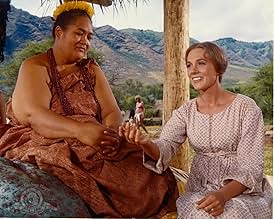
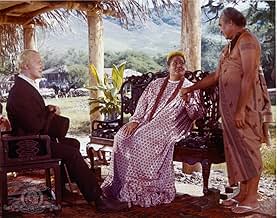
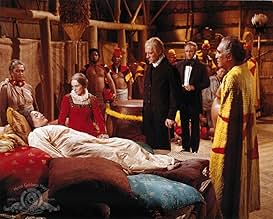
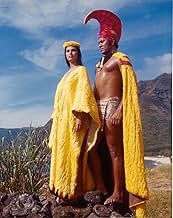
Max von Sydow was an excellent choice for this role. Admittedly his Swedish accent is a bit of a non-sequitur, but he is perfect at bringing out both the sympathetic young lad and the unshakable preacher. His performance occasionally seems to border on the hammy, but this is acceptable because it fits in with his strength of character and the earnest manner with which he takes up his ministerial duties. Julie Andrews is great too. After having made her name with the more or less fantasy figures of Mary Poppins and Maria von Trapp there's a strange kind of poignancy seeing her suffer the strains of being a more realistic wife and mother. She seems sadly underused here however, although apparently she was the main victim of the cuts in the edited version I have, which is a real pity. Richard Harris and Gene Hackman bring their forceful presences to make some of the more powerful statements in the dialogue, while Jocelyn LaGrande makes a terrific impact with her full-of-life performance. Although she spoke no English and learned her lines phonetically, it's incredible the way she communicates meaning and emotion around those words.
Hawaii was the first large-scale picture directed by George Roy Hill, and by and large he handles the broad canvas well. Of note is that fact that he gives a constant life and rhythm to the island, often featuring a few figures working in the background or framing a character with gently swaying foliage. Hill was of course a child of the New Wave and this is evident in the occasional zoom or whip pan, but his touch is generally quite light and minimalist. Unlike some of the other younger directors around at this time he favours long takes with few close-ups. The only trouble with this is doesn't seem to quite have developed the knack of subtly making a point within the frame, sometimes using the camera to force our attention on something. An example is when Iliki runs to greet Richard Harris's ship, throwing off her western dress, a moment which seems rather contrived and clunky by the way the camera pans down onto the discarded garment.
Hawaii is a far from perfect picture, being neither quite the stunning extravaganza that epics are generally meant to be, nor the stirring human drama it also seems to aspire to. However, it has many moments which come close to both goals, and most importantly has a very honest humanity to it – something so many epics lack – and this allows it to speak its message directly without ever threatening to alienate its audience.
Epic-scale adventure drama or history lesson?
Where Is The Rest......
The movie is only about one-fifth of the whole book. Too bad. The movie leaves a lot of unresolved plot threads which are resolved later in the book. Subplots which seem inconsequential turn out to have major implications to the plot of the novel. Minor characters from the movie become more important as the story progresses. For example, Gene Hackman's Dr. John Whipple and Richard Harris' Raefer Hoxworth have only a few scenes in Hawaii, but their characters are perhaps the two most important characters in the book. Whipple and Hoxworth are the ones who challenge the authority of the missionaries and, in a sense, are the true foils to Abner Hale. They also are the ones who go into business.
As a result, the movie, standing by itself, tends to introduce characters and subplots with no relevancy to the main Abner-Jerusha-Malama-Keolo story line. Perhaps a sequel was planned? In short, Hawaii would have worked better as a mini-series.
********************* How the Novel Ends:
Abner Hale's son, Micah, who was last seen getting a boat to the mainland to attend Yale University, becomes a minister like his father. The sea captain, Raefer Hoxworth, marries Noelini, the daughter of the Alii Nui. Micah then meets and falls in love with Raefer's and Noelini's daughter. They get married. Abner Hale scorns Micha; claiming the Micah has gone "whoring with the heathens." Micah quits the ministry and becomes a partner in Raefer Hoxworth's shipping company - now called Hoxworth and Hale.
John Whipple and Retire Janders (the captain of the ship that brought the missionaries to Hawaii) are partners in Janders & Whipple. Initially a trading company, general store, and ship chandler, they start acquiring land and growing sugar. J&W eventually becomes a plantation company and needs cheap labor to work their fields. John Whipple imports Chinese workers.
A generation after the movie ends, the descendants of Hale, Whipple, Janders, Hewlett (the man who was kicked out of the church for marrying a Hawaiian woman) and the Hoxworth are the commercial, social, and political elite of Hawaii. Micah Hale leads the movement to have the United States annex Hawaii and serves as the first governor of the Territory of Hawaii.
The descendants of these families continue to build their businsses and develop the islands. In an ironic twist, the families, refusing to marry Hawaiians or Chinese, intermarry. Eventually cousins marry cousins - the very practices Abner Hale condemned from his puplit. You eventually get characters named: Whipple Hoxworth; Hoxworth Hale; Hewlett Janders; Bromley Hoxworth.
Finally, at the end of the novel the rich, post-WW II descendants of the missionaries talk about their "distinguished ancestors." Their descriptions and interpretation of events, differs from what it portrayed in the earlier chapters.
Very moving, dramatic, well acted and infuriating film
True to Spirit of Novel


Did you know
- TriviaJocelyne LaGarde is the only performer in Academy Award history to be nominated for her only screen role. LaGarde had never acted before, and never acted again in her entire life.
- GoofsIn the opening scene, which is set in 1818, Jerusha is said to be 22, but a later shot of her gravestone has her born in 1799.
- Quotes
Dr. John Whipple: [Addressing Abner, while holding Keoki's lifeless body, victim of the measles epidemic that has ravaged the native Hawaiians] There's nothing you could've done for him... When Captain Cook discovered these islands 50 years ago, they were a true paradise. Infectious disease was unknown. They didn't even catch cold! And there were 400,000 of them - now there are less than 150,000. You and I may well live to see the last Hawaiian lowered into his grave - with proper Christian services, of course.
- Alternate versionsOriginal version ran 189 minutes; subsequently cut to 171 minutes. The general release version ran 151 minutes. Full-length version available on home video.
- ConnectionsFeatured in The Dick Cavett Show: Julie Andrews/Blake Edwards (1971)
Details
- Release date
- Country of origin
- Languages
- Also known as
- Hawai
- Filming locations
- Bodo, Norway(Missionary boat saing thru Magellan Straits)
- Production companies
- See more company credits at IMDbPro
Box office
- Budget
- $15,000,000 (estimated)
- Runtime
- 3h 9m(189 min)
- Color
- Aspect ratio
- 2.35 : 1