IMDb RATING
6.9/10
8.4K
YOUR RATING


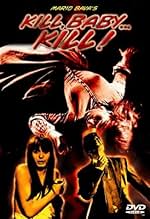
A Carpathian village is haunted by the murderous ghost of a little girl, prompting a coroner and a medical student to uncover her secrets while a witch attempts to protect the villagers.A Carpathian village is haunted by the murderous ghost of a little girl, prompting a coroner and a medical student to uncover her secrets while a witch attempts to protect the villagers.A Carpathian village is haunted by the murderous ghost of a little girl, prompting a coroner and a medical student to uncover her secrets while a witch attempts to protect the villagers.
- Awards
- 1 win & 1 nomination total




Giacomo Rossi Stuart
- Dr. Paul Eswai
- (as Giacomo Rossi-Stuart)


Fabienne Dali
- Ruth
- (as Fabienne Dalì)

Luciano Catenacci
- Burgomeister Karl
- (as Max Lawrence)

Giovanna Galletti
- Baroness Graps
- (as Giana Vivaldi)

Giuseppe Addobbati
- Innkeeper
- (as John MacDouglas)

Mirella Pamphili
- Irena Hollander
- (as Mirella Panfili)

Aldo Barozzi
- Interrogated Villager
- (uncredited)
Salvatore Campochiaro
- Coachman
- (uncredited)
Carla Cassola
- The Graps' Maid
- (uncredited)
Quinto Marziale
- Inn Patron
- (uncredited)

Mario Passante
- Monica's Father
- (uncredited)
Alfredo Rizzo
- The Graps' Butler
- (uncredited)
6.98.4K
1
2
3
4
5
6
7
8
9
10
Featured reviews
A good, solid Gothic horror film from Bava.
The people of a late 19th century European village are beginning to perish in incidents that could be accidents, suicides...or murders. A dedicated police inspector, Kruger (Piero Lulli), investigates the case, while calling in a doctor from out of town. Dr. Paul Eswai (Giacomo Rossi Stuart) arrives to find a community full of frightened and deeply superstitious citizens, which frustrates the practical man of medicine. Dr. Paul even goes so far as to perform an autopsy on a young woman, a practice that these locals find to be abhorrent. In an odd touch, victims are found with gold coins placed inside their hearts.
The relatively simple story actually isn't hard to follow at all, and in fact much crucial plot information is conveyed through pure exposition. Still, when this exposition is so vividly delivered by such an eclectic cast, it's hard to complain too much. Master of the macabre Mario Bava does go overboard with his frequent zooming in on people and then zooming back out. Other than that, this is an engaging example of the whole Gothic horror genre, with Bava working at the peak of his abilities. As he demonstrated so stylishly in previous efforts such as "Black Sunday" and "Black Sabbath", Bava was expert at creating an otherworldly atmosphere. He's capably assisted by his set decorator, Alessandro Dell'Orco, and cinematographer, Antonio Rinaldi. Bava also helped with the lighting, uncredited. Carlo Rustichellis' music is excellent, and the sound design is another plus, with that infernal giggling helping to put us on edge.
The handsome Rossi Stuart is a jut jawed, stoic hero. Erika Blanc is beautiful and appealing as Monica Schuftan, who assists him with the autopsy. Gorgeous raven haired Fabienne Dali is intoxicating as Ruth, the local sorceress. Lulli, Luciano Catenacci, and Giovanna Galletti round out our interesting primary cast. One key casting decision is crucial in keeping the film somewhat off kilter.
The finale is over awfully quickly, but there's still a fair bit to recommend here. The sequence that takes place about a quarter hour from the end is the most striking of all.
Seven out of 10.
The relatively simple story actually isn't hard to follow at all, and in fact much crucial plot information is conveyed through pure exposition. Still, when this exposition is so vividly delivered by such an eclectic cast, it's hard to complain too much. Master of the macabre Mario Bava does go overboard with his frequent zooming in on people and then zooming back out. Other than that, this is an engaging example of the whole Gothic horror genre, with Bava working at the peak of his abilities. As he demonstrated so stylishly in previous efforts such as "Black Sunday" and "Black Sabbath", Bava was expert at creating an otherworldly atmosphere. He's capably assisted by his set decorator, Alessandro Dell'Orco, and cinematographer, Antonio Rinaldi. Bava also helped with the lighting, uncredited. Carlo Rustichellis' music is excellent, and the sound design is another plus, with that infernal giggling helping to put us on edge.
The handsome Rossi Stuart is a jut jawed, stoic hero. Erika Blanc is beautiful and appealing as Monica Schuftan, who assists him with the autopsy. Gorgeous raven haired Fabienne Dali is intoxicating as Ruth, the local sorceress. Lulli, Luciano Catenacci, and Giovanna Galletti round out our interesting primary cast. One key casting decision is crucial in keeping the film somewhat off kilter.
The finale is over awfully quickly, but there's still a fair bit to recommend here. The sequence that takes place about a quarter hour from the end is the most striking of all.
Seven out of 10.
A Great Introduction to Mario Bava
A doctor (Giacomo Rossi-Stuart) goes to a small town in the Carpathian mountains some time around 1910 in order to perform an autopsy. The villagers are generally not pleased with this, but he presses on. At the same time, there is rumor of a ghost that appears just prior to death... and somehow these two events are connected.
I had not much experience with the work of Mario Bava, having been more familiar with the splatter subgenre of his son Lamberto. But I had always heard great things of Mario, and knew this film was considered by many to be a strong, memorable piece... most notably for a scene where the doctor chases himself or a doppelganger through a series of identical rooms. This scene is pretty great and pulled off very well for the time, no special effects needed. The Gothic atmosphere is also well captured, on par with Hammer films or the Poe works of Roger Corman.
I find this film to be something of a tightrope between Fritz Lang's "M" and Peter Medak's "Changeling". Like "M", there is a leitmotif connected to the evil force -- in "M", the whistled tune. Here, a bouncing ball. Likewise, the ball here is somewhat replicated in "Changeling", though no longer as a forewarning to the killer. Also, the colorful imagery here really anticipates the later Italian directors, particularly Argento.
Although Luca Palmerini calls the film overrated, he does say the "to the devil a daughter" theme started here and was taken up by Fellini in Toby Dammitt in "Spirits of the Dead" and later in Friedkin's "The Exorcist". I think this is a bit of stretch to connect this film to "Exorcist". Again, the white, bouncing ball symbolizing a dead child, as would later be done to great effect in "The Changeling", is the real key here to future film.
To really understand and appreciate Bava, I feel one would have to watch "Black Sabbath" or "Planet of the Vampires", but this film shall be considered my introduction to the man, and I loved him from the first camera shot. I would strongly urge others to meet him in a similar way. Different releases exist, some probably better than others. I watched two different DVDs, the better one being produced by Diamond Entertainment, but I assume a still better print exists.
I had not much experience with the work of Mario Bava, having been more familiar with the splatter subgenre of his son Lamberto. But I had always heard great things of Mario, and knew this film was considered by many to be a strong, memorable piece... most notably for a scene where the doctor chases himself or a doppelganger through a series of identical rooms. This scene is pretty great and pulled off very well for the time, no special effects needed. The Gothic atmosphere is also well captured, on par with Hammer films or the Poe works of Roger Corman.
I find this film to be something of a tightrope between Fritz Lang's "M" and Peter Medak's "Changeling". Like "M", there is a leitmotif connected to the evil force -- in "M", the whistled tune. Here, a bouncing ball. Likewise, the ball here is somewhat replicated in "Changeling", though no longer as a forewarning to the killer. Also, the colorful imagery here really anticipates the later Italian directors, particularly Argento.
Although Luca Palmerini calls the film overrated, he does say the "to the devil a daughter" theme started here and was taken up by Fellini in Toby Dammitt in "Spirits of the Dead" and later in Friedkin's "The Exorcist". I think this is a bit of stretch to connect this film to "Exorcist". Again, the white, bouncing ball symbolizing a dead child, as would later be done to great effect in "The Changeling", is the real key here to future film.
To really understand and appreciate Bava, I feel one would have to watch "Black Sabbath" or "Planet of the Vampires", but this film shall be considered my introduction to the man, and I loved him from the first camera shot. I would strongly urge others to meet him in a similar way. Different releases exist, some probably better than others. I watched two different DVDs, the better one being produced by Diamond Entertainment, but I assume a still better print exists.
A candy-coloured visual feast
This colour-drenched Gothic horror film from Italian master Mario Bava is full to the brim with atmosphere and style. A doctor travels to a remote village to perform an autopsy on a woman who has died in mysterious circumstances. He immediately finds himself in the midst of a series of similar unexplained deaths. Everything seems to be connected to an ominous nearby house, the Villa Graps. While the malevolent ghost of little girl terrorises the vicinity...
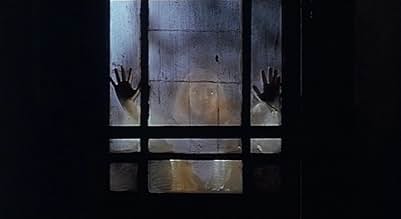
Kill, Baby...Kill! May sport a title that makes it sound like it should be a Russ Meyer sexploitation flick but to all intents and purposes this is pure Bava. It contains most of the elements that are associated with the great man's work: terrific fluid cinematography, beautiful use of colour and light, and strong atmospherics. It benefits too from a pretty good cast. Giacomo Rossi-Stuart is solid as the doctor while there is strong support from the beautiful and very Gothic Fabienne Dali as the local sorceress. Carlo Rustichelli pipes in too with a good score that sounds very like his soundtrack to Blood and Black Lace. But it also has an eerie section that accompanies the ghostly girl. This latter presence is well used throughout the picture. She appears in the night looking through windows, while her bouncing ball follows her around and adds splendid macabre detail - the ball led to the girl's death in the first place.
Like all Bava films, this one is an exercise in cinematic style. Mostly, visual style. Many of the compositions are beautifully conceived and lit. Bava's camera gracefully captures it all and the sets are awash with striking colour and lit to perfection. In a couple of standout scenes the director puts together sequences of surreal splendour. One features a spiral staircase and the other has a man chase a figure through a maze of identical rooms until he finally catches him only to discover it is himself he has been chasing.
Like many of Bava's films the story isn't really very great. Its serviceable and no more. But this is ultimately only a minor point as it's the style in which the story is told that is the main draw. And this is a great film from a master of visual cinematic style.
Kill, Baby...Kill! May sport a title that makes it sound like it should be a Russ Meyer sexploitation flick but to all intents and purposes this is pure Bava. It contains most of the elements that are associated with the great man's work: terrific fluid cinematography, beautiful use of colour and light, and strong atmospherics. It benefits too from a pretty good cast. Giacomo Rossi-Stuart is solid as the doctor while there is strong support from the beautiful and very Gothic Fabienne Dali as the local sorceress. Carlo Rustichelli pipes in too with a good score that sounds very like his soundtrack to Blood and Black Lace. But it also has an eerie section that accompanies the ghostly girl. This latter presence is well used throughout the picture. She appears in the night looking through windows, while her bouncing ball follows her around and adds splendid macabre detail - the ball led to the girl's death in the first place.
Like all Bava films, this one is an exercise in cinematic style. Mostly, visual style. Many of the compositions are beautifully conceived and lit. Bava's camera gracefully captures it all and the sets are awash with striking colour and lit to perfection. In a couple of standout scenes the director puts together sequences of surreal splendour. One features a spiral staircase and the other has a man chase a figure through a maze of identical rooms until he finally catches him only to discover it is himself he has been chasing.
Like many of Bava's films the story isn't really very great. Its serviceable and no more. But this is ultimately only a minor point as it's the style in which the story is told that is the main draw. And this is a great film from a master of visual cinematic style.
creepy!
the movie starts off wonderfully, a woman gets chased through the grounds of a villa, and jumps to her doom. Then a doctor shows up to do the controversial new medical procedure, the autopsy. The film pace suffers at this point, where the film is introducing characters. Once the film moves into the baroness's mansion, the film runs at full speed. The film gets insanely bizarre, with wonderful creepy imagery, such as graps' ghostly daughter, the repeating room, and the disturbing portrait of the daughter with a skull. The movie is gloomy, and downbeat, but the pace is wonderful at this point. This is one of the best movies bava made.
Primo Bava spookfest
I see a lot of people complaining about the silly title "Kill, Baby, Kill", but the original title, "Operation Fear", is no better. But don't be deceived, this is a first-rate Bava shocker with plenty to look at.
Here we have an isolated Transylvanian village haunted by the spirit of a dead little girl intent on collecting the souls of the inhabitants. The plot finds a young doctor summoned to the town to perform an autopsy in the investigation of a girl's mysterious death. The simultaneous arrival of a damsel-in-distress "assistant" completes the formula, and soon there is danger galore for everyone.
The imagery gets the emphasis here, and I found some of these sets to be absolutely unreal. Spooky-movie cobwebs and mist abounds, and the movie takes place in a series of oddly-shaped buildings, labyrinthine walkways, and even an ultra-campy graveyard. One of the most astonishing sets is that of the ominous "haunted villa", inhabited by Gianna Vivaldi, bearing an uncanny resemblance to Alida Valli (Ironically, the town's burgomaster is played by Luciano Catenacci, who looks more than a little bit like Telly Savalas. Alida Valli and Telly Savalas would both star in Mario Bava's seminal "Lisa and the Devil" years later).
The film's influence on many genre classics will be obvious to horror film buffs, particularly the resemblance of several sequences to Dario Argento's "Suspiria". Even the soundtrack features a number of sighs and musical cues that seem to have been borrowed by Goblin for "Suspiria"'s score. The most obvious similarity is the use of gratuitous red and green lights (which makes you wonder where these villagers got those colored bulbs-this is a period piece, after all!), and one dizzying sequence makes ingenious use of a spiral staircase.
The film also has a level of violence that must have been quite shocking in 1966, with a throat-slashing, temple-piercing, and even an impalement on an iron fence. I am so glad I finally made the time to sit down & watch this great movie. I'm really surprised the film doesn't get more recognition; it is that good. Now why couldn't anyone think of a better title for it???
Here we have an isolated Transylvanian village haunted by the spirit of a dead little girl intent on collecting the souls of the inhabitants. The plot finds a young doctor summoned to the town to perform an autopsy in the investigation of a girl's mysterious death. The simultaneous arrival of a damsel-in-distress "assistant" completes the formula, and soon there is danger galore for everyone.
The imagery gets the emphasis here, and I found some of these sets to be absolutely unreal. Spooky-movie cobwebs and mist abounds, and the movie takes place in a series of oddly-shaped buildings, labyrinthine walkways, and even an ultra-campy graveyard. One of the most astonishing sets is that of the ominous "haunted villa", inhabited by Gianna Vivaldi, bearing an uncanny resemblance to Alida Valli (Ironically, the town's burgomaster is played by Luciano Catenacci, who looks more than a little bit like Telly Savalas. Alida Valli and Telly Savalas would both star in Mario Bava's seminal "Lisa and the Devil" years later).
The film's influence on many genre classics will be obvious to horror film buffs, particularly the resemblance of several sequences to Dario Argento's "Suspiria". Even the soundtrack features a number of sighs and musical cues that seem to have been borrowed by Goblin for "Suspiria"'s score. The most obvious similarity is the use of gratuitous red and green lights (which makes you wonder where these villagers got those colored bulbs-this is a period piece, after all!), and one dizzying sequence makes ingenious use of a spiral staircase.
The film also has a level of violence that must have been quite shocking in 1966, with a throat-slashing, temple-piercing, and even an impalement on an iron fence. I am so glad I finally made the time to sit down & watch this great movie. I'm really surprised the film doesn't get more recognition; it is that good. Now why couldn't anyone think of a better title for it???


Did you know
- TriviaMelissa Graps, the ghost girl, is played by a boy, billed as 'Valerio Valeri.'
- GoofsNadine is put to bed nude, but after the doctor visits and she is left sleeping, somehow she appears dressed in a nightgown in the next shot.
- Alternate versionsIn the United States, an edited version of this film was released as "Curse of the Living Dead" as part of "Living Dead" triple feature aimed at drive-ins. Other releases, including home video, under the title "Kill Baby, Kill" are the more complete version.
- ConnectionsFeatured in Fangs of the Living Dead (1969)
- How long is Kill, Baby... Kill!?Powered by Alexa
Details
- Release date
- Country of origin
- Language
- Also known as
- Curse of the Living Dead
- Filming locations
- Villa Grazioli, Grottaferrata, Rome, Lazio, Italy(castle of Baroness Graps)
- Production company
- See more company credits at IMDbPro
Box office
- Budget
- $50,000 (estimated)
- Runtime
- 1h 23m(83 min)
- Aspect ratio
- 1.85 : 1
Contribute to this page
Suggest an edit or add missing content