IMDb RATING
7.1/10
1.7K
YOUR RATING

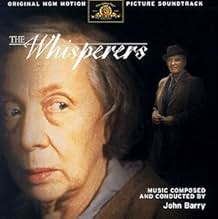
A lonely elderly Englishwoman talks to herself and hears voices talking about her.A lonely elderly Englishwoman talks to herself and hears voices talking about her.A lonely elderly Englishwoman talks to herself and hears voices talking about her.
- Nominated for 1 Oscar
- 9 wins & 4 nominations total






- Director
- Writers
- All cast & crew
- Production, box office & more at IMDbPro
7.11.6K
1
2
3
4
5
6
7
8
9
10
Featured reviews
The bleakest of kitchen sink dramas
This may be the bleakest of all the 'kitchen sink' movies, (it is unremittingly gloomy) and Bryan Forbes' picture of the British Welfare State in the 1960's has an almost Dickensian feel to it. But then Forbes always seemed to work better with subjects which didn't lend themselves to levity.
It's the story of Mrs Ross, a pensioner living on her own and beset by the voices one hears when one is so lonely and in the part Edith Evans is quite magnificent. If you think Evans too patrician for the part of an old woman living in a working class district of an industrial, mostly derelict and rain-sodden city, she does point out that 'she married beneath her' and since she is hardly ever off the screen this is a real tour-de-force, (and she was nominated for the Oscar for it as well as winning a whole slew of other awards). There are also first-rate supporting performances from the wonderful Avis Bunnage and the always consistently reliable Gerald Sim and Eric Portman, terrific as her errand husband). Unfortunately the film's sub-plots involving stolen money and some gangsters seems superfluous and gives the film a somewhat melodramatic air and its down-beat mood meant it was never a popular success and it is hardly ever revived. But seek it out, all the same; it is certainly worth seeing.
It's the story of Mrs Ross, a pensioner living on her own and beset by the voices one hears when one is so lonely and in the part Edith Evans is quite magnificent. If you think Evans too patrician for the part of an old woman living in a working class district of an industrial, mostly derelict and rain-sodden city, she does point out that 'she married beneath her' and since she is hardly ever off the screen this is a real tour-de-force, (and she was nominated for the Oscar for it as well as winning a whole slew of other awards). There are also first-rate supporting performances from the wonderful Avis Bunnage and the always consistently reliable Gerald Sim and Eric Portman, terrific as her errand husband). Unfortunately the film's sub-plots involving stolen money and some gangsters seems superfluous and gives the film a somewhat melodramatic air and its down-beat mood meant it was never a popular success and it is hardly ever revived. But seek it out, all the same; it is certainly worth seeing.
Sad, dreary and moving
First off, I want to say that I am drawn to movies that have, at their core, a genuine feeling of sadness for humanity. It's not so much that these films offer a pessimistic view of the world - although, I guess you can label it that way - as they just seem to have a clear understanding of the horribly awful things we often do to one another.
Shot in black and white, in perpetually fogged out/drizzly England, this story of one older woman's loneliness and dementia tinged world is about 5 steps down into the dungeon of depressing. It offers a kind of sad relief - the kind that comes from knowing that, although things are terrible, they could be much, much worse.
I've always been one to not quite understand the desire for a "feel good" movie. All movies, if they work as they should, will leave you feeling better for having seen them - whether silly or serious. This is one of those films.
Shot in black and white, in perpetually fogged out/drizzly England, this story of one older woman's loneliness and dementia tinged world is about 5 steps down into the dungeon of depressing. It offers a kind of sad relief - the kind that comes from knowing that, although things are terrible, they could be much, much worse.
I've always been one to not quite understand the desire for a "feel good" movie. All movies, if they work as they should, will leave you feeling better for having seen them - whether silly or serious. This is one of those films.
Brilliant performance by one of the theater's greatest luminaries
Dame Edith Evans, one of the British theater's greatest actresses of the first half of the twentieth century, gives a brilliant performance as a lonely old lady existing in seedy rented rooms in a grimy industrial town while scraping by on National Assistance. This film should be shown to everyone on their first day of work, before they fill out their tax deferred pension withholdings. If ever there was a good lesson for putting something away for one's old age, it is this film. It is a horror story of "This is what's going to happen to you if you don't start putting something aside for your old age."
Mrs. Ross lives alone in poverty despite a family of sorts, a work-shy husband who deserted her and a son who only comes by to hide stolen loot while pretending to visit. Her rooms are a disorderly clutter of books, old newspapers, glass bottles and anything she doesn't want to throw away. Her endless days are filled with visits to the local library reading room, to keep warm; the local mission church; the police station, to complain about the neighbors; and the social security office, to beg for more public assistance; which is doled out a few shillings at a time.
To escape this grim reality Mrs. Ross builds a fantasy world not unlike Luis in "Kiss of the Spider Woman". She exists in her fantasy of a privileged upbringing as the daughter of a Bishop, living in a palace, and watching the white gloved dancers at a ball. She awaits the settling of her fantasy father's estate and the fortune from the family cattle business. When she finds stolen money hidden by her shiftless son during a quick visit, she believes that her ship has finally come home and her fantasies are reality. It is not long before the vulnerable old lady is "befriended" and robbed by a steely eyed con woman, and dumped in an alley near her home. Although the welfare people do all they can to get her back on her feet and her husband to take care of her, by the film's end she has come full circle and has resumed her daily routine and her fantasy world.
Dame Edith, who was the original "St. Joan" on stage in the 1920's, and for whom Shaw wrote "The Millionairess" is rarely off the screen and gives a faultless performance in what could otherwise be a very depressing film about poverty and loneliness. Where at first you sympathise with the old lady who has come down in the world and is now living in genteel poverty, you come to understand that she never went up in the first place, the only genteel world she ever inhabited was in her mind, and that is where she now resides.
As for an acting tour de force, just watching the way Dame Edith conveys the lowly origins of Mrs. Ross without words, as in the way she eats - out of tins - lifting large slices of bread to her mouth (where they fall apart) rather than cutting the slice to small manageable portions, licking her fingers, reading at the table - all the things considered to be bad manners. The way she conveys old tired poverty, by slipping off her shoes in the library to warm her feet on the hot pipes, is a lesson in technique that all aspiring actors should take note of. You know as you watch her slowly make her way down the cobbled streets carrying her large tote bag that this pathetic old lady is a prime target for a mugging, or a slip and fall. I would recommend this film to anyone who wants to study great acting and to those who are concerned with the plight of the elderly.
Mrs. Ross lives alone in poverty despite a family of sorts, a work-shy husband who deserted her and a son who only comes by to hide stolen loot while pretending to visit. Her rooms are a disorderly clutter of books, old newspapers, glass bottles and anything she doesn't want to throw away. Her endless days are filled with visits to the local library reading room, to keep warm; the local mission church; the police station, to complain about the neighbors; and the social security office, to beg for more public assistance; which is doled out a few shillings at a time.
To escape this grim reality Mrs. Ross builds a fantasy world not unlike Luis in "Kiss of the Spider Woman". She exists in her fantasy of a privileged upbringing as the daughter of a Bishop, living in a palace, and watching the white gloved dancers at a ball. She awaits the settling of her fantasy father's estate and the fortune from the family cattle business. When she finds stolen money hidden by her shiftless son during a quick visit, she believes that her ship has finally come home and her fantasies are reality. It is not long before the vulnerable old lady is "befriended" and robbed by a steely eyed con woman, and dumped in an alley near her home. Although the welfare people do all they can to get her back on her feet and her husband to take care of her, by the film's end she has come full circle and has resumed her daily routine and her fantasy world.
Dame Edith, who was the original "St. Joan" on stage in the 1920's, and for whom Shaw wrote "The Millionairess" is rarely off the screen and gives a faultless performance in what could otherwise be a very depressing film about poverty and loneliness. Where at first you sympathise with the old lady who has come down in the world and is now living in genteel poverty, you come to understand that she never went up in the first place, the only genteel world she ever inhabited was in her mind, and that is where she now resides.
As for an acting tour de force, just watching the way Dame Edith conveys the lowly origins of Mrs. Ross without words, as in the way she eats - out of tins - lifting large slices of bread to her mouth (where they fall apart) rather than cutting the slice to small manageable portions, licking her fingers, reading at the table - all the things considered to be bad manners. The way she conveys old tired poverty, by slipping off her shoes in the library to warm her feet on the hot pipes, is a lesson in technique that all aspiring actors should take note of. You know as you watch her slowly make her way down the cobbled streets carrying her large tote bag that this pathetic old lady is a prime target for a mugging, or a slip and fall. I would recommend this film to anyone who wants to study great acting and to those who are concerned with the plight of the elderly.
beautiful ugliness
This grim tale about the loneliness and vulnerability of old age, set in what must be the most rundown section of Manchester, manages to touch us in an unsentimental manner. Its chief quality is the crisply photographed slum in which it largely takes place, like the last remains of the 19th century surviving into the post-War 20th. The protagonist, Margaret Ross, played by the stately Edith Evans, lives in a cluttered ground floor flat in this urban wasteland of rain-slicked cobblestone streets without cars or pedestrians, but an abundance of crumbling brick walls, gutted buildings and stray cats. The opening credit sequence of grey rooftops under rainy skies is particularly striking.
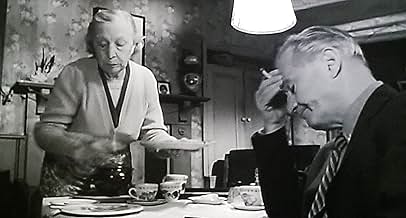
At home she looks through newspapers, eats bread with honey, sips tea and listens to radio as her sink faucet drips, drips, drips. She constantly hears voices (the "whisperers" of the title) and turns up the radio to drown them out. When the upstairs neighbors, an interracial couple with an infant, pound on the floor in protest, she pounds back on the ceiling with a broomstick and is showered with bits of plaster. (We see the bald patch from where the plaster has fallen but the absence of other patches means that she has never before banged on the ceiling; this strand of the story would have been more convincing if more of the ceiling was similarly defaced.) When not talking to the imagined voices, she spends her solitary life visiting the library where she surreptitiously warms her feet on the heating pipes, collecting welfare from a local government office where she makes frequent references to her good breeding and high-class family connections, listening to sermons at a local evangelical storefront chapel, and tending to household chores which seem to consist mostly of emptying large quantities of dust, coal ashes and bottles and cans from which she derives most of her nourishment.
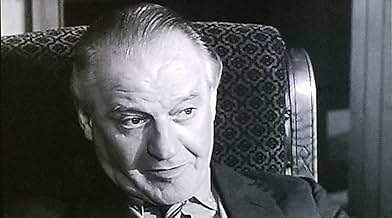
Evans brings dignity to the role but somehow she does not seem to be the right actress for the part. Margaret Ross is a woman of humble origins. Evans is a thoroughbred. True, she does claim that she married beneath herself, but that would be putting it mildly. Still, she has the acting skills to keep us entertained, and she gets brilliant support from the secondary players: Eric Portman as her surly husband, Avis Bunnage as a predatory welfare mom and Gerald Sim as a welfare clerk add a great deal to the overall presentation. Leonard Rossiter, too, shows up for a strong few minutes as a government official. And John Barry supplies a melancholy but unobtrusive musical score.
Evans got an Oscar nomination for this performance. Fair enough. But I think Gerry Turpin should have also gotten one for his beautiful cinematography.
At home she looks through newspapers, eats bread with honey, sips tea and listens to radio as her sink faucet drips, drips, drips. She constantly hears voices (the "whisperers" of the title) and turns up the radio to drown them out. When the upstairs neighbors, an interracial couple with an infant, pound on the floor in protest, she pounds back on the ceiling with a broomstick and is showered with bits of plaster. (We see the bald patch from where the plaster has fallen but the absence of other patches means that she has never before banged on the ceiling; this strand of the story would have been more convincing if more of the ceiling was similarly defaced.) When not talking to the imagined voices, she spends her solitary life visiting the library where she surreptitiously warms her feet on the heating pipes, collecting welfare from a local government office where she makes frequent references to her good breeding and high-class family connections, listening to sermons at a local evangelical storefront chapel, and tending to household chores which seem to consist mostly of emptying large quantities of dust, coal ashes and bottles and cans from which she derives most of her nourishment.
Evans brings dignity to the role but somehow she does not seem to be the right actress for the part. Margaret Ross is a woman of humble origins. Evans is a thoroughbred. True, she does claim that she married beneath herself, but that would be putting it mildly. Still, she has the acting skills to keep us entertained, and she gets brilliant support from the secondary players: Eric Portman as her surly husband, Avis Bunnage as a predatory welfare mom and Gerald Sim as a welfare clerk add a great deal to the overall presentation. Leonard Rossiter, too, shows up for a strong few minutes as a government official. And John Barry supplies a melancholy but unobtrusive musical score.
Evans got an Oscar nomination for this performance. Fair enough. But I think Gerry Turpin should have also gotten one for his beautiful cinematography.
Outstanding!
"The Whisperers" is the kind of movie you curl up with on a rainy day. I had the fortune of catching it on Turner Classic Movies once and I was mesmerized. Edith Evans gives a completely convincing performance as a lonely old woman living in a run down apartment (or flat) in London. Clearly, she is bordering on senility or dementia as she imagines voices coming from faucets, her radio, and suspects her neighbors are spying on her. She imagines herself an heiress (as she frequently reminds her social worker at the Public Assistance Board) waiting for her inheritance to come through. It is sad to see her begging for a new pair of shoes or a pound to get food. Before the film ends, you will find yourself concerned for her well being as though she is a real person. Perhaps it is the realization that many old people the world over live this very existence. I had the good fortune to find this movie available on video through Movies Unlimited. Act fast as it is out of print. Perhaps it will be available on DVD in the future.


Did you know
- TriviaThe director Bryan Forbes and Nanette Newman, who played the upstairs neighbor, were husband and wife.
- GoofsThe old kitchen curtain is shown in scene after Archie leaves, while Margaret is moping around the apartment. The new curtains are shown again after she returns from seeing Mr. Conrad at the National Assistance Board.
- Quotes
Archie Ross: What kind of job might it be, sir?
Mr. Conrad: Doorman at a cinema.
Archie Ross: Oh, wonderful. Nice and healthy and in the open.
Mr. Conrad: The healthiest jobs, Mr. Ross, are the ones you keep.
- ConnectionsVersion of ITV Play of the Week: The Whisperers (1961)
- SoundtracksShall We Gather at the River?
(uncredited)
Written by Robert Lowry
Performed by Edith Evans and mission attendees
- How long is The Whisperers?Powered by Alexa
Details
- Runtime
- 1h 46m(106 min)
- Color
- Sound mix
- Aspect ratio
- 1.66 : 1
Contribute to this page
Suggest an edit or add missing content