IMDb RATING
6.7/10
4.3K
YOUR RATING


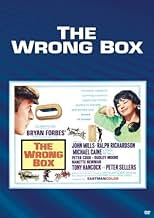
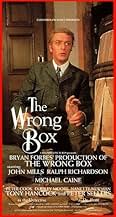
In Victorian England, a fortune now depends on which of two brothers outlives the other, or can be made to have seemed to do so.In Victorian England, a fortune now depends on which of two brothers outlives the other, or can be made to have seemed to do so.In Victorian England, a fortune now depends on which of two brothers outlives the other, or can be made to have seemed to do so.
- Won 1 BAFTA Award
- 1 win & 2 nominations total




6.74.3K
1
2
3
4
5
6
7
8
9
10
Featured reviews
10Signet
One Of The Ten Best
Without question, I would put THE WRONG BOX on any list of the ten best movies ever made. Certainly, to my mind, it is the most perfectly conceived and realized comedy to appear in my lifetime (and I have been around for a long spell). All the performances are flawless, but Peter Sellers's Dr. Pratt is, I believe, the best work he ever did on the screen. His characterization is hilariously funny and, at the same time, heart-wrenchingly poignant. It is worth the price of the film simply to see what he does with the kitten and the thermometer (No, not what you expect). I have always suspected that he and Peter Cook improvised their dialogue and these two brilliant satirists display a give-and-take of such high wit and subtlety that it is probably unique in cinema.
An amazing, wonderful, happy motion picture. THE WRONG BOX is a classic.
An amazing, wonderful, happy motion picture. THE WRONG BOX is a classic.
10drdcw
Timeless English comedy, superbly done.
Little known in the United States, THE WRONG BOX is an absolute must-see for serious students of comedy. The plot revolves around a tontine, a lottery established by the well-heeled fathers of a class of English schoolboys, the proceeds to be awarded after many years to the last surviving member of the class. The story picks up at the point where only two of the classmates are still alive: the brothers Masterman and Joseph Finsbury, who rather detest one another. The plot is full of Finsburys, all of whom want one or the other to die first so they can get a piece of the loot.
Bryan Forbes's direction is first rate, visually exquisite, and even though the convoluted plot is a bit slow to get started, nicely paced. Forbes has a notable cast of experienced actors, and he gives them free reign to perform comedy as only the British can do. The climax chase comes to a head at exactly the right time and is hilarious, the more so because it is marvelously unforced. The actors involved give the impression they're delighted to be in the film, as they should be.
THE WRONG BOX is one of Michael Caine's earlier films and he performs creditably, and Peter Sellers shines in an excellent bit part. Nevertheless, my hat goes off to three other actors who give the performance of their careers: Ralph Richardson, as the quintessential pedant Joseph Finsbury, the world's most boring narcissist; Peter Cook, as Joseph's incessantly scheming nephew who wants to see his uncle die a few seconds after Masterman croaks; and most especially, Wilfrid Lawson as the wondrously torpid Peacock, Masterman's dignified but disheveled butler whose peculiar grunts and malapropisms remain fresh with every viewing of the film. I would put Lawson's performance on a par with Humphrey Bogart's in THE CAINE MUTINY or Fred MacMurray's in DOUBLE INDEMNITY -- it is truly that good.
THE WRONG BOX ranks on a par with THE LIFE OF BRIAN as one of the finest British comedies ever. Enjoy it!
Bryan Forbes's direction is first rate, visually exquisite, and even though the convoluted plot is a bit slow to get started, nicely paced. Forbes has a notable cast of experienced actors, and he gives them free reign to perform comedy as only the British can do. The climax chase comes to a head at exactly the right time and is hilarious, the more so because it is marvelously unforced. The actors involved give the impression they're delighted to be in the film, as they should be.
THE WRONG BOX is one of Michael Caine's earlier films and he performs creditably, and Peter Sellers shines in an excellent bit part. Nevertheless, my hat goes off to three other actors who give the performance of their careers: Ralph Richardson, as the quintessential pedant Joseph Finsbury, the world's most boring narcissist; Peter Cook, as Joseph's incessantly scheming nephew who wants to see his uncle die a few seconds after Masterman croaks; and most especially, Wilfrid Lawson as the wondrously torpid Peacock, Masterman's dignified but disheveled butler whose peculiar grunts and malapropisms remain fresh with every viewing of the film. I would put Lawson's performance on a par with Humphrey Bogart's in THE CAINE MUTINY or Fred MacMurray's in DOUBLE INDEMNITY -- it is truly that good.
THE WRONG BOX ranks on a par with THE LIFE OF BRIAN as one of the finest British comedies ever. Enjoy it!
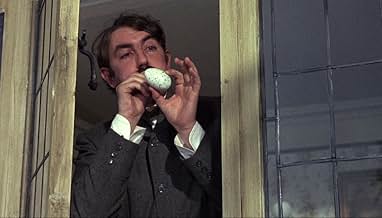
Petal-soft hands are the mark of a great ornithologist
Funny and often laugh out loud hilarious story of two brothers (John Mills and Ralph Richardson), one of whom must outlive the other in order to win a Tontine started at their boys school and going to the final survivor of the class. What transpires is "The Wrong Box," a 1966 film directed by Bryan Forbes and also starring Michael Caine, Peter Cook, Dudley Moore, Wilfred Lawson, Nanette Newman (Mrs. Forbes) and Peter Sellers.
The first ten minutes or so of the movie is hilarious, as it shows the demise of the other students over the years. Regarding the surviving Finsbury brothers, one side of has Caine and his grandfather Mills, who is desperate to win, so he summons his brother to his "deathbed" in order to kill him, in one of the funniest scenes in the movie. On the other side, Cook and Moore are Richardson's nephews, who have devoted themselves to keeping their uncle alive. They needn't have bothered because he can't be killed anyway. He walks away from a train crash, but there's a mix-up, and he's believed dead. The nephews are desperate to cover this up until Mills dies. When they go to bury what they think is his body, Cook makes Moore do it rather than put his hands in the dirt, insisting "petal-soft hands are the mark of a great ornithologist."
Both Richardson, as the fact-spewing brother, and Mills, as the crazy old coot with murder in his heart, are excellent, as is the rest of the cast. Michael Caine is young and handsome here. Peter Sellers as a shady, cat-loving doctor is a riot. Wilfred Lawson, who plays Mills' butler, nearly steals the film as the elderly servant so old he practically has rigor mortis. One of the best moments is when Michael Caine sends him to the door telling him to go slowly - it already takes him ten minutes to get there, and Lawson starts to go to the door and mumbles to himself, "I'll slow it down." Too much. The pretty ingénue, Newman, had been married to director Forbes for ten years before the making of this film. She's still married to him.
Lots of fun, with a crazy finale befitting the film.
The first ten minutes or so of the movie is hilarious, as it shows the demise of the other students over the years. Regarding the surviving Finsbury brothers, one side of has Caine and his grandfather Mills, who is desperate to win, so he summons his brother to his "deathbed" in order to kill him, in one of the funniest scenes in the movie. On the other side, Cook and Moore are Richardson's nephews, who have devoted themselves to keeping their uncle alive. They needn't have bothered because he can't be killed anyway. He walks away from a train crash, but there's a mix-up, and he's believed dead. The nephews are desperate to cover this up until Mills dies. When they go to bury what they think is his body, Cook makes Moore do it rather than put his hands in the dirt, insisting "petal-soft hands are the mark of a great ornithologist."
Both Richardson, as the fact-spewing brother, and Mills, as the crazy old coot with murder in his heart, are excellent, as is the rest of the cast. Michael Caine is young and handsome here. Peter Sellers as a shady, cat-loving doctor is a riot. Wilfred Lawson, who plays Mills' butler, nearly steals the film as the elderly servant so old he practically has rigor mortis. One of the best moments is when Michael Caine sends him to the door telling him to go slowly - it already takes him ten minutes to get there, and Lawson starts to go to the door and mumbles to himself, "I'll slow it down." Too much. The pretty ingénue, Newman, had been married to director Forbes for ten years before the making of this film. She's still married to him.
Lots of fun, with a crazy finale befitting the film.
Sixties Victoriana
Sixties take offs of the Victorian era are usually very entertaining. All of the clichés of repression and morbidity are always very over the top and they are here. A woman falls madly in love with a man when she sees his arms, the salvation army stick their nose into everything. It is perhaps more insightful into the sixties than anything! This is by no means a master piece, frankly with such a stellar cast it is rather disappointing. The script tries too hard to be funny and the gags come too thick and fast , especially at the end, for the viewer to be able to follow, certainly it is very unlike the slower, more leisurely pace of Stevenson's book.
However it is certainly worth watching. If nothing else it contains one of my favourite lines ever 'Listen to me all you eggs'!
However it is certainly worth watching. If nothing else it contains one of my favourite lines ever 'Listen to me all you eggs'!
10vox-sane
Little Gem
The quiet little black comedy "The Wrong Box" has a superb cast. Veteran British stage/cinema actors (Ralph Richardson, John Mills, Wilfred Lawson) play with rising stars (Michael Caine, just off "Alfie", and Peter Cook & Dudley Moore from the groundbreaking "Beyond the Fringe" revue). Established comic actors (Peter Sellers, Tony Hancock) give performances that carefully-polished little gems. Even the tiniest "blink and you'll miss 'em" roles are loaded with familiar character actors (Cicely Courtneidge, John Le Mesurier, Thorley Walters &c) rubbing elbows with rising talents (Jeremy Lloyd, James Villiers, Leonard Rossiter, Graham Stark) making the movie a veritable field day for spotters of British humor. The performances in the major roles are all solid. Some of the smaller parts have variable performances: Thorley Walters is delightful, Courtneidge, too overbearing). All the actors seem to realize that they must take this sort of comedy seriously -- mugging kills this sort of humor. The leads (Richardson, Mills, Cook, Moore, Caine, Lawson) are all suitably earnest. Only Nanette Newman (the director's wife) doesn't seem quite up to her part, being a better actress in modern dress; but she's quite pretty enough and she's good enough not to be utterly lost even in this ensemble of extremely talented actors.
The humor is quiet, with a Victorian hush over the proceedings, lending a (perhaps tongue in cheek) funereal respect to its theme of death with laughter. The gentle pace picks up near the end with a chase with hearses and beer wagons, and a climax that gathers all the principles in a cemetery in a satisfying conclusion.
The witty script is filled with little bits that might not register at first (such as the pulse bit, or "Can you speak a little lower" and the peculiar words "unnecessarily mutilated"). Some of the sight gags go askew, but enough of them work to make them worth while. It's not a movie for every taste. Anglophiles and those who appreciate an easy-going humor may find it work a peek. Anyone who loves Peter Sellers has to see his Pratt.
The humor is quiet, with a Victorian hush over the proceedings, lending a (perhaps tongue in cheek) funereal respect to its theme of death with laughter. The gentle pace picks up near the end with a chase with hearses and beer wagons, and a climax that gathers all the principles in a cemetery in a satisfying conclusion.
The witty script is filled with little bits that might not register at first (such as the pulse bit, or "Can you speak a little lower" and the peculiar words "unnecessarily mutilated"). Some of the sight gags go askew, but enough of them work to make them worth while. It's not a movie for every taste. Anglophiles and those who appreciate an easy-going humor may find it work a peek. Anyone who loves Peter Sellers has to see his Pratt.


Did you know
- TriviaPeter Cook's wife, Wendy was nine months pregnant when filming began. Producer and director Bryan Forbes promised them that he would let Peter leave the set as soon as Wendy went into labour. He kept his word, and Peter made it to the hospital just in time for the birth of his daughter, Daisy. Forbes, Dudley Moore, Sir Michael Caine, and Peter Sellers filled his dressing room with flowers and champagne, in celebration of Daisy's birth, when he returned to work.
- GoofsThe Victorian-age London houses have TV antennae on them.
- Quotes
[the doctor, owner of dozens of cats, is coughing]
Doctor Pratt: I'm all right; it's just a fur ball; it's nothing. Strangely, I haven't had fur for a fortnight.
- Crazy credits"Certain Funereal & Military Airs played by Her Majesty Queen Victoria's Temperance Seven (who actually number eight)"
- ConnectionsFeatured in Hollywood: The Gift of Laughter (1982)
- SoundtracksLight of Head
Written by Clifford Bevan
- How long is The Wrong Box?Powered by Alexa
Details
- Release date
- Country of origin
- Official sites
- Languages
- Also known as
- La caja equivocada
- Filming locations
- Royal Crescent, Bath, Somerset, England, UK(Finsbury residences)
- Production company
- See more company credits at IMDbPro
Box office
- Gross worldwide
- $15
- Runtime
- 1h 45m(105 min)
- Sound mix
- Aspect ratio
- 1.66 : 1
Contribute to this page
Suggest an edit or add missing content