IMDb RATING
7.0/10
2.1K
YOUR RATING
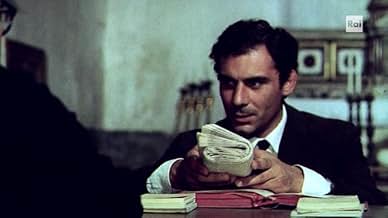
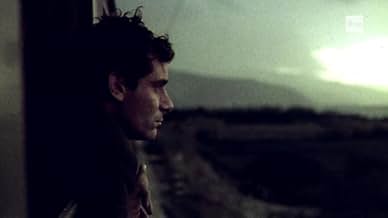
In Sicily, a leftist professor investigates the "honor killings" of two friends, uncovering a tangled web involving politicians, the Mafia, the Church, and the widow of one of the victims.In Sicily, a leftist professor investigates the "honor killings" of two friends, uncovering a tangled web involving politicians, the Mafia, the Church, and the widow of one of the victims.In Sicily, a leftist professor investigates the "honor killings" of two friends, uncovering a tangled web involving politicians, the Mafia, the Church, and the widow of one of the victims.
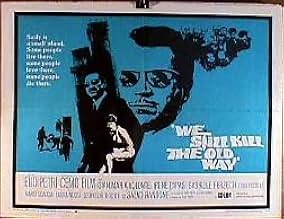
- Director
- Writers
- Stars
- Awards
- 6 wins & 2 nominations total
- Director
- Writers
- All cast & crew
- Production, box office & more at IMDbPro
7.02.1K
1
2
3
4
5
6
7
8
9
10
Featured reviews
Sunny Noir
"A Ciascuno Il Suo" (1967) aka "We Still Kill The Old Way" (both great titles) is a scenic, sunny political noir set in Sicily. It is blessed with some gorgeous scenery and the magnificent (if underused) Irene Papas, but its portrayal of Sicily falls back to stereotypes, and the story is rather repetitive....until the shocking ending. **1/2 out of 4.
Sicilian sunbath for a deadly game
A left-wing professor stressed by moral doubts (Gian Maria Volonté) has the rather strange idea to try to break the ambiant omerta in order to clear the violent death of two friends, honor issues happening just to conceal quite more material interests. But Sicily and its little folk of mute but watchful characters don't seem ready to accept this kind of trouble. Bound with beauty but ungraspable like the doctor's few disconsolate widow (Irene Papas), the island and its stifling sun know how to subdue the one who dares to upset their immutably established order, between a conspicuous church and an invisible mafia.
To each his own.
This marks the first collaboration between director Elio Petri, writer Ugo Pirro and actor Gian Maria Volonte which was to bear fruit in the extraordinary 'Indagine su un cittadino al di sopra di ogni sospetto' and is loosely adapted from the novel by Leonardo Scascia who was again to provide the source material for Rosi's stupendous 'Cadaveri Eccellenti'.
Scascia's novel was inspired by the assassination of a policeman by the Mafia and here Petri and his cinematographer Luigi Kuveiiller have created a striking contrast between the ravishing Sicilian scenery and the all-pervading corruption although there is perhaps a little too much use made of the 'zoom'.
Excellent script and taut editing with strong performances from Volonte, Gabriele Ferzetti, both of whom were awarded Silver Ribbons, the striking Irene Papas whose role does not really do justice to her talents and a marvellous cameo by Petri regular Salvo Randone as a blind oculist!
Petri's customary Left-leaning social criticism is in evidence here but what should have been a top class film is alas, for this viewer at any rate, weakened by imperfect post-synchronisation and some distinctly dodgy dubbing. The genius of Ennio Morricone is conspicuous by its absence here as the score by Luis Bacalov is intrusive, badly integrated and undermines rather than underlines the film's effectiveness.
Scascia's novel was inspired by the assassination of a policeman by the Mafia and here Petri and his cinematographer Luigi Kuveiiller have created a striking contrast between the ravishing Sicilian scenery and the all-pervading corruption although there is perhaps a little too much use made of the 'zoom'.
Excellent script and taut editing with strong performances from Volonte, Gabriele Ferzetti, both of whom were awarded Silver Ribbons, the striking Irene Papas whose role does not really do justice to her talents and a marvellous cameo by Petri regular Salvo Randone as a blind oculist!
Petri's customary Left-leaning social criticism is in evidence here but what should have been a top class film is alas, for this viewer at any rate, weakened by imperfect post-synchronisation and some distinctly dodgy dubbing. The genius of Ennio Morricone is conspicuous by its absence here as the score by Luis Bacalov is intrusive, badly integrated and undermines rather than underlines the film's effectiveness.
A subtle and clever intrigue of fear, power and clamming-up
At the beginning of the movie a pharmacist receives an anonymous letter that threatens him of death. And the murder actually happens. Seems very simple but nothing is what it seems and the journey to the truth will be long and difficult. The book is excellent and the movie is at par with it and very faithful to the romance. Great direction. Incredible cast with Gabriele Ferzetti in his best interpretation together with the one in "C'era una volta il West" and Gianmaria Volonté simply beyond reach as always. Many other great actors. Yes I am an enthusiast 'cause there's not a word or a shot out of place in this movie and the plot is ingenious. Who is going to see this film for the first time will be taken away by the developments (the pace seems to be calm but looking in between the kinks you may realize that many things are going rapidly on). Trying to figure out what is the kernel of the happenings and the "reasons" for the murder is a very interesting exercise but it's highly unlikely for the spectator not to experience a big surprise at the end. In my opinion Elio Petri at his best (I mean at the same level of his other masterwork: La classe operaia va in Paradiso).
The more you know, the more you are in danger.
Paolo Laurana is a kind of leftist intellectual who chances to be intrigued by a mysterious double murder in the Sicily of mid Sixties. In his personal detection for murder's instigators, he will run into a plot in which both politicians and mafia racketeers are involved. So curiosity will become a very dangerous affair. Taken from a novel by Leonardo Sciascia (1921-1989), A ciascuno il suo (1967) is a film where high rank acting is at its top. Cast (Gianmaria Volonté, Irene Papas, Gabriele Ferzetti, Salvo Randone, Luigi Pistilli. Mario Scaccia, Leopoldo Trieste) is perfect and well-combined, direction (Elio Petri, 1929-1982) is powerful and impressive. If compared to the novel, Elio Petri's film (written with Ugo Pirro) may seem short of that illuministic pessimism that breathes through Sciascia's books, but Laurana's rationalistic search for truth retains that `bitter taste of intelligence' which is one of the major feature of Sciascia's characters. A key film to understand historical condition of Italy in the Sixties.
Did you know
- TriviaElio Petri and Gian Maria Volontè later collaborated in Investigation of a Citizen Above Suspicion (1970), The Working Class Goes to Heaven (1971) and Todo modo (1976).
- ConnectionsEdited into Lo schermo a tre punte (1995)
- SoundtracksPour rêve l'hiver
("A Dream for Winter") (uncredited)
Lyrics by Arthur Rimbaud
Music by Luis Bacalov
Sung by Léo Ferré
- How long is We Still Kill the Old Way?Powered by Alexa
Details
- Runtime
- 1h 39m(99 min)
- Sound mix
- Aspect ratio
- 1.85 : 1
Contribute to this page
Suggest an edit or add missing content