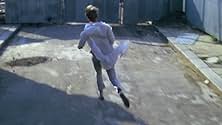
When young poet Max (Michael Gothard) hires a marketing company to turn his suicide-by-jumping into a mass-media spectacle, he finds that his subversive intentions are quickly diluted into a... Read allWhen young poet Max (Michael Gothard) hires a marketing company to turn his suicide-by-jumping into a mass-media spectacle, he finds that his subversive intentions are quickly diluted into a reactionary gesture, and his motivations are revealed as a desperate attempt to seek atte... Read allWhen young poet Max (Michael Gothard) hires a marketing company to turn his suicide-by-jumping into a mass-media spectacle, he finds that his subversive intentions are quickly diluted into a reactionary gesture, and his motivations are revealed as a desperate attempt to seek attention through celebrity.
- Director
- Writers
- All cast & crew
- Production, box office & more at IMDbPro
Featured reviews
an extraordinary,disturbing and haunting movie
cinematic surrealism, scientifically conceived, that often communicates like music
The film is remarkable not only for its very high visual quality (often on the level of the best of Antonioni and Tarkovsky) and for its sometimes innovative relations of sound and image, but also for the attitude and working method of the director: a highly personal and historically deeply rooted concept of surrealism, linked to the scientific method, that shapes the stream of consciousness woven into the narrative into something close to visual music.
I had the opportunity to see this film twice in the 1970's, and thirty years later, images are still vividly present. I'll mention just two: first, the black-clad woman (Ines Levy) lighted from behind, face painted white, carrying a black parasol, seen either slowly stalking out of an alley towards the viewer, or standing on a rooftop, viewed from below, recalling for me drawings by Hans Bellmer. Second, the lengthy hyper-violent sequence in which the protagonist demolishes his paraphernalia-packed apartment. A swaying suspended doll stands out within the jagged rhythms of the editing and will much later in the film be flashed into another key sequence: one example for the rich network of associations that go far beyond story-telling structures. On the soundtrack during the demolition: one of the virulent fugues from Beethoven's MISSA SOLEMNIS.
The film's female lead is named Clio, and CLIO is, in Greek mythology, the muse of history.
HEROSTRATUS does have some flaws, but is by any applicable standards a work of depth and integrity. Had it received more extensive distribution, it might have turned out to be a key film of the late 1960's. It's to be hoped that current plans for a commercial DVD release will soon bear fruit and that this film will receive the (belated) recognition that it richly deserves.
Sadly, dated
Herostratus
Like others who have written here about HEROSTRATUS, I too saw this amazing and unforgettable film in the early 70's. I have subsequently longed to see it again.
This film is what I like to call "transformative" cinema. Tranformative in the way the films of Bergman, Pasolini, Godard & DaSica can be. You may detest this film. But, you will not easily forget it.
I'd also like to say that if you like the novels of J.G.Ballard, particularly the books of the 70's, you will probably appreciate this film. I've always considered it particularly "Ballardian". This film grabs corporate capitalism by the throat. Yes, it is cynical.
I am happy to report that Herostratus is now available on DVD. It can be obtained at Amazon UK.
An extraordinary film, in a category of its own.
I have never been more moved by a film. I can compare it only to such transforming experiences as seeing L'Avventura in the early 'sixties, although the art of Herostratus is far more mysterious. The mystery is compounded by the great gulf of years that separates me from that screening, by the fact that almost nobody I meet has seen it or even heard of it, and by the apparent lack of any body of explication and commentary.
Without seeing it again I wouldn't attempt a precis of the plot, but what remains in memory is the cool classicism of the narrative(innocence vs. worldliness and levels of manipulativeness that Henry James might have appreciated) as mediated through an unobtrusive but arresting surrealism of technique.
It's been 35 years--I'd really like to revisit Herostratus.
Did you know
- TriviaHelen Mirren's debut.
- ConnectionsEdited from Nazi Concentration and Prison Camps (1945)
- How long is Herostratus?Powered by Alexa
Details
- Runtime
- 2h 22m(142 min)
- Color
- Sound mix