IMDb RATING
5.7/10
2.7K
YOUR RATING

A man desperate for money and no income, turns prostitute and interplays with a variety of clients and hustlers.A man desperate for money and no income, turns prostitute and interplays with a variety of clients and hustlers.A man desperate for money and no income, turns prostitute and interplays with a variety of clients and hustlers.
- Awards
- 1 win total

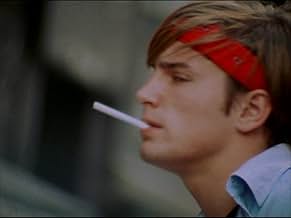
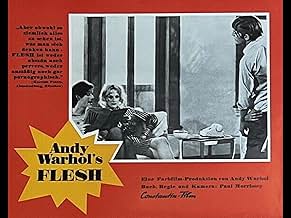


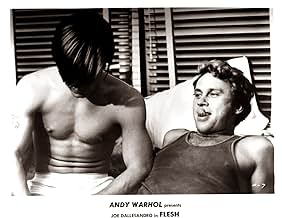


Roberto D'Allesandro
- Boy in the Street #2
- (uncredited)

Jed Johnson
- Solicitor
- (uncredited)
- Director
- Writer
- All cast & crew
- Production, box office & more at IMDbPro
5.72.7K
1
2
3
4
5
6
7
8
9
10
Featured reviews
75% brilliant, 25% tedious
In a lot of ways this film defines the essence of everything I love about cinema, in terms of capturing those strange, elusive moments of unguarded truth. In other ways, it is undeniably an amateurish, unfocused result of junkies self-indulgently fooling around with a camera. Ultimately it comes out somewhere between pure brilliance and unwatchability (thankfully much more so the former than the latter). Part of me wants to reward it solely for it's absolute innovativeness and moments of pure sublimity, but at the same time I can't completely ignore the occasionally downright awful "acting" and overtly bad production values. At first the editing seems overwhelmingly sloppy and needlessly distracting (or maybe just wrongheadedly "innovative"), but after a while I got used to it, which is, in the end, the true sign of whether a film succeeds on it's own terms or not. I guess that answer basically sums up my all-around feelings for the film. That is, despite it's in-ignorable flaws, on a whole it does work very well. And, if nothing else, a film like this really shows how false and contrived the faux-documentary, shaky-cam style can sometimes be when it so obviously applied purely for effect (such as in films like the otherwise admirable Roger Dodger). Here the aesthetics are plainly derived from the necessities of the filming situation, and are not just used arbitrarily to make it look "cool".
The lost art of joe dallesando
It seems inhumane to describe someone as a work of art but in the Warhol
Art Sphere there seems little other way to describe Joe Dallesandro in
"Flesh". His body is displayed constantly in the nude, more consistently
naked than any other actor I can think of in American film history.
Warhol/Morrissey (the authorship of the movie remains contentious though
Morrisey is the credited director, the film rides under the "Andy
Warhol's" banner) objectify and expose every part of Dallesandro's
hustler in the film. He was truly the first sex symbol of the 70s. It
was only in "Flesh" he was so un-self-conscious and innocent though
always with survivalist and self-serving cunning. Joe (the character) is
an interesting kafka-esque (unable to control the world around oneself,
prone to the ebb and flow of circumstance and external control) figure
in the midst of a collage of underground culture figures of the 60s from
drag artistes to quivering tricks. Its a high camp affair at times but
Morrissey has a loving camera when it comes to Joe. Joe's beauty is
vividly captured and the fly-on-the-wall style story of a day in his
life remains engaging a
Art Sphere there seems little other way to describe Joe Dallesandro in
"Flesh". His body is displayed constantly in the nude, more consistently
naked than any other actor I can think of in American film history.
Warhol/Morrissey (the authorship of the movie remains contentious though
Morrisey is the credited director, the film rides under the "Andy
Warhol's" banner) objectify and expose every part of Dallesandro's
hustler in the film. He was truly the first sex symbol of the 70s. It
was only in "Flesh" he was so un-self-conscious and innocent though
always with survivalist and self-serving cunning. Joe (the character) is
an interesting kafka-esque (unable to control the world around oneself,
prone to the ebb and flow of circumstance and external control) figure
in the midst of a collage of underground culture figures of the 60s from
drag artistes to quivering tricks. Its a high camp affair at times but
Morrissey has a loving camera when it comes to Joe. Joe's beauty is
vividly captured and the fly-on-the-wall style story of a day in his
life remains engaging a
Cult Classic
Although the film opens with the credit "Andy Warhol Presents", it was actually written, photographed and directed by cult film-maker Paul Morrissey (according to Morrissey, all Warhol provided was money and publicity).
Joe Dallesandro (immortalised as "little Joe" in the Velvet Underground song "Walk on the Wild Side") plays Joe, a slightly dim-witted male prostitute, who is supporting his bisexual wife and baby. His wife wants him to come up with $200 for her girlfriend's abortion. We basically follow Joe around as he encounters various characters willing to help him, including an artist who wants to pay him to pose nude, and Warhol "superstars" Candy darling and Jackie Curtis.
Despite being amateurishly shot, with countless technical errors, the most annoying of which is a very badly-recorded soundtrack, the film is fascinating due to it's delving into a world rarely seen on mainstream screens, which probably doesn't exist anymore. Although many scenes do go on for too long, it's too startling to be dull. Fans of Joe Dallesandro will no doubt enjoy his frequent exposure (he provides most of the flesh of the title).
If you're a fan of cult or underground films, you'll not want to miss this. It was followed by "Trash" (1970) and "Heat" (1972) to form a loose trilogy.
Joe Dallesandro (immortalised as "little Joe" in the Velvet Underground song "Walk on the Wild Side") plays Joe, a slightly dim-witted male prostitute, who is supporting his bisexual wife and baby. His wife wants him to come up with $200 for her girlfriend's abortion. We basically follow Joe around as he encounters various characters willing to help him, including an artist who wants to pay him to pose nude, and Warhol "superstars" Candy darling and Jackie Curtis.
Despite being amateurishly shot, with countless technical errors, the most annoying of which is a very badly-recorded soundtrack, the film is fascinating due to it's delving into a world rarely seen on mainstream screens, which probably doesn't exist anymore. Although many scenes do go on for too long, it's too startling to be dull. Fans of Joe Dallesandro will no doubt enjoy his frequent exposure (he provides most of the flesh of the title).
If you're a fan of cult or underground films, you'll not want to miss this. It was followed by "Trash" (1970) and "Heat" (1972) to form a loose trilogy.
FLESH (Paul Morrissey, 1968) **
I guess only a selected number of audience members really had any interest in watching how a male hustler in New York operates but I'd be willing to bet that even these brave souls were turned off by the irritating patchwork technique and deliberately muffled sound recording on display here; the fact that these inherent 'defects' were a direct result of the film's low-budget/underground/experimental nature is, I'd say, beside the point. Anyway, for those so inclined, the film features extensive male nudity and Joe Dallesandro, understandably, became an underground and gay icon!
The episodic structure showing the day-to-day routine of the hustler protagonist offers a couple of mildly interesting scenes: his meeting with (and eventually posing for) an eccentric elderly artist; the one where Dallesandro expresses his views on his unusual line of work and delineates his particular modus operandi to a couple of prospective 'colleagues' including perhaps the unlikeliest of hustlers a bespectacled nerd! Perhaps mercifully, the film ran for only 89 minutes against the IMDb's claim that its complete length is 105 (but the latter could well be a mistake)!
I had watched a few other of Warhol's 'movies' and this one is decidedly not as satisfying as the most tolerable example I've run into yet, BAD (1977), and only slightly better than the likes of MY HUSTLER (1965) which were mostly a strain to sit through. The fact that this was only the first part of a trilogy did not augur well but, as the saying goes, you gotta to do what you gotta do and the other two 'chapters' had to follow in quick succession...
Despite my generally negative reaction to it, FLESH is nevertheless still valuable as a 1960s time capsule and as a prototype of the Underground scene of that era, both cinematically and in real life. For the record, an image of Dallesandro from this film adorns the sleeve of The Smiths' self-titled 1984 debut album and transsexual Candy Darling (who appears here rather unremarkably) was immortalized in "Candy Says", the opening track of The Velvet Underground's eponymous 1969 album. Although the latter band is my all-time favorite, and one of the reasons for this is that, through their sheerly unique and ground-breaking music, they described a lifestyle so utterly different from my own, this is truly a case where I'd much rather experience something aurally instead of visually!
The episodic structure showing the day-to-day routine of the hustler protagonist offers a couple of mildly interesting scenes: his meeting with (and eventually posing for) an eccentric elderly artist; the one where Dallesandro expresses his views on his unusual line of work and delineates his particular modus operandi to a couple of prospective 'colleagues' including perhaps the unlikeliest of hustlers a bespectacled nerd! Perhaps mercifully, the film ran for only 89 minutes against the IMDb's claim that its complete length is 105 (but the latter could well be a mistake)!
I had watched a few other of Warhol's 'movies' and this one is decidedly not as satisfying as the most tolerable example I've run into yet, BAD (1977), and only slightly better than the likes of MY HUSTLER (1965) which were mostly a strain to sit through. The fact that this was only the first part of a trilogy did not augur well but, as the saying goes, you gotta to do what you gotta do and the other two 'chapters' had to follow in quick succession...
Despite my generally negative reaction to it, FLESH is nevertheless still valuable as a 1960s time capsule and as a prototype of the Underground scene of that era, both cinematically and in real life. For the record, an image of Dallesandro from this film adorns the sleeve of The Smiths' self-titled 1984 debut album and transsexual Candy Darling (who appears here rather unremarkably) was immortalized in "Candy Says", the opening track of The Velvet Underground's eponymous 1969 album. Although the latter band is my all-time favorite, and one of the reasons for this is that, through their sheerly unique and ground-breaking music, they described a lifestyle so utterly different from my own, this is truly a case where I'd much rather experience something aurally instead of visually!
lots of flesh, lots of fun for the crew
Because this flick is the first feature fruit of a long lasting collaboration between Paul Morrissey, Andy Warhol and Joe Dallessandro, it is too much obvious that it was mostly made for having fun among themselves. The script is quite loose, the dialogues are too obviously improvised, one even suspects that there probably is no script at all, just thematic concepts: prostitution, addiction and poverty (which all seem to continue in the following films Trash and Heat).
Joe Dallessandro reveals unashamedly his gorgeous body at any chance, to the hungry eyes of other addicts (not only drug addicts).
Although the whole film seems like amateurish, especially the scene with other hustlers at the park is very intriguing, like a documentary project.
I would not recommend to see this by itself, but watching the trilogy (Flesh, Heat and Trash) altogether will be much enlightening.
Joe Dallessandro reveals unashamedly his gorgeous body at any chance, to the hungry eyes of other addicts (not only drug addicts).
Although the whole film seems like amateurish, especially the scene with other hustlers at the park is very intriguing, like a documentary project.
I would not recommend to see this by itself, but watching the trilogy (Flesh, Heat and Trash) altogether will be much enlightening.


Did you know
- TriviaUK censor John Trevelyan was wary of issuing the film a cinema certificate and suggested to the distributors that the film be shown on a club basis. When it was initially shown at the Open Space Theatre in London in February 1970 the cinema was raided by police who attempted to seize the film, leading Trevelyan himself to hastily rush to the cinema and vigorously defend the movie against possible prosecution, calling the police action 'unjustified and preposterous'. In the light of this incident Trevelyan was able to grant the film an uncut 'X' certificate.
- GoofsDuring a scene with the go-go dancer, Candy and Jackie alternately call her by the character's first name (Terry) and that of the actress playing her (Geri Miller).
- Quotes
Joe, the Hustler: How am I supposed to make any money without clean underwear?
- Crazy creditsThe opening credits run sideways and list Warhol's name, the title, the main cast members, and that it was written, photographed and directed by Paul Morissey.
- ConnectionsEdited into Porn to Be Free (2016)
- SoundtracksMakin' Wicky Wacky Down in Waikiki
Performed by Sophie Tucker.
- How long is Flesh?Powered by Alexa
Details
- Release date
- Country of origin
- Language
- Also known as
- Andy Warhol's Flesh
- Filming locations
- Greenwich Village, New York City, New York, USA(At the apartment of critic David Bourdon)
- Production company
- See more company credits at IMDbPro
Box office
- Budget
- $4,000 (estimated)
- Runtime
- 1h 29m(89 min)
- Sound mix
- Aspect ratio
- 1.37 : 1
Contribute to this page
Suggest an edit or add missing content