

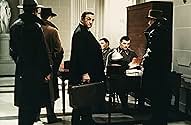
An account of underground resistance fighters in Nazi-occupied France.An account of underground resistance fighters in Nazi-occupied France.An account of underground resistance fighters in Nazi-occupied France.
- Director
- Writers
- Stars
- Awards
- 4 wins & 1 nomination total




- Director
- Writers
- All cast & crew
- Production, box office & more at IMDbPro
8.128.5K
1
2
3
4
5
6
7
8
9
10
Featured reviews
far from fake romanticism
This is probably one of the best fiction movies ever made on the French resistance during Worl War II. Far from the usual romantic cliches showing handsome young men playing tricks with the Nazis and falling in love with sublime women, the substance of the movie is reality. It depicts a "shadow army" made of courageous men who are ready to sacrifice their lives but are aware of the huge cost they will eventually have to pay. It shows the cruel and sometimes inhuman choices they have to make in order to survive. This is a very useful movie that gives a real hint of what resistance truly was.
Heroism in its ugly glory, as history tells it
Based on truth, the Army in the Shadows takes the French men and women of the Resistance as its theme, at a point near the end of the war when the Resistance movement and Nazi intelligence about its work and staff are both firmly established. As well as giving a thrilling history lesson in the workings of the Resistance, from the rural ladies who operated safe houses, to the chateaux-dwelling aristocrats whose lawns played host to light aircraft smuggling collaborators in and out of France, it also is a fascinating essay on the gruesome realities of heroism: including moments of hopelessness and complete failure of nerve. Events test our group of collaborators, so that each one bumps up against his or her personal limit, as to what they are intelligent enough to understand, brave enough to endure, and determined enough to achieve. Excellently acted and directed, it is a classic uncompromising Melville thriller.
aside from his later crime films, this is Melville at his best, and usual challenging self
Jean Pierre Melville, writer/director of Army of Shadows, has said in interviews that the book of which he based his movie from is considered THE book on the French resistance in the second world war. While I can only speculate as to this film being THE film of its category, as I've yet to see other films on the resistance, it sets quite a high standard for painting a very calculated, perfectly cool (or cold on your POV) piece of film-making on the subject.
It's basically as if Melville, having lived through the period- this being perhaps an even more personal film than his other crime films- still takes on some of the true knacks of what he does in the rest of his oeuvre. Taking characters who go by codes of loyalty, professional as can be, and in a true underground in society. However this time their opponent being the Germans instead of the police the stakes are raised. Even as a couple of parts in the middle seem to shake with the deliberate pace Melville sets a couple of times, the main core of the story and the characters is remarkable, and honest in a dark, bleak way.
Lino Ventura is at his best as Gerbier, a main man in the French resistance movement, who gets more involved in the proceedings following a brief prison-camp stint (the escape from which is one of the most daring in any film). The film is fairly episodic, however encompassing a group of the resistance people, including Mathilde (Simon Signet, very good as always), Le Masque (Claude Mann), and Jean-Francois (Jean-Pierre Cassel, at a peak as well in his own way).
Some of their operations are simple, like retrieving weapons or finding more support through certain channels. Though here and there some payback is in due to the traitors. This becomes a higher issue as the film rolls into its final act, as alliances come into question, and the real ties of humanity together are tested in the midst of the German occupation.
As usual with Melville all of this is told, in its own way, fairly simply- almost clinically- by Melville's camera. There are some zooms here and there, some very intense camera positions (though not awkwardly), and exciting when need be. At the same time, there are some scenes like a short scene on a beach (all blue) or a few others at night or in different lighting modes that are the best Melville's done in the midst of a color scheme used perfectly to correspond with the mood; it works just as well if not better than how he uses it for his crime films.
But one of the pleasures of seeing a film like this by a real kind of maverick of European cinema is seeing how much room he gives for his actors. These are not performances that become over-sensational in the slightest. On the contrary, what adds sometimes to the tension in some of the scenes, or the outright tragedy, is how the actors just play as they do professional-wise, sometimes with what's not said meaning more (and how the Melville gets these quiet moments is fantastic). Featuring a superlative musical accompaniment by Eric De Marsan, this is one of the best directed anti-war films ever made.
It's basically as if Melville, having lived through the period- this being perhaps an even more personal film than his other crime films- still takes on some of the true knacks of what he does in the rest of his oeuvre. Taking characters who go by codes of loyalty, professional as can be, and in a true underground in society. However this time their opponent being the Germans instead of the police the stakes are raised. Even as a couple of parts in the middle seem to shake with the deliberate pace Melville sets a couple of times, the main core of the story and the characters is remarkable, and honest in a dark, bleak way.
Lino Ventura is at his best as Gerbier, a main man in the French resistance movement, who gets more involved in the proceedings following a brief prison-camp stint (the escape from which is one of the most daring in any film). The film is fairly episodic, however encompassing a group of the resistance people, including Mathilde (Simon Signet, very good as always), Le Masque (Claude Mann), and Jean-Francois (Jean-Pierre Cassel, at a peak as well in his own way).
Some of their operations are simple, like retrieving weapons or finding more support through certain channels. Though here and there some payback is in due to the traitors. This becomes a higher issue as the film rolls into its final act, as alliances come into question, and the real ties of humanity together are tested in the midst of the German occupation.
As usual with Melville all of this is told, in its own way, fairly simply- almost clinically- by Melville's camera. There are some zooms here and there, some very intense camera positions (though not awkwardly), and exciting when need be. At the same time, there are some scenes like a short scene on a beach (all blue) or a few others at night or in different lighting modes that are the best Melville's done in the midst of a color scheme used perfectly to correspond with the mood; it works just as well if not better than how he uses it for his crime films.
But one of the pleasures of seeing a film like this by a real kind of maverick of European cinema is seeing how much room he gives for his actors. These are not performances that become over-sensational in the slightest. On the contrary, what adds sometimes to the tension in some of the scenes, or the outright tragedy, is how the actors just play as they do professional-wise, sometimes with what's not said meaning more (and how the Melville gets these quiet moments is fantastic). Featuring a superlative musical accompaniment by Eric De Marsan, this is one of the best directed anti-war films ever made.
Somber and reflective view of the French resistance
ARMY IN THE SHADOWS (Jean-Pierre Melville - France/Italy 1969).
Jean-Pierre Melville's work features basically two themes: the world of crime and the French resistance. In Melville's eyes, these two worlds are very much the same. The gangster codes he adopted for many of his films were based largely on the codes of the French resistance and his own experiences during the German occupation (not the other way round as some people suggested).
Melville must be the most celebrated French director at this point in the U.S, after the re-release of "Army in the Shadows" in 2006, that was almost universally applauded by the critics as a work of genius or a forgotten masterpiece. Now, in many ways this is a good film, but something is missing, and I can't really put my finger on it. Perhaps it's the clinically almost surreal interaction between the characters, that worked so well in Melvile's gangsters film, but here he is depicting (admittedly his own ) reality and very much his personal take on French resistance, where "real life" plays a much greater part than in the surreal settings of many of his gangster films, but it doesn't feel that way when watching this. The film is languidly paced with a slow build-up, but never really catches fire. With Melville's characteristically cold - almost clinical - direction, it's partly captivating in parts, but perhaps the tone is a little too detached for my taste. He certainly takes his time to tell the story, but the acting is first class with Lino Ventura and Simone Signouret giving memorable performances among a first-rate cast.
Camera Obscura --- 7/10
Jean-Pierre Melville's work features basically two themes: the world of crime and the French resistance. In Melville's eyes, these two worlds are very much the same. The gangster codes he adopted for many of his films were based largely on the codes of the French resistance and his own experiences during the German occupation (not the other way round as some people suggested).
Melville must be the most celebrated French director at this point in the U.S, after the re-release of "Army in the Shadows" in 2006, that was almost universally applauded by the critics as a work of genius or a forgotten masterpiece. Now, in many ways this is a good film, but something is missing, and I can't really put my finger on it. Perhaps it's the clinically almost surreal interaction between the characters, that worked so well in Melvile's gangsters film, but here he is depicting (admittedly his own ) reality and very much his personal take on French resistance, where "real life" plays a much greater part than in the surreal settings of many of his gangster films, but it doesn't feel that way when watching this. The film is languidly paced with a slow build-up, but never really catches fire. With Melville's characteristically cold - almost clinical - direction, it's partly captivating in parts, but perhaps the tone is a little too detached for my taste. He certainly takes his time to tell the story, but the acting is first class with Lino Ventura and Simone Signouret giving memorable performances among a first-rate cast.
Camera Obscura --- 7/10
Outstanding--but brutal--film
"L'Armée des ombres" (1969) was shown in the U.S as "Army of Shadows." The film is co-written and directed by Jean-Pierre Melville.
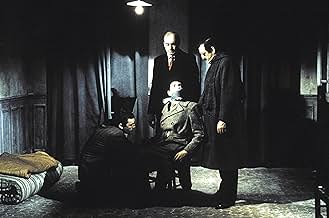
The time is 1942 and the setting is France. Lino Ventura plays Philippe Gerbier, a high-ranking officer in the French resistance. Gerbier is intelligent, resourceful, and brave. He and his small band of urban fighters are constantly in danger of capture and torture by the Nazis. This isn't a film of rural partisans--it's a film where people meet in cafés and offices. No one knows when Nazi soldiers or Gestapo will sweep down and drag them off. No meeting is safe, and no relationship is safe either--how many people can remain silent under savage tortures that go on for days?
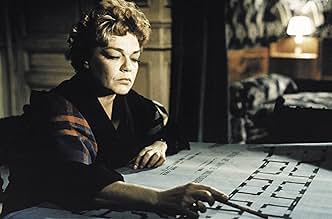
Although Ventura is excellent in the role, the movie is dominated by Simone Signoret as Mathilde--tougher and braver than any of the men, but possessing one terrible weakness.
This movie is different than most films about the French Resistance. Things don't go smoothly, they don't go well, fear is everywhere, and heroism often takes place in a prison cell where no one ever learns of it. It's fascinating, but grim.
"Army of Shadows" is a neglected film by a great director. It's definitely worth seeking out.
The time is 1942 and the setting is France. Lino Ventura plays Philippe Gerbier, a high-ranking officer in the French resistance. Gerbier is intelligent, resourceful, and brave. He and his small band of urban fighters are constantly in danger of capture and torture by the Nazis. This isn't a film of rural partisans--it's a film where people meet in cafés and offices. No one knows when Nazi soldiers or Gestapo will sweep down and drag them off. No meeting is safe, and no relationship is safe either--how many people can remain silent under savage tortures that go on for days?
Although Ventura is excellent in the role, the movie is dominated by Simone Signoret as Mathilde--tougher and braver than any of the men, but possessing one terrible weakness.
This movie is different than most films about the French Resistance. Things don't go smoothly, they don't go well, fear is everywhere, and heroism often takes place in a prison cell where no one ever learns of it. It's fascinating, but grim.
"Army of Shadows" is a neglected film by a great director. It's definitely worth seeking out.


Did you know
- TriviaCinematographer Pierre Lhomme claimed that the last surviving, watchable print of the movie had turned completely pink with age. He later supervised the 2k resolution, digital restoration of the film at the Eclair Laboratories in Paris.
- GoofsIn the London WWII sequence, double yellow lines are visible on the road. These were only introduced in the UK in 1956 and didn't become common until the 1960s; a few of the street signs have a style not known before the 1960s.
- Quotes
Philippe Gerbier: See you, Comrade.
Legrain: You a communist?
Philippe Gerbier: No. But I do have comrades.
- ConnectionsFeatured in Mémoires pour Simone (1986)
Details
- Release date
- Countries of origin
- Languages
- Also known as
- El ejército de las sombras
- Filming locations
- Bunker de l'armée, Saint-Cyr-l'Ecole, Yvelines, France(execution by the Gestapo)
- Production companies
- See more company credits at IMDbPro
Box office
- Gross US & Canada
- $861,983
- Opening weekend US & Canada
- $12,620
- Apr 30, 2006
- Gross worldwide
- $931,732
Contribute to this page
Suggest an edit or add missing content