
A woman causes a group of assassins to face their greatest challenge.A woman causes a group of assassins to face their greatest challenge.A woman causes a group of assassins to face their greatest challenge.
- Awards
- 2 nominations total

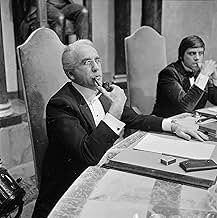


Curd Jürgens
- Gen. von Pinck
- (as Curt Jurgens)


John Abineri
- Police Inspector
- (uncredited)
John Adams
- French President
- (uncredited)

Jonathan Adams
- French President
- (uncredited)
6.43.9K
1
2
3
4
5
6
7
8
9
10
Featured reviews
Entertaining and pleasant.
This is the kind of movie made with care and respect for the audience:lavish sets,dazzling costumes,and a very attractive cast including Diana Rigg,Telly Savalas -both teamed for "on her majesty's secret service" the same year-,Philippe Noiret,Curd Jurgens and the sadly missed Oliver Reed.
The screenplay is often full of wit and humor,with such lines as "if there's a war,people will kill each others for a penny,and we will have to shut up shop (our "assassination bureau").Actually the whole movie is a long chase through a chocolate-box Europa with a lot of traps,bombs and disguises.Diana Rigg's appearances run the whole gamut from a Victorian prude resembling Mary Poppins to a femme fatale,from a widow in deep mourning to a nun,she's astonishing.So does (and is )Oliver Reed,who plays some British Arsène Lupin.History is given a rough ride when Francis-Ferdinand is murdered in Vienna (instead of Sarajevo) but who cares?
Best scene:Diana Rigg is alone in her hotel bedroom in Venice,Italy:she can hear a ticking.No,it's not the clock.So she rushes into her bathroom where a tap(faucet) is dripping.But when it's closed,the noise still remains.Is-it a bomb? .The brothel scene where Rigg is mistaken for a hooker is also great fun!
Two movies made in the seventies might have been influenced by Basil Dearden's amusing comedy:Douglas's Hickox's "theater of blood" (1973) also starring Rigg- a treat that should not be missed-and Ted Kotcheff's "who's killing the great chefs of Europe?" (1978)-Jacqueline Bisset cooks a bombe glacée here-.The people who liked this movie could do worse than picking those delightful black comedies.
The screenplay is often full of wit and humor,with such lines as "if there's a war,people will kill each others for a penny,and we will have to shut up shop (our "assassination bureau").Actually the whole movie is a long chase through a chocolate-box Europa with a lot of traps,bombs and disguises.Diana Rigg's appearances run the whole gamut from a Victorian prude resembling Mary Poppins to a femme fatale,from a widow in deep mourning to a nun,she's astonishing.So does (and is )Oliver Reed,who plays some British Arsène Lupin.History is given a rough ride when Francis-Ferdinand is murdered in Vienna (instead of Sarajevo) but who cares?
Best scene:Diana Rigg is alone in her hotel bedroom in Venice,Italy:she can hear a ticking.No,it's not the clock.So she rushes into her bathroom where a tap(faucet) is dripping.But when it's closed,the noise still remains.Is-it a bomb? .The brothel scene where Rigg is mistaken for a hooker is also great fun!
Two movies made in the seventies might have been influenced by Basil Dearden's amusing comedy:Douglas's Hickox's "theater of blood" (1973) also starring Rigg- a treat that should not be missed-and Ted Kotcheff's "who's killing the great chefs of Europe?" (1978)-Jacqueline Bisset cooks a bombe glacée here-.The people who liked this movie could do worse than picking those delightful black comedies.
Odd, Quirky, but Infectious
The big selling point of "The Assassination Bureau" is that it was based on an unfinished novel by Jack London -- "Unfinished" being an euphemism for "abandoned". Long after London's death it was finished by a lesser writer and that version is the basis for this movie.
A superb cast, headed by Oliver Reed and Diana Rigg, is underemployed.
Reed plays the chairman of the Assassination Bureau, Ltd. For a price, the bureau will undertake the homicide of deserving victims. Like a Star Chamber court they weigh each case by their own sense of justice.
Rigg, an enterprising journalist, decides to end the bureau by approaching Reed for a hit. Reed accepts, only to discover she wants Reed to assassinate himself. Amused, he accepts. The bureau, he thinks, has become too mercenary, killing whether they've carefully weighed the justice of the murder or not.
Bringing it before the Bureau, Reed suggests they clean house -- either they kill the chairman, or he kills all of them.
And this is just in the first fifteen minutes.
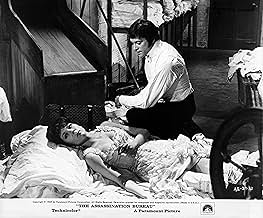
What follows is an episodic cat-and-mouse game and, like all episodic features, some episodes work better than others. The scenes in Switzerland and Vienna, for example, are remarkably uninteresting, while the scenes in Venice show flashes of brilliance. Best scene: Diana Rigg, swathed in only a towel, trying to discover whether there is a bomb in her room, whether it's just a clock, or whether it's altogether her imagination. The most embarrassing is an extended foray in a French bordello.
Scrumptuous turn-of-the-century sets, far better than anything in similar period features like "Chitty Chitty Bang Bang", make for great eye-candy. The whole feature plays light-handedly, so its treatment of death never comes off even as black-comedic, as with the superior "The Wrong Box". To accentuate the joking element is the addition of a wacky late-sixties type song about love that makes the Carpenters sound profound.
Silly as it is, and dull as it can be in spots, its high spirit is infectious. How much of it is Jack London, I don't know, but it's a far cry from "The Sea Wolf"
A superb cast, headed by Oliver Reed and Diana Rigg, is underemployed.
Reed plays the chairman of the Assassination Bureau, Ltd. For a price, the bureau will undertake the homicide of deserving victims. Like a Star Chamber court they weigh each case by their own sense of justice.
Rigg, an enterprising journalist, decides to end the bureau by approaching Reed for a hit. Reed accepts, only to discover she wants Reed to assassinate himself. Amused, he accepts. The bureau, he thinks, has become too mercenary, killing whether they've carefully weighed the justice of the murder or not.
Bringing it before the Bureau, Reed suggests they clean house -- either they kill the chairman, or he kills all of them.
And this is just in the first fifteen minutes.
What follows is an episodic cat-and-mouse game and, like all episodic features, some episodes work better than others. The scenes in Switzerland and Vienna, for example, are remarkably uninteresting, while the scenes in Venice show flashes of brilliance. Best scene: Diana Rigg, swathed in only a towel, trying to discover whether there is a bomb in her room, whether it's just a clock, or whether it's altogether her imagination. The most embarrassing is an extended foray in a French bordello.
Scrumptuous turn-of-the-century sets, far better than anything in similar period features like "Chitty Chitty Bang Bang", make for great eye-candy. The whole feature plays light-handedly, so its treatment of death never comes off even as black-comedic, as with the superior "The Wrong Box". To accentuate the joking element is the addition of a wacky late-sixties type song about love that makes the Carpenters sound profound.
Silly as it is, and dull as it can be in spots, its high spirit is infectious. How much of it is Jack London, I don't know, but it's a far cry from "The Sea Wolf"
Worth watching for Reed and Rigg
This film is an enjoyable enough lightweight romp, with an array of locations and actors that is perhaps excessive.
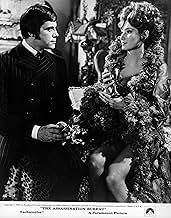
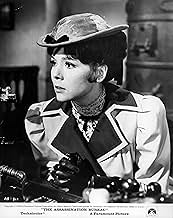
Oliver Reed is suavely bucaneering as the main protaganist, while the other main star, Diana Rigg of Avengers fame, does a very well-judged comic performance as the feminist journalist in 1910. It's a shame she didn't appear in more films. No other actors get much of a chance to shine, as there are far too many minor characters.
The writing is OK; you get the feeling that there should be more laughs than there are. Still, it's an enjoyable enough way to spend an hour and a half.
Rating:- *** (out of *****)
Oliver Reed is suavely bucaneering as the main protaganist, while the other main star, Diana Rigg of Avengers fame, does a very well-judged comic performance as the feminist journalist in 1910. It's a shame she didn't appear in more films. No other actors get much of a chance to shine, as there are far too many minor characters.
The writing is OK; you get the feeling that there should be more laughs than there are. Still, it's an enjoyable enough way to spend an hour and a half.
Rating:- *** (out of *****)
Life is a precious thing.
Diana Rigg plays Sonya Winter, a journalist with an agenda in the early 20th century who contacts the title murder-for-hire organization, wanting someone dead. The young boss (Oliver Reed) is initially aghast when she reveals that it is HE whom she wants dead, but his shock turns to intrigue when he realizes that a good cat-and-mouse game between him and his associates could be good for weeding out the incompetents. Then he learns that some of his associates are interested in politically motivated crimes.
Designed, produced, and scripted by Michael Relph, based on an idea in a novel began by Jack London and finished by Robert L. Fish, "The Assassination Bureau" is an agreeably daft time waster. It has a great, classic sense of farce for a while, and is quite lively and humorous at first. Only in the second half does it lose some momentum and get more bogged down in plot.
But this has such an engaging, eclectic international cast that it ends up as a very watchable bit of nonsense. It's a treat to see Reed give such a *fun* performance, and Rigg is his match as the feisty woman who's gotten in over her head. Also making appearances are Telly Savalas, Curd Jurgens, Philippe Noiret, Warren Mitchell, Beryl Reid, Clive Revill, Vernon Dobtcheff, Annabella Incontrera, Kenneth Griffith, Jess Conrad, and George Coulouris.
This *does* have a gleefully unpredictable quality, with Reeds' swashbuckling protagonist often unflappable in the face of danger.
"The Assassination Bureau" might be too silly for some folks, but I had a pretty good time with it. Yes, it's lightweight and forgettable in the end, and goes on a bit long, but is overall a genially tongue-in-cheek affair, and must viewing for fans of Rigg & Reed.
Seven out of 10.
Designed, produced, and scripted by Michael Relph, based on an idea in a novel began by Jack London and finished by Robert L. Fish, "The Assassination Bureau" is an agreeably daft time waster. It has a great, classic sense of farce for a while, and is quite lively and humorous at first. Only in the second half does it lose some momentum and get more bogged down in plot.
But this has such an engaging, eclectic international cast that it ends up as a very watchable bit of nonsense. It's a treat to see Reed give such a *fun* performance, and Rigg is his match as the feisty woman who's gotten in over her head. Also making appearances are Telly Savalas, Curd Jurgens, Philippe Noiret, Warren Mitchell, Beryl Reid, Clive Revill, Vernon Dobtcheff, Annabella Incontrera, Kenneth Griffith, Jess Conrad, and George Coulouris.
This *does* have a gleefully unpredictable quality, with Reeds' swashbuckling protagonist often unflappable in the face of danger.
"The Assassination Bureau" might be too silly for some folks, but I had a pretty good time with it. Yes, it's lightweight and forgettable in the end, and goes on a bit long, but is overall a genially tongue-in-cheek affair, and must viewing for fans of Rigg & Reed.
Seven out of 10.
Holds up well over time
This charming film, made when Oliver Reed and Diana Rigg were at the height of their appeal, is what they used to call a "romp", when it wasn't considered to be a putdown. Reed, as Ivan, born and bred to lead an international group of highly-placed assassins, is hired by would-be reporter Sonia (Rigg) to have his group kill him, and realizing that his house badly needs some cleaning out, Ivan accepts the commission. The rest is a whirlwind tour of Europe, taking out substantial portions of the terrain as they go, avoiding bungled attempts on his life as he tries to track down the traitors who would turn the Bureau into a political machine. The dialogue is refreshingly devoid of political correctness, but maintains a firm respect between the unlikely couple as they go from bickering rivalry to bickering fondness. Guest villains include Clive Revill as a gluttonous Italian, and sad stories include the accidental demise of Roger Delgado (Dr. Who, the first Master) while on location. Much worth the time and effort, although sadly almost never seen on TV, and abysmally represented in video release.


Did you know
- TriviaJack London's original novel was left markedly incomplete at the time of his death, and it was not until many decades later that the thriller-writer Robert L. Fish (also known as Robert L. Pike) finished it for publication, amidst much publicity. The novel is noticeably more serious in tone than this movie, although a New York Times review at the time called it "delightfully ridiculous."
- GoofsIn the scene about 40-45 minutes in where Lord Bostwick visits General Van Pinck whilst the latter is at fencing practice, there's a map of Europe on the wall. Although this film ostensibly takes place before World War I, the map is of post-Versailles Europe, c.1925-1939.
- Quotes
Miss Winter: With your ideas, I'm surprised you're shocked at the thought of war.
Ivan Dragomiloff: Not at all. It's purely a matter of business. How can we charge our sort of prices with everybody happily killing each other for a shilling a day?
- How long is The Assassination Bureau?Powered by Alexa
Details
- Release date
- Country of origin
- Languages
- Also known as
- El sindicato del crimen
- Filming locations
- Cliveden House, Taplow, Buckinghamshire, England, UK(Lord Bostwick riding in the woods towards Ruthenia)
- Production company
- See more company credits at IMDbPro
Contribute to this page
Suggest an edit or add missing content