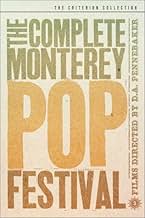
IMDb RATING
7.9/10
5.3K
YOUR RATING
A film about the greatest pre-Woodstock rock music festival.A film about the greatest pre-Woodstock rock music festival.A film about the greatest pre-Woodstock rock music festival.
- Awards
- 1 win & 2 nominations total
Denny Doherty
- Self - Performers
- (as Mamas and the Papas)
Cass Elliot
- Self - Performers
- (as Mamas and the Papas)
The Mamas and the Papas
- Themselves
- (as Mamas and Papas)
John Phillips
- Self - Performers
- (as Mamas and the Papas)
Michelle Phillips
- Self - Performers
- (as Mamas and the Papas)
Frank Cook
- Self - Performers
- (as Canned Heat)
Bob Hite
- Self - Performers
- (as Canned Heat)
Henry Vestine
- Self - Performers
- (as Canned Heat)
Alan Wilson
- Self - Performers
- (as Canned Heat)
Art Garfunkel
- Self - Performers
- (as Simon and Garfunkel)
Paul Simon
- Self - Performers
- (as Simon and Garfunkel)
Marty Balin
- Self - Performers
- (as Jefferson Airplane)
7.95.3K
1
2
3
4
5
6
7
8
9
10
Featured reviews
So many gone too young
There was a time in 1969 when a friend and I went to see Monterey Pop every Friday night at the Kips Bay Cinema in NYC just to hear Janis sing Ball and Chain and Otis sing I've been Lovin You Too Long. Then we'd go to dinner and maybe another movie, but it set up our entire weekend.
Now, I think about how many of the performers were gone too soon, too young -- Janis, Jimi, Otis, Mama Cass... How amazing to have them all there in this one glorious celebration of music and the innocence (yes) of the 60's.
Maybe it's not the best "film-making" but it's a treasure to be appreciated as the years go by. Would love to see a DVD release with any additional available footage. Enjoy and remember, (or discover)
Now, I think about how many of the performers were gone too soon, too young -- Janis, Jimi, Otis, Mama Cass... How amazing to have them all there in this one glorious celebration of music and the innocence (yes) of the 60's.
Maybe it's not the best "film-making" but it's a treasure to be appreciated as the years go by. Would love to see a DVD release with any additional available footage. Enjoy and remember, (or discover)
Watch out for your ears!!
I've heard it commented that Monterey Pop is less of a `movie' than Woodstock because it doesn't really get to know the Audience as a character (through interviews, pointed observation, thru-stories, etc.). This is nothing more than old-fashioned critic snobbery. The distance is precisely the mystique of the film. Do we need to talk to the audience or to Janis Joplin, for example, after her performance? As an impressed Cass Elliot looks on, we see Joplin playfully skitter off the stage like a schoolgirl to embrace a friend after her victorious `Ball & Chain,' and we totally feel her sense of accomplishment and state of exhaustion after delivering such a powerhouse. Sometimes a picture speaks a thousand words.
Monterey Pop, in comparison to Woodstock, does indeed have a distant feel and, overall, lacks that film's spit & polish. But this is like comparing two different directing styles say Kubrick vs. Ford. Based on its own merits, this film is a fantastic, bare-bones look back at the state of (what was then!) underground music before drugs & death took their massive toll, before it all became `classic rock' commercialism, and before everyone (including myself) had a chance to pontificate on its merits ad nauseum. The distance afforded their subjects by the filmmakers adds to this experimental `street' allure and is actually very appropriate. Have you ever felt cheated by a band simply because they went commercial? How it just doesn't feel the same because what once seemed like a hip secret kept by a choice few had now gained Mass Audience Appeal? The jig was up. Alas, for those old days Monterey captures that spirit of an unbridled, non-compromised and spontaneous movement that has just the right touch of danger attached.
Even though Monterey Pop has a garage rock feel, it's not really about `garage rock' per se, which has its roots back to 50s. It's more about a time when rock really went through a kind of psychedelic overhaul that continues to influence today. Besides the psychedelia, however, rock went through a diverse artistic transition that begun to incorporate music from other countries, styles and mediums (You want diversity? Try Otis Redding and Ravi Shankar on the same bill!). Although the Beatles had already begun to incorporate this stuff, most had not by '67 and were just perfecting their own innovative sounds (Janis Joplin, for instance, did not bring in a full horn section until a couple of years later, and Big Brother remained very guitar-driven). The jazz of Hugh Mesekela, for instance, is a standout here. I don't see Woodstock as having such a wide scope.
On the other hand, comparisons made to Woodstock are valuable enhancements to this film's enjoyment, not necessarily the base of negative critique. One reviewer, for instance, pointed out the medium hairstyle length of most of the men here (most were so new to The Scene that they hadn't had enough time to grow it out yet. Crew cuts and horn-rimmed glasses also abound). Many of the bands also look surprisingly young & innocent when compared with their Woodstock performances only 2 years later (the results of hard living?). Hendrix at Woodstock, in particular, comes off as nearly sedate when compared to his historic appearance here. Such details are what make Monterey Pop a gorgeous document of this period.
Monterey Pop, in comparison to Woodstock, does indeed have a distant feel and, overall, lacks that film's spit & polish. But this is like comparing two different directing styles say Kubrick vs. Ford. Based on its own merits, this film is a fantastic, bare-bones look back at the state of (what was then!) underground music before drugs & death took their massive toll, before it all became `classic rock' commercialism, and before everyone (including myself) had a chance to pontificate on its merits ad nauseum. The distance afforded their subjects by the filmmakers adds to this experimental `street' allure and is actually very appropriate. Have you ever felt cheated by a band simply because they went commercial? How it just doesn't feel the same because what once seemed like a hip secret kept by a choice few had now gained Mass Audience Appeal? The jig was up. Alas, for those old days Monterey captures that spirit of an unbridled, non-compromised and spontaneous movement that has just the right touch of danger attached.
Even though Monterey Pop has a garage rock feel, it's not really about `garage rock' per se, which has its roots back to 50s. It's more about a time when rock really went through a kind of psychedelic overhaul that continues to influence today. Besides the psychedelia, however, rock went through a diverse artistic transition that begun to incorporate music from other countries, styles and mediums (You want diversity? Try Otis Redding and Ravi Shankar on the same bill!). Although the Beatles had already begun to incorporate this stuff, most had not by '67 and were just perfecting their own innovative sounds (Janis Joplin, for instance, did not bring in a full horn section until a couple of years later, and Big Brother remained very guitar-driven). The jazz of Hugh Mesekela, for instance, is a standout here. I don't see Woodstock as having such a wide scope.
On the other hand, comparisons made to Woodstock are valuable enhancements to this film's enjoyment, not necessarily the base of negative critique. One reviewer, for instance, pointed out the medium hairstyle length of most of the men here (most were so new to The Scene that they hadn't had enough time to grow it out yet. Crew cuts and horn-rimmed glasses also abound). Many of the bands also look surprisingly young & innocent when compared with their Woodstock performances only 2 years later (the results of hard living?). Hendrix at Woodstock, in particular, comes off as nearly sedate when compared to his historic appearance here. Such details are what make Monterey Pop a gorgeous document of this period.
music history
It's the legendary California music festival in June 1967. D. A. Pennebaker films the incredible iconic concert. There is great music. It is an important time capsule for popular music in general. Two of the most notorious performances are Jimi Hendrix burning his guitar and Joplin singing with Mama Cass watching in shock from the audience. One does learn a few things. I didn't think they had chairs but the metal chairs are all neatly lined up in their rows. This is more than a movie, a documentary, or a concert film. It is music history.
The Motherlode - 1967 and the Festival That Celebrated It
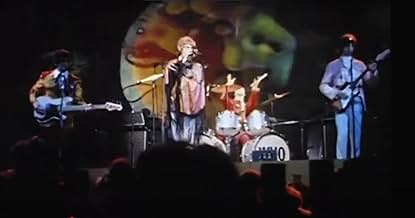
Organized and planned by Mamas & The Papas leader John Phillips and associates The Monterey Pop Festival was a concert featuring various acts of the time from different parts of the world. Held in Monterey, California from June 16-18, 1967 the two day event hosted an array of musical luminaries some of whom gained bigger recognition from the concert. The highlights of the gig showcase the eclectic talents involved: Hugh Masekela's loud Afrobeat Jazz; Big Brother & The Holding Company's memorable lead screecher; Ravi Shankar's lengthy sitar workout; Otis Redding's rocking Soul; The Who's pioneering high decibel destruction; and Jimi Hendrix's legendary show stealer which elevated Rock performance like no other since Elvis and raised the standard of guitar playing unparalleled since. Interposed with the performances are shots of the crowd (lots of pretty girls) and interviews with the audience. One can immediately see the influence the event and the film had on the Woodstock and Isle of Wight concerts and documentaries. A simple and effective document of a place and time, "Monterey Pop Festival" is a visual and audio legacy of an age when legends walked the earth and the promise of a better future seemed truly and genuinely real.
10HSauer
Classic
This is a classic documentary of 60s rock, captured live before all the hype and hoopla of hippiedom sank most of these acts (and many others). The Monterey Pop Festival kicked off the Summer of Love and remains the prime event of that epoch. The film should be seen by anyone who claims a passing interest in "Woodstock" or "the 60s." I give it 10 stars.
Did you know
- TriviaAlthough they declined the invitation to perform because they had sworn off touring permanently, all four of The Beatles were on the festival's board of directors. George Harrison had helped recommend Ravi Shankar, and Paul McCartney had pushed for the organizers to sign Jimi Hendrix, who was unknown in the United States at the time.
- GoofsIn the opening credits, a hand-drawn title says "IN ORDER OF PEFORMANCE", misspelling the word "PERFORMANCE".
- Quotes
Female Fan: I think its gonna be like Easter and Christmas and New Year's and your Birthday all together, you know! Hearing all the different bands, you know. It's just, like, I've heard a lot of them; but, all at the same time - it's going to be too much. I mean, the vibrations are just going to be floating everywhere!
- Alternate versionsThe 1997 video version includes as an appendix The Who's performance of "A Quick One While He's Away."
- ConnectionsEdited into The Kids Are Alright (1979)
- SoundtracksSan Francisco (Be Sure to Wear Flowers in Your Hair)
Written by John Phillips
Performed by Scott McKenzie
Studio version, played over film footage of pre-concert activity.
- How long is Monterey Pop?Powered by Alexa
Details
- Release date
- Country of origin
- Language
- Also known as
- Monterrey Pop
- Filming locations
- Monterey County Fairgrounds - 2004 Fairground Road, Monterey, California, USA(location of the festival)
- Production companies
- See more company credits at IMDbPro
Box office
- Gross US & Canada
- $1,524
- Opening weekend US & Canada
- $1,524
- Aug 26, 2001
- Runtime
- 1h 18m(78 min)
- Color
- Sound mix
- 4-Track Stereo(original release)
- Mono(original release)
- Aspect ratio
- 1.37 : 1
Contribute to this page
Suggest an edit or add missing content