IMDb RATING
7.6/10
6.1K
YOUR RATING


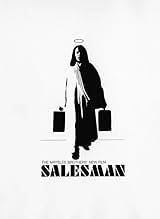
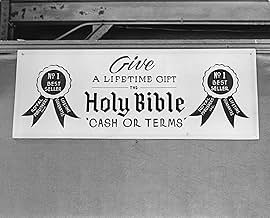
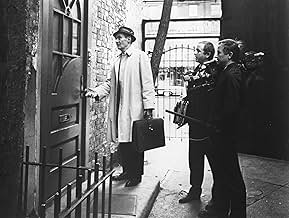
Four dogged door-to-door Bible salesmen travel from Boston to Florida on a seemingly futile quest to sell luxury editions of the Good Book to working-class Catholics.Four dogged door-to-door Bible salesmen travel from Boston to Florida on a seemingly futile quest to sell luxury editions of the Good Book to working-class Catholics.Four dogged door-to-door Bible salesmen travel from Boston to Florida on a seemingly futile quest to sell luxury editions of the Good Book to working-class Catholics.
- Awards
- 4 wins total



7.66K
1
2
3
4
5
6
7
8
9
10
Featured reviews
Fascinating
The camera follows four Bible salesmen as they follow up on names of Catholic parishioners in Boston and then Florida.
I can understand that the documentary is not for all tastes. There's really no narrative, while we know next to nothing about the four principals. Yet, the results, to me at least, are fascinating, if not entertaining. The four Bible salesmen are a harried crew, near the bottom of a commercial food chain. Pressure to sell goes from ownership to management to salesmen, and finally to prospective customers to buy. And throughout, the camera never wavers, at times lingering over a face in rather enigmatic fashion. Nor do the subjects ever acknowledge camera's presence-- quite a cinematic accomplishment. Importantly, these are ordinary faces, certainly not the Hollywood variety.
To me, the most interesting part are the working class customers. They can barely pay the bills they already have, let alone fork over an extra dollar a week. I'm guessing Badger's burnout comes from years of hustling people who should not be hustled. Of course, the pitch revolves around having a Bible with illustrations that will confirm a Catholic's faith and enrich their lives. I'm supposing the salesmen have to believe that at some level, otherwise how could they continue to pressure poor people to buy. And catch the ride by the ritzy Miami Beach hotels, right before the guys start knocking on wear-worn doors.
Overall, this is quite a remarkable 85-minutes, like nothing else I've seen. I'm not sure what to make of the result, that is, whether there's an intended point beyond the momentary. But either way, the unvarnished glimpses the film provides are definitely memorable.
I can understand that the documentary is not for all tastes. There's really no narrative, while we know next to nothing about the four principals. Yet, the results, to me at least, are fascinating, if not entertaining. The four Bible salesmen are a harried crew, near the bottom of a commercial food chain. Pressure to sell goes from ownership to management to salesmen, and finally to prospective customers to buy. And throughout, the camera never wavers, at times lingering over a face in rather enigmatic fashion. Nor do the subjects ever acknowledge camera's presence-- quite a cinematic accomplishment. Importantly, these are ordinary faces, certainly not the Hollywood variety.
To me, the most interesting part are the working class customers. They can barely pay the bills they already have, let alone fork over an extra dollar a week. I'm guessing Badger's burnout comes from years of hustling people who should not be hustled. Of course, the pitch revolves around having a Bible with illustrations that will confirm a Catholic's faith and enrich their lives. I'm supposing the salesmen have to believe that at some level, otherwise how could they continue to pressure poor people to buy. And catch the ride by the ritzy Miami Beach hotels, right before the guys start knocking on wear-worn doors.
Overall, this is quite a remarkable 85-minutes, like nothing else I've seen. I'm not sure what to make of the result, that is, whether there's an intended point beyond the momentary. But either way, the unvarnished glimpses the film provides are definitely memorable.
Death of a Salesman meets Glengarry Glen Ross
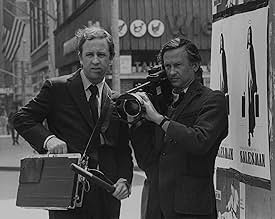
Documentaries are a fairly pervasive genre in today's culture, and an increasing trend is to manipulate the footage in order to further the authentication of one's thesis. Albert and David Maysles' 1969 documentary 'Salesman' however, turns an unflinching eye on its' subjects, sometimes with unnerving and disturbing results.
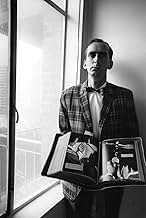
'Salesman' follows four door-to-door high-end bible salesmen as they travel around the country. The four men have nicknames they've given each other, all describing their sales approach: The Rabbit, The Badger, The Gipper and The Bull. We hear most from The Badger (Paul Brennan) as he takes his leads and tries to pull himself out of a sales slump. The leads that most of the salesmen follow end up being poor Catholic families who can't even afford a dollar a week payment, but are at times talked into it anyway by the sales tactics these men employ.
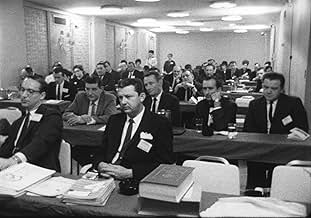
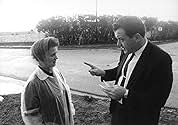
The Maysles give us an absolutely fascinating look at the world of door-to-door sales, but it is also a disturbing door to open. The pressure that the salesmen use when trying to sell the product, and the struggle that the prospects exhibit, is difficult to watch. In one scene, Brennan goes to the door of a recent customer to pick up their down payment for another of the salesmen and pretty much refuses to take 'No' for an answer, telling her that he's the salesman's boss and is going to have to dock him a fee if she cancels the sale, eventually guilting this family who clearly cannot take on another installment payment into going on with the sale. On the other hand, we also see sales meetings where the pressure is turned on the salesmen themselves, so it's clear that the threats of unemployment are a definite motivator.
I wondered throughout the film if David Mamet had seen this film and subsequently used it as inspiration for 'Glengarry Glen Ross'. From the sales meeting where the manager threatens the salesmen to the characters themselves, I saw several clear comparisons. Brennan is Lemmon's 'Shel' character to a tee, and I subsequently couldn't help chuckling at the image of The Simpsons' character 'Gil'. Whatever specific inspiration 'Salesman' has provided, it is clearly an important film that does not soften its edges. 7/10
'Salesman' follows four door-to-door high-end bible salesmen as they travel around the country. The four men have nicknames they've given each other, all describing their sales approach: The Rabbit, The Badger, The Gipper and The Bull. We hear most from The Badger (Paul Brennan) as he takes his leads and tries to pull himself out of a sales slump. The leads that most of the salesmen follow end up being poor Catholic families who can't even afford a dollar a week payment, but are at times talked into it anyway by the sales tactics these men employ.
The Maysles give us an absolutely fascinating look at the world of door-to-door sales, but it is also a disturbing door to open. The pressure that the salesmen use when trying to sell the product, and the struggle that the prospects exhibit, is difficult to watch. In one scene, Brennan goes to the door of a recent customer to pick up their down payment for another of the salesmen and pretty much refuses to take 'No' for an answer, telling her that he's the salesman's boss and is going to have to dock him a fee if she cancels the sale, eventually guilting this family who clearly cannot take on another installment payment into going on with the sale. On the other hand, we also see sales meetings where the pressure is turned on the salesmen themselves, so it's clear that the threats of unemployment are a definite motivator.
I wondered throughout the film if David Mamet had seen this film and subsequently used it as inspiration for 'Glengarry Glen Ross'. From the sales meeting where the manager threatens the salesmen to the characters themselves, I saw several clear comparisons. Brennan is Lemmon's 'Shel' character to a tee, and I subsequently couldn't help chuckling at the image of The Simpsons' character 'Gil'. Whatever specific inspiration 'Salesman' has provided, it is clearly an important film that does not soften its edges. 7/10
Searing and unforgettable
As with Frederick Wiseman's "Titicut Follies," the Maysles brothers' "Salesman" is truly a landmark for the "cinema verite" documentary movement of the 1960s. Although the former is shockingly realistic in a sensational way, "Salesman" is actually the more disturbing for showing the Hell-on-earth that marks the workaday world for most of humanity. If ever a film shows that most people "lead lives of quiet desperation," this is it. In my lifetime of viewing films, I've never seen a non-fiction film more affecting and poignant. That this film didn't make the AFI Top 100 is practically scandalous. Be forewarned, this is an oppressively sad, yet slyly funny, film that is not easy to watch. It speaks volumes about American business practices, the ties between business and organized religion, the exploitation of religious belief (and its perversion via materialism), the dehumanization of workers, the crushing wisdom that can come with aging, the scary mindset of suburban denizens, and a lot more. If ever anyone had the right to ask the question, "Is that all there is?" it would be Paul, an aging Bible salesman having trouble meeting his sales quota, who serves as the film's central character. The film is brutally honest, yet powerfully manipulative. It does beg the question: how much is real and how much is affected by the presence of the cameras? One does feel, after seeing this, that reality is just as bad as Dorothy Parker said it was. For those who fail, the American Dream is a nightmare. In short, a film you'll never forget.
A time capsule
A 1969 documentary about a group of salesman selling bibles to the masses. It's probably most interesting because you see how people lived and worked 40 years ago. The salesmen themselves are interesting but so are the people they meet. Of course they use every trick in their book to sell their bibles ("Did I tell you I'm an Irish catholic?"). Very interesting to see how these men worked in a job which is now very much gone. Alone on the road they share their misery and failings with their fellow salesmen who yawn and offer some half-hearted advice.
Salesman is a real version Glengary Glen Ross 25 years before that movie was made. What we have here is a time capsule of 1969. The decorations in the homes, the clothing, the cars, the way they talk, it's all pretty dated by today's standards. But it's interesting to see how people lived in 1969.
Salesman is a real version Glengary Glen Ross 25 years before that movie was made. What we have here is a time capsule of 1969. The decorations in the homes, the clothing, the cars, the way they talk, it's all pretty dated by today's standards. But it's interesting to see how people lived in 1969.
Desperation is painful to watch...
From the Maysles Brothers (Gimme Shelter, Monterey Pop, When We Were Kings) comes this unsettling portrait of door-to-door salesmen. In this case, the film is especially interesting since they're selling Bibles to Catholic families. All the sales tricks are there, with a special dose of guilt. Most interesting is the portrayal of Paul, one of the older salesmen, who is realizing he may have "lost it." His desperation is painful to watch. (9/ 10)


Did you know
- Trivia49.95 U.S. Dollars (which is what the Bibles sold by the salesmen cost in 1965-66, the time of the movie) is the equivalent of about $500 in 2025.
- ConnectionsFeatured in Camera Three: Direct Cinema: Part 1 (1969)
- How long is Salesman?Powered by Alexa
Details
- Release date
- Country of origin
- Official sites
- Language
- Also known as
- The Maysles Brothers' Salesman
- Filming locations
- Auburn, Massachusetts, USA(The Yankee Drummer Inn)
- Production company
- See more company credits at IMDbPro
Box office
- Budget
- $105,000 (estimated)
- Runtime
- 1h 31m(91 min)
- Color
- Sound mix
- Aspect ratio
- 1.37 : 1
Contribute to this page
Suggest an edit or add missing content