IMDb RATING
7.6/10
6.1K
YOUR RATING


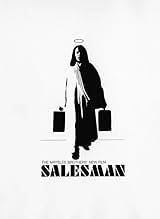
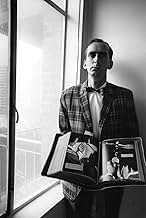
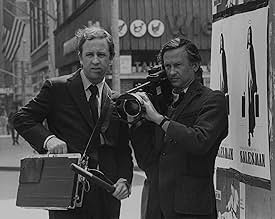
Four dogged door-to-door Bible salesmen travel from Boston to Florida on a seemingly futile quest to sell luxury editions of the Good Book to working-class Catholics.Four dogged door-to-door Bible salesmen travel from Boston to Florida on a seemingly futile quest to sell luxury editions of the Good Book to working-class Catholics.Four dogged door-to-door Bible salesmen travel from Boston to Florida on a seemingly futile quest to sell luxury editions of the Good Book to working-class Catholics.
- Awards
- 4 wins total



7.66K
1
2
3
4
5
6
7
8
9
10
Featured reviews
Death of a Salesman meets Glengarry Glen Ross
Documentaries are a fairly pervasive genre in today's culture, and an increasing trend is to manipulate the footage in order to further the authentication of one's thesis. Albert and David Maysles' 1969 documentary 'Salesman' however, turns an unflinching eye on its' subjects, sometimes with unnerving and disturbing results.
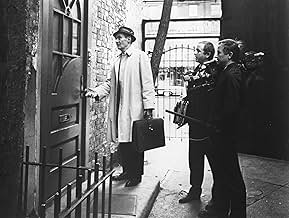
'Salesman' follows four door-to-door high-end bible salesmen as they travel around the country. The four men have nicknames they've given each other, all describing their sales approach: The Rabbit, The Badger, The Gipper and The Bull. We hear most from The Badger (Paul Brennan) as he takes his leads and tries to pull himself out of a sales slump. The leads that most of the salesmen follow end up being poor Catholic families who can't even afford a dollar a week payment, but are at times talked into it anyway by the sales tactics these men employ.
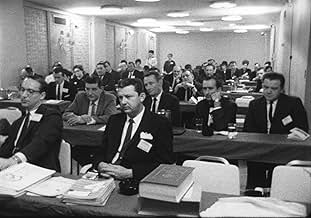
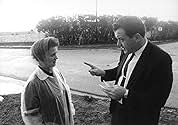
The Maysles give us an absolutely fascinating look at the world of door-to-door sales, but it is also a disturbing door to open. The pressure that the salesmen use when trying to sell the product, and the struggle that the prospects exhibit, is difficult to watch. In one scene, Brennan goes to the door of a recent customer to pick up their down payment for another of the salesmen and pretty much refuses to take 'No' for an answer, telling her that he's the salesman's boss and is going to have to dock him a fee if she cancels the sale, eventually guilting this family who clearly cannot take on another installment payment into going on with the sale. On the other hand, we also see sales meetings where the pressure is turned on the salesmen themselves, so it's clear that the threats of unemployment are a definite motivator.
I wondered throughout the film if David Mamet had seen this film and subsequently used it as inspiration for 'Glengarry Glen Ross'. From the sales meeting where the manager threatens the salesmen to the characters themselves, I saw several clear comparisons. Brennan is Lemmon's 'Shel' character to a tee, and I subsequently couldn't help chuckling at the image of The Simpsons' character 'Gil'. Whatever specific inspiration 'Salesman' has provided, it is clearly an important film that does not soften its edges. 7/10
'Salesman' follows four door-to-door high-end bible salesmen as they travel around the country. The four men have nicknames they've given each other, all describing their sales approach: The Rabbit, The Badger, The Gipper and The Bull. We hear most from The Badger (Paul Brennan) as he takes his leads and tries to pull himself out of a sales slump. The leads that most of the salesmen follow end up being poor Catholic families who can't even afford a dollar a week payment, but are at times talked into it anyway by the sales tactics these men employ.
The Maysles give us an absolutely fascinating look at the world of door-to-door sales, but it is also a disturbing door to open. The pressure that the salesmen use when trying to sell the product, and the struggle that the prospects exhibit, is difficult to watch. In one scene, Brennan goes to the door of a recent customer to pick up their down payment for another of the salesmen and pretty much refuses to take 'No' for an answer, telling her that he's the salesman's boss and is going to have to dock him a fee if she cancels the sale, eventually guilting this family who clearly cannot take on another installment payment into going on with the sale. On the other hand, we also see sales meetings where the pressure is turned on the salesmen themselves, so it's clear that the threats of unemployment are a definite motivator.
I wondered throughout the film if David Mamet had seen this film and subsequently used it as inspiration for 'Glengarry Glen Ross'. From the sales meeting where the manager threatens the salesmen to the characters themselves, I saw several clear comparisons. Brennan is Lemmon's 'Shel' character to a tee, and I subsequently couldn't help chuckling at the image of The Simpsons' character 'Gil'. Whatever specific inspiration 'Salesman' has provided, it is clearly an important film that does not soften its edges. 7/10
The Real Life of the Door to Door Salesman
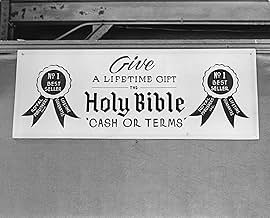
"Salesman" documents the activities of Bible salesmen as they go on the road to sell their wares to "leads" garnered from Catholic churches. It's a tough life, especially when many prospects cannot afford the cost of these illustrated Bibles.
It is difficult not to compare this film to Mamet's "Glengarry Glen Ross". It details the hardships and humiliations of men who earn their egos through sales. Anyone who has ever sold a product door to door can relate to this film.
The transparent sales techniques. The smug sales aphorisms. The roller-coaster ride from day to day. It is all there.
It is easy to draw conclusions or morals from this documentary. The most obvious refers to the soul-sucking depression that comes from spending your life doing something you do not enjoy or believe in.
As a time capsule of life in the late 60s, the film is enjoyable. Seeing everyone smoking cigarettes nonstop, for example, is a reminder of how things have changed.
It is difficult not to compare this film to Mamet's "Glengarry Glen Ross". It details the hardships and humiliations of men who earn their egos through sales. Anyone who has ever sold a product door to door can relate to this film.
The transparent sales techniques. The smug sales aphorisms. The roller-coaster ride from day to day. It is all there.
It is easy to draw conclusions or morals from this documentary. The most obvious refers to the soul-sucking depression that comes from spending your life doing something you do not enjoy or believe in.
As a time capsule of life in the late 60s, the film is enjoyable. Seeing everyone smoking cigarettes nonstop, for example, is a reminder of how things have changed.
A time capsule
A 1969 documentary about a group of salesman selling bibles to the masses. It's probably most interesting because you see how people lived and worked 40 years ago. The salesmen themselves are interesting but so are the people they meet. Of course they use every trick in their book to sell their bibles ("Did I tell you I'm an Irish catholic?"). Very interesting to see how these men worked in a job which is now very much gone. Alone on the road they share their misery and failings with their fellow salesmen who yawn and offer some half-hearted advice.
Salesman is a real version Glengary Glen Ross 25 years before that movie was made. What we have here is a time capsule of 1969. The decorations in the homes, the clothing, the cars, the way they talk, it's all pretty dated by today's standards. But it's interesting to see how people lived in 1969.
Salesman is a real version Glengary Glen Ross 25 years before that movie was made. What we have here is a time capsule of 1969. The decorations in the homes, the clothing, the cars, the way they talk, it's all pretty dated by today's standards. But it's interesting to see how people lived in 1969.
Could have been more then but the cold look at the sales business, the sellers and the potential buyers is well done and makes for engaging if rather downbeat entertainment
Paul Brennan is "The Badger". Charles McDevitt is "The Gipper". James Baker is "The Rabbit" and Raymond Martos is "The Bull". However this is not yet another British gangster film from Guy Ritchie but rather a fly-on-the-wall documentary following these four door-to-door bible salesman as they go about their trade and shoot the breeze with one another. Selling for as much as $40 per ornate book, the target audience are mostly poor catholic families who are given a hard sell before being offered a range of payment methods. In the middle of a sales slum, we follow Paul Brennan as he tries to break his losing streak.
Probably the worst job I have done wasn't that bad but was when I was a cleaner 7 mornings a week while also going through university. It felt worse because I also worked weekend evenings in a bar. However I would happily do either of those again if the only other option open to me was telephone or door-to-door sales because to me it is a soul-destroying job. I know some people can excel at it but others scrape by on their commissions, trying to force products onto others that they wouldn't buy themselves. This documentary confirms my thoughts on the job as we follow Paul Brennan on sales calls, conferences and sales meetings. Those familiar with Glengary Glenross will know where they are already and personally I kept seeing Brennan as the Gill character from the Simpsons, frantically just trying to get by. The film doesn't provide much more insight than that because it is very much a fly-on-the-wall affair that lets the characters speak for themselves.
By doing this it lays bare the approach of the sales game. It is depressing for several reasons and it made me feel sympathy for Brennan as often as I felt repulsed by him. He doesn't care about those he is selling to and he lies, applies pressure and guilts his marks into buying something they don't need and often don't actually want. But it is easy to feel for him because he is doing a job. I have never had someone coming door-to-door astonish me with a service or product that I suddenly wanted, especially nowadays, if you want it and can afford it, you probably already have it, but the sales staff still need to sell and Brennan's way is the most basic approach. The Maysles brothers wisely stay out of the way and I was quite amazed at how unobtrusive their camera was even when the sales were in relatively confined rooms.
Overall this is a rather depressing film that could have had more in the way of insight but does well to stand back and just observe. Modern documentaries often lose that so in a way it was refreshing not to have talking heads throughout the footage. Could have been more then but the cold look at the sales business, the sellers and the potential buyers is well done and makes for engaging if rather downbeat entertainment.
Probably the worst job I have done wasn't that bad but was when I was a cleaner 7 mornings a week while also going through university. It felt worse because I also worked weekend evenings in a bar. However I would happily do either of those again if the only other option open to me was telephone or door-to-door sales because to me it is a soul-destroying job. I know some people can excel at it but others scrape by on their commissions, trying to force products onto others that they wouldn't buy themselves. This documentary confirms my thoughts on the job as we follow Paul Brennan on sales calls, conferences and sales meetings. Those familiar with Glengary Glenross will know where they are already and personally I kept seeing Brennan as the Gill character from the Simpsons, frantically just trying to get by. The film doesn't provide much more insight than that because it is very much a fly-on-the-wall affair that lets the characters speak for themselves.
By doing this it lays bare the approach of the sales game. It is depressing for several reasons and it made me feel sympathy for Brennan as often as I felt repulsed by him. He doesn't care about those he is selling to and he lies, applies pressure and guilts his marks into buying something they don't need and often don't actually want. But it is easy to feel for him because he is doing a job. I have never had someone coming door-to-door astonish me with a service or product that I suddenly wanted, especially nowadays, if you want it and can afford it, you probably already have it, but the sales staff still need to sell and Brennan's way is the most basic approach. The Maysles brothers wisely stay out of the way and I was quite amazed at how unobtrusive their camera was even when the sales were in relatively confined rooms.
Overall this is a rather depressing film that could have had more in the way of insight but does well to stand back and just observe. Modern documentaries often lose that so in a way it was refreshing not to have talking heads throughout the footage. Could have been more then but the cold look at the sales business, the sellers and the potential buyers is well done and makes for engaging if rather downbeat entertainment.
Desperation is painful to watch...
From the Maysles Brothers (Gimme Shelter, Monterey Pop, When We Were Kings) comes this unsettling portrait of door-to-door salesmen. In this case, the film is especially interesting since they're selling Bibles to Catholic families. All the sales tricks are there, with a special dose of guilt. Most interesting is the portrayal of Paul, one of the older salesmen, who is realizing he may have "lost it." His desperation is painful to watch. (9/ 10)


Did you know
- Trivia49.95 U.S. Dollars (which is what the Bibles sold by the salesmen cost in 1965-66, the time of the movie) is the equivalent of about $500 in 2025.
- ConnectionsFeatured in Camera Three: Direct Cinema: Part 1 (1969)
- How long is Salesman?Powered by Alexa
Details
- Release date
- Country of origin
- Official sites
- Language
- Also known as
- The Maysles Brothers' Salesman
- Filming locations
- Auburn, Massachusetts, USA(The Yankee Drummer Inn)
- Production company
- See more company credits at IMDbPro
Box office
- Budget
- $105,000 (estimated)
- Runtime
- 1h 31m(91 min)
- Color
- Sound mix
- Aspect ratio
- 1.37 : 1
Contribute to this page
Suggest an edit or add missing content