Two American college friends, traveling in Europe near the Mediterranean, meet and fall for a charming English tourist. However, they agree not to test their friendship and just be friends w... Read allTwo American college friends, traveling in Europe near the Mediterranean, meet and fall for a charming English tourist. However, they agree not to test their friendship and just be friends with her. Soon, reality kicks in.Two American college friends, traveling in Europe near the Mediterranean, meet and fall for a charming English tourist. However, they agree not to test their friendship and just be friends with her. Soon, reality kicks in.
- Director
- Writers
- All cast & crew
- Production, box office & more at IMDbPro
5.7386
1
2
3
4
5
6
7
8
9
10
Featured reviews
A gentle and well told tale of youthful ideals and yearning
This film wears well since the story is an age old one. So nice to see the young Sam Waterston and Charlotte Rampling in very picturesque european locations.What happened to Robie Porter? Two male friends in Europe meet a beautiful English girl who then travels with them on their summer tour (many young Americans did this in the sixties in Europe) One, Sam Waterston, is an idealist about love, falling for Rampling, but keeping a promise to his friend that everything has to be kept platonic for the three to survive as a group. Rampling needs the attractive company but also wants a physical relationship which Porter, at the end, gives to her. Waterston realises the magic of the threesome is broken and gives up the the romantic thoughts of studying in Paris and breaks away to return home. Thoughtful and well told, more through subtle actions than words.
Two college buddies in the late 60s tour Europe with an enchanting woman they meet along the way.
I didn't catch up to this film until thirty years after the fact, but I was pulled in by its simple, elegant emotional resonance. This is a pretty young Sam Waterston. Though the plot is rife with potential rivalries over Charlotte Rampling, the film lays an astute and well-observed tale about friendship over a road film and, happily, these guys aren't ugly Americans, and even make an attempt to try to speak the languages along the way. Wonderful, spare location photography. I started watching it out of morbid interest, but ended up being lulled by that heart ache and yearning at the center of a vacation and adventure movie.
Great scenery, so-so story
Story of two college buddys who are touring through Europe and meet a beautiful woman and of course they both vie for her affections. She of course likes both of them! The sites are beautiful and actually are important to the story. The scenery and Charlotte Rampling are both beautiful and mysterious and Sam Waterston has a difficult time accepting both for what they are. I guess this is the moral dilemma that the characters must ponder! Lots of shots of the characters doing nothing! Extetended scenes of them eating, drinking and just walking and looking around. The pace of the film is very slow and it seems deliberate. The director seems to want us to feel what its like to be consumed by the scenery and elements. I guess its effective, but I'm not sure how interesting it is.
A summer abroad, with a broad
This is one of those movies from the late 1960s and early 1970s in which young characters ramble around the country (or in this case, Western Europe) vaguely trying to "find themselves" and experiencing even vaguer interpersonal conflicts. A very young Sam Waterston and the more conventionally handsome Robie Porter (an Australiian pop performer who soon left acting to go back to music, particularly as a very successful producer) play American best friends touring "the Continent") for a summer before differing responsibilities (including the draft) will call them back home. They meet Charlotte Rampling, a worldly, directionless and faintly bored young woman who "sort of" lives in Paris, and is likewise just kicking around. The three agree to travel together for a time--strictly platonically, with the two men vowing not to become rivals over her.
Of course, that plan doesn't really work out. But neither does much real conflict arise in "Three," which is intelligently crafted and acted but simply has little narrative drive or psychological depth to bolster its attractive locations and photography. Yes, Rampling (who apparently was unhappy at finding herself working on such a small movie right after Visconti's "The Damned") looks gorgeous, and the two male actors are appealing. (As for the claims of Waterston being full- frontal nude, however, either I blinked and missed it, or that shot was excised from the print I saw.) But there's just not much going on here. The film's rather tepid stab at "offbeat" isn't helped by still-active (at 90!) Laurence Rosenthal's score, which in a typical move for the era drapes a movie that could use more flavor in nicely composed yet very conventional orchestral soundtrack fodder.
Like other, similar rare movies of the era (say, "Thumb Tripping"), this one is worth seeing if you've always been curious about it (it's been very hard to see since it's original release), but it's not exactly a major rediscovery. You can see why it stirred little critical or commercial interest at the time. It was the only film directed by novelist and scenarist James Salter.
Of course, that plan doesn't really work out. But neither does much real conflict arise in "Three," which is intelligently crafted and acted but simply has little narrative drive or psychological depth to bolster its attractive locations and photography. Yes, Rampling (who apparently was unhappy at finding herself working on such a small movie right after Visconti's "The Damned") looks gorgeous, and the two male actors are appealing. (As for the claims of Waterston being full- frontal nude, however, either I blinked and missed it, or that shot was excised from the print I saw.) But there's just not much going on here. The film's rather tepid stab at "offbeat" isn't helped by still-active (at 90!) Laurence Rosenthal's score, which in a typical move for the era drapes a movie that could use more flavor in nicely composed yet very conventional orchestral soundtrack fodder.
Like other, similar rare movies of the era (say, "Thumb Tripping"), this one is worth seeing if you've always been curious about it (it's been very hard to see since it's original release), but it's not exactly a major rediscovery. You can see why it stirred little critical or commercial interest at the time. It was the only film directed by novelist and scenarist James Salter.
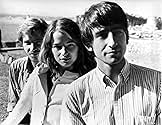
Three for the Road in an Endless Summer
Two young American students (Bert played by Robie Porter, and Taylor played by Sam Waterston) meet an intriguing young woman while on their vacation in Europe.
What follows is a contemplation on the passage of youth and a tribute to those periods of time in one's life when there is a temptation to disengage from life's responsibilities and dwell in an aimless pursuit of pleasure.
The photography and the scenery are beautiful and full of a fin d'ete quality. The camera lingers on the three young people, who wander in search of the next town, the next experience, something to vanquish boredom, while reveling in idleness. Marty (Charlotte Rampling) is the focus of the men's attentions, but the film centers on Taylor, who Waterston portrays as full of eagerness, self-doubt, and lack of guile, reminiscent of a young Anthony Perkins. He tries to free himself from the conventions of (American) society, but they are too deeply ingrained.
Though the messages of the film might be personal to the viewer, I think it does capture a moment in life that many can identify with. And as someone who was around to experience 1969 (when the film was released), I think it captures the mood of the times and reminds one of the choices available, remembering that the military draft was a reality that hung over the heads of all male college students.
What follows is a contemplation on the passage of youth and a tribute to those periods of time in one's life when there is a temptation to disengage from life's responsibilities and dwell in an aimless pursuit of pleasure.
The photography and the scenery are beautiful and full of a fin d'ete quality. The camera lingers on the three young people, who wander in search of the next town, the next experience, something to vanquish boredom, while reveling in idleness. Marty (Charlotte Rampling) is the focus of the men's attentions, but the film centers on Taylor, who Waterston portrays as full of eagerness, self-doubt, and lack of guile, reminiscent of a young Anthony Perkins. He tries to free himself from the conventions of (American) society, but they are too deeply ingrained.
Though the messages of the film might be personal to the viewer, I think it does capture a moment in life that many can identify with. And as someone who was around to experience 1969 (when the film was released), I think it captures the mood of the times and reminds one of the choices available, remembering that the military draft was a reality that hung over the heads of all male college students.
Did you know
- TriviaFilm debut of Robie Porter.
- ConnectionsReferences To Catch a Thief (1955)
- How long is Three?Powered by Alexa
Details
- Runtime
- 1h 44m(104 min)
- Sound mix
Contribute to this page
Suggest an edit or add missing content