IMDb RATING
4.8/10
1.1K
YOUR RATING


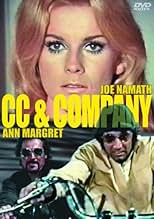
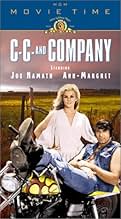
A motorcycle rebel saves a woman from his gang and fights an outlaw guru for supremacy.A motorcycle rebel saves a woman from his gang and fights an outlaw guru for supremacy.A motorcycle rebel saves a woman from his gang and fights an outlaw guru for supremacy.


Jacquie Rohr
- Zit-Zit
- (as Jackie Rohr)


Bill Baldwin
- Night Watchman
- (as William Baldwin)

- Director
- Writer
- All cast & crew
- Production, box office & more at IMDbPro
4.81.1K
1
2
3
4
5
6
7
8
9
10
Featured reviews
William Smith shines as the "bad guy."
While Joe Namath was likeable in his role, William Smith, who made a living mostly playing "bad guys" in many B pictures, gave the best performance in this movie. Smith looked like a biker, unlike Namath. He was nasty, grizzled, and mean. Just what you would expect from a "Hells Angel." With an R rating it would have been nice to see a little more skin (especially on a young Ann Margret) but the movie is worth seeing anyway.
We Liked it in the 1970s
Largely forgotten now, this movie was viewed by a lot of people in the 1970s. Parents saw it, mainly for Ann Margeret, in movie theaters during its 1st run, older kids caught it, mainly for Joe Namath, during its drive-in run and all us youngsters saw it when it made it's way to TV in the mid-1970s. I remember it fondly.
A product of a by gone era, it's really not as bad as some have made it out to be. Worth it for the novelty of Joe Namath and the 1970s cheese factor alone. Broadway Joe isn't really half bad because he did have tremendous charisma and a screen presence which somewhat compensates for his lack of acting chops. Plus as his adversary, we have quintessential 1970s bad guy, William Smith (the unforgettable Falconetti from Rich Man, Poor Man mini series or bad-ass Jack Wilson in Clint Eastwood's Any Which Way You Can) who turns in a fine performance. Throw in Sid Haig, Crispin Glover's father Bruce (of Diamond's Are Forever fame) and a delightfully campy performance from Teda Bracci and you have a pretty memorable Biker gang.
I wonder if Ann Margret and her husband originally thought of Elvis for the title role because this film is similar to many of his mid-sixties on screen personas (misunderstood rebel woos wary girl, defeats opposition in race at end). Fortunately for Elvis, his career, unlike Miss Margret's at the time, had just been spectacularly reignited with his TV Comeback Special and Vegas headlining. Anyway, Ann always possessed a great screen presence of her own; enough, along with all the outdoor scenery, to keep the viewer interested.
I think if you take this movie for what it is, a mindless artifact of late 1960s/early 1970s culture starring one of that era's biggest icons, you won't regret having spent 90 mins. watching it on a dreary Saturday afternoon.
A product of a by gone era, it's really not as bad as some have made it out to be. Worth it for the novelty of Joe Namath and the 1970s cheese factor alone. Broadway Joe isn't really half bad because he did have tremendous charisma and a screen presence which somewhat compensates for his lack of acting chops. Plus as his adversary, we have quintessential 1970s bad guy, William Smith (the unforgettable Falconetti from Rich Man, Poor Man mini series or bad-ass Jack Wilson in Clint Eastwood's Any Which Way You Can) who turns in a fine performance. Throw in Sid Haig, Crispin Glover's father Bruce (of Diamond's Are Forever fame) and a delightfully campy performance from Teda Bracci and you have a pretty memorable Biker gang.
I wonder if Ann Margret and her husband originally thought of Elvis for the title role because this film is similar to many of his mid-sixties on screen personas (misunderstood rebel woos wary girl, defeats opposition in race at end). Fortunately for Elvis, his career, unlike Miss Margret's at the time, had just been spectacularly reignited with his TV Comeback Special and Vegas headlining. Anyway, Ann always possessed a great screen presence of her own; enough, along with all the outdoor scenery, to keep the viewer interested.
I think if you take this movie for what it is, a mindless artifact of late 1960s/early 1970s culture starring one of that era's biggest icons, you won't regret having spent 90 mins. watching it on a dreary Saturday afternoon.
Decent "bad but good" biker flick
As far as low budget biker films go, "C.C. and Company" definitely makes enjoyable viewing for a number of reasons. Of course, the main reason is Joe Namath, who fumbles (bad pun), stumbles and basically sleep walks (I guess he simply cannot act) through this abomination of the "so bad it's good" variety. Watching Joe in this film now is rather funny, because you wonder what he was thinking in even signing to do this movie, hoping to have some sort of film career.
Of course there is also Ann-Margaret, who is very good looking, but she isn't much in the acting department either. Actually it's safe to say that the two big names in this flick are the film's worst actors, and you can almost fall asleep in the scenes where it's just Joe and Ann. Everyone else, dare I say, seems to be having a lot more fun making this movie, especially the leader of The Heads, Joe's biker gang. He's the most fun to watch, especially when he's mad at 'ol Joe for not giving all his money into the biker "pot."
There's some good bike action, especially the final showdown between Joe and the Heads' leader on a track. Tons of cheesy scenes abound, but it's all a lot of fun. It's funny how in almost all these old biker films, many of the bikers are of the "goofy" type, and do things like carry each other in their arms. Even the big chair the leader gets to sit in looks funny. Many of the biker girls are pretty, especially when they go out on the road to "earn" some cash for the gang's money pot.
It was especially good to see this film in it's original "R" rated uncut form, after a bunch of times watching as a kid on TV in the 70's.
I found "C.C. and Company" on a DVD with two other 1971 biker flicks, "Evel Knievel" and "Angels Hard As They Come" (Gary Busey's first flick) for less than ten dollars, talk about a great bargain! The DVD was called "Classic Biker Movies" and is a definitely great deal. Even the quality was pretty decent.
I wonder how 'ol Joe feels about this flick now. No doubt he'd probably be up for a sequel!
Of course there is also Ann-Margaret, who is very good looking, but she isn't much in the acting department either. Actually it's safe to say that the two big names in this flick are the film's worst actors, and you can almost fall asleep in the scenes where it's just Joe and Ann. Everyone else, dare I say, seems to be having a lot more fun making this movie, especially the leader of The Heads, Joe's biker gang. He's the most fun to watch, especially when he's mad at 'ol Joe for not giving all his money into the biker "pot."
There's some good bike action, especially the final showdown between Joe and the Heads' leader on a track. Tons of cheesy scenes abound, but it's all a lot of fun. It's funny how in almost all these old biker films, many of the bikers are of the "goofy" type, and do things like carry each other in their arms. Even the big chair the leader gets to sit in looks funny. Many of the biker girls are pretty, especially when they go out on the road to "earn" some cash for the gang's money pot.
It was especially good to see this film in it's original "R" rated uncut form, after a bunch of times watching as a kid on TV in the 70's.
I found "C.C. and Company" on a DVD with two other 1971 biker flicks, "Evel Knievel" and "Angels Hard As They Come" (Gary Busey's first flick) for less than ten dollars, talk about a great bargain! The DVD was called "Classic Biker Movies" and is a definitely great deal. Even the quality was pretty decent.
I wonder how 'ol Joe feels about this flick now. No doubt he'd probably be up for a sequel!
"Those characters over there - that's what gives motorcyling a bad name."
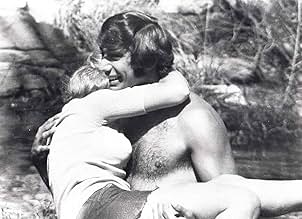
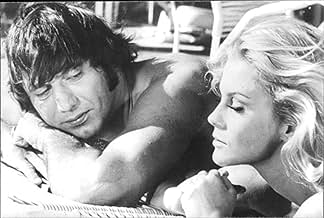
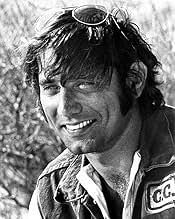
C.C. Ryder (Joe Namath), a motorcycle mechanic, is a somewhat reluctant member of an outlaw biker gang known as The Head. By accident, he meets a fashion photographer, Ann McCalley (Ann-Margret), and saves her from the other members of his gang. C.C. falls for Ann, but realizes he'll have to leave the gang if he is to win her over. C.C. enters and wins a dirt bike race, giving him the funds he needs to strike out on his own and pursue Ann. But gang leader Moon (William Smith) doesn't see it that way. He wants C.C.'s money for his own and goes after Ann to prove his point. C.C. will have to defeat Moon if he is to be free of The Head.
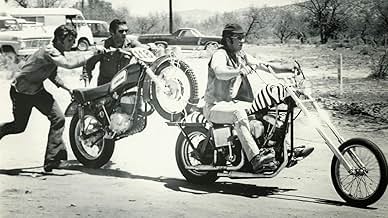
Given its relatively poor online reputation, I'm as shocked as anyone by how much I enjoyed C.C. and Company. The movie just clicked with me and worked quite nicely. Director Seymour Robbie may have been mainly a television director, but I felt he handled this transition to film very professionally. C.C. and Company is well-paced with plenty of sight gags and fight scenes that work as intended. For example, the scene where C.C. steals the dirt bike is really cleverly handled. The shot of him towing the dirt bike behind his chopper was a real kick. As for fight scenes, the fight between C.C. and Moon in the creek is really well choreographed and filmed. It's a solid action piece. Robbie also manages to throw in some menacing set-pieces, none more so than the kidnap of Ann. Again, nicely done.
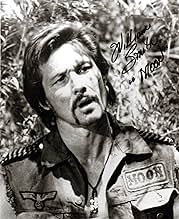
The acting in C.C. and Company is also a highlight. I wasn't expecting much from Namath, but he gives a reasonably competent performance. In a lot of scenes he's not asked to do much more than sit on his bike and smile, but when challenged, he's more than capable. Ann-Margret is Ann-Margret and gives the performance you expect. The chemistry she had with Namath seemed natural and easy. The real star for me, however, is William Smith. He plays Moon as a hulking, menacing presence capable of snapping at a moment's notice. He's always struck me as a wonderful actor and, here, he really gets a chance to shine.
As I said near the start of this, I enjoyed C.C. and Company more than most. I was entertained throughout and that's all I ask of a film. A solid 7/10 from me.
Given its relatively poor online reputation, I'm as shocked as anyone by how much I enjoyed C.C. and Company. The movie just clicked with me and worked quite nicely. Director Seymour Robbie may have been mainly a television director, but I felt he handled this transition to film very professionally. C.C. and Company is well-paced with plenty of sight gags and fight scenes that work as intended. For example, the scene where C.C. steals the dirt bike is really cleverly handled. The shot of him towing the dirt bike behind his chopper was a real kick. As for fight scenes, the fight between C.C. and Moon in the creek is really well choreographed and filmed. It's a solid action piece. Robbie also manages to throw in some menacing set-pieces, none more so than the kidnap of Ann. Again, nicely done.
The acting in C.C. and Company is also a highlight. I wasn't expecting much from Namath, but he gives a reasonably competent performance. In a lot of scenes he's not asked to do much more than sit on his bike and smile, but when challenged, he's more than capable. Ann-Margret is Ann-Margret and gives the performance you expect. The chemistry she had with Namath seemed natural and easy. The real star for me, however, is William Smith. He plays Moon as a hulking, menacing presence capable of snapping at a moment's notice. He's always struck me as a wonderful actor and, here, he really gets a chance to shine.
As I said near the start of this, I enjoyed C.C. and Company more than most. I was entertained throughout and that's all I ask of a film. A solid 7/10 from me.
A Cultural Icon
As producers, Allen Carr and Roger Smith didn't know how to make movies but they did know how to market them. "C.C. and Company" (1970) was one of Smith's attempts to revive the acting and singing career of his wife Ann-Margret, whose American career had pretty much dried up in the mid-60's. So they looked around for a way to package the aging star in a vehicle they could profitably distribute.
They decided to capitalize of the huge popularity of the super bowl champion N.Y. Jets quarterback Broadway Joe Namath. If you were not around in 1969 you will have a hard time grasping the extent of Joe's popularity. At its peak he was probably the most popular sports figure of all time and he single-handedly transformed NFL viewing from a men's club to a mixed gender group. In "C.C. and Company" Joe doesn't act so much as just play his relaxed good- natured self in front of the camera. The film begins with its best sequence as Joe, playing an outlaw motorcycle club member named C. C. Ryder, is shown walking around inside a supermarket while casually assembling a sandwich from the various products on the shelves. After he eats the sandwich he helps himself to a Twinkie and a small carton of milk. Then he hits the checkout line with just a package of "Fruit Stripe" gum to pay for and exits the store. This might be film's only attempt at symbolism as the gas tank and rear fender of Joe's chopper are painted a zebra stripe pattern. Baby boomers may recall that "Fruit Stripe" gum commercials featured a zebra.
Carr and Smith (Smith also wrote the screenplay) chose to make an independent outlaw motorcycle picture, a sub-genre dominated by American International. While AI's films were normally distributed to drive-ins, Carr and Smith hoped to exploit the recent unexpected success of "Easy Rider"- a motorcycle movie that had played well in mainstream theaters. And this is just what they did with "C.C. and Company", using Avco Embassy to book the film into first-run theaters and into giving it extensive promotion. It would not play to drive-in audiences until 1971.
Joe delivers a lot of charm, some credible action sequences, and a scene where he actually exhibits some acting skill (or at least an awareness of the acting craft). This scene occurs early in the film when his club disrupts a moto-cross race. Joe is sitting on his bike watching the fun when he spots Ann looking on in shock. Joe wordlessly conveys a sudden embarrassment over the actions of his associates. The scene works, in part because of good editing, but also because Namath obviously understands the process.
The film was not a success for Ann-Margaret even though she gets to ride a mini-bike in one scene and sing a song ("Today" by Lenny Stack). She was a bit too old to keep playing the innocent girl who is also a sex kitten role, up till then her standard character. Without this to fall back on she seems lost trying to appear more sophisticated. In the looks-sexy department she is totally upstaged by biker chick Pom Pom-Jennifer Billingsley who I remember as the Driving Range attendant on an episode of "Ozzie and Harriet".
Upstaging everybody is William Smith (who played Texas Ranger Joe on the "Laredo" television show) as "Heads" leader Moon. Flexing his muscles, thanks to a sleeveless denim jacket, Smith pretty much steals the whole film. The seemingly virile Moon is a disappointment in the sack, which sets up a little action between Namath and Billingsley. The big fight between Smith and Namath is nicely staged but is really sold by frequent cut-away shots to the increasingly turned-on Pom Pom.
Also notable is Sid Haig who rides a traffic cop trike and wears a Mongol helmet. Lizard, the other trike rider, is "Mary Hartman's" Greg Mullavy, whose machine sports a toilet seat and the title "The Heads Head".
Largely forgotten now, at the time of its release "C.C. and Company" was a cultural icon. It was probably the most quoted 1970 film in schools and workplaces. The most immortal line being Moon's convoluted declaration to C.C. that: "We got the club here see and you are way over there". And just about everything that straight-arrow moto-cross racer Eddie Ellis (Don Chastain) said was an instant classic. "That's what gives motorcycling a bad name" and "You talking to me" (he said the line before Robert De Niro!).
Then again, what do I know? I'm only a child.
They decided to capitalize of the huge popularity of the super bowl champion N.Y. Jets quarterback Broadway Joe Namath. If you were not around in 1969 you will have a hard time grasping the extent of Joe's popularity. At its peak he was probably the most popular sports figure of all time and he single-handedly transformed NFL viewing from a men's club to a mixed gender group. In "C.C. and Company" Joe doesn't act so much as just play his relaxed good- natured self in front of the camera. The film begins with its best sequence as Joe, playing an outlaw motorcycle club member named C. C. Ryder, is shown walking around inside a supermarket while casually assembling a sandwich from the various products on the shelves. After he eats the sandwich he helps himself to a Twinkie and a small carton of milk. Then he hits the checkout line with just a package of "Fruit Stripe" gum to pay for and exits the store. This might be film's only attempt at symbolism as the gas tank and rear fender of Joe's chopper are painted a zebra stripe pattern. Baby boomers may recall that "Fruit Stripe" gum commercials featured a zebra.
Carr and Smith (Smith also wrote the screenplay) chose to make an independent outlaw motorcycle picture, a sub-genre dominated by American International. While AI's films were normally distributed to drive-ins, Carr and Smith hoped to exploit the recent unexpected success of "Easy Rider"- a motorcycle movie that had played well in mainstream theaters. And this is just what they did with "C.C. and Company", using Avco Embassy to book the film into first-run theaters and into giving it extensive promotion. It would not play to drive-in audiences until 1971.
Joe delivers a lot of charm, some credible action sequences, and a scene where he actually exhibits some acting skill (or at least an awareness of the acting craft). This scene occurs early in the film when his club disrupts a moto-cross race. Joe is sitting on his bike watching the fun when he spots Ann looking on in shock. Joe wordlessly conveys a sudden embarrassment over the actions of his associates. The scene works, in part because of good editing, but also because Namath obviously understands the process.
The film was not a success for Ann-Margaret even though she gets to ride a mini-bike in one scene and sing a song ("Today" by Lenny Stack). She was a bit too old to keep playing the innocent girl who is also a sex kitten role, up till then her standard character. Without this to fall back on she seems lost trying to appear more sophisticated. In the looks-sexy department she is totally upstaged by biker chick Pom Pom-Jennifer Billingsley who I remember as the Driving Range attendant on an episode of "Ozzie and Harriet".
Upstaging everybody is William Smith (who played Texas Ranger Joe on the "Laredo" television show) as "Heads" leader Moon. Flexing his muscles, thanks to a sleeveless denim jacket, Smith pretty much steals the whole film. The seemingly virile Moon is a disappointment in the sack, which sets up a little action between Namath and Billingsley. The big fight between Smith and Namath is nicely staged but is really sold by frequent cut-away shots to the increasingly turned-on Pom Pom.
Also notable is Sid Haig who rides a traffic cop trike and wears a Mongol helmet. Lizard, the other trike rider, is "Mary Hartman's" Greg Mullavy, whose machine sports a toilet seat and the title "The Heads Head".
Largely forgotten now, at the time of its release "C.C. and Company" was a cultural icon. It was probably the most quoted 1970 film in schools and workplaces. The most immortal line being Moon's convoluted declaration to C.C. that: "We got the club here see and you are way over there". And just about everything that straight-arrow moto-cross racer Eddie Ellis (Don Chastain) said was an instant classic. "That's what gives motorcycling a bad name" and "You talking to me" (he said the line before Robert De Niro!).
Then again, what do I know? I'm only a child.


Did you know
- TriviaThe #12 given to Joe Namath ("CC") for the Moto X Race is the same number he wore on his jersey with the NY Jets.
- GoofsIn a scene where C.C. kicks starts his dirt bike you hear the engine rev-up but his hand never moves the throttle.
- Quotes
Ann McCalley: How do you get along without working?
C.C. Ryder: Just fine.
Ann McCalley: [laughs] You steal from the rich to give to the poor?
C.C. Ryder: No, I steal from the rich 'cause the poor have no money.
- ConnectionsFeatured in The Fabulous Allan Carr (2017)
- SoundtracksToday
The Love Theme from C.C. & Company (1970)
by Lenny Stack and Janelle Webb (as Janelle Cohen)
Sung by Ann-Margret
- How long is C.C. & Company?Powered by Alexa
Details
- Release date
- Country of origin
- Language
- Also known as
- C. C. y compañía
- Filming locations
- 4868 East 22nd Street, Tucson, Arizona, USA(where C.C. "buys" a motocross motorcycle)
- Production companies
- See more company credits at IMDbPro
Contribute to this page
Suggest an edit or add missing content