IMDb RATING
5.8/10
819
YOUR RATING

Set in a future in which children have overthrown adults, the film does not have a central narrative. It depicts a series of graphic tableaux in which children engage in cruel and abusive ac... Read allSet in a future in which children have overthrown adults, the film does not have a central narrative. It depicts a series of graphic tableaux in which children engage in cruel and abusive acts against the adults.Set in a future in which children have overthrown adults, the film does not have a central narrative. It depicts a series of graphic tableaux in which children engage in cruel and abusive acts against the adults.




- Director
- Writer
- All cast & crew
- Production, box office & more at IMDbPro
5.8819
1
2
3
4
5
6
7
8
9
10
Featured reviews
Sick movie for sick people
I had read this was an experimental, controversial and interesting movie so I decided to watch it. What I found was a sick movie probably made by and for sick people. It's literally a torture. I don't mind about the nude children, but this was a bunch of stupid and random sequences put together. No writing, no direction... At some point I chose to put the x2 fast forward. At least I could get some laughs that way. Do film makers know movies are made for entertainment? And I don't mean comedy, I mean entertainment! And don't give me that "you didn't get the depth message" crap. I am sure even children in YouTube make better films.
Don't waste your time. If you want a good experimental surrealist film go and watch Eraserhead.
Don't waste your time. If you want a good experimental surrealist film go and watch Eraserhead.
The Subversive Nature of The Tomato Ketchup
Shuji Terayama already had a reputation as a playwright and poet, but he decided to venture into filmmaking in 1964 with the short film "The Cage." In 1971, he and his theater group and associated artists, Tenjo Sajiki (The Curtain of Heaven), collaborated on a series of sketches with no factual connection other than the creation of a dystopian universe revolving around a revolution waged by children against an adult world: "Emperor Tomato Ketchup." It was released in two versions: a 30-minute short film and a longer, more complete 72-minute feature film - which has also spawned another short, "The War of Jan-Ken-Poh." I will focus here on the original feature film.
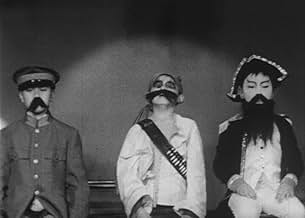
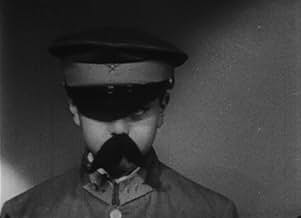
It's not a film for minors, much less for the most prudish, rule-shaving, and authoritarian. It's a cruel satire of authoritarianism in any form or stance. Terayama's poetics are of cruel satires, bringing an extreme perspective on revolutions triggered by totalitarian attitudes that, in reality, is that of adult infantilism. "Emperor Tomato Ketchup" is accurate in its critique, but highly controversial and questionable in its subversion. Everyone talks about the eroticization of children here - the "sexual" initiation that, in reality, is nothing more than a game without actually getting really sexual, while filmed in one long single take... but what about the decapitation of a chicken by a dwarf? And the crazy and comical jan-ken-po war, with actors deliberately injuring each other? (A brilliant single take, too.) And the child cosplaying as a dictator, begging a geisha for breast milk, to the sound of Franz Schubert's "Serenade"? (This is, for me, the best scene in the film and where the entire narrative axis of the film lies.)
Contrary to some detractors, I don't consider this a film that encourages pedophilia or child-porn, as Terayama's direction shows no intention to corrupt the children's spontaneous actions with or without adult presence. They are portrayed in a completely free, playful manner, clearly playing in front of the camera, following minimal instructions from the director. Terayama has a perfectly clear sense of theatrical guidance for his older actors, but the children here are clearly non-professional actors - or rather, they are not actors at all.
I believe this surrealist film is not merely a sardonic political commentary on the infantile nature of revolutions, while potentially aiming to respond to May 1968 and the countercultural movement that was spreading in Japan. I believe this is a highly relevant film for the debate on the very adultification of children that has been happening today (or always), unfortunately spread through social media. And there are good reasons for this. "Emperor Tomato Ketchup" is a fiercely ironic and incredibly visionary warning AGAINST the adultification of children made more than 50 years ago. And it is an unparalleled and unrepeatable effort.
I believe that, behind Terayama's subversive actions in this first feature, there are autobiographical motivations that he will reiterate and deepen thematically in even better produced and accomplished films, such as "Throw Away Your Books, Let's Go to the Streets" or "Pastoral: To Die in the Countryside."
It's not a film for minors, much less for the most prudish, rule-shaving, and authoritarian. It's a cruel satire of authoritarianism in any form or stance. Terayama's poetics are of cruel satires, bringing an extreme perspective on revolutions triggered by totalitarian attitudes that, in reality, is that of adult infantilism. "Emperor Tomato Ketchup" is accurate in its critique, but highly controversial and questionable in its subversion. Everyone talks about the eroticization of children here - the "sexual" initiation that, in reality, is nothing more than a game without actually getting really sexual, while filmed in one long single take... but what about the decapitation of a chicken by a dwarf? And the crazy and comical jan-ken-po war, with actors deliberately injuring each other? (A brilliant single take, too.) And the child cosplaying as a dictator, begging a geisha for breast milk, to the sound of Franz Schubert's "Serenade"? (This is, for me, the best scene in the film and where the entire narrative axis of the film lies.)
Contrary to some detractors, I don't consider this a film that encourages pedophilia or child-porn, as Terayama's direction shows no intention to corrupt the children's spontaneous actions with or without adult presence. They are portrayed in a completely free, playful manner, clearly playing in front of the camera, following minimal instructions from the director. Terayama has a perfectly clear sense of theatrical guidance for his older actors, but the children here are clearly non-professional actors - or rather, they are not actors at all.
I believe this surrealist film is not merely a sardonic political commentary on the infantile nature of revolutions, while potentially aiming to respond to May 1968 and the countercultural movement that was spreading in Japan. I believe this is a highly relevant film for the debate on the very adultification of children that has been happening today (or always), unfortunately spread through social media. And there are good reasons for this. "Emperor Tomato Ketchup" is a fiercely ironic and incredibly visionary warning AGAINST the adultification of children made more than 50 years ago. And it is an unparalleled and unrepeatable effort.
I believe that, behind Terayama's subversive actions in this first feature, there are autobiographical motivations that he will reiterate and deepen thematically in even better produced and accomplished films, such as "Throw Away Your Books, Let's Go to the Streets" or "Pastoral: To Die in the Countryside."
In reply to Vocklabruck...
And I quote... "Do film makers know movies are made for entertainment? And I don't mean comedy, I mean entertainment!"
That is THE most ignorant, most INSULTING comment one could ever write about the possibilities of the "septieme art"! I'm baffled! Literally BAFFLED by your post! *sigh*
I personally haven't seen this film and it could very well be garbage, but it won't be because it's not "entertaining". What is it with people and "entertainment"? The very word has taken on a negative connotation in my book because of all you people who have become accustomed to "fast food films". As if it were a requirement for good cinema. PLEASE!
That is THE most ignorant, most INSULTING comment one could ever write about the possibilities of the "septieme art"! I'm baffled! Literally BAFFLED by your post! *sigh*
I personally haven't seen this film and it could very well be garbage, but it won't be because it's not "entertaining". What is it with people and "entertainment"? The very word has taken on a negative connotation in my book because of all you people who have become accustomed to "fast food films". As if it were a requirement for good cinema. PLEASE!
Strange, political, experimental, Yes, child porn, NO
In the post-war period Japan there was a new constitution which guaranteed new rights in terms of freedom of expression similar to those in the US, even arguably more "free". As a result experimental cinema blossomed and decreasing financial boundaries for entry into film-making allowed a renaissance in artistic and experimental cinema. Far from offensive, Emperor Tomato Ketchup uses the canvas of the moving image to explore political (anarchist movements), social issues, and sexual issues but at no point are the scenes intended for sexual stimulation. In fact the scenes which contain nudity do include a mature woman and young teenage boy, but what take place is not actual sex but more a nudist/naturalist depiction of humanity and playfulness. This film is not a depiction of reality but rather, befitting an avant garde film, the creation of another world where extremes and strangeness exist to point out issues in own own reality. Without experimental film there is no new film.
The director should be physically abused
I found this at the West Coast Video in Pittsburg in the middle of a shelf marked "Five Seconds To Live." The synopsis on the back seemed interesting and the guy behind the counter highly recommended it. If I ever see him again, I will shoot him in the throat for saying that.
SUMMARY: This cult B&W Japanese film from the 1970s analyzes the result of a colony in which children overthrow the control of their parents and attempt to form a new society. Their plan spirals out of control and they are soon lost in a web of sexual deviation and violence.
At least that's what I'd like to think it was about.
OKAY NOW, forget what you've seen on Mystery Science Theater 3000; this is quite simply the worst movie I have ever seen. If you have ever wondered what it would look like if you took a bunch of random video clips of absolutely ANYTHING, put them together in an editing program, and pressed a button called "Create Movie," you would get something along the lines of Emperor Tomato Ketchup.
I do not mean to say that this movie is not interesting, by all means it absolutely is. I mean, if you consider the dancing old woman in the field who has about 20 minutes of uninterrupted screen time from a single camera shot, the naked children stuffed into closets, a midget decapitating a chicken, two men playing Rock-Paper-Scissors and physically injuring the loser in various ways over the course of another 20 minutes, and the disgusting abundance of child pornography, it is quite possibly the most interesting video I've seen in a while. But bear in mind that "interesting" and "good" are not synonymous. On many levels, the directors, actors, and all involved, regardless of whatever socio-political significance this movie attempted to create, should be physically abused for making this movie.
If you have the patience, enjoy it in whatever way "enjoy" applies to anything involved in the viewing of this bizarre film, though I recommend making use of your DVDs scan rate to watch this in AT LEAST 8x speed for maximum enjoyment. If not, then you're probably better off that way.
Note: For the record, there are two versions: only black-and-white which is under 30 minutes, another just under 60 in poor-quality sepia tone. They are both equally bad, though it's best to watch them back-to-back starting with the B&W one.
Interesting quirk though: my friend's West Coast Video account got revoked shortly afterward for returning this and another video late, in addition to renting this movie which was marked "Over 21 only" on the cover, despite how one of the clerks recommended it. Unfortunately, the "Who cares if you're 21? Child pornography's illegal for everyone!" argument didn't work.
SUMMARY: This cult B&W Japanese film from the 1970s analyzes the result of a colony in which children overthrow the control of their parents and attempt to form a new society. Their plan spirals out of control and they are soon lost in a web of sexual deviation and violence.
At least that's what I'd like to think it was about.
OKAY NOW, forget what you've seen on Mystery Science Theater 3000; this is quite simply the worst movie I have ever seen. If you have ever wondered what it would look like if you took a bunch of random video clips of absolutely ANYTHING, put them together in an editing program, and pressed a button called "Create Movie," you would get something along the lines of Emperor Tomato Ketchup.
I do not mean to say that this movie is not interesting, by all means it absolutely is. I mean, if you consider the dancing old woman in the field who has about 20 minutes of uninterrupted screen time from a single camera shot, the naked children stuffed into closets, a midget decapitating a chicken, two men playing Rock-Paper-Scissors and physically injuring the loser in various ways over the course of another 20 minutes, and the disgusting abundance of child pornography, it is quite possibly the most interesting video I've seen in a while. But bear in mind that "interesting" and "good" are not synonymous. On many levels, the directors, actors, and all involved, regardless of whatever socio-political significance this movie attempted to create, should be physically abused for making this movie.
If you have the patience, enjoy it in whatever way "enjoy" applies to anything involved in the viewing of this bizarre film, though I recommend making use of your DVDs scan rate to watch this in AT LEAST 8x speed for maximum enjoyment. If not, then you're probably better off that way.
Note: For the record, there are two versions: only black-and-white which is under 30 minutes, another just under 60 in poor-quality sepia tone. They are both equally bad, though it's best to watch them back-to-back starting with the B&W one.
Interesting quirk though: my friend's West Coast Video account got revoked shortly afterward for returning this and another video late, in addition to renting this movie which was marked "Over 21 only" on the cover, despite how one of the clerks recommended it. Unfortunately, the "Who cares if you're 21? Child pornography's illegal for everyone!" argument didn't work.


Did you know
- TriviaBritish alternative-rock band Stereolab, named their 1996 album Emperor Tomato Ketchup after this film
- Alternate versionsA 27-minute cut of the movie was released in 1971. A re-cut version, attempting to recreate the film as originally made in 1970, was released as a 75-minute, color-tinted feature in 1996.
- ConnectionsEdited from Janken sensô (1971)
- How long is Emperor Tomato Ketchup?Powered by Alexa
Details
- Release date
- Country of origin
- Language
- Also known as
- Tomato Kecchappu Kôtei
- Production companies
- See more company credits at IMDbPro
- Runtime
- 1h 12m(72 min)
- Color
- Aspect ratio
- 1.33 : 1
Contribute to this page
Suggest an edit or add missing content