
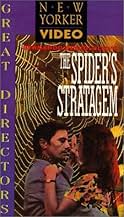
A man returns to the place where his father was murdered and tries to find closure. But he finds himself in a similar predicament as his late father instead.A man returns to the place where his father was murdered and tries to find closure. But he finds himself in a similar predicament as his late father instead.A man returns to the place where his father was murdered and tries to find closure. But he finds himself in a similar predicament as his late father instead.
- Awards
- 1 win total




Featured reviews
🎬🌟Webs of Memory: Bertolucci's Enigmatic Journey Through Time 🇮🇹
Based on a short story by Jorge Luis Borges, the film follows Athos Magnani Jr. (played by Giulio Brogi) as he returns to his father's hometown of Tara to investigate the circumstances of his death. As Athos delves deeper into the past, the line between reality and myth becomes increasingly blurred, with the film's narrative structure mirroring this confusion.
Bertolucci's direction is both the film's greatest strength and, at times, its weakness. His visual style is undeniably impressive, with carefully composed shots that often carry more narrative weight than the dialogue. The use of color is particularly noteworthy, with the golden hues of the Italian countryside contrasting sharply with the shadowy interiors where secrets lurk. However, Bertolucci's penchant for ambiguity sometimes crosses the line from intriguing to frustrating, leaving viewers struggling to piece together the fractured narrative.
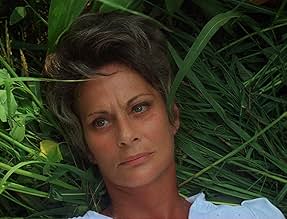
Giulio Brogi delivers a nuanced performance in the dual role of Athos Jr. And his father, Athos Sr. His ability to subtly differentiate between the two characters while maintaining a sense of their shared identity is crucial to the film's exploration of generational legacy and the weight of the past. Alida Valli, as Draifa, one of Athos Sr.'s former lovers, brings a haunting quality to her role, her performance embodying the town's inability to move beyond its mythologized past.
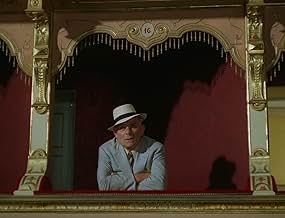
One of the film's standout scenes occurs when Athos Jr. Attends an outdoor opera performance. The merging of the operatic drama with the unfolding mystery of Athos Sr.'s death creates a surreal, dreamlike atmosphere that encapsulates the film's themes of performance, reality, and historical narrative. This scene exemplifies Bertolucci's skill in creating visually striking set pieces that resonate on multiple levels.
The film's exploration of fascism and anti-fascist resistance in Italy is both timely and timeless. Bertolucci deftly weaves these political themes into the fabric of the mystery, using them to comment on the nature of heroism and the way societies construct their historical narratives. However, the film's political commentary sometimes feels overly oblique, potentially limiting its impact on viewers not well-versed in Italian history.
Vittorio Storaro's cinematography is a highlight, capturing both the sun-drenched exteriors and the shadowy interiors of Tara with equal skill. His work significantly contributes to the film's dreamlike quality, enhancing the sense of a town trapped in time.
The pacing of "Strategia del ragno" may test the patience of some viewers. Bertolucci takes a deliberately measured approach, allowing scenes to unfold slowly and often prioritizing mood and atmosphere over narrative clarity. While this approach yields some beautifully crafted moments, it can also lead to periods where the film feels somewhat static.
For cinephiles and those interested in the evolution of European art cinema, "Strategia del ragno" offers a fascinating glimpse into Bertolucci's developing style. Its exploration of memory, myth, and political idealism remains relevant, even if its execution is not always entirely successful. While not Bertolucci's most accessible work, it stands as an important and intriguing entry in his filmography, showcasing his willingness to experiment with form and narrative in ways that would influence his later, more widely acclaimed films.
Fascinating, lyrical, memorable.
Why isn't this movie in the top 250?
Guessing the future Bertolucci
A part from this observations, this film has a story to be followed, not as intriguing or as fascinating as others... but still worthy to reflect on. Even though this is a political film, that's not even subtle or hidden, the main theme of this one is, in my point of view, the creation of myths, the creation of heros, idols... Fernando Pessoa, a portuguese poet, said that a myth is "a nothing which is everything". This film confirms it. Athos Magnani, the father, is an absolute nothing, despite his pseudo idealism, he made nothing in concrete except... becoming the hero of those people, except becoming one more reason for the fight. Even though he was admired for that, he wasn't particularly smart... just a bit more educated, and he just saw the chance of immortality... in his death. This is a myth, and myths, at least like this, only exist if people believe them.
Beautiful landscapes, not spectacular acting (the actor who plays both athos Magnani is not exceptionaly convincing as the son but gives an interesting performance as the father). Also a good use of the non original music especially the excerpts from Il Rigolletto. I too enjoyed that the director resisted to the temptation of showing exactly the murdering; he did it in a better way. All this and a Bernardo Bertolucci starting to reveal all he would become.
Thematically Deep But Lacking Entertainment Value
An essentially political film, "The Spider's Stratagem" contains deep themes related to personal identity, the definition of heroes, as well as perceptions of, and the truth about, others. Events and people are not always what they seem to be. The thematic depth is enhanced by competent cinematography, with some clever compositional camera shots.
And yet, I found this film hard to like. There is an overall sense of gloom, with a drab landscape and bleak characters that seem more symbolic of ideas vis-à-vis real people with personal lives. Direction trends theatrical and stagy. And some plot elements seem either unnecessary or deliberately opaque.
Acting also seems stagy and contrived, which may have been the director's intent. Alida Valli's performance is terrible. I dislike the way she smiles at the most inappropriate times. Further, the viewer must endure periodic outbursts of grand opera.
I am thus ambivalent toward "The Spider's Stratagem". It has adequate thematic depth, for viewers wanting a thought-provoking film. But the slow-moving plot is something of a trial to sit through, with irksome characters and gloomy visuals. I found it not entertaining.
Maybe a second viewing, when I have more time to digest the film's political themes, will render an impression that is not so alien and forbidding.


Did you know
- TriviaThe Spider's Stratagem (1970) and The Conformist (1970) were both made by Bernardo Bertolucci within a 12 or 18 month period and both were released in the same year.
- Quotes
Athos Magnani, father and son: You will not kill me. Even a dead traitor is damaging. A hero is more useful. A hero, whom people can love. I shall be basely murdered by a Fascist. We'll offer the spectacle of a dramatic death to seize people's imagination so they will continue to hate more and more Fascism.
- ConnectionsEdited into Gli ultimi giorni dell'umanità (2022)
- SoundtracksRigoletto
di Giuseppe Verdi (as G. Verdi)
per gentile concessione E. M. I. Italiana S. p. A.
da disco STASERA ALL'OPERA QSOX 11/12
- How long is The Spider's Stratagem?Powered by Alexa
Details
- Runtime
- 1h 40m(100 min)
- Aspect ratio
- 1.37 : 1