IMDb RATING
6.6/10
1.9K
YOUR RATING
An apolitical college student joins a group of campus protesters to meet girls but gets swept up in their cause and involved in a violent confrontation with police.An apolitical college student joins a group of campus protesters to meet girls but gets swept up in their cause and involved in a violent confrontation with police.An apolitical college student joins a group of campus protesters to meet girls but gets swept up in their cause and involved in a violent confrontation with police.
- Awards
- 1 win & 2 nominations total
- Director
- Writers
- All cast & crew
- Production, box office & more at IMDbPro
6.61.9K
1
2
3
4
5
6
7
8
9
10
Featured reviews
Sucked.
Sorry, but it did. I read the book first, which was absolutely priceless. It was the journal of James Simon Kunen (called Simon in the movie), who was a jock at Columbia when the student uprising got started, and half-heartedly joined the protestors, mostly because the squares weren't meeting his needs. He had a wonderfully cynical, pessimistic attitude.
So what do they do for the movie? First they change the setting to San Francisco! Why? Then they make his character into a complete wimp; I cringed at almost every line. And they add all this gratuitous violence, despite the fact that there was almost no violence in the real-life uprising. What struck me about the book/journal was how disorganized everyone was. The protestors didn't have a clear plan. Some of the Columbia students opposed the protestors, and *they* didn't have a clear plan. The cops were powerless to do much of anything to the protestors except occasionally put handcuffs on them and herd them around, and the administration flipped back and forth constantly between trying to compromise with the students and threatening to expel everyone. What I got out of it was that revolution sounds like a great idea, until you get into the dean's office and realize that you don't know what to do, besides pose for a photo in his leather chair while holding a joint.
But that doesn't sell tickets. So they have a big, loud riot scene, ending with a totally campy freeze frame. (I was waiting for Bruce Davison to die in that manner when I saw him in X-Men! No such luck.)
So what do they do for the movie? First they change the setting to San Francisco! Why? Then they make his character into a complete wimp; I cringed at almost every line. And they add all this gratuitous violence, despite the fact that there was almost no violence in the real-life uprising. What struck me about the book/journal was how disorganized everyone was. The protestors didn't have a clear plan. Some of the Columbia students opposed the protestors, and *they* didn't have a clear plan. The cops were powerless to do much of anything to the protestors except occasionally put handcuffs on them and herd them around, and the administration flipped back and forth constantly between trying to compromise with the students and threatening to expel everyone. What I got out of it was that revolution sounds like a great idea, until you get into the dean's office and realize that you don't know what to do, besides pose for a photo in his leather chair while holding a joint.
But that doesn't sell tickets. So they have a big, loud riot scene, ending with a totally campy freeze frame. (I was waiting for Bruce Davison to die in that manner when I saw him in X-Men! No such luck.)
Great celebration and memory of the revolutionary feelings of the late 60's
I've grown older, I've grown sedated - this was the first time in I don't remember how long that a movie really made me FEEL so much. The music, the camera-work, the speeches, the feeling of just wanting to c h a n g e so much! I got completely wrapped up in it, especially, like someone else wrote, since the state of the world is at it is today; it makes this movie feel more accurate than ever! Why, oh why, aren't there revolutionaries like these on the streets and in the universities of today? One thing though. The movie very accurately portrays women of this time and this movement, and by that I mean they are portrayed either as sexual objects, passive jewelry for the revolutionaries (men) to lean on in their "headquarter" (in this case the dean's office)or as frail and beautiful little birds the men have to care for. It is true that this is how women of the movement were treated - as someone who could make coffee whilst the men drew up revolutionary plans of how to overthrow the government - that is until women fought back and started their own revolution. I just wish that when revolution comes next time, there will be no sexism in its lines...
It was more than that
I guess I agree that this wasn't a "great movie," but it was better than other reviewers have claimed. Honestly, most movies from this period don't stand up all that well. It was an experimental time and experiments usually go bad. That's the nature of attempting to be creative. Most Hollywood crap barely tries for competent and rarely considers creative.
For no other reason, the context of Thunderclap Newman's "Something in the Air" (on of the all time greatest rock songs) is worth experiencing this movie. A pretty damn good version of "Give Peace a Chance" can be found here, too.
counter-culture
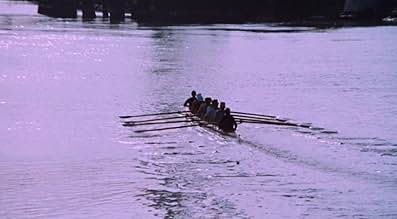
Simon (Bruce Davison) is an apolitical college rower in San Francisco. He is indifferent to the mounting protest on campus about stealing an African-American playground for the ROTC headquarter. He drops by to watch the protest and is taken with Linda (Kim Darby). He follows her into a student takeover of the administration building.
This is a counter-culture film or a counter-counter-culture film. It could be a simple straight stiff turns hippie radical. It does take some unexpected turns. He's not a simple nice guy. There are darker edges. The couple has a difficult encounter with the very black people that they're trying to help. It's not all flower power. I don't buy the shopkeeper. His actions don't feel right. It would be so much better for him to placate and cooperate with the couple before calling the cops. Instead, he's raising his hands which make it less shocking to have him call for the cops. Anyways, it all struck me wrong. There are a couple of notable actors but mostly it looks like an amateur cast. Kim Darby is cute coming a year after True Grit. It all adds up to a lesser, interesting counter-culture film.
An interesting period piece
This movie will be of interest to anyone curious about the mores, attitudes, fashions, and lifestyles of the those involved in the radical student movement of the late 1960s. It presents a compelling portrait of the times. Personally I was left with the impression that the students were largely naive, spoiled idiots, and I found it difficult to sympathize with their agenda and methods. Nevertheless, I did feel for the duration of the movie that I was immersed in a reasonable, realistic representation of those times. The movie presents a more reality-based view of the late 60s than hippy freakout pieces like "Easy rider," for example, so you the viewer is advised to look at it as a kind of window into an era gone by.
Did you know
- TriviaOriginally the film was to be shot on Columbia University's campus. However, Columbia withdrew their offer and the crew moved to Berkeley instead (Columbia University had already been through large student protests in 1967 and '68). The book had not gained notoriety yet and Berkeley was more or less in the dark about the content of the film and what events the director would be staging on the campus. This explains the tongue-in-cheek statement that appears before the opening credits thanking an "anonymous locale" and noting "other cities refused to cooperate."
- GoofsCoxswains don't say "stroke." The stroke of the boat (the rower in front of the coxswain) is responsible for maintaining the stroke rate.
- Quotes
Girl in Filing Room: [after exposing her breasts to Simon] Did you know Lenin loved women with big breasts?
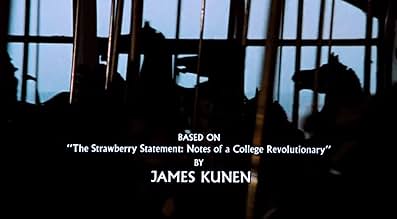
- Crazy creditsThe following written statement appears on screen before the opening credits sequence: "The producers of this film gratefully acknowledge the cooperation of the people of San Francisco and another anonymous locale for participating in the production of this motion picture. Other cities refused to cooperate--perhaps feeling that strawberries are irrelevant."
- Alternate versionsThis movie has 2 cuts. A Theatrical release with 103 minutes and the International version that runs 109 minutes. Both version where included on the 2012 Warner DVD.
- How long is The Strawberry Statement?Powered by Alexa
Details
Box office
- Budget
- $1,750,000 (estimated)
- Runtime
- 1h 49m(109 min)
- Sound mix
- Aspect ratio
- 1.85 : 1
Contribute to this page
Suggest an edit or add missing content