Eden and After
Original title: L'Eden et après
- 1h 33m
IMDb RATING
6.3/10
1.5K
YOUR RATING

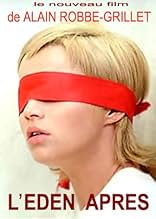
A group of French students are drawn into the psychological and sexual games of a mysterious Dutchman. Once they sample his "fear powder" the students experience a series of hallucinations.A group of French students are drawn into the psychological and sexual games of a mysterious Dutchman. Once they sample his "fear powder" the students experience a series of hallucinations.A group of French students are drawn into the psychological and sexual games of a mysterious Dutchman. Once they sample his "fear powder" the students experience a series of hallucinations.
- Director
- Writer
- Stars
- Awards
- 1 nomination total


Jarmila Kolenicová
- Sonia
- (as Jarmila Kolenicova)


Ludovít Króner
- Franc
- (as Ludwik Kroner)
Eva Luther
- Violette's look-a-like
- (uncredited)
- Director
- Writer
- All cast & crew
- Production, box office & more at IMDbPro
6.31.5K
1
2
3
4
5
6
7
8
9
10
Featured reviews
Eden and After
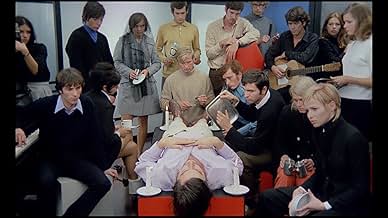
Yikes, talk about self-indulgent. It does start off quite frighteningly as a girl is ambushed in an office by a group of colleagues and stripped on what looks like a sacrificial table! Then we discover that it's nothing more than a bunch of bored and wired students who have nothing better to do than play their own version of psycho-cleudo. Then they encounter the enigmatic "Duchemin" (Pierre Zimmer) who regales them with stories of his time in North Africa and of a special powder that could change their lives for ever. Gullible as they are, off we head to some beautifully pristine Tunisian seaside adobe homes where the rest of this plays out. Surreal is putting the rest of this mildly, so don't be looking for anything akin to a traditional plot as the group start to hallucinate and partake in some real Marquis de Sade kind of stuff. Perhaps it's meant to be erotic - but nudity in itself (almost exclusively female) is not necessarily sexy nor provocative. For the last half hour or so, you could easily be forgiven for thinking you're watching a "Playboy" shoot. To be fair, the randomness and unpredictability does work at times and the whole thing keeps you on your toes for a while, but as it gets towards what passes for a conclusion, I felt that perhaps I'd have volunteered for one of the venomous little scorpions that may (or, of course, may not) have featured earlier. It's far too long, far too slow and no attempt is made to develop any form of characterisation amongst these pretty introspective young folks who are easy pickings for their new mentor. It's was showcased at the abandoned 1970 Berlinale and though I am glad I watched it, I shall never bother watching it again.
Captivating and mesmerizing, a stunning achievement
I suppose an argument on whether or not "Eden and After" is a load of pretentious twaddle or a film with real substance could go on forever, but whether or not there is more than the typical late 60's/early 70's drugged-out pseudo-intellectualism here is irrelevant. I don't think Robbe-Grillet's intention is to make a 'Grand Statement' of any sort, "Eden and After" seems interested mostly in asking questions and provoking a response from the audience, as well as in its aesthetic sensibilities.
"Eden and After" has been described as a highbrow soft-core flick, not only in another IMDb comment but elsewhere as well, and it's a fair enough label- many of the images here, particularly in the last forty minutes of the film are certainly erotic, or at least obviously were to Robbe-Grillet. Robbe-Grillet has achieved genuine sensuality with his imagery. It's not porn, there's none of the visceral satisfaction of that sort of thing, it's actually evocative enough to earn the 'erotica' label, although the film certainly has ambition beyond that.
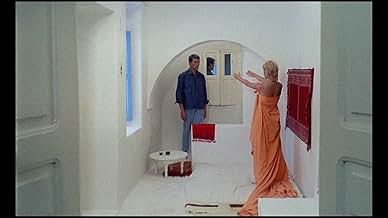
Indeed, dismissing this as a skin flick is a bit moronic; there's so much more here. It's a dark, captivating, occasionally nightmarish, and very interesting film. The sound mixing here is absolutely superb, much like it was in the only other Robbe-Grillet film I've seen so far, "Trans-Europ-Express", and the cinematography stunning, especially after the film shifts focus to Tunisia in its final act. This was Robbe-Grillet's first color film and the opportunity is not wasted- everything from the minutest detail of the design to the cast's wardrobe is a carefully-orchestrated visual extravaganza of bold colors, often used very well in the film to emphasize a point.
"Eden and After" is something special, and whether or not you like it you have to admit that it's a unique experience and that much of the imagery is jarring and very effective. For me it was one of the most intense and involving viewing experiences of my life and is already one of my favorite films, having viewed it twice in a row, something I have rarely ever done before. I can understand disliking this one, but you have to give it credit at least as an aesthetic achievement.
"Eden and After" has been described as a highbrow soft-core flick, not only in another IMDb comment but elsewhere as well, and it's a fair enough label- many of the images here, particularly in the last forty minutes of the film are certainly erotic, or at least obviously were to Robbe-Grillet. Robbe-Grillet has achieved genuine sensuality with his imagery. It's not porn, there's none of the visceral satisfaction of that sort of thing, it's actually evocative enough to earn the 'erotica' label, although the film certainly has ambition beyond that.
Indeed, dismissing this as a skin flick is a bit moronic; there's so much more here. It's a dark, captivating, occasionally nightmarish, and very interesting film. The sound mixing here is absolutely superb, much like it was in the only other Robbe-Grillet film I've seen so far, "Trans-Europ-Express", and the cinematography stunning, especially after the film shifts focus to Tunisia in its final act. This was Robbe-Grillet's first color film and the opportunity is not wasted- everything from the minutest detail of the design to the cast's wardrobe is a carefully-orchestrated visual extravaganza of bold colors, often used very well in the film to emphasize a point.
"Eden and After" is something special, and whether or not you like it you have to admit that it's a unique experience and that much of the imagery is jarring and very effective. For me it was one of the most intense and involving viewing experiences of my life and is already one of my favorite films, having viewed it twice in a row, something I have rarely ever done before. I can understand disliking this one, but you have to give it credit at least as an aesthetic achievement.
Hypnotic Maze of Psychosexual Insanity
This is one of the horror genre's most delirious, imaginative, nightmarish and disturbing films ever made, on the same vein of Andrej Zulawski's "Possession" and, to a lesser extent, Harry Kümel's "Malpertuis". Directed by Alain Robbe Grillet (who wrote the screenplay for the equally enigmatic "Last Year in Marienbad") does not disappoint in creating a suffocating dreamlike atmosphere, as he takes the audience, through the eyes of the protagonist, in a "Alice in Wonderland"-like trip, with a little Marquis De Sade twist. The story is told basically through striking, thought provoking imagery, with dialog kept to a minimum, something that can be very unappealing to some, but I found it particularly fascinating. We follow the Mia Farrow-lookalike Catherine Jourdan as Violet, who goes to Tunisia in order to find out the truth behind the strange death of a mysterious man she met at a bar (the Eden of the title) during one of her friends' drug-induced games. That's basically all I can tell you, because it's a film so difficult to describe in words, you just have to see it for yourself to understand. Grillet's script, just like the film's setting, is a twisted, mind-bending labyrinth of sexual deviance and murder, where nothing is what it seems. In fact, once you've seen it, exactly how much of the events actually did happen, and if so, what did they mean. As in "Marienbad...", Grillet haunts the viewer with many questions, which may or may not be answer within this maze of a film. As mentioned before, it may not be everyone's cup of tea, but if you like this kind of deliciously bizarre, surreal film that will undoubtedly leave you scratching your head long after you've watched it, this one is a must see. It's kind of hard to find, but it's really worth it.
Alice in S&M Land or The Post-Modern Marquis De Sade
Philosophical thriller or Post-Modern jigsaw or S&M skinflick - or all three at once - Alain Robbe-Grillet's first colour film is a dazzling, at times frustrating experience. Try to imagine Alice in Wonderland crossed with Story of O and you may get some idea of the perverse sensibility at work behind it. Starting off in a labyrinthine, mirror-lined nightclub called Eden, moving on to a disused factory with huge industrial vats full of sperm, ending up on the Tunisian island of Djerba - with, naturally, a detour through a jet-set torture chamber where glamorous naked women are crucified or suspended in cages - Robbe-Grillet takes his wide-eyed and waif-like heroine (Catherine Jourdan) on a spiritual and erotic odyssey to...what exactly? Sorry, but I don't know either.
Nor does Robbe-Grillet seem the tiniest bit inclined to let us in on the secret. According to a mysterious stranger (Pierre Zimmer) who breaks in on Jourdan and her jaded pals, it's something to do with transcending the limits of rational Western consciousness. Finding a darker and more primitive reality. "Break on through to the other side" - or so The Doors might put it. Intriguing enough in a drugged-up late 60s kind of way, but Robbe-Grillet's own personal "doors of perception" don't seem to open very far beyond a spot of mild flagellation, or some Emmanuelle-style sex tourism on a photogenic Third World beach.
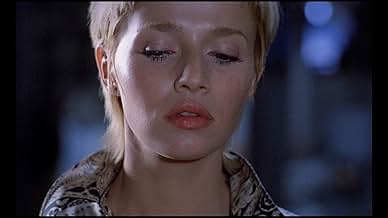
At least the film is exquisite to behold. Its imagery is bizarre and erotic and disturbing. Catherine Jourdan - who went on to make even weirder movies with director/husband Alain Fleischer - is a lovely heroine in the tradition of the Marquis de Sade's Justine. She combines the doe-eyed fragility of a Mia Farrow with the icy blonde sensuality of a Catherine Deneuve. As her lover, Richard Leduc is undeniably handsome - but he seems far too sweet and mild-mannered for some seriously nasty sex-games with a blindfold and a bucket of scorpions. As for any ultimate meaning, you may or may not want to work that out. I suspect most of us would be happier not knowing.
Incidentally, Eden and After is one of Robbe-Grillet's MORE linear films in terms of plot - yet it's also one of his hardest to grasp. Perhaps there's a lesson to be learned from that, but - once again - don't ask me what!
David Melville
Nor does Robbe-Grillet seem the tiniest bit inclined to let us in on the secret. According to a mysterious stranger (Pierre Zimmer) who breaks in on Jourdan and her jaded pals, it's something to do with transcending the limits of rational Western consciousness. Finding a darker and more primitive reality. "Break on through to the other side" - or so The Doors might put it. Intriguing enough in a drugged-up late 60s kind of way, but Robbe-Grillet's own personal "doors of perception" don't seem to open very far beyond a spot of mild flagellation, or some Emmanuelle-style sex tourism on a photogenic Third World beach.
At least the film is exquisite to behold. Its imagery is bizarre and erotic and disturbing. Catherine Jourdan - who went on to make even weirder movies with director/husband Alain Fleischer - is a lovely heroine in the tradition of the Marquis de Sade's Justine. She combines the doe-eyed fragility of a Mia Farrow with the icy blonde sensuality of a Catherine Deneuve. As her lover, Richard Leduc is undeniably handsome - but he seems far too sweet and mild-mannered for some seriously nasty sex-games with a blindfold and a bucket of scorpions. As for any ultimate meaning, you may or may not want to work that out. I suspect most of us would be happier not knowing.
Incidentally, Eden and After is one of Robbe-Grillet's MORE linear films in terms of plot - yet it's also one of his hardest to grasp. Perhaps there's a lesson to be learned from that, but - once again - don't ask me what!
David Melville


Did you know
- TriviaItalian censorship visa # 57570 delivered on 5 February 1971.
- ConnectionsEdited into N. Took the Dice (1972)
- How long is Eden and After?Powered by Alexa
Details
Contribute to this page
Suggest an edit or add missing content