IMDb RATING
6.2/10
1.4K
YOUR RATING


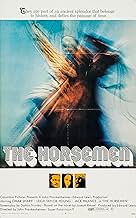
Drama depicting rural life in contemporary Afghanistan and the Afghani people's love for an ancient traditional sport similar to horseback polo.Drama depicting rural life in contemporary Afghanistan and the Afghani people's love for an ancient traditional sport similar to horseback polo.Drama depicting rural life in contemporary Afghanistan and the Afghani people's love for an ancient traditional sport similar to horseback polo.
- Director
- Writers
- Stars

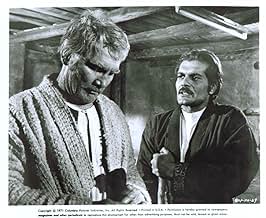
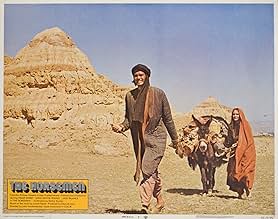
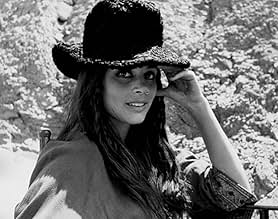
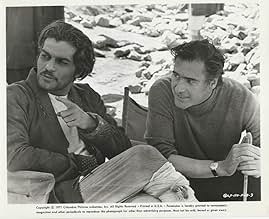


Salmaan Peerzada
- Salih
- (as Salmaan Peer)
Aziz Resham
- Bacha to Ghulam
- (as Aziz Resh)

Vida St. Romaine
- Gypsy Woman
- (as Vida St Romaine)
Florencio Amarilla
- Arabian Man
- (uncredited)

Ishaq Bux
- Amjad Kahn
- (uncredited)

Carlos Casaravilla
- Messenger
- (uncredited)
- Director
- Writers
- All cast & crew
- Production, box office & more at IMDbPro
6.21.4K
1
2
3
4
5
6
7
8
9
10
Featured reviews
An underrated Masterpiece - entertaining AND Educational.
There is so much of interest in this compelling film, set in Afghanistan. Based on the book by Joseph Kessells, a writer of rare insight.
Centered around the ancient game of Buzkashi, played on horseback, and only in the three northern provinces of Mazar-i-Sharif, Maimana and Kataghan. [The game had it's origin in a training routine instituted by Ghengiz Khan, which both conditioned his men for warfare and provided a means of feeding his army. A very large circle was formed by his warriors and as the circle closed no animal was permitted to escape.]
There are some terrific scenes of the first "Royal Buzkashi" played on Bagrami Plain, just outside Kabul, which had been decreed by the king. Also some great footage of the country, depicting the beautiful and varied terrain encountered as Uroz makes the self-imposed and dangerous journey back to his home province in the North.
The interplay of all the characters is an education in understanding the powerful role human emotion and upbringing play in all our lives, as both Tursen(the father) and Uroz(the son) attempt to come to terms with their own harsh anger and pride. The consequences spill over and embroil other individuals in the story. The story also gives some insight into the different way of thinking engendered by the cultural mix of religion,relatively isolated living, and living in a harsh environment where survival can be pretty raw.
Contrast is drawn by the mix of ancient and modern. One such scene has Tursen (Jack Palance),who as Head of Osman Bey's stable is addressing the chopendoz,(players of Buzkashi), pauses to look upwards at a jetliner passing overhead whilst he stands on "The Roof of the World". Another takes place in the modern hospital in Kabul.
Both Palance & Sharif give of their finest, very well supported by a great character cast.
A dramatic part of the story unfolds in the Bamian Valley, where Uroz gambles & loses the very thing he later realise he loves and wants back. Historically this part of the film contains important footage of the giant Budhas that were carved into the cliffside, until deliberately destroyed by Talliban militia.
All in all, an excellent and enjoyable film and I am surprised it has not been shown on Television or re-issued on disc, as the world focussed on that area just a short time ago.
Centered around the ancient game of Buzkashi, played on horseback, and only in the three northern provinces of Mazar-i-Sharif, Maimana and Kataghan. [The game had it's origin in a training routine instituted by Ghengiz Khan, which both conditioned his men for warfare and provided a means of feeding his army. A very large circle was formed by his warriors and as the circle closed no animal was permitted to escape.]
There are some terrific scenes of the first "Royal Buzkashi" played on Bagrami Plain, just outside Kabul, which had been decreed by the king. Also some great footage of the country, depicting the beautiful and varied terrain encountered as Uroz makes the self-imposed and dangerous journey back to his home province in the North.
The interplay of all the characters is an education in understanding the powerful role human emotion and upbringing play in all our lives, as both Tursen(the father) and Uroz(the son) attempt to come to terms with their own harsh anger and pride. The consequences spill over and embroil other individuals in the story. The story also gives some insight into the different way of thinking engendered by the cultural mix of religion,relatively isolated living, and living in a harsh environment where survival can be pretty raw.
Contrast is drawn by the mix of ancient and modern. One such scene has Tursen (Jack Palance),who as Head of Osman Bey's stable is addressing the chopendoz,(players of Buzkashi), pauses to look upwards at a jetliner passing overhead whilst he stands on "The Roof of the World". Another takes place in the modern hospital in Kabul.
Both Palance & Sharif give of their finest, very well supported by a great character cast.
A dramatic part of the story unfolds in the Bamian Valley, where Uroz gambles & loses the very thing he later realise he loves and wants back. Historically this part of the film contains important footage of the giant Budhas that were carved into the cliffside, until deliberately destroyed by Talliban militia.
All in all, an excellent and enjoyable film and I am surprised it has not been shown on Television or re-issued on disc, as the world focussed on that area just a short time ago.
Bite the bullet!
With a writer like Trumbo (who also did one of the best anti war movies of all time :"Johnny got his gun" )and a director like Frankenheimer ("the Manchurian candidate " "seconds" "birdman from Alcatraz" ,how could you be wrong?Add Omar Shariff and Jack Palance.Plus the marvelous wild landscapes .And the magic of these Asian nights.And however it does not quite make it.The slow-moving story is sometimes boring ,in spite of the talent of the actors (and the horses who play a prominent part ,check the title).The magnificence of the settings makes up for it but make sure you see it on a wide screen in a movie theater.Much of its appeal is inevitably lost on a tiny TV screen.
Action adventure in Afghanastan: needs to become a DVD!
An excellent adaptation of the Book by Joseph Kessel; centered on the running of the first Buskashi in Kabul by the King of Afghanistan circa the 1950s. I have read the book in its English translation(1968) and seen the Movie on VHS.(1671) The movie is very fresh and not dated; and all the more compelling due to recent liberation from Arab control of that country. Footage of the Buskashi just has to be from a real game. The games were played at Bagram (Bagrimi) the plain above Kabul which was made an airport in recent years.
The author, Kessel can be compared to Joseph Conrad and Hemmingway as he apparently lived what he wrote. The book has themes just as penetrating as "Heart of Darkness" or "the Old man and the Sea" and much has translated well to this Movie. The acting is well done and convincingly. Local color shots were done in the late sixties giving this film a truly timeless feeling with little motor traffic evident.
One inspired scene has Jack Palance as Chief breeder and legendary Horseman, interrupted in his instructions to his team by the noise of a Jet; and looking up to see contrails above.
This is a real treasure just begging to be on DVD.
The author, Kessel can be compared to Joseph Conrad and Hemmingway as he apparently lived what he wrote. The book has themes just as penetrating as "Heart of Darkness" or "the Old man and the Sea" and much has translated well to this Movie. The acting is well done and convincingly. Local color shots were done in the late sixties giving this film a truly timeless feeling with little motor traffic evident.
One inspired scene has Jack Palance as Chief breeder and legendary Horseman, interrupted in his instructions to his team by the noise of a Jet; and looking up to see contrails above.
This is a real treasure just begging to be on DVD.
Lifeless
Reportedly, John Frankenheimer bugged out of the post-production process of I Walk the Line as fast as possible to get to Afghanistan to film this. Also, Columbia went through a regime change and the budget on the film got slashed in the middle of things, necessitating the change from filming in 65mm to 35mm. And...it's kind of dull. Again. Just like The Fixer. Another prestige literary adaptation that has no real energy to it, The Horsemen isn't a complete failure of a film. It's just not as interesting as it should have been.
Uraz (Omar Sharif) is the son of Tursen (Jack Palance), a rich man and famous chapandaz, a rider in the game called buzkashi where a group of individual horsemen wrangle for a sheep's carcass to throw into a painted circle on the ground. It's apparently very big in Afghanistan. Anyway, the heart of the film is the father/son dynamic of Uraz feeling unworthy to live up to his father's expectations, made all the worse when Tursen gives Uraz his horse for a big buzkashi contest where Uraz gets thrown from the saddle and breaks his leg. He then must make a long journey, choosing to take the hard, ancient road, to prove his worth. Along for the ride are his servant, Hayatal (Peter Jeffrey), and the untouchable prostitute, Zareh (Leigh Taylor-Young).
Where this film is easily the most interesting is a look at rural Afghanistan, their customs, sports, and the landscape. I mean, I'd seen the use of a head in a sack for polo in The Man Who Would be King, but never the wrangling of a goat carcass for sport. The portrayal of traditional Afghani masculinity is also interesting through Uraz who has a deep distrust of modern medicine. When he wakes up from the accident on the buzkashi pitch, his leg is wrapped up in a white cast. How can his leg heal without the sun hitting it? So, he has Hayatal break it off and wraps up his wound with a page from the Koran because the Prophet's words should heal him. It, of course, does not work, and the film has this kind of detached, sympathetic view to a backwards man trying to make his way across a hostile landscape.
It's not that hostile, though. The travelogue aspects kind of wear out their welcome after a while with little to add after the first half hour or so. Instead, we get some character-based stuff around Uraz naming Hayatal as the heir to his horse should something happen to him, a background thing between Hayatal and Zareh that could be a romance, a ram fight they come across where Uraz bets on an underdog, and even looks back to Tursen trying to recreate a moment from his youth by trying to jump onto a small building with his horse, something he did in a buzkashi contest many years prior.
It's just...not that interesting. And, again, like in The Fixer, I think a large part of it is how lackadaisical the film is edited. There's no real drive. It's just kind of a journey across a baren wasteland as Uraz gets steadily sicker because he refused Western treatment of his broken leg. It's just not that engaging of a journey. There's added interest late in the film when he has to make a drastic decision to save his life, something that should make it pretty much impossible for him to expertly ride a horse ever again. Which he, of course, does.
I mean...it's fine. After the look at Afghanistan loses interest, there's not a whole lot else. Uraz's daddy issues actually get sidetracked for watching ram fights and dealing with subdued feelings for an untouchable prostitute. The tension around Hayatal trying to kill him for the horse kind of comes out of nowhere. When Uraz does finally get back to Tursen, having grown through his pain and loss, there's something to it. It's not deeply affecting or anything, but it makes sense. Enough connections have been made through the film for it to make sense on an intellectual level.
I think part of the disconnect though, is performance based. Jack Palance was not a bad actor (and I generally don't care about brown face stuff), but he trended very easily towards arch performances, and I think his performance as Sharif's father, aside from the fact that his old-age makeup is unconvincing and they look the same age, is too arch for this film which is generally more restrained (too restrained, to be honest). A big performance wouldn't be bad, but he just...doesn't fit.
So, this feels like another attempt by Frankenheimer to adapt literature handsomely. It's also another tail of self-destruction, though with a more hopeful ending than most. It fits his filmography and shows a certain ambition, but it also demonstrates how he could easily be lost in types of films he wasn't familiar with.
Uraz (Omar Sharif) is the son of Tursen (Jack Palance), a rich man and famous chapandaz, a rider in the game called buzkashi where a group of individual horsemen wrangle for a sheep's carcass to throw into a painted circle on the ground. It's apparently very big in Afghanistan. Anyway, the heart of the film is the father/son dynamic of Uraz feeling unworthy to live up to his father's expectations, made all the worse when Tursen gives Uraz his horse for a big buzkashi contest where Uraz gets thrown from the saddle and breaks his leg. He then must make a long journey, choosing to take the hard, ancient road, to prove his worth. Along for the ride are his servant, Hayatal (Peter Jeffrey), and the untouchable prostitute, Zareh (Leigh Taylor-Young).
Where this film is easily the most interesting is a look at rural Afghanistan, their customs, sports, and the landscape. I mean, I'd seen the use of a head in a sack for polo in The Man Who Would be King, but never the wrangling of a goat carcass for sport. The portrayal of traditional Afghani masculinity is also interesting through Uraz who has a deep distrust of modern medicine. When he wakes up from the accident on the buzkashi pitch, his leg is wrapped up in a white cast. How can his leg heal without the sun hitting it? So, he has Hayatal break it off and wraps up his wound with a page from the Koran because the Prophet's words should heal him. It, of course, does not work, and the film has this kind of detached, sympathetic view to a backwards man trying to make his way across a hostile landscape.
It's not that hostile, though. The travelogue aspects kind of wear out their welcome after a while with little to add after the first half hour or so. Instead, we get some character-based stuff around Uraz naming Hayatal as the heir to his horse should something happen to him, a background thing between Hayatal and Zareh that could be a romance, a ram fight they come across where Uraz bets on an underdog, and even looks back to Tursen trying to recreate a moment from his youth by trying to jump onto a small building with his horse, something he did in a buzkashi contest many years prior.
It's just...not that interesting. And, again, like in The Fixer, I think a large part of it is how lackadaisical the film is edited. There's no real drive. It's just kind of a journey across a baren wasteland as Uraz gets steadily sicker because he refused Western treatment of his broken leg. It's just not that engaging of a journey. There's added interest late in the film when he has to make a drastic decision to save his life, something that should make it pretty much impossible for him to expertly ride a horse ever again. Which he, of course, does.
I mean...it's fine. After the look at Afghanistan loses interest, there's not a whole lot else. Uraz's daddy issues actually get sidetracked for watching ram fights and dealing with subdued feelings for an untouchable prostitute. The tension around Hayatal trying to kill him for the horse kind of comes out of nowhere. When Uraz does finally get back to Tursen, having grown through his pain and loss, there's something to it. It's not deeply affecting or anything, but it makes sense. Enough connections have been made through the film for it to make sense on an intellectual level.
I think part of the disconnect though, is performance based. Jack Palance was not a bad actor (and I generally don't care about brown face stuff), but he trended very easily towards arch performances, and I think his performance as Sharif's father, aside from the fact that his old-age makeup is unconvincing and they look the same age, is too arch for this film which is generally more restrained (too restrained, to be honest). A big performance wouldn't be bad, but he just...doesn't fit.
So, this feels like another attempt by Frankenheimer to adapt literature handsomely. It's also another tail of self-destruction, though with a more hopeful ending than most. It fits his filmography and shows a certain ambition, but it also demonstrates how he could easily be lost in types of films he wasn't familiar with.
Better-- much better than average
Omar Sharif and Jack Palance may be the only names in this cast that most will recognize but the story based on an Afghan tale, set in Afghanistan before the Russian invasion, is a classic tale which lays out a great deal of Afghan culture during the period before the great disruption by the West. Afghanistan returned to the public eye after the post-911 invasion to depose the Taliban but the state of knowledge about these marvelous independent people who fought the British Empire to a standstill, still remains obscure. The game of buzgashi, a kind of polo for Weidman, was the core for many of the tribesmen. Its importance as an institution marking the status of tribes and individuals has no real counterpart in Western culture, and this is a tale of intrigue and self-learning, framed in a cultural setting we still have yet to understand.


Did you know
- TriviaThe film began shooting using 65mm negative (Super Panavision), but during production Columbia Pictures went through a change in management. The budgets for this and another 65mm production, Mackenna's Gold (1969), were cut and both films were forced to switch over to 35mm anamorphic Panavision. However, both were released in 70mm, with the later-shot sections blown up. In later years, the mix-and-match formats made restoration of the films more time consuming and expensive than if they'd been shot entirely in 65mm, and they were preserved in 35mm only.
- GoofsWhen Tursen (Jack Palance) has a flashback to one of his past victories, one can tell that he is swinging a phony, lightweight, stuffed goat carcass around when his horse jumps up on the mud hut.
- Quotes
District Chief: What demon has possessed you to mock these good people with that piece of dog-bait?
- How long is The Horsemen?Powered by Alexa
Details
- Release date
- Country of origin
- Official site
- Language
- Also known as
- Konjanici
- Filming locations
- Afghanistan(Exterior)
- Production companies
- See more company credits at IMDbPro
Box office
- Budget
- $6,000,000 (estimated)
- Runtime
- 1h 49m(109 min)
- Sound mix
- Aspect ratio
- 2.35 : 1
Contribute to this page
Suggest an edit or add missing content