

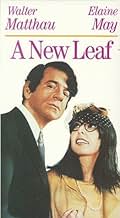
When Henry Graham's lawyer informs him that his playboy lifestyle has consumed all of his funds, he must avoid sliding down the social ladder. He plans to marry wealthy scientist Henrietta L... Read allWhen Henry Graham's lawyer informs him that his playboy lifestyle has consumed all of his funds, he must avoid sliding down the social ladder. He plans to marry wealthy scientist Henrietta Lowell--and kill her.When Henry Graham's lawyer informs him that his playboy lifestyle has consumed all of his funds, he must avoid sliding down the social ladder. He plans to marry wealthy scientist Henrietta Lowell--and kill her.
- Awards
- 1 win & 3 nominations total
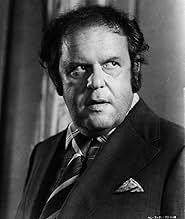




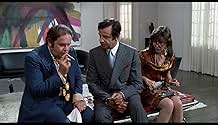


- Professor Heinrich
- (uncredited)
- Maid
- (uncredited)
- Mrs. Heinrich
- (uncredited)
- Victor the Butler
- (uncredited)
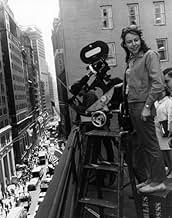
- Director
- Writers
- All cast & crew
- Production, box office & more at IMDbPro
Featured reviews
Brilliant, edgy socio/romantic comedy; flawless
Romance always involves the conflict between selfish vanity and naive devotion or love.
Most romantic comedies simply give up the fight at the end, and collapse into gooey, deluded sentimentality (e.g. "French Kiss", "Roxanne"). Some err in the opposite way, concluding on a bittersweet ambivalent implication that love is always dulled or compromised (e.g. "Nothing In Common", "Chasing Amy", "Purple Rose Of Cairo").
The acid test of a romantic comedy screenplay is its balance, its resolution of this issue. Can the lovers truly satisfy each other, without either one abusing or sacrificing his unique character, his intellect, his humanity?
The more starkly and intelligently these forces are presented and opposed, the more difficult the problem. Imagine, then, the most selfish, vain, sarcastic and sophisticated man imaginable, meeting and marrying (for her money) an utterly naive, pure, awkward, cloistered academic woman; a botanist.
Fans of irony enjoy silly dated romances for the stereotypes, the gratuitous sloppy honeyed sentiment, the emotional denial. "A New Leaf" does not shrink from the harsh side of the world, from the dark human character, and (except for the music) it has not dated an hour since its release.
The score may be slightly dated, mixed too high in places, but the music is sweet uptown Manhattan violin-muzak, reminiscent of "Theme From A Summer Place", so why quibble?
Henry Graham marries Henrietta Lowell intending to kill her. He is too bad to be true. Yet, his venal motives are only an exaggeration of our own. He doesn't want to be married; he wants to be free! He doesn't want to share, he wants everything for himself! He has never needed people to like him. Only now, he is desperate for money.
Henrietta, Henry's opposite, is foremost a botanist. She is a pure academic, uninitiated in the ways of sophistication, deception, vanity or power, despite her wealth. Her mind is unprejudiced, but intensely isolated, focused. She lives in a rarefied climate. Her dream in life is to discover and catalog a new species of plant, a "new leaf", which would cause her name to be modestly memorialized in the scientific literature.
These two opposites must combine in everyone. It is the problem of romance, most precisely stated. We love. We trust. Yet, we have infantile desires and vanities. We must struggle in a corrupt world that doesn't give a damn about our delicate preoccupations, to wrest from it the admiration and pleasure our dark hearts desire. We are Henry, we are Henrietta. Can these characters love each other? Can we accept, integrate ourselves?
"A New Leaf" rollicks with endlessly clever, sarcastic, inventive, trenchant dialog, reels through convoluted and finely wrought complications, revels in every character, each played by a brilliant comedian. Matthau was born to play this archetype of morbid, deranged, malevolent and dissolute urbanity. Elaine May conjures an ineffable, lethal sexiness, her myopic naivete perfectly complementing her gentle intellectual clarity. The film is an immaculate, fierce, luminous, huge-hearted gem.
A real Gem
May is Unforgettable
Well, I guess the movie's a comedy thanks mainly to May's touchingly clumsy funny girl. Still, it's a hard movie to get a handle on. Matthau's coldly calculating fortune hunter hardly cracks a smile the whole time, even in social situations. Between the two, they're hardly a promising comedy mix. Yet, the mix works even as Graham (Matthau) pores over a poisoning book on his wedding night, while poor Lowell (May) can't even get her gown on straight. No, the movie may not be a knee-slapper, but it is unusually charming in its own way. In fact, May manages to make her character one of the most uniquely winning that I've had the good luck to see. Then too, casting the familiar faces of Coco and Weston conveys a hint of tongue in cheek even as they play a couple of mean guys.
The ending is appropriate as the movie's title suggests. At the same time we can't be sure what the emotionally destitute Graham will do. After all, he wants status, but without the responsibilities.
Apparently, May was the creative hand (writer and director) behind this unusual comedy-drama. Too bad she was also behind the monumental flop Ishtar which appears to have slowed her promising movie career. No, the movie may not be a knee-slapper, but it is humorously different. Thanks to May, we're left with a memorable portrayal that I'll think of every time I check the carbon on my car's cylinders.
Great fun
"There's carbon on the valves!"
"I've achieved a sort of immortality. As a footnote and under G."
"Henrietta, you have your head in the arm hole!"
I respect Ms. May so much I feel a little guilty enjoying the film she disowned. I hope one day she will, if possible, do a "Touch Of Evil" style re-editing of the film, so that we can enjoy it as she originally intended. I guess you could say that this is my hope and my dream, which is to say that my hope and my dream are the same (my dream.)
Directed and acted with a kind of off kilter perfect pitch...an unexpected find
A kookie, forcibly odd movie. If at first you think it's just plain stupid, keep watching. It's really well balanced, smartly written, and acted with more restraint than usual for a madcap movie like this.
It's billed (by some) as filled with dark humor, but it didn't strike me as dark, not like the contemporary "Harold and Maude" for example. But there is an unusual tone achieved here that is just slightly different and worth getting a feel for. There is, for another example, a parallel in general plot and scenario to "How to Murder Your Wife" from 1965, complete with the willing butler and the hapless rich bachelor, but that movie is a silly 1960s farce and this one has an edge of almost poignancy to it. (I write that word and think Elaine May would cringe--only because I don't think there is an intention to be sentimental or even romantic, the last scene notwithstanding.)
The star is singularly Walter Matthau, who is almost necessarily goofy just by appearances. But maybe the first clever trick by the director, Elaine May, is putting the goofy man in even goofier situations so that he comes off as actually someone serious and believable. To have his character, Henry Graham, driving in his red Ferrari wearing a crash helmet is pure insanity, yet you don't blink an eye. The guy is self-absorbed and nuts. But also very likable, a little out of touch the way we all are, or wish we could be (if we had his money).
And of course the man's dilemma is stated immediately: the money he once had so much of is used up. And you have to see to appreciate the one long scene in the first twenty minutes with Graham meeting his financial adviser about some bounced checks. This is comedy at its absolute best--I mean that. Watch only this scene if you must (and I dare you to skip the rest of the movie once you do). The actor opposite Matthau here is William Redfield, who pulls off the most brilliant of performances.
The other leading character, eventually, is Elaine May herself as the clumsy, naive, filthy rich scientist who Graham sets his sights on for salvation. She is terrific, as well, and like Woody Allen of the same time ("Bananas" is also 1971) seems to direct her own comic zaniness with a calculated distance. The rest of the shenanigans play out with the necessary twists, and it's consistently funny.
So, see this for its freshness even four decades later. No wonder it has a (small but growing) cult following. May has suffered historically from having made the bizarrely awkward "Ishtar" and for being forever linked in the early 1960s as the comedy partner of Mike Nichols, whose movie career overshadows almost everyone's. But here, at least, she shines on her own terms, without distraction.


Did you know
- TriviaThe film as delivered by Elaine May was drastically re-cut and shortened ("butchered", according to some) by Paramount before its release. May sued Paramount after such drastic cuts and attempted to have her name removed from the credits, but was unsuccessful. Sadly, neither the director's cut of the film nor the original shooting script has ever been made publicly available.
- GoofsDuring the wedding scene, Bo (Graham Jarvis) is seen in close-up wearing eyeglasses with the frame taped. In his next close-up, the tape is gone.
- Quotes
Gloria Cunliffe: [Henrietta has clumsily spilled tea on Gloria's carpet several times] Henrietta, is this some kind of a joke? Because if it is, I do not find it amusing. If your nerves are not steady enough to hold a cup and saucer in your hand, then you should not be drinking tea. Once - yes, but twice in a row...
Henry Graham: [Deliberately dumping his tea on Gloria's carpet] Madam... there you are, madam. Take your damn carpet to the cleaners, and send the bill to me. There you are. Come, Miss Lowell, I'm taking you home. Take your bag.
Gloria Cunliffe: [Henry and Miss Lowell start to depart] You son of a bitch...
Henry Graham: You dare call me a son of a bitch? Madam, I have seen many examples of perversion in my time, but your erotic obsession with your carpet is probably the most grotesque and certainly the most boring I have ever encountered. You're more to be scorned than pitied. Good day, Mrs. Cunliffe
[Henry and Miss Lowell leave together]
- ConnectionsFeatured in Siskel & Ebert: Buried Treasures - 1987 Edition (1987)
Details
- Release date
- Country of origin
- Languages
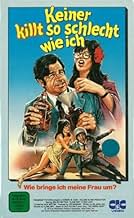
- Also known as
- The Green Heart
- Filming locations
- Oakland Gardens, Queens, New York City, New York, USA(Henry drives his Ferrari from the southbound Cross Island Parkway to the eastbound Long Island Expressway)
- Production companies
- See more company credits at IMDbPro
Box office
- Budget
- $4,000,000 (estimated)
- Gross worldwide
- $308