IMDb RATING
6.9/10
517
YOUR RATING

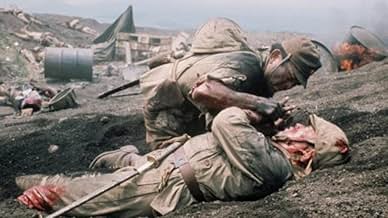
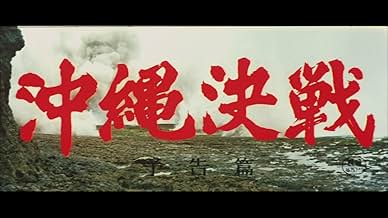
Told from the Japanese perspective, this war drama captures the events of World War II's Battle of Okinawa - a massive amphibious assault by U.S. troops that left more than 150,000 Japanese ... Read allTold from the Japanese perspective, this war drama captures the events of World War II's Battle of Okinawa - a massive amphibious assault by U.S. troops that left more than 150,000 Japanese civilians dead.Told from the Japanese perspective, this war drama captures the events of World War II's Battle of Okinawa - a massive amphibious assault by U.S. troops that left more than 150,000 Japanese civilians dead.
- Director
- Writers
- Stars




- Director
- Writers
- All cast & crew
- Production, box office & more at IMDbPro
6.9517
1
2
3
4
5
6
7
8
9
10
Featured reviews
Movie that tries to be factual ends up being borderline fanatic.
I bought this movie for a higher price than i'd care to admit, expecting a interesting take on the Battle of Okinawa with real facts and maybe some cool battle scenes. I was extremely disappointed.
Over the entire movie we are presented with the spiritually pure Japanese angels desperately fighting against those American Yankee murderers that only win the battle because they have unlimited ammo hack Thompson's that they spray and pray without discrimination, as well as some obligatory war crime weapons like chemical bombs. Which as a reviewer before mentioned was not even in use during the Okinawa invasion. I at the same time understand and hate the decision by movie-makers to portray ones own side in a better light than the other. But deliberately making your own side seem so good as it was presented in this movie is borderline historical revisionism. Which is a curse word in my dictionary.
One thing that irked me: Okinawan's were treated like trash by the Japanese during the actual invasion, yet here we are presented with Okinawan civilians that gets denied the great honor of joining the mass suicide of the Japanese soldiers, but eventually after proving their spirit the Japanese soldiers kindly allow them to use one of their grenades to off themselves. I have no doubts that some Okinawan's wanted to willingly kill themselves, but mainly the Okinawan's actually wanted to surrender to the Americans due to how crappy the Japanese treated them, using them as human shields and deliberately forcing them to kill themselves.
Also the combat scenes themselves mainly consists of the Japanese soldiers trying to get stabby stabby while the Americans use 2000 bullets on each of the Japanese in return. There is a lot of gore and blood everywhere, but it comes off as fake and stupid with the bad fighting choreography and the random narrator commenting on how "glorious" the Japanese defenders were.
I suspect the Japanese ultra-nationalists welcome this movie's inaccuracy, but at the same time it also fails as a entertaining movie. The document mixed with the bad acting makes this entire ordeal seem like a lifeless propaganda film that i could easily imagine being created by the actual WW2 Japanese government. That this was actually created 20 years afterwards is astonishing to me.
The history is not actually completely wrong, it is just glaced with lies to make it seem factual. That makes this the worst attempt at propaganda i have ever seen. And i hope that whoever Japanese director that wrote the line "this is the best war movie ever made" which made me buy the movie will be forced to watch Fires on the plain, letters of Iwo Jima or Stalingrad so he can see an actual good war movie and how pointless war actually is.
Man i could go on and on about how bad this movie is To sum it up, this is a stupid jingoistic and historically wrong document movie with many horrible combat scenes.
Over the entire movie we are presented with the spiritually pure Japanese angels desperately fighting against those American Yankee murderers that only win the battle because they have unlimited ammo hack Thompson's that they spray and pray without discrimination, as well as some obligatory war crime weapons like chemical bombs. Which as a reviewer before mentioned was not even in use during the Okinawa invasion. I at the same time understand and hate the decision by movie-makers to portray ones own side in a better light than the other. But deliberately making your own side seem so good as it was presented in this movie is borderline historical revisionism. Which is a curse word in my dictionary.
One thing that irked me: Okinawan's were treated like trash by the Japanese during the actual invasion, yet here we are presented with Okinawan civilians that gets denied the great honor of joining the mass suicide of the Japanese soldiers, but eventually after proving their spirit the Japanese soldiers kindly allow them to use one of their grenades to off themselves. I have no doubts that some Okinawan's wanted to willingly kill themselves, but mainly the Okinawan's actually wanted to surrender to the Americans due to how crappy the Japanese treated them, using them as human shields and deliberately forcing them to kill themselves.
Also the combat scenes themselves mainly consists of the Japanese soldiers trying to get stabby stabby while the Americans use 2000 bullets on each of the Japanese in return. There is a lot of gore and blood everywhere, but it comes off as fake and stupid with the bad fighting choreography and the random narrator commenting on how "glorious" the Japanese defenders were.
I suspect the Japanese ultra-nationalists welcome this movie's inaccuracy, but at the same time it also fails as a entertaining movie. The document mixed with the bad acting makes this entire ordeal seem like a lifeless propaganda film that i could easily imagine being created by the actual WW2 Japanese government. That this was actually created 20 years afterwards is astonishing to me.
The history is not actually completely wrong, it is just glaced with lies to make it seem factual. That makes this the worst attempt at propaganda i have ever seen. And i hope that whoever Japanese director that wrote the line "this is the best war movie ever made" which made me buy the movie will be forced to watch Fires on the plain, letters of Iwo Jima or Stalingrad so he can see an actual good war movie and how pointless war actually is.
Man i could go on and on about how bad this movie is To sum it up, this is a stupid jingoistic and historically wrong document movie with many horrible combat scenes.
Inaccurate and melodramatic
I'm really surprised at the positive reviews this film has received and the high IMDb rating. Reading them at times I wondered if we was watching the same movie. I'm going to have to disagree with the other reviewers and say that the film doesn't work, either historically or dramatically.
Historically, it's wildly inaccurate. The whole movie suffers from the need to portray the Japanese in the best possible and most heroic light. A few examples: by April, 1945, the Japanese pilot corps had been almost totally destroyed. The Japanese were unable to train new pilots at the rate they were being killed. This is one reason why they resorted to suicide attacks. And yet we are to believe that large air forces still exist and were not employed in Okinawa because the army was unwilling to attack the American forces and recapture the air fields to the north. Another example is the Yamato. The Japanese Navy in the north had been almost destroyed, and what remained lacked fuel, but the admiralty felt the need to make some sort of gesture and sent their largest battleship. The plan had always been to beach and scuttle the ship on Okinawa and use it as a gun platform, but instead we are told that it's mission was to bravely sail amongst the Americans and fight until it was out of ammo. Unfortunately before she could do that, she was attacked by those dastardly Americans who flew gigantic squadrons of planes against her (100 planes attacking a single ship at once?). What tripe.
Unlike movies like "Tora Tora Tora" or "Midway", there is no attempt to personalize or portray the other side as anything but mindless, bloodthirsty automatons. The Americans are shown as surprisingly weak, unable to cope with the Japanese in hand to hand combat, and most of the Japanese appear to die by artillery fire or mowed down by tanks. It's the kind of chauvinism one would expect from a John Wayne movie.
Now, I don't expect historical accuracy from a John Wayne movie, but I do expect it to be entertaining. However, this movie is just too confusing and poorly written. Worse of all, it resorts to melodrama. I lost count of how many times women and children were used to manipulate the audience's emotions.
All in all, I don't recommend it.
Historically, it's wildly inaccurate. The whole movie suffers from the need to portray the Japanese in the best possible and most heroic light. A few examples: by April, 1945, the Japanese pilot corps had been almost totally destroyed. The Japanese were unable to train new pilots at the rate they were being killed. This is one reason why they resorted to suicide attacks. And yet we are to believe that large air forces still exist and were not employed in Okinawa because the army was unwilling to attack the American forces and recapture the air fields to the north. Another example is the Yamato. The Japanese Navy in the north had been almost destroyed, and what remained lacked fuel, but the admiralty felt the need to make some sort of gesture and sent their largest battleship. The plan had always been to beach and scuttle the ship on Okinawa and use it as a gun platform, but instead we are told that it's mission was to bravely sail amongst the Americans and fight until it was out of ammo. Unfortunately before she could do that, she was attacked by those dastardly Americans who flew gigantic squadrons of planes against her (100 planes attacking a single ship at once?). What tripe.
Unlike movies like "Tora Tora Tora" or "Midway", there is no attempt to personalize or portray the other side as anything but mindless, bloodthirsty automatons. The Americans are shown as surprisingly weak, unable to cope with the Japanese in hand to hand combat, and most of the Japanese appear to die by artillery fire or mowed down by tanks. It's the kind of chauvinism one would expect from a John Wayne movie.
Now, I don't expect historical accuracy from a John Wayne movie, but I do expect it to be entertaining. However, this movie is just too confusing and poorly written. Worse of all, it resorts to melodrama. I lost count of how many times women and children were used to manipulate the audience's emotions.
All in all, I don't recommend it.
Great Film On A Horrible Battle
Battle of Okinawa is a film directed by the now legendary Kihachi Okamoto. It stars Tatsuya Nakadai and Tetsuro "I'm in every Japanese film" Tamba. Both show off their acting chops in this film and deliver outstanding performances. Don't get me wrong though, there are dozens of actors in this film with almost equal scream time as these two men. This is definitely an ensemble piece on one of the most gruesome slaughters on the Japanese armies front. This film is not easy to watch. It is much more violent than "Letters From Iwo Jima" and as in "Iwo" we see how fanatical the Japanese army was at this point in history. Being taken prisoner was not an option and losing meant death or forever living in dishonor. This notion is even implemented to civilians who in this move kill themselves in droves. Tatsuya Nakadai's character is one of the few characters who believes that suicide in not the only option in defeat. He is the western voice in the film for his character even studied in America. This is a hard core war film that takes no prisoners. I recommend you go out and buy this film for it is now available in R1 DVD thanks to the fine folks at AnimEigo.
Ambitious film overhwelms filmmakers
From the director of the terrific "Japan's Longest Day", this is an ambitious documentary-styled recreation of the battle for Okinawa, where hundreds of thousands of soldiers and civilians were abandoned by the Japanese military in order to better protect the mainland. The soldiers fortified themselves in caves and fended of an overwhelming American attack over a period of several months. Unfortunately, the filmmaker's talents don't match their ambitions. "Japan's Longest Day" was a fascinating film written by Shinobu Hashimoto about a little known military revolt at the end of the war. Okinawa is dramatically inept with misplaced bits of humor, and the crowd scenes never number more than 50, making it seem far less epic than it purports to be. The photography is bland and the blood very fake. The desperation never seeps in like it should, but the film does a good job of showing what they went through. It also shows that when the going gets tough, the Japanese commit suicide - according to this film it must have been the leading cause of death. The events depicted are similar to "Sands of Iwo Jima" - so if you like that you might like this. Okinawa is still occupied by American forces. Script by Kaneto Shindo ("Onibaba").
Okamoto pulls no punches
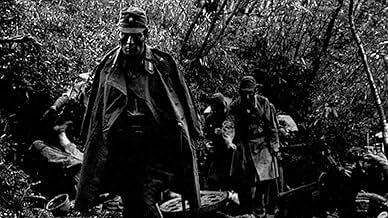
Chronicling the bloodiest and most pointless last stand of the Pacific Theatre, The Battle of Okinawa is far more well-known nowadays for essentially giving Hideaki Anno his career. Told in a quasi-documentary-like format, with black and white newsreel footage juxtaposed with narration from Kiyoshi Kobayashi over the dramatic scenes, Kihachi Okamoto manages to expertly balance horrific authenticity with few artistic liberties taken along the way. It's a film that captures an essence of bravery, lunacy and hollow childlike subservience, as well as the sheer devastating horror that gets increasingly desperate and progressively violent the longer it goes on, the final 5-minutes alone comparable to the likes of Saving Private Ryan in its entirety; Okamoto pulls no punches in the graphic details with his cynical, dark sense of humour coming out in full force. With incredible performance from its cast, most notably Tetsuro Tanba and Tatsuya Nakadai, a fantastic if limited score by Masaru Sato and energetic direction, The Battle of Okinawa is an incredible epic, one of exhaustive and continual bombardment that takes no prisoners leaving the camera smeared with blood by its dramatic end.


Did you know
- TriviaDirector Hideaki Anno has mentioned that this is the film he has watched the most in his life, well over 100 times.
- ConnectionsReferenced in Twenty Years of African Cinema (1983)
- How long is Battle of Okinawa?Powered by Alexa
Details
- Release date
- Country of origin
- Language
- Also known as
- Bitka za Okinavu
- Production company
- See more company credits at IMDbPro
- Runtime
- 2h 29m(149 min)
- Color
- Sound mix
- Aspect ratio
- 2.40 : 1
Contribute to this page
Suggest an edit or add missing content