IMDb RATING
7.2/10
4K
YOUR RATING


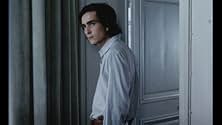
Jacques, a young man with artistic aspirations, spends four nights wandering Paris with a young woman, whom he rescued from suicide.Jacques, a young man with artistic aspirations, spends four nights wandering Paris with a young woman, whom he rescued from suicide.Jacques, a young man with artistic aspirations, spends four nights wandering Paris with a young woman, whom he rescued from suicide.
- Director
- Writers
- Stars
- Awards
- 2 wins & 1 nomination total




- Director
- Writers
- All cast & crew
- Production, box office & more at IMDbPro
7.23.9K
1
2
3
4
5
6
7
8
9
10
Featured reviews
The caressing camera still can't draw substance from these vacuous characters
Revered for his minimalist approach to cinema, writer-director Robert Bresson shows an unerring artistic eye for his surroundings in this French-Italian co-production (in French with English subtitles); however, he stumbles with this pallid script (inspired by Dostoyevsky's short story "White Nights") about two young people in Paris. It's a flashback-heavy non-romance between a starving artist and a suicidal girl. After stopping her from leaping from a bridge, the painter finds himself drawn to the girl during an intimate conversation wherein they reveal to each other their past and present regrets (she's still pining for her fickle lover). Bresson and cinematographer Pierre Lhomme do capture lyrical, lazy bits of business--and sensual, though not particularly erotic, female nudes. Unfortunately, the characters never take shape, and the amateur actors (a Bresson specialty) aren't compelling. ** from ****
Striking cinematography and an intelligent script make for a fascinating film
"Four Nights of a Dreamer" is my first Robert Bresson film, and my first impression of his style and ethos. This film is one of several adaptations of Fyodor Dostoyevsky's "White Nights", but from what I gather from reading about the other adaptations this is the only one worth seeing other than Luchino Visconti's lovely "Le notti bianche". While I enjoyed that film nearly as much as this one, "Four Nights of a Dreamer" is more striking and ambitious, thanks to Bresson's intelligent and thoughtful screenplay and the beauty of the cinematography and simple economy of Bresson's direction.
The adaptation is loose, but needs to be. Dostoyevsky's writing is too reliant on the reader's perception and the emotional core of the story to be effective when literally translated to film, but is ripe for interpretation, and Bresson's is particularly interesting as he moves the story to 1970's France, introduces more emotion and passion to the characters, and actually makes the cinematic cliché of the aimless artist interesting and involving.
The story is simple, Jacques (the 'dreamer') meets Marthe as she is about to commit suicide because her lover had promised to meet her that night after being away at Yale for a year but hadn't shown up, they become friends, share their stories over four nights until Marthe's lover shows up and they are forced to part. Bresson's script is remarkable, though, in its occasional wit and humor, in the uniqueness of its characters, in its observations on modern life and being in love. Even more impressive than the screenplay is the striking cinematography by Pierre Lhome, particularly during the nighttime scenes in Paris, which is shockingly beautiful at times.
My first impression of a legendary director like Bresson could have resulted in disappointment, but I am now interested in exploring his filmography because I found his mute style so appealing. Most interesting was his ability to be very literal and clear through his use of the camera without seeming heavy-handed at any point. This is a wonderful, strikingly beautiful film.
9/10
The adaptation is loose, but needs to be. Dostoyevsky's writing is too reliant on the reader's perception and the emotional core of the story to be effective when literally translated to film, but is ripe for interpretation, and Bresson's is particularly interesting as he moves the story to 1970's France, introduces more emotion and passion to the characters, and actually makes the cinematic cliché of the aimless artist interesting and involving.
The story is simple, Jacques (the 'dreamer') meets Marthe as she is about to commit suicide because her lover had promised to meet her that night after being away at Yale for a year but hadn't shown up, they become friends, share their stories over four nights until Marthe's lover shows up and they are forced to part. Bresson's script is remarkable, though, in its occasional wit and humor, in the uniqueness of its characters, in its observations on modern life and being in love. Even more impressive than the screenplay is the striking cinematography by Pierre Lhome, particularly during the nighttime scenes in Paris, which is shockingly beautiful at times.
My first impression of a legendary director like Bresson could have resulted in disappointment, but I am now interested in exploring his filmography because I found his mute style so appealing. Most interesting was his ability to be very literal and clear through his use of the camera without seeming heavy-handed at any point. This is a wonderful, strikingly beautiful film.
9/10
An aimless artist/dreamer meets a woman considering suicide, and they tell each other their stories.
I saw this film twice with Japanese subtitles. Tonight I saw a print (and very different version) with English subtitles.
In this film, Bresson makes everyday life beautiful.... the lights on the river, the Brazilian music coming from a beautifully lighted tour boat going under the bridge the lovers are on... The story is small... An aimless artist prevents a woman from suicide and listens to her story and tries to help her reunite with her lover. This story seems to be seen through a dark filter of the beauty of Paris and its people.
A scene where the heroine is making love in the next room while her mother is walking back and forth calling her name, not realizing that her daughter is right next door... Her voice gets louder and softer and louder...
The scene with the aimless artist following one beautiful woman, only to be distracted by another beautiful woman whom he then follows....
There are many small beauties in this film. And my telling you about them will only make you anticipate them with pleasure.
Bresson, working with a minor little story has created a film of great beauty. Good luck finding it....I was fortunate enough to see it at a theater twice, where the beauty of the scenery could be appreciated. For some reason, it is not out in video or DVD. The DVD I saw probably had the photographer setting up his camera in the dark theater... and shooting at the screen!
In this film, Bresson makes everyday life beautiful.... the lights on the river, the Brazilian music coming from a beautifully lighted tour boat going under the bridge the lovers are on... The story is small... An aimless artist prevents a woman from suicide and listens to her story and tries to help her reunite with her lover. This story seems to be seen through a dark filter of the beauty of Paris and its people.
A scene where the heroine is making love in the next room while her mother is walking back and forth calling her name, not realizing that her daughter is right next door... Her voice gets louder and softer and louder...
The scene with the aimless artist following one beautiful woman, only to be distracted by another beautiful woman whom he then follows....
There are many small beauties in this film. And my telling you about them will only make you anticipate them with pleasure.
Bresson, working with a minor little story has created a film of great beauty. Good luck finding it....I was fortunate enough to see it at a theater twice, where the beauty of the scenery could be appreciated. For some reason, it is not out in video or DVD. The DVD I saw probably had the photographer setting up his camera in the dark theater... and shooting at the screen!
Have you heard about the lonesome loser? Beaten by the Queen of Hearts every time.
An art-school kid meets a sad-faced girl on the Pont-Neuf; she's about to leap. It seems her beau left for Yale, swore he'd meet her one year later to the day--and he's blown her off. Love ensues between the couple on the bridge; Joe Yalie fails to make his appointment; and all seems to be heavenly for the two young lovebirds. Until, of course, days later, Joe Yalie comes a-callin'...
The relationship between a painter's self-torturing love life and his efflorescent work life was explored with a riotous, blasting, punk-rock yet p**s-elegant glee by Martin Scorsese and company in the short film LIFE LESSONS. Bresson's version of a similar tale is, to put it lightly, less communicative. Late Bresson--from THE TRIAL OF JOAN OF ARC on--puts a premium on mum's-the-word. But in a late, underappreciated masterpiece, UNE FEMME DOUCE, Bresson's deliberate muteness worked: this adaptation of a Dostoevsky story about a blinkered husband decrypting his wife's suicide prods at the question "What do women want?" with comic and sensuous tactics unseen elsewhere in Bresson. And the emphasis on the unreadable--made literal in Bresson's concentration on shoulders, hands, backs of heads--fit the material like a glove.
The Dostoevsky source material for FOUR NIGHTS OF A DREAMER is simpler stuff. And more psychological stuff, too--which, mated with Bresson's deliberately dime-store-Indian, anti-acting style, makes for incoherence. You can't make out just exactly what Bresson thinks this movie is about, except a touching, and not altogether lecherous, affection for Today's Youth. It has freaky asides, like his other unhinged youth movie THE DEVIL PROBABLY: an art student pontificates on his moral agenda for painting in a bowlegged scene that suggests Bresson standing up in the movie theatre and reading from a tract. It has bits of rock music performed live that take you back to the with-it-ness of Otto Preminger's SKIDOO. And it has the hero's weird, unfinished, Pop Art-meets-Matisse paintings, everywhere. And it ends with a sadder-but-wiser shrug.
You get the feeling Bresson's heart and soul slammed painfully into every frame of this movie. It's also inscrutable and not absorbing in the least. Is this the fate of all master directors who make it to a ripe old age--they keep their chops, but they simply have no more stories they're impassioned to tell?
The relationship between a painter's self-torturing love life and his efflorescent work life was explored with a riotous, blasting, punk-rock yet p**s-elegant glee by Martin Scorsese and company in the short film LIFE LESSONS. Bresson's version of a similar tale is, to put it lightly, less communicative. Late Bresson--from THE TRIAL OF JOAN OF ARC on--puts a premium on mum's-the-word. But in a late, underappreciated masterpiece, UNE FEMME DOUCE, Bresson's deliberate muteness worked: this adaptation of a Dostoevsky story about a blinkered husband decrypting his wife's suicide prods at the question "What do women want?" with comic and sensuous tactics unseen elsewhere in Bresson. And the emphasis on the unreadable--made literal in Bresson's concentration on shoulders, hands, backs of heads--fit the material like a glove.
The Dostoevsky source material for FOUR NIGHTS OF A DREAMER is simpler stuff. And more psychological stuff, too--which, mated with Bresson's deliberately dime-store-Indian, anti-acting style, makes for incoherence. You can't make out just exactly what Bresson thinks this movie is about, except a touching, and not altogether lecherous, affection for Today's Youth. It has freaky asides, like his other unhinged youth movie THE DEVIL PROBABLY: an art student pontificates on his moral agenda for painting in a bowlegged scene that suggests Bresson standing up in the movie theatre and reading from a tract. It has bits of rock music performed live that take you back to the with-it-ness of Otto Preminger's SKIDOO. And it has the hero's weird, unfinished, Pop Art-meets-Matisse paintings, everywhere. And it ends with a sadder-but-wiser shrug.
You get the feeling Bresson's heart and soul slammed painfully into every frame of this movie. It's also inscrutable and not absorbing in the least. Is this the fate of all master directors who make it to a ripe old age--they keep their chops, but they simply have no more stories they're impassioned to tell?
Loners
From all the Bressons I've seen this week, this one is the hardest to describe. I liked a lot, but I don't exactly know what it was that I liked. The film, taking place mostly at night in the streets and on the bridges of Paris is somewhere in between the typical lethargy and an a-typical hysteria and is about utterly lonely people that meet up with people who are even lonelier. It's fascinating to look how those change directions all the time, interrupt actions to start a completely different one, jump from one anecdote to another. It's a fascinating jumble; you never know what is going to happen next and very similar to Cassavetes' Shadows (which I tend to like more).


Did you know
- TriviaBased on the short story 'White Nights' by Fyodor Dostoevsky.
- ConnectionsReferenced in The Mother and the Whore (1973)
- SoundtracksMusseke
Written by Mané Gomes, Marku Ribas, Wilson Sá Brito
Performed by Marku Ribas
- How long is Four Nights of a Dreamer?Powered by Alexa
Details
Box office
- Gross US & Canada
- $56,569
- Opening weekend US & Canada
- $11,666
- Sep 7, 2025
- Gross worldwide
- $72,057
- Runtime
- 1h 27m(87 min)
- Sound mix
- Aspect ratio
- 1.66 : 1
Contribute to this page
Suggest an edit or add missing content