IMDb RATING
6.3/10
8.9K
YOUR RATING

Pasolini's artistic and always vividly cinematic retelling of eight of Chaucer's famous tales.Pasolini's artistic and always vividly cinematic retelling of eight of Chaucer's famous tales.Pasolini's artistic and always vividly cinematic retelling of eight of Chaucer's famous tales.
- Director
- Writers
- Stars
- Awards
- 1 win total



Orla Pederson
- Pilgrim
- (as OT)

Derek Deadman
- The Pardoner
- (as Derek Deadmin)

George Bethell Datch
- Host of the Tabard
- (as George B. Datch)


- Director
- Writers
- All cast & crew
- Production, box office & more at IMDbPro
6.38.9K
1
2
3
4
5
6
7
8
9
10
Featured reviews
dull decadence
As far as where this one sits on the film map, it's somewhere between Belle de Jour and Tinto Brass's Caligula.
The most important credit Pasolini's setting of the Canterbury Tales deserves is for its dismissal of the usual on-screen morality. Such candor seems essential to the nature of such a narrative (being much more appreciated than the stifled decadence of Keir Dullea's Marquis de Sade or the early Warhol/Morrissey efforts). This is most effective because the film also depicts the baseness and depravity of the late Middle Ages. Everyone's fornicating or trying to fornicate everyone else, with lots of potty humor thrown in just to make sure that it wouldn't be taken too seriously as a foray into art-house pretensions.
On all other counts, it's overblown and a bit sluggish, with an especially disappointing outcome au montage son. And non-professional actors are much less effective in adding a dimension of realism than they are in inducing a sense of self-mockery. The imagery is shamelessly ribald although not extreme, and the storyline is far from seamless. Far from Pasolini's best, although perhaps a good preparation for the far more intense Salo.
The most important credit Pasolini's setting of the Canterbury Tales deserves is for its dismissal of the usual on-screen morality. Such candor seems essential to the nature of such a narrative (being much more appreciated than the stifled decadence of Keir Dullea's Marquis de Sade or the early Warhol/Morrissey efforts). This is most effective because the film also depicts the baseness and depravity of the late Middle Ages. Everyone's fornicating or trying to fornicate everyone else, with lots of potty humor thrown in just to make sure that it wouldn't be taken too seriously as a foray into art-house pretensions.
On all other counts, it's overblown and a bit sluggish, with an especially disappointing outcome au montage son. And non-professional actors are much less effective in adding a dimension of realism than they are in inducing a sense of self-mockery. The imagery is shamelessly ribald although not extreme, and the storyline is far from seamless. Far from Pasolini's best, although perhaps a good preparation for the far more intense Salo.
Ever-fresh Pasolini comedy of ethics
This, even though it lacks a bit the wit and spirit of IL DECAMERON, which was funnier, it still manages to satisfy as you reach the end. Pasolini's perverted humor as well as some of his usual actors are here. There's full nudity, both male and female. Maybe here the erotic element is more intense so its less humorous, I am not sure. I suppose it will satisfy those who like Pasolini's humour like, say, IL DECAMERON.
The copy I saw had awful dubbing - Italian language- maybe it's bad sychronisation, or something else...
As far as I am concerned it is worth it alone for this special, absurd, perverted, surrealistic last scene, taking place in hell. It rulez! Some others scenes are awesome too! And of course there'e Pasolini evident dislike of church/religious dogmas.
If you're not easily offended and like old films, specially European ones, give it a try, IL DECAMERON as well.
The copy I saw had awful dubbing - Italian language- maybe it's bad sychronisation, or something else...
As far as I am concerned it is worth it alone for this special, absurd, perverted, surrealistic last scene, taking place in hell. It rulez! Some others scenes are awesome too! And of course there'e Pasolini evident dislike of church/religious dogmas.
If you're not easily offended and like old films, specially European ones, give it a try, IL DECAMERON as well.
well put together
Making a film about the Canterbuy Tales, one that lasts one to two hours, presents one with the decision of how to go about it.
The logical approach would be to tell of the pilgrimage itself, and then splice 2 or 3 tales at a time, probably beginning with the joke tales, like the miller's.
It would be doubtful that one could get all the stories in, and still have a pilgrimage tale.
Here, the pilgrimage is pretty much forgotten, just mentioned at the beginning.
The cuts between stories are sometimes straights cuts, and sometimes back to Chaucer writing the tale.
The bawdiness is kept, although it is done more Italian style than English. There is a mixture of the two cultures involved here.
The stories stay fairly true to form.
It would take a huge budget to include the squire's story, and indeed, the squire's story would take some interpretation to finish. Sadly, it is left out.
Which leaves the pardoner's story as the "thriller" story. I was very much hoping this story, a natural finale, would be the climax.
I wasn't disappointed. The pardoner's tale is the masterpiece in terms of action and adventure. It isn't exactly the very last tale, but close enough to serve as the climax, as there are two very brief joke tales that follow it.
Would I piece it together like this? Probably not. I think each person would direct this in a different way, with about a half dozen general methods.
However, I liked the way this film was done. It stayed very true to form, in my opinion. Most of the tales are "raunchy humor" tales, showing the mores of what one would expect to be puritan people, most of them professionals in religion. This was well done.
The logical approach would be to tell of the pilgrimage itself, and then splice 2 or 3 tales at a time, probably beginning with the joke tales, like the miller's.
It would be doubtful that one could get all the stories in, and still have a pilgrimage tale.
Here, the pilgrimage is pretty much forgotten, just mentioned at the beginning.
The cuts between stories are sometimes straights cuts, and sometimes back to Chaucer writing the tale.
The bawdiness is kept, although it is done more Italian style than English. There is a mixture of the two cultures involved here.
The stories stay fairly true to form.
It would take a huge budget to include the squire's story, and indeed, the squire's story would take some interpretation to finish. Sadly, it is left out.
Which leaves the pardoner's story as the "thriller" story. I was very much hoping this story, a natural finale, would be the climax.
I wasn't disappointed. The pardoner's tale is the masterpiece in terms of action and adventure. It isn't exactly the very last tale, but close enough to serve as the climax, as there are two very brief joke tales that follow it.
Would I piece it together like this? Probably not. I think each person would direct this in a different way, with about a half dozen general methods.
However, I liked the way this film was done. It stayed very true to form, in my opinion. Most of the tales are "raunchy humor" tales, showing the mores of what one would expect to be puritan people, most of them professionals in religion. This was well done.
Best Italian film ever
When I was going to see "Canterbury Tales", I knew Pasolini was infamous director who made crazy films, that weren't for everyone's taste.When I saw it. It was one of those movie experiences that change the way you see films. It's not that I loved this film, I don't see how I can use word "love" here. It's just that from the beginning to the end I couldn't believe my eyes. Sequence after sequence, the movie became one of the most original films I ever seen in my life. Wife having sex standing on her husband's shoulders, woman farting in the face of the young boy who loves her, drunken man, p***ing on dining people, giant ass, that defecates with demons, it's shocking, yes, but it's not the point. The point is,we believe every single thing we see on the screen. Of course, it's because Pasolini uses natural lightning, unprofessional actors, and partly because when there is fucking on the screen, it's not simulation, it's real f**king (what other film can be classified as "porn", and also have Oscar-winning costume designer in its credits?). But it's not the reason. I always admired Pasolini, because he was one of those people, who make others respect them, who have remained hip even twenty years after they are dead. And being this incredibly fascinating person, he could put part of the magic that made him the person he was into his movies.
Great movie
Strange at times but a most delightful tale of 8 stories from the mother land. I am confused as there isn't any x rated content in the movie. There is some nudity but nothing that warrants an x rating for sure. I would say its a mild R rated movie. Very humorous and at times strange. I enjoyed the adventurous tales but most of them are ended prematurely and with questions still unanswered. It would have been a better movie if they told 4 tales with more story to them. I never read the actual tales, but if they are anything like whats in the movie, it might be a good read. I have always enjoyed movies from the area depicted in the movie, I just wish that the stories had more content to keep me engaged more. I found myself wondering away from the movie more than once which tells me that the stories just were not interesting enough to spark my interest. That is why I think it would have been a much better movie with each tale telling more of a story then just cutting to one, 10 minutes later your cut to another story wondering what happened. Over all I would still give it a 6 out of 10 for the slapstick English humor.


Did you know
- TriviaRemarkably, this is the only major cinematic take on Geoffrey Chaucer's classic tales.
- GoofsSome of the women have tan-lines from bikinis.
- Quotes
The Wife from Bath: There's nowhere in the Gospels that says we ought to stay virgins. Anyway, tell me, what were the genital organs made for at the creation? Not to lie dormant I suppose. And nobody's going to tell me they were just put there to piss through. Mark you, I use it for that as well. And every man must serve his wife in wedlock...
- Alternate versionsThe original UK cinema version was cut by the BBFC with edits to anal sex shots, a man being whipped, and Rufus urinating on the crowd during the 'Pardoner's Tale' segment for an 'X' certificate. The cuts were fully restored in 2001 and the certificate downgraded to a '15'.
- ConnectionsFeatured in Playboy: The Story of X (1998)
- SoundtracksThe Old Piper
written by Carl Hardebeck in 1912
performed by Frank McPeake
Played over the opening credits and sung frequently by Perkin the Reveler in the Cook's Tale
- How long is The Canterbury Tales?Powered by Alexa
Details
- Release date
- Countries of origin
- Official site
- Languages
- Also known as
- Los cuentos de Canterbury
- Filming locations
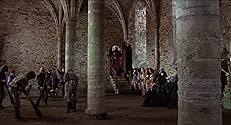
- Battle Abbey, East Sussex, England, UK(merchant's tale: hall interior)
- Production companies
- See more company credits at IMDbPro
Box office
- Gross worldwide
- $9,028
- Runtime
- 1h 51m(111 min)
- Sound mix
- Aspect ratio
- 1.85 : 1
Contribute to this page
Suggest an edit or add missing content